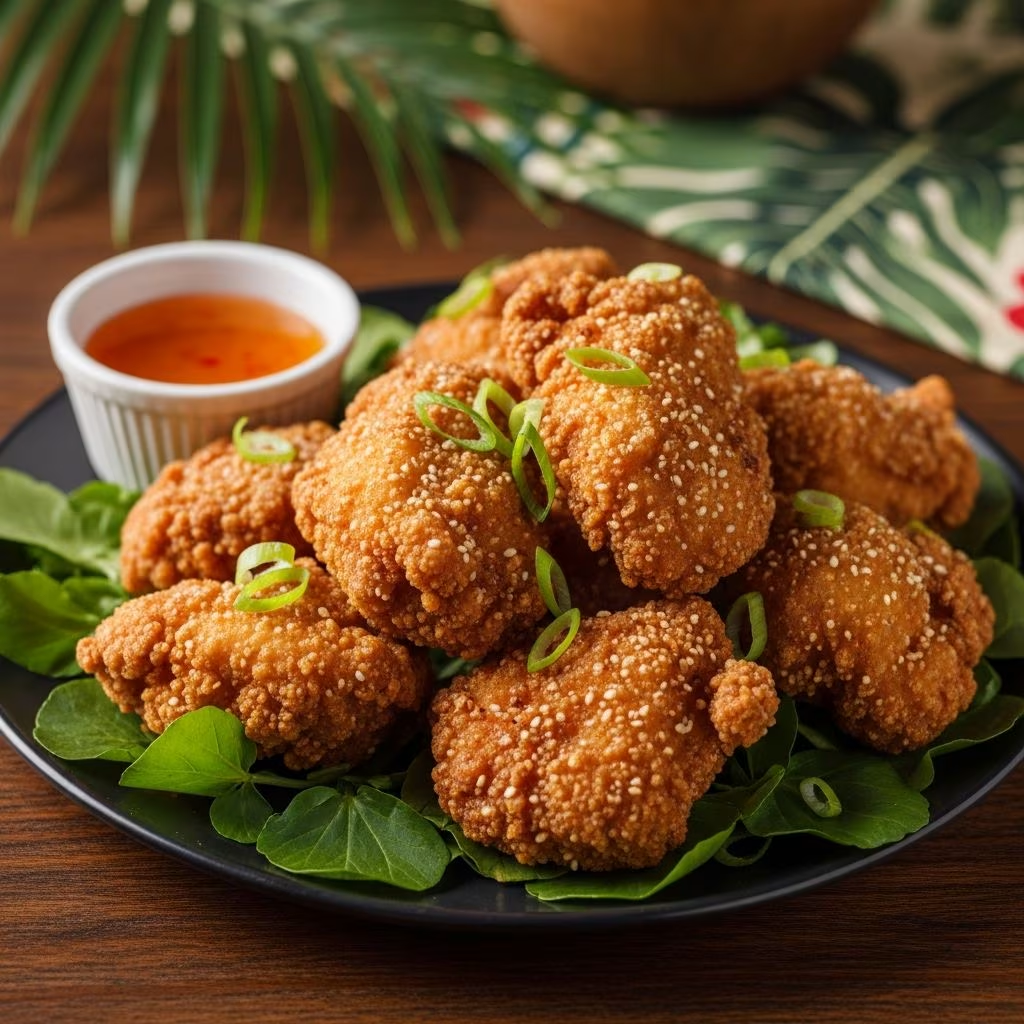
Hawaii’s culinary landscape is rich with influences from Japanese, Filipino, Chinese, and Portuguese traditions, and nowhere is this more evident than in the beloved local plate lunch. Among the most iconic components of these plates is mochiko chicken, a distinctly Hawaiian preparation that transforms simple chicken into a golden, crispy delicacy. This beloved island dish represents generations of cultural fusion and has become synonymous with authentic Hawaiian comfort food.
Understanding the Origins and Cultural Significance
Mochiko chicken stands as a testament to Hawaii’s multicultural heritage, particularly reflecting the substantial Japanese influence on the islands’ food traditions. This dish emerged from the convergence of Japanese cooking techniques and Hawaiian ingredients, alongside other iconic preparations like shoyu chicken and Spam musubi. The use of mochiko flour, a glutinous sweet rice flour with Japanese origins, became a cornerstone ingredient in Hawaiian local cuisine, offering a unique textural quality that distinguishes island-style fried chicken from mainland American versions.
The dish typically appears as part of the famous Hawaiian plate lunch, a meal format that itself represents the blending of multiple culinary traditions. These plates customarily feature a protein, two scoops of rice, and macaroni salad, reflecting the diverse workforce and communities that built modern Hawaii. Mochiko chicken’s presence on these plates has made it a cultural icon, served in restaurants from humble plate lunch shops to upscale dining establishments attempting to honor local traditions.
The Science Behind Mochiko Flour and Texture
The foundation of exceptional mochiko chicken lies in understanding mochiko flour itself. Unlike all-purpose wheat flour used in traditional fried chicken, mochiko flour is derived from glutinous sweet rice, a specialty grain that produces distinctly different results when cooked. The term “glutinous” refers not to gluten content but rather to the sticky, cohesive quality the rice develops when heated, creating a unique structural matrix during frying.
When mochiko flour is combined with liquid and heat, it creates a coating that fries up light, delicate, and surprisingly crispy—more closely resembling the texture of tempura than the crunchy, thick crust associated with traditional Southern fried chicken. This distinctive texture profile is what makes mochiko chicken instantly recognizable to those familiar with Hawaiian cuisine. The flour’s natural sweetness also contributes subtle flavor dimensions that complement the savory marinade ingredients, creating a complex taste experience despite the straightforward ingredient list.
For those with gluten sensitivity or celiac disease, mochiko chicken offers a naturally gluten-free option, as mochiko flour contains no wheat gluten. However, the dish should be finished with tamari, a gluten-free soy sauce alternative, rather than traditional shoyu to maintain this dietary advantage.
Essential Ingredients and Their Roles
Creating authentic mochiko chicken requires a carefully balanced combination of components, each contributing specific qualities to the final dish:
- Mochiko flour – The primary coating ingredient, providing the signature light, crispy texture and subtle sweetness
- Potato starch or cornstarch – Mixed with mochiko flour to enhance crispiness and maintain a delicate texture, preventing the coating from becoming too dense
- Shoyu (Japanese soy sauce) – Delivers authentic umami depth and saltiness; traditional Hawaiian recipes specify shoyu rather than Chinese-style soy sauce for its mellow, balanced flavor profile
- Granulated sugar – Balances the savory elements and adds subtle sweetness while promoting browning during frying
- Eggs – Bind the coating mixture to the chicken and provide structural integrity to the batter
- Sesame seeds – Add nutty flavor, visual appeal, and textural contrast
- Green onions – Contribute fresh, mild onion notes and aromatic complexity
- Garlic and ginger – Provide pungent, warming spice notes that enhance the overall flavor profile
- Salt – Essential for seasoning and flavor enhancement
- Chicken thighs – Preferred over breasts for their higher fat content, which yields more flavorful, juicy meat
Preparation Methods and Cooking Techniques
The Marination Process
Mochiko chicken’s distinctive flavor develops primarily during the marination phase. Unlike traditional fried chicken recipes where dry seasonings are applied before cooking, mochiko chicken uses a thick, smooth batter-style marinade that completely envelops each piece of chicken. The mixture should have a consistency more similar to pancake batter than a traditional liquid marinade—thick, smooth, and slightly stretchy when pulled apart.
After cubing chicken thighs into approximately one-inch pieces, the meat is fully submerged in this batter mixture and refrigerated for at least four to six hours, though overnight marination produces superior flavor development. This extended marination time allows the shoyu, sugar, and aromatic ingredients to penetrate the chicken flesh while the starch components absorb moisture, creating a cohesive coating that adheres firmly during frying.
Achieving Optimal Crispiness
The frying stage requires careful temperature control and technique to achieve the characteristic light, crispy exterior while maintaining juicy, cooked-through chicken. Oil should reach approximately 325°F before introducing the marinated chicken. Working in batches to avoid overcrowding the pan ensures that each piece fries evenly and develops proper color without the oil temperature dropping excessively, which would result in greasy, soggy chicken.
Each piece should fry for approximately four to five minutes per side until achieving golden-brown coloration and reaching an internal temperature of 165°F. Removing the chicken to a cooling rack positioned over a baking sheet or paper towels allows excess oil to drain while air circulation prevents the coating from becoming soggy from steam.
Advanced Techniques
Some restaurant preparations employ an additional technique inspired by Korean fried chicken traditions: after removing chicken from the initial marinade, pieces are dredged in a mixture of flour and cornstarch before frying. This creates an extra-crunchy exterior reminiscent of fried chicken found in Korean establishments, offering diners an ultra-crispy texture experience while maintaining the distinctive mochiko flour base coat.
Ingredient Variations and Customization
| Variation | Primary Change | Effect on Dish |
|---|---|---|
| Extra-Crispy Version | Dredge in flour-cornstarch mixture after marinating | Creates thicker, ultra-crunchy exterior |
| Gluten-Free Preparation | Substitute tamari for shoyu | Maintains Hawaiian flavor while accommodating dietary needs |
| Lighter Oil Version | Use vegetable or peanut oil instead of heavier options | Reduces heaviness while maintaining crispiness |
| Spice Enhancement | Increase garlic, ginger, or add cayenne pepper | Amplifies aromatic and heat elements |
Regional and family variations exist throughout Hawaii, with some recipes incorporating baking powder to enhance rise and crispiness, while others adjust sugar ratios based on preference for sweeter or more savory profiles. The beauty of mochiko chicken lies in its flexibility—the core technique remains consistent while individual cooks adapt ingredient proportions to match their palate and available ingredients.
Serving and Pairing Traditions
Mochiko chicken reaches its fullest expression when served as part of a traditional Hawaiian plate lunch, accompanied by two scoops of white rice and a generous portion of macaroni salad. The starchy rice provides textural contrast to the crispy chicken, while macaroni salad’s creamy richness complements both components. This combination represents more than a mere meal; it embodies Hawaii’s multicultural history and working-class food traditions.
Beyond plate lunch contexts, mochiko chicken serves excellently as an appetizer for gatherings, a component of poke bowls, or simply as a standalone protein. The bite-sized pieces make it ideal for parties and casual entertaining, while its portable nature and ability to maintain quality at room temperature enhance its practicality.
Storage and Make-Ahead Considerations
Mochiko chicken maintains quality for three to four days when stored in an airtight container in the refrigerator. The coating will gradually soften over time as moisture from the chicken penetrates the fried exterior, though the chicken itself remains safe and flavorful. For optimal texture, consumption within two days of frying is recommended.
The marinated chicken can be prepared up to 24 hours before frying, allowing busy cooks to complete preparation work in advance and finish cooking when ready to serve. This make-ahead capability makes mochiko chicken particularly appealing for meal planning and entertaining scenarios.
Frequently Asked Questions
Where can I find mochiko flour?
Mochiko flour is increasingly available in mainstream grocery stores in the international or Asian foods aisle. Specialty Asian markets typically stock multiple brands, including Hawaiian-produced options like Aloha brand. Online retailers offer convenient purchasing options for those without local access.
Can I use chicken breasts instead of thighs?
While chicken breasts can technically be used, thighs remain the traditional choice due to their superior fat content, which produces more flavorful, tender results. Breasts tend toward dryness when cooked with extended marination times. If using breasts, reduce marination time to three to four hours and monitor cooking temperature carefully.
What oil temperature is essential for success?
Maintaining oil between 320°F and 330°F produces optimal results. Temperatures below this range result in greasy, oil-laden chicken, while temperatures above 330°F can produce exteriors that brown too quickly before interiors cook through. A reliable deep-fry or instant-read thermometer is essential for success.
How do I know when the chicken is fully cooked?
Golden-brown exterior coloration combined with reaching an internal temperature of 165°F confirms doneness. Using a meat thermometer inserted into the thickest piece provides definitive assurance that food-safety standards are met.
References
- Hawaiian Style Mochiko Chicken Recipe — Keeping It Relle. https://keepingitrelle.com/hawaiian-style-mochiko-chicken-recipe/
- Crispy Mochiko Chicken (Hawaii-Style Fried Chicken) — Plays Well with Butter. https://playswellwithbutter.com/mochiko-chicken/
- Mochiko Chicken Recipe: Make This Hawaii Classic at Home — Aloha Hawaiian. https://www.aloha-hawaiian.com/blog/mochiko-chicken-recipe-make-this-classic-hawaii-plate-lunch-favorite-at-home/
- USDA Food Safety Guidelines: Safe Internal Temperatures — United States Department of Agriculture. https://www.foodsafety.gov/keep-food-safe/foodborne-germs-and-illnesses/safe-temperature-chart