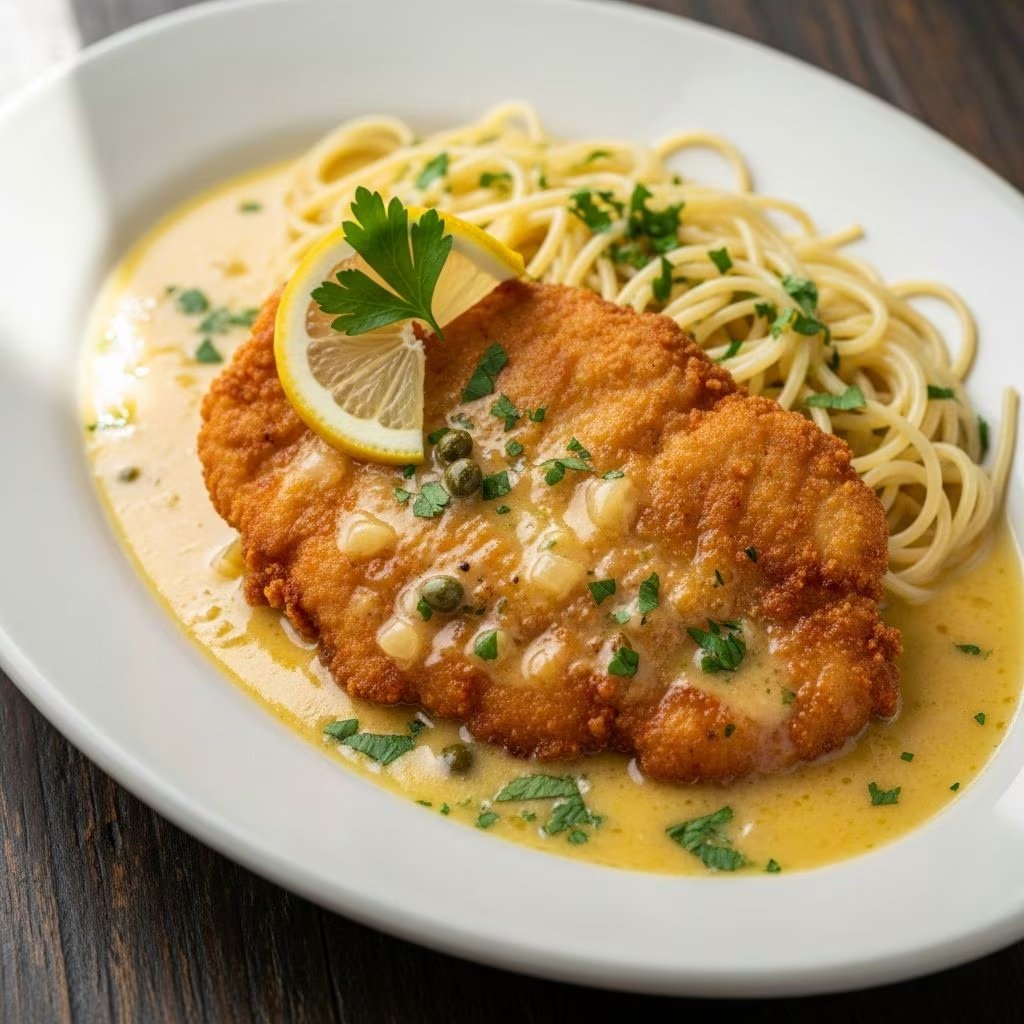
Chicken Francese brings the taste of fine dining to your kitchen table with its crispy, golden chicken cutlets bathed in a silky lemon sauce. This dish, rooted in Italian-American cuisine, combines simple ingredients like chicken breasts, eggs, flour, and fresh lemons into a meal that’s both impressive and accessible. Ideal for busy evenings, it cooks up in about 30 minutes and serves four generously.
Why Chicken Francese Deserves a Spot in Your Rotation
This recipe stands out for its balance of textures and flavors: the light, crunchy breading from the flour-egg dredge contrasts beautifully with the tender chicken inside. The sauce, made with white wine, broth, and lemon, adds a bright, tangy finish that cuts through the richness. Unlike heavier fried dishes, it’s light yet satisfying, making it perfect for pairing with pasta, rice, or steamed vegetables.
Home cooks love it because it requires no special equipment—just a skillet, basic pantry staples, and fresh citrus. Variations abound, from adding capers for a piccata twist to using veal for a Milanese vibe. Its versatility extends to dietary tweaks, like gluten-free flour or dairy-free butter alternatives.
Essential Ingredients for Perfect Results
Gathering the right components ensures success. Focus on quality chicken and fresh lemons for the best flavor profile.
- Chicken: 4 boneless, skinless breasts (about 1.5 lbs), sliced or pounded to 1/4-inch thickness for even cooking.
- Dredging station: 1/2 cup all-purpose flour, 1 tsp salt, 1/2 tsp black pepper, 1/2 tsp garlic powder; 2 large eggs whisked with 1 tbsp water or milk.
- For frying: 1/4 cup olive oil, 2 tbsp butter.
- Sauce base: 1 cup chicken broth, 1/2 cup dry white wine (like Sauvignon Blanc), juice and zest of 2 lemons, 1-2 thin lemon slices, 1 tbsp flour for thickening, fresh parsley for garnish.
Pro tip: Use thin-sliced chicken breasts if available, or butterfly and pound them yourself using plastic wrap and a meat mallet to avoid mess.
Step-by-Step Cooking Guide
Follow these instructions precisely for restaurant-worthy results. Prep time: 10 minutes. Cook time: 20 minutes.
Prepare the chicken: If not pre-sliced, halve each breast horizontally to create 8 thin cutlets. Place between plastic wrap and gently pound to uniform 1/4-inch thickness. Pat dry, then season both sides with salt, pepper, and garlic powder.
Set up dredging bowls: In one shallow dish, mix flour with salt, pepper, and garlic powder. In another, whisk eggs with water until smooth.
Heat the pan: Warm olive oil in a large skillet over medium-high heat until shimmering (about 350°F if using a thermometer).
Dredge and fry: Coat each cutlet in flour (shake off excess), dip in egg (let drip), then flour again lightly. Fry in batches, 3-4 minutes per side until golden and internal temperature reaches 165°F. Transfer to a plate lined with paper towels.
Make the sauce: Wipe pan clean if needed. Melt 1 tbsp butter over medium heat, stir in 1 tbsp flour to form a roux (cook 30 seconds). Gradually whisk in broth, wine, lemon juice, and zest. Add lemon slices and simmer 4-5 minutes until thickened. Taste and adjust seasoning.
Combine and serve: Return chicken to sauce, spoon over to coat, and simmer 2 minutes to warm through. Garnish with chopped parsley.
Serve immediately with lemon wedges on the side for extra zing.
Ingredient Substitutions and Variations
Adapt this recipe to your pantry or preferences with these swaps:
| Original | Substitution | Why It Works |
|---|---|---|
| Chicken breasts | Chicken thighs or veal cutlets | Juicier meat with similar thin profile. |
| White wine | Extra broth + splash vinegar | Keeps it alcohol-free while mimicking acidity. |
| All-purpose flour | Gluten-free blend or almond flour | Allergy-friendly without sacrificing crunch. |
| Olive oil | Avocado oil | Higher smoke point for frying. |
| Lemon | Lime or orange | Changes flavor profile for tropical twists. |
For a creamy version, stir in 1/4 cup heavy cream at the end. Spice it up with red pepper flakes in the sauce.
Pro Tips for Flawless Chicken Francese
- Achieve crispiness: Don’t overcrowd the pan—fry in batches to maintain oil temperature.
- Sauce perfection: Scrape up browned bits (fond) from the pan; they’re flavor gold.
- Lemon balance: Use fresh lemons for sauce; bottled juice lacks vibrancy.
- Make ahead: Bread and fry chicken up to 4 hours ahead; reheat in sauce.
- Storage: Refrigerate leftovers up to 3 days. Reheat gently on stovetop with extra broth to revive sauce.
Nutrition Breakdown
Per serving (1/4 recipe, approx. 1.5 cutlets with sauce): 420 calories, 24g fat (8g saturated), 28g protein, 18g carbs (1g fiber, 1g sugar), 850mg sodium. This dish is high in protein and vitamin C from lemons, supporting immune health. Data approximated based on standard ingredient values.
Pairing Suggestions for a Complete Meal
Elevate your plate with these complements:
- Starches: Angel hair pasta, risotto, or garlic mashed potatoes to soak up sauce.
- Veggies: Sautéed spinach, asparagus, or broccoli rabe for green balance.
- Wines: Crisp Pinot Grigio or Chardonnay to match the lemon notes.
- Sides: Crusty bread or a simple arugula salad.
Common Mistakes to Avoid
Steer clear of these pitfalls for success:
- Pounding chicken too thin (under 1/4 inch) leads to dry results.
- Skipping the double dredge—single coating gets soggy.
- Overcooking sauce; it thickens quickly off heat.
- Using sweet wine—opt for dry to avoid cloying sweetness.
Frequently Asked Questions (FAQs)
Can I bake instead of fry the chicken?
Yes, but it won’t be as crispy. Dredge, place on a parchment-lined baking sheet, spray with oil, and bake at 400°F for 15-20 minutes, flipping halfway.
Is Chicken Francese gluten-free?
Easily—swap flour for a 1:1 gluten-free mix. Ensure broth is GF too.
How do I make it dairy-free?
Use plant-based butter or oil in the sauce and skip any Parmesan if added.
What’s the difference between Chicken Francese and Piccata?
Francese uses egg in breading and thicker sauce; Piccata has capers and no egg.
Can I freeze leftovers?
Yes, up to 2 months. Thaw overnight and reheat on stove with added liquid.
Historical Notes on Chicken Francese
Originating in the 1950s-60s Italian-American communities of New York, this dish evolved from French techniques (“Francese” means French in Italian). It gained popularity in restaurants for its elegant simplicity, blending veau francais traditions with American twists like white wine sauce.
References
- Easy Chicken Francese — Dish It Girl. 2023. https://www.dishitgirl.com/recipes/easy-chicken-francese
- Chicken Francese — Salt & Lavender. 2022-10-15. https://www.saltandlavender.com/chicken-francese/
- Chicken Francese (Chicken Francaise) — Go Go Go Gourmet. 2021. https://www.gogogogourmet.com/chicken-francese/
- Chicken Francese — RecipeTin Eats. 2020-05-01. https://www.recipetineats.com/chicken-francese/
- Chicken Francese — Dinner at the Zoo. 2023-08-20. https://www.dinneratthezoo.com/chicken-francese/