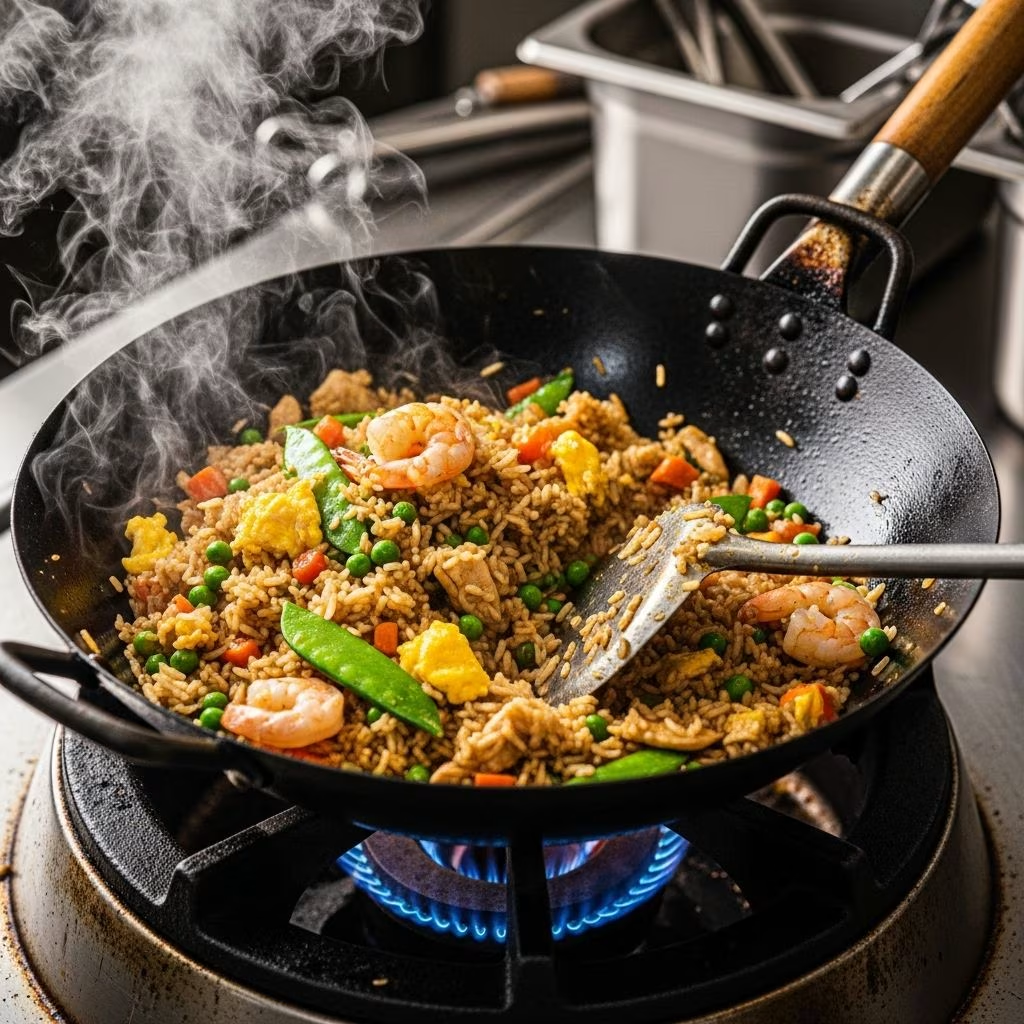
Achieving authentic restaurant-quality fried rice at home requires understanding the fundamentals of wok cooking, selecting appropriate ingredients, and applying time-tested culinary techniques. This comprehensive guide explores the methods professional chefs use to create perfectly textured, evenly seasoned fried rice that rivals what you’d find in established Asian establishments.
Understanding the Foundation: Why Rice Selection Matters
The foundation of exceptional fried rice begins before you ever turn on the heat. The type and preparation of rice fundamentally determines whether your final dish achieves that signature restaurant texture or ends up mushy and clumped.
Leftover rice serves as the gold standard for fried rice preparation. When rice sits in the refrigerator overnight, the starches firm up and the individual grains separate more easily during the high-heat cooking process. This characteristic allows each grain to maintain its integrity while absorbing the flavorful oils and seasonings without becoming soggy or overly dense.
Fresh, warm rice presents challenges that even experienced cooks struggle to overcome. The high moisture content and sticky exterior cause grains to clump together, and the heat from the wok’s flames accelerates evaporation in ways that can lead to unevenly cooked batches. Using day-old jasmine rice or short-grain varieties provides optimal results, though long-grain white rice works adequately for those with ingredient limitations.
For convenience-oriented home cooks, pre-cooked rice available in grocery stores offers a viable alternative to cooking rice from scratch. These products have been processed to reduce moisture content and typically perform comparably to refrigerated leftover rice when handled correctly during the stir-frying process.
Essential Ingredients and Flavor Building Blocks
Restaurant-quality fried rice balances multiple flavor dimensions through strategic ingredient selection and proper execution of each component.
Core Protein and Aromatics
- Eggs — The binding and richness agent that creates tender texture and luxurious mouthfeel throughout the dish
- Garlic and onions — Aromatic foundations that build depth when properly cooked and infused into the oil
- Optional proteins — Chicken, shrimp, or beef cut into small, uniform pieces for even cooking and distribution
Vegetables and Texture Elements
Professional preparation involves a careful balance of vegetable types that contribute different colors, flavors, and textural contrasts. Frozen peas and carrots provide consistent quality year-round and cook evenly without releasing excessive moisture that might compromise the rice texture. Mushrooms, when included, should be finely diced to prevent large chunks that interrupt the eating experience. Fresh scallions added after cooking preserve their bright onion flavor and delicate crunch.
Oil and Seasoning Strategy
The choice between sesame oil, peanut oil, and neutral cooking oils significantly impacts the final flavor profile. Neutral oils like avocado or canola oil handle the high temperatures required for proper stir-frying without degrading or imparting unwanted flavors. Toasted sesame oil, conversely, should never be used as a primary cooking medium, as heat destroys its delicate nutty characteristics. Instead, it’s incorporated at the finish to preserve its aromatic intensity.
Soy sauce provides the primary umami and salt foundation. Low-sodium versions allow for better control over final seasoning levels, while tamari and coconut aminos offer alternatives for those with specific dietary preferences. Oyster sauce, when used, adds additional depth and complexity that distinguishes restaurant preparations from basic home versions.
Equipment Considerations and Heat Management
While traditional woks represent the ideal vessel for fried rice preparation, large skillets and cast iron pans serve as adequate alternatives when woks aren’t available. The critical factor involves maintaining high, consistent heat throughout the cooking process.
Professional kitchens employ powerful burners that heat woks to temperatures home stoves typically cannot replicate. To compensate, home cooks should maximize available heat output, use cast iron or other heat-conductive materials, and work in smaller batches to maintain temperature consistency. A large skillet or wok, one quality spatula for stirring and lifting ingredients, and paper towels for moisture management constitute the essential equipment list.
Mastering the Sequential Cooking Method
Preparing Protein Elements
When incorporating chicken, beef, or shrimp, professional technique involves cooking the protein separately before rice addition. This approach ensures proper browning and flavor development that wouldn’t occur if the protein were added simultaneously with the rice. Season the protein with soy sauce, salt, and pepper, then cook it only until the exterior develops color—overcooking results in tough, dry meat that detracts from the finished dish.
The protein should be set aside temporarily, allowing you to maintain focus on properly executing the rice cooking sequence without juggling multiple components simultaneously.
Aromatic Base Development
Begin by heating oil in your cooking vessel over medium-high heat. Once the oil reaches proper temperature, add minced garlic and diced onions, cooking them for approximately two minutes until they become fragrant and the onion begins softening. This foundational step infuses the entire dish with savory aromatics that cannot be replicated by adding these ingredients later in the process.
Vegetable Integration
Fresh vegetables requiring longer cooking times should be added next, while frozen vegetables can be incorporated slightly later since they’re already partially cooked. Stir-fry for three to four minutes until the vegetables achieve the desired tenderness. The goal involves softening them enough for pleasant eating while preserving texture and nutritional value.
Rice Incorporation and Breaking Clumps
This critical step separates successful restaurant-style fried rice from disappointing home attempts. Using a spatula, break apart any rice clumps as you add the chilled rice to the vegetables. Rather than stirring constantly, employ a tossing motion that flips and lifts the rice, preventing the starch from releasing and making the dish soggy. Continue this technique for approximately three to five minutes, occasionally allowing the rice to rest briefly against the hot surface to develop slight browning and textural contrast.
Egg Integration Technique
Push the partially cooked rice and vegetables to one side of the cooking vessel, then pour lightly beaten eggs onto the empty surface. Allow the eggs to begin setting before stirring, breaking them into small curds as they cook. Once mostly set, gently fold the scrambled eggs throughout the rice mixture, distributing them evenly without aggressive stirring that might break the rice grains.
Final Seasoning and Oil Finishing
Add soy sauce and any additional seasonings while the rice is still actively being tossed over high heat. The heat helps the seasonings distribute evenly and allows volatile aromatic compounds to permeate the rice. Remove from heat and immediately drizzle toasted sesame oil throughout, stirring gently to combine. This final step imparts the characteristic restaurant aroma without allowing the delicate flavors to dissipate through prolonged heating.
Technique Comparisons: What Separates Professional From Amateur Results
| Technique Element | Amateur Approach | Professional Method |
|---|---|---|
| Rice Moisture | Uses warm or room-temperature rice | Refrigerates rice overnight to reduce moisture content |
| Heat Level | Maintains medium or medium-high heat | Uses maximum available heat from burner |
| Mixing Motion | Stirs constantly in circular motions | Tosses and flips to prevent starch release |
| Ingredient Sequencing | Adds all ingredients simultaneously | Adds ingredients in calculated sequence for optimal results |
| Protein Handling | Incorporates raw or undercooked protein with rice | Cooks protein separately to specific doneness |
| Seasoning Timing | Seasons at the end only | Seasons progressively and finishes with aromatic oils |
Customization Strategies for Dietary Preferences
Restaurant-style fried rice adapts remarkably well to various dietary requirements without sacrificing authenticity or flavor quality. The fundamental cooking techniques remain unchanged regardless of protein selection or vegetable choices.
Vegetarian preparations work excellently by emphasizing umami-rich ingredients like mushrooms, additional garlic, and generous soy sauce or tamari. Tofu, when cut into small cubes and pan-seared before rice addition, provides protein substance without compromising the dish’s essential character.
Health-conscious modifications might include brown rice instead of white varieties, though preparation methods remain identical. Increasing vegetable ratios while decreasing oil slightly allows for lighter finished dishes that maintain satisfying flavors through proper seasoning and cooking technique.
Allergen accommodations are straightforward since the dish consists of simple whole ingredients. Soy-free versions substitute tamari, coconut aminos, or other amino-based seasonings without compromising results. Egg-free adaptations require more creativity but remain possible through additional binding from cornstarch slurries or chickpea flour mixed with water.
Common Mistakes and How to Avoid Them
- Using insufficient heat — Results in steamed rather than fried rice with pale, soft grains lacking textural interest
- Overcrowding the cooking vessel — Prevents proper heat transfer and creates steaming conditions that compromise texture
- Constant stirring motions — Breaks rice grains and releases excess starch, creating a mushy, clumpy consistency
- Adding seasonings too early — Allows salty flavors to become harsh and concentrated rather than integrated
- Incorporating warm or fresh rice — The primary reason most home attempts fail; proper rice preparation cannot be overstated
- Skipping the separate protein cooking step — Results in uneven cooking and inconsistent texture throughout the dish
Frequently Asked Questions About Restaurant-Style Fried Rice
Can I make fried rice with freshly cooked rice if I lack refrigerated leftovers?
While fresh rice is far from ideal, spreading it on a plate and refrigerating it for at least two hours helps reduce moisture content substantially. This preparation method isn’t as effective as overnight resting but provides an acceptable workaround in urgent situations.
What cooking vessels work best if I don’t own a traditional wok?
Cast iron skillets and large stainless steel pans retain heat effectively and produce excellent results. Avoid non-stick surfaces, which cannot tolerate the high temperatures required for proper fried rice preparation.
How do I prevent eggs from becoming rubbery in the final dish?
Cook eggs to only three-quarters doneness before folding them into the rice. The residual heat from the rice continues cooking them gently, reaching the perfect consistency without overcooking.
Should I use raw or frozen vegetables?
Frozen vegetables, particularly pea and carrot mixes, provide consistency and perform reliably without releasing excess moisture. Fresh vegetables work but require more careful timing to prevent overcooking.
What’s the difference between sesame oil and toasted sesame oil?
Regular sesame oil has a mild flavor and higher smoke point, making it suitable for cooking. Toasted sesame oil features an intense, nutty flavor and lower smoke point, making it appropriate only for finishing the dish after cooking completes.
Storage and Serving Recommendations
Properly prepared fried rice maintains quality for three to four days when stored in an airtight container in the refrigerator. Reheat gently over medium heat with a splash of water or additional soy sauce to restore moisture without degrading texture. Fried rice actually improves slightly during storage as flavors integrate more completely, making it an excellent candidate for meal preparation strategies.
Serve immediately after cooking for optimal textural contrast and aromatic intensity. Garnishing with fresh scallions, sesame seeds, and additional sesame oil provides visual appeal and flavor enhancement that elevates the presentation to restaurant standards.
Conclusion: Building Your Fried Rice Mastery
Creating restaurant-quality fried rice at home requires understanding fundamental principles more than possessing specialized equipment or rare ingredients. Proper rice preparation, sequential ingredient addition, appropriate heat management, and finishing technique with quality oils combine to produce results indistinguishable from professional establishments. The methods outlined throughout this guide apply consistently across countless fried rice variations, from simple vegetable versions to elaborate protein-laden preparations, providing a foundation for endless culinary exploration and improvement.
References
- Best Chicken Fried Rice (Restaurant-Style!) — 40 Aprons. Accessed 2026-04-09. https://40aprons.com/restaurant-style-chicken-fried-rice/
- Restaurant Style Fried Rice — Pickled Plum. Accessed 2026-04-09. https://pickledplum.com/basic-fried-rice/
- Favorite Fried Rice! — Gimme Some Oven. Accessed 2026-04-09. https://www.gimmesomeoven.com/fried-rice-recipe/
- Vegetable Fried Rice Recipe – Savory Experiments — Savory Experiments. Accessed 2026-04-09. https://www.savoryexperiments.com/easy-fried-rice-restaurant-style/