Potato chowder represents one of the most versatile and satisfying soups in any home cook’s repertoire. This beloved comfort dish combines tender potatoes with aromatic vegetables and a velvety broth that warms from the inside out. Whether you’re seeking a light vegetarian option or a hearty meat-based version, potato chowder adapts beautifully to various dietary preferences and ingredient availability. Understanding the fundamentals of chowder preparation transforms this simple soup into an impressive dish worthy of any dinner table.
Understanding Chowder Basics and Soup Fundamentals
Chowder represents a distinct category of soup characterized by its thick, creamy consistency and substantial vegetable content. Unlike lighter broths, chowders rely on specific techniques to achieve their signature texture. The foundation of any successful chowder begins with quality ingredients and proper layering of flavors. The cooking process involves multiple stages, each contributing to the final dish’s depth and richness. Understanding these basics ensures consistent results every time you prepare this classic soup.
Selecting the Right Potato Varieties
Potato selection significantly impacts your chowder’s final texture and mouthfeel. Different potato varieties contain varying starch levels, which directly affects how they behave during cooking. Starchy potatoes, including russet varieties, break down more easily during simmering, creating a naturally thicker broth without requiring additional thickening agents. These potatoes contribute to the soup’s creamy consistency through their natural starch release. Alternatively, waxy potatoes like red or fingerling varieties hold their shape better throughout cooking, providing defined potato pieces in each spoonful. For optimal results, many cooks prefer starchy potatoes for their textural contribution to the finished soup.
Essential Ingredients and Flavor Components
Beyond potatoes, several foundational ingredients create the chowder’s characteristic flavor profile. Aromatic vegetables form the flavor base, with onions, celery, and garlic providing depth and complexity. These vegetables develop their sweetness through gentle sautéing in butter or oil, a process called sweating. This initial cooking stage unlocks their aromatic compounds, creating a flavorful foundation for the entire soup. Broth selection determines the soup’s overall character—vegetable broth maintains a lighter profile, while chicken or beef broth adds richness and body. Fresh herbs like thyme enhance the soup’s sophistication without overwhelming the delicate potato flavor.
- Onions: Provide sweet, savory undertones
- Celery: Adds subtle earthiness and aromatic qualities
- Garlic: Delivers pungent depth and complexity
- Butter: Creates richness and aids in sautéing vegetables
- Broth: Forms the liquid foundation and flavor base
- Cream or milk: Contributes to silky texture
- Fresh herbs: Enhance and brighten flavors
Step-by-Step Preparation Method
Successful chowder preparation follows a logical sequence that builds flavor gradually. Begin by preparing all ingredients before cooking, a practice known as mise en place. Cut potatoes into uniform, bite-sized pieces ensuring even cooking throughout the batch. Dice onions, celery, and mince garlic to facilitate quick, even cooking during the sautéing stage.
The Sautéing Stage
Heat a large pot over medium-high heat and add butter along with a small amount of olive oil. The combination of butter and oil prevents burning while maximizing flavor development. Once the butter froths, add your prepared onions, celery, and garlic. Stir these vegetables frequently for approximately eight minutes until they begin softening and becoming fragrant. This crucial step develops the chowder’s flavor foundation through the caramelization of natural sugars in the vegetables. Season this mixture lightly with salt, pepper, and dried herbs like thyme to begin building the soup’s seasoning layers.
Building the Broth Base
Pour your prepared broth into the pot with the sautéed vegetables, stirring to combine and distribute flavors evenly. Add your prepared potato pieces, ensuring they’re fully submerged in the liquid. The broth should reach approximately one inch above the vegetables for proper cooking. Bring the mixture to a gentle simmer over medium heat. Avoid rapid boiling, which can break down potatoes too quickly and create an overly thick, starchy texture. Maintain a steady simmer, stirring occasionally to ensure even cooking and prevent sticking on the pot’s bottom.
Simmering and Thickening
Allow the soup to simmer for approximately twenty minutes, or until potatoes become completely fork-tender. To create the chowder’s signature creamy texture, prepare a slurry by whisking flour with a small amount of cold broth until completely smooth and lump-free. Remove approximately two cups of broth from the pot and whisk in the flour mixture thoroughly. Pour this thickened mixture back into the soup, stirring constantly to distribute evenly. This technique prevents lumps while gradually thickening the broth to the desired consistency. Continue simmering for an additional few minutes, allowing the flour to cook completely and the soup to reach the preferred thickness.
Cream and Dairy Integration
Adding dairy products requires careful technique to prevent curdling or breaking. Remove the pot from direct heat before introducing milk, cream, or sour cream. Stir these ingredients thoroughly into the hot (but not boiling) soup. The residual heat warms the dairy products without subjecting them to the aggressive heat that causes separation. Adding fresh herbs such as minced parsley at this final stage preserves their bright, fresh flavor that would diminish if added earlier. Taste the finished soup and adjust seasonings with additional salt and pepper as needed.
Customization Options and Variations
Potato chowder’s adaptability makes it suitable for diverse ingredient preferences and dietary requirements. Adding corn creates a sweet, textural contrast that complements the creamy base beautifully. Crispy bacon pieces contribute smoky, salty notes that enhance savory flavors. Cheese additions, particularly sharp cheddar or parmesan, introduce tangy depth and additional richness. Green onions or fresh chives sprinkled over individual servings provide fresh onion flavor and visual appeal. For vegetarian versions, omitting meat-based broths and substituting with vegetable broth creates an entirely plant-based soup without sacrificing flavor or satisfaction.
| Variation Type | Key Ingredients | Flavor Profile |
|---|---|---|
| Classic Creamy | Potatoes, cream, onion, celery | Rich, buttery, subtle vegetable notes |
| Bacon and Cheese | Bacon, cheddar cheese, potatoes, green onions | Smoky, savory, tangy |
| Corn-Infused | Potatoes, corn, cream, thyme | Sweet, creamy, summery |
| Roasted Garlic | Roasted garlic bulb, potatoes, parmesan, thyme | Mellow, nutty, sophisticated |
| Vegetarian Garden | Potatoes, carrots, celery, vegetable broth | Light, fresh, garden-inspired |
Ingredient Quality and Selection Tips
The quality of your finished chowder directly correlates with the quality of ingredients you select. Choose potatoes that feel firm without soft spots or sprouting eyes. Fresh vegetables should display vibrant color and lack wilting or discoloration. Broth quality varies significantly between brands; low-sodium varieties provide better seasoning control than heavily salted options. Cream should be fresh, refrigerated, and used within the expiration date for optimal flavor and texture. Fresh herbs outperform dried varieties in terms of flavor intensity and brightness, though dried herbs remain acceptable alternatives when fresh options are unavailable.
Cooking Techniques for Optimal Results
Mastering specific cooking techniques elevates your chowder from adequate to exceptional. Gentle, consistent heat prevents potatoes from becoming mushy while ensuring thorough cooking throughout. Frequent stirring, particularly after adding the flour slurry, prevents sticking and ensures even thickening. Testing potato doneness with a fork determines when simmering should conclude—potatoes should pierce easily without resistance. Careful temperature management when adding dairy prevents separation and maintains the soup’s smooth, creamy texture. These techniques, when combined, produce consistently excellent results regardless of ingredient variations.
Serving Suggestions and Presentation
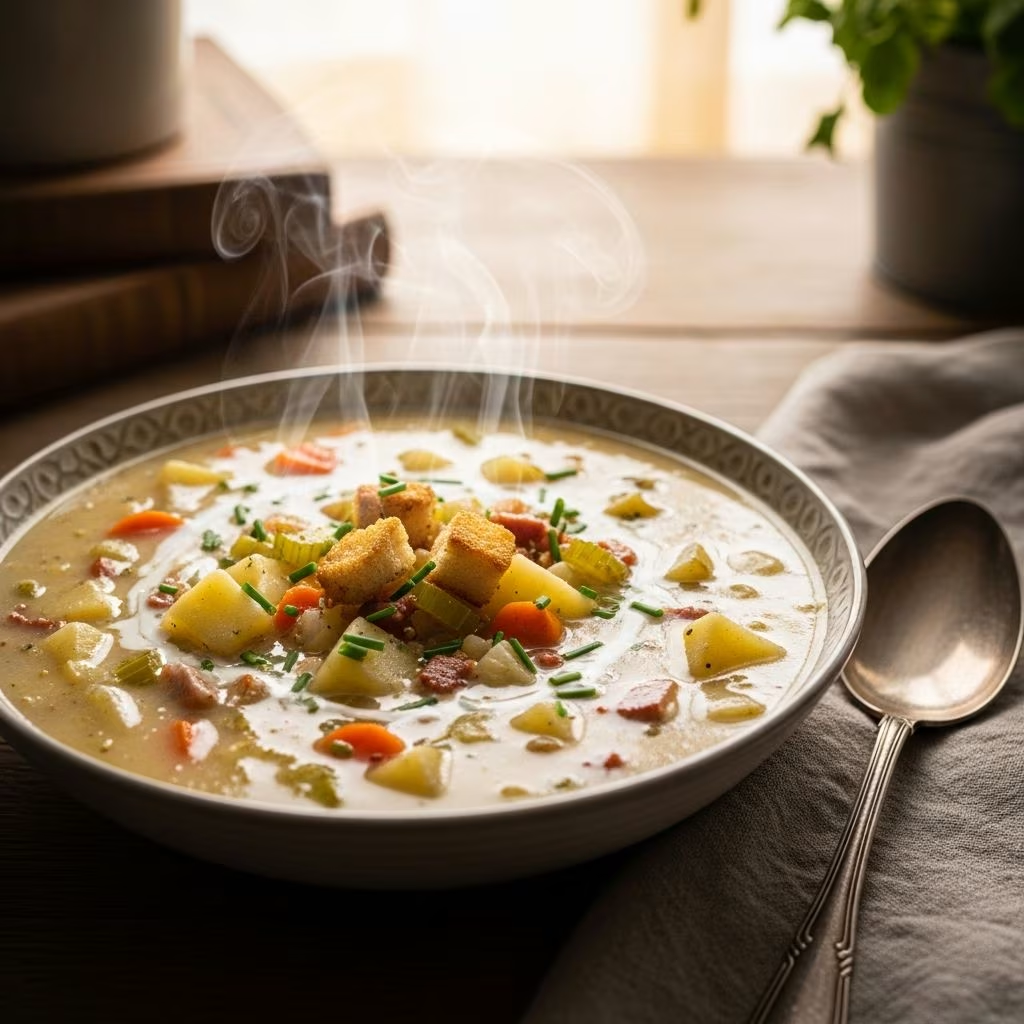
Presentation transforms simple chowder into an appealing meal worthy of company. Ladle soup into warmed bowls to maintain temperature longer. Garnishes contribute both visual appeal and complementary flavors—crispy bacon bits, fresh herb sprinklings, grated cheese, or croutons all enhance the eating experience. A drizzle of cream or olive oil across the surface adds sophistication and richness. Crusty bread on the side provides a textural contrast and vehicle for soaking up remaining broth. Consider serving chowder with simple salads or light appetizers to create a balanced, complete meal.
Storage and Make-Ahead Considerations
Potato chowder stores well, making it ideal for meal preparation and advance planning. Allow cooled soup to reach room temperature before transferring to airtight containers. Refrigerated chowder remains fresh for three to four days, while frozen portions maintain quality for up to three months. When reheating, warm gently over medium-low heat, stirring occasionally to prevent scorching. The soup may thicken during storage as potatoes continue absorbing liquid; thin it to preferred consistency with additional broth or cream. Freezing dairy-based chowders may affect texture slightly; adding cream or milk after reheating rather than before freezing maintains optimal consistency.
Troubleshooting Common Issues
Understanding potential problems and their solutions ensures successful chowder preparation. Overly thick soup results from excessive simmering time or too much flour slurry; remedy this by adding broth gradually while stirring. Thin, watery soup indicates insufficient simmering time or inadequate thickening agent; continue simmering longer or add additional flour slurry. Lumpy soup develops when flour isn’t adequately whisked before adding to broth; prevent this by whisking flour thoroughly with cold broth until completely smooth. Curdled dairy indicates exposure to excessive heat; add cream off-heat and stir gently to prevent separation. Bland soup needs additional seasoning; taste frequently and adjust salt, pepper, and herbs incrementally.
Frequently Asked Questions
Can I make potato chowder without cream?
Yes, absolutely. While cream creates traditional richness, you can achieve satisfying texture through potato starch release alone. Starchy potatoes break down naturally during simmering, thickening the broth without dairy additions. Use this method for lactose-free or vegan variations while maintaining authentic chowder character.
How do I prevent my chowder from becoming too thick?
Control thickness by adjusting simmering time and flour slurry quantity. Simmer only until potatoes reach fork-tender consistency, then stop cooking. If thickening occurs, thin with additional broth or cream rather than continuing to cook. Store-bought chowders tend to thicken significantly during storage, so factor this into your initial thickness preference.
What’s the best way to reheat leftover chowder?
Heat gently over medium-low heat, stirring occasionally to prevent burning. Alternatively, reheat in a microwave-safe container, stirring every minute until warmed through. Avoid high heat, which can cause separation in dairy-based soups. Thin with additional broth if needed to restore desired consistency.
Can I substitute ingredients in a traditional recipe?
Potato chowder welcomes ingredient substitutions based on preference and availability. Replace cream with milk or non-dairy alternatives for different dietary needs. Add vegetables like carrots, corn, or bell peppers for additional nutrition and flavor complexity. Experiment with different broth types to discover preferred flavor profiles.
How can I make this soup more flavorful?
Enhance flavor by thoroughly sautéing aromatics before adding broth—this develops deeper, more complex tastes. Add fresh herbs like thyme, bay leaves, or parsley for aromatic depth. Include smoked paprika, cayenne pepper, or chili flakes for subtle heat. Taste frequently and adjust seasonings incrementally throughout cooking rather than making large adjustments at the end.
Conclusion: Mastering the Art of Potato Chowder
Potato chowder represents accessible comfort food that rewards attention to technique and ingredient quality. By understanding fundamental cooking methods, selecting appropriate potatoes and vegetables, and mastering flavor-building strategies, you’ll create chowder that rivals restaurant versions. The soup’s inherent flexibility allows for creative variations while maintaining its essential character. Whether preparing a classic version or experimenting with innovative additions, these guidelines provide the foundation for consistent success. Practice builds confidence and intuition, eventually allowing you to create variations that reflect your personal tastes and preferences. Transform humble potatoes and simple ingredients into memorable meals that warm body and soul.
References
- Potato Corn Chowder Recipe — Budget Bytes. Accessed April 2026. https://www.budgetbytes.com/potato-corn-chowder/
- Potato Chowder with Roasted Garlic — Sugar Salt Magic. Accessed April 2026. https://www.sugarsaltmagic.com/roasted-garlic-and-potato-chowder/
- Loaded Baked Potato Chowder Recipe — Modern Crumb. Accessed April 2026. https://moderncrumb.com/loaded-baked-potato-chowder/
- 5-Ingredient Potato and Corn Chowder — The Modern Proper. Accessed April 2026. https://themodernproper.com/5-ingredient-potato-and-corn-chowder
- The Ultimate Creamy Potato Soup — Sugar Spun Run. Accessed April 2026. https://sugarspunrun.com/creamy-potato-soup-recipe/