Ceramic bakeware has become a staple in modern kitchens due to its blend of functionality, safety, and visual appeal. Crafted from natural clay materials fired at high temperatures, these pieces deliver consistent baking results while minimizing health risks associated with traditional coatings. This guide explores everything from material types to practical selection criteria, helping you build a collection that suits your cooking needs.
Understanding Ceramic Bakeware Materials
Ceramic bakeware comes in two primary varieties, each offering distinct advantages for different baking tasks. Pure ceramic, including varieties like porcelain, stoneware, and earthenware, is formed entirely from clay, quartz, and feldspar, then kiln-fired above 1200°C. This process creates a robust structure with superior heat retention, perfect for slow-cooking dishes such as casseroles or lasagnas that require steady temperatures.
In contrast, ceramic-coated bakeware features a metal base—often aluminum or stainless steel—topped with a non-toxic ceramic layer. This hybrid design combines metal’s rapid heating with ceramic’s slick, PFAS- and PFOA-free nonstick properties, resulting in lighter weight and quicker preheat times. It’s an eco-conscious choice for those avoiding chemical-based nonsticks, providing easy food release without added oils.
Key Benefits of Choosing Ceramic Over Other Materials
Ceramic stands out for its performance characteristics. It distributes heat evenly, eliminating hotspots that plague some metal pans and ensuring uniform browning on cakes, breads, and roasts. Once heated, it retains warmth exceptionally well, keeping meals hot during serving.
- Flavor Neutrality: Unlike reactive metals, ceramic doesn’t impart tastes or react with acids in tomatoes or citrus, preserving recipe authenticity.
- Versatility Across Appliances: Most pieces handle ovens up to 500°F, many are microwave-compatible, and select models work on stovetops or in freezers.
- Health-Focused Design: High-quality options avoid heavy metals and synthetic chemicals, supporting safer cooking.
Compared to glass, which can shatter under thermal stress, or metal, which may warp or leach, ceramic offers a balanced profile of durability and gentleness on food.
Prioritizing Safety in Ceramic Bakeware
Safety is paramount when selecting bakeware. The clay body is inherently safe, but glazes pose potential risks if substandard. Inferior glazes might release lead or cadmium, especially with acidic foods. Opt for products certified lead- and cadmium-free by standards like FDA, LFGB, or SGS to ensure compliance with food-contact regulations.
Ceramic coatings from reputable makers remain stable at baking temperatures, emitting no fumes and resisting degradation. Avoid thermal shock by not transitioning pieces from freezer to hot oven or immersing hot dishes in cold water, as this can cause cracking. Federal guidelines from the FDA emphasize testing for leachables in ceramic glazes, confirming that certified items pose minimal risk under normal use (FDA, 2023, https://www.fda.gov/food/food-ingredients-packaging/food-contact-substances-fcs).
Essential Features for Everyday Use
Functional details elevate bakeware from basic to indispensable. Prioritize wide, mitt-friendly handles for secure oven handling, especially on larger dishes. Lids add value for storage and transport, turning bakeware into all-in-one solutions. Pour spouts simplify saucy recipes, while stackable or nesting designs save cabinet space.
Glaze quality affects longevity—a smooth, non-porous finish resists staining and simplifies cleanup, often making dishwasher use viable. Weight should feel substantial yet manageable; pure ceramic tends heavier for better stability, while coated versions prioritize lightness.
Selecting the Right Shapes and Sizes
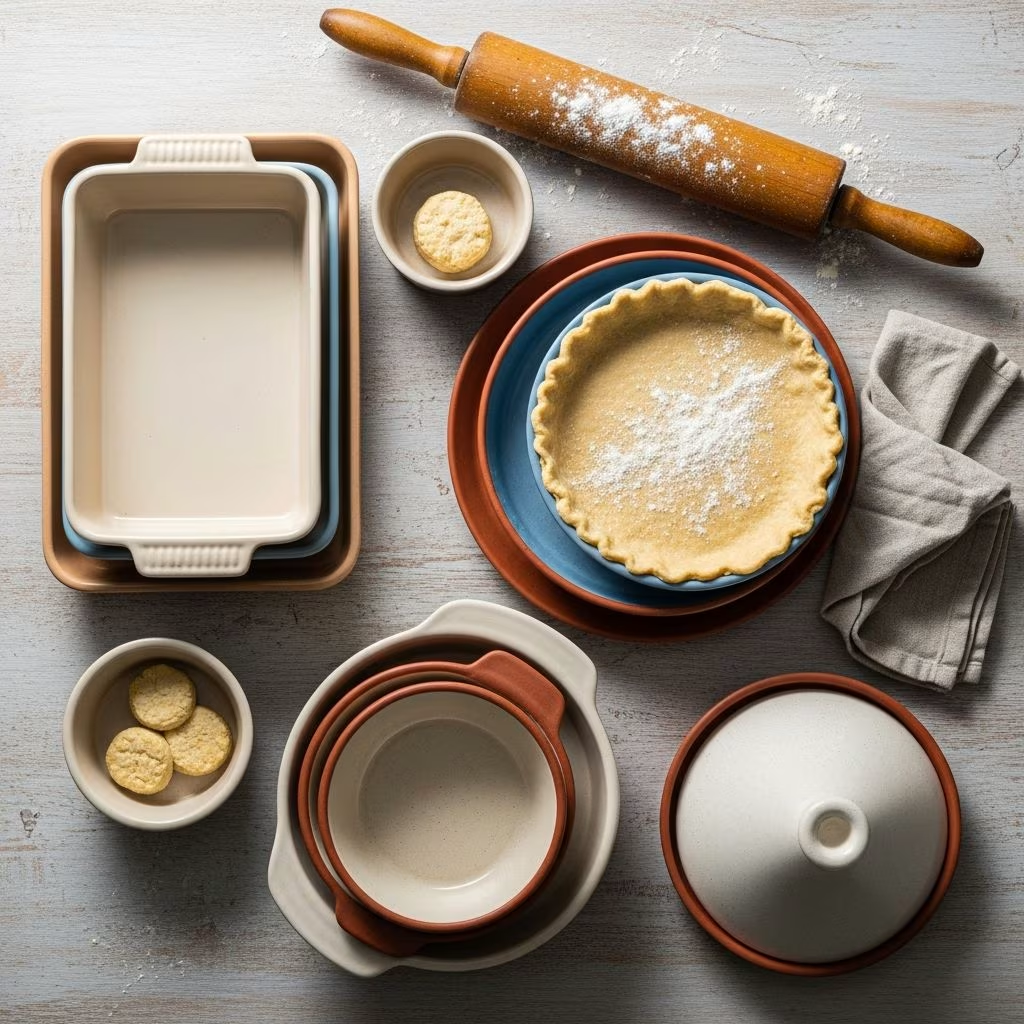
Matching size to recipe prevents waste and optimizes results. Here’s a breakdown of common forms:
| Shape & Size | Ideal Uses | Dimensions (inches) |
|---|---|---|
| Rectangular | Casseroles, lasagnas, sheet cakes | 9×13 |
| Square | Brownies, cornbread, bar cookies | 8×8 or 9×9 |
| Round | Pies, quiches, tarts | 9-10 diameter |
| Oval | Gratins, roasted fish, vegetables | Varies, ~12-14 long |
| Loaf | Breads, meatloaves, quick breads | 9×5 |
| Ramekins | Individual soufflés, custards | 4-6 oz |
Start with versatile staples like a 9×13 rectangular for family meals, then expand based on favorites.
Design and Style Elements
Bakeware often serves double duty as serveware, so aesthetics matter. Glazes range from crisp whites to bold colors, with embossed textures or fluted rims adding elegance. Ensure even glazing without pits or bubbles for both looks and performance. Coordinate sets for cohesive tabletops, blending functionality with dining appeal.
Care and Maintenance for Longevity
Proper handling extends lifespan. Use wooden, silicone, or nylon utensils to protect surfaces from scratches—metal tools can gouge coatings. Clean gently with soft sponges and mild soap; avoid abrasives. Store stacked with protective liners to prevent chipping. For pure ceramic, hand-washing preserves glaze integrity.
Preheat ovens gradually and use mitts, as edges heat first. Ceramic excels in even cooking but benefits from middle-rack placement for optimal airflow.
Comparing Ceramic Bakeware Types
| Aspect | Pure Ceramic | Ceramic-Coated |
|---|---|---|
| Weight | Heavier | Lighter |
| Heat Speed | Slow, steady | Quick |
| Nonstick | Glaze-dependent | Inherent |
| Best For | Casseroles, breads | Cakes, cookies |
| Price | Mid to high | Affordable |
This comparison highlights how pure ceramic suits slow bakes, while coated excels in speedy tasks.
Building Your Ideal Bakeware Collection
Beginners should invest in a multi-size set with rectangular, square, and round basics. Avid cooks might add premium stoneware for heirloom quality. Consider oven size, family needs, and storage when scaling up. Versatile pieces handle sweets to savories, maximizing utility.
Frequently Asked Questions (FAQs)
What makes ceramic bakeware safer than traditional nonstick?
Ceramic avoids PFAS, PFOA, and heavy metals when certified, offering natural release without chemical breakdown.
Can ceramic bakeware go in the microwave or freezer?
Many are safe for both, but verify manufacturer specs to avoid damage.
How do I prevent cracking in ceramic dishes?
Avoid sudden temperature shifts; thaw frozen items before oven use.
Is ceramic bakeware dishwasher-safe?
Often yes, but hand-washing extends life, especially for hand-painted glazes.
What’s the temperature limit for most ceramic pieces?
Typically 400-500°F; check labels for precise ratings.
Final Thoughts on Elevating Your Baking
Ceramic bakeware combines safety, performance, and style for rewarding kitchen experiences. By focusing on certified materials, smart features, and proper care, you’ll enjoy reliable results across recipes. Whether pure or coated, these pieces promise enduring value in every bake.
References
- Choosing Ceramic Bakeware — Joyye. 2023. https://www.joyye.com/info-detail/choosing-ceramic-bakeware
- Ceramic Bakeware Guide: Safe, Stylish & Durable — Hosen Home. 2024. https://hosen28.com/ceramic-bakeware-guide-safe-stylish-durable/
- Food Contact Substances (FCS) — U.S. Food and Drug Administration (FDA). 2023-10-01. https://www.fda.gov/food/food-ingredients-packaging/food-contact-substances-fcs
- How To Find the Right Bakeware Set For Your Kitchen — Caraway. 2023. https://www.carawayhome.com/blog/choosing-bakeware-how-to-find-the-right-bakeware-set-for-your-kitchen