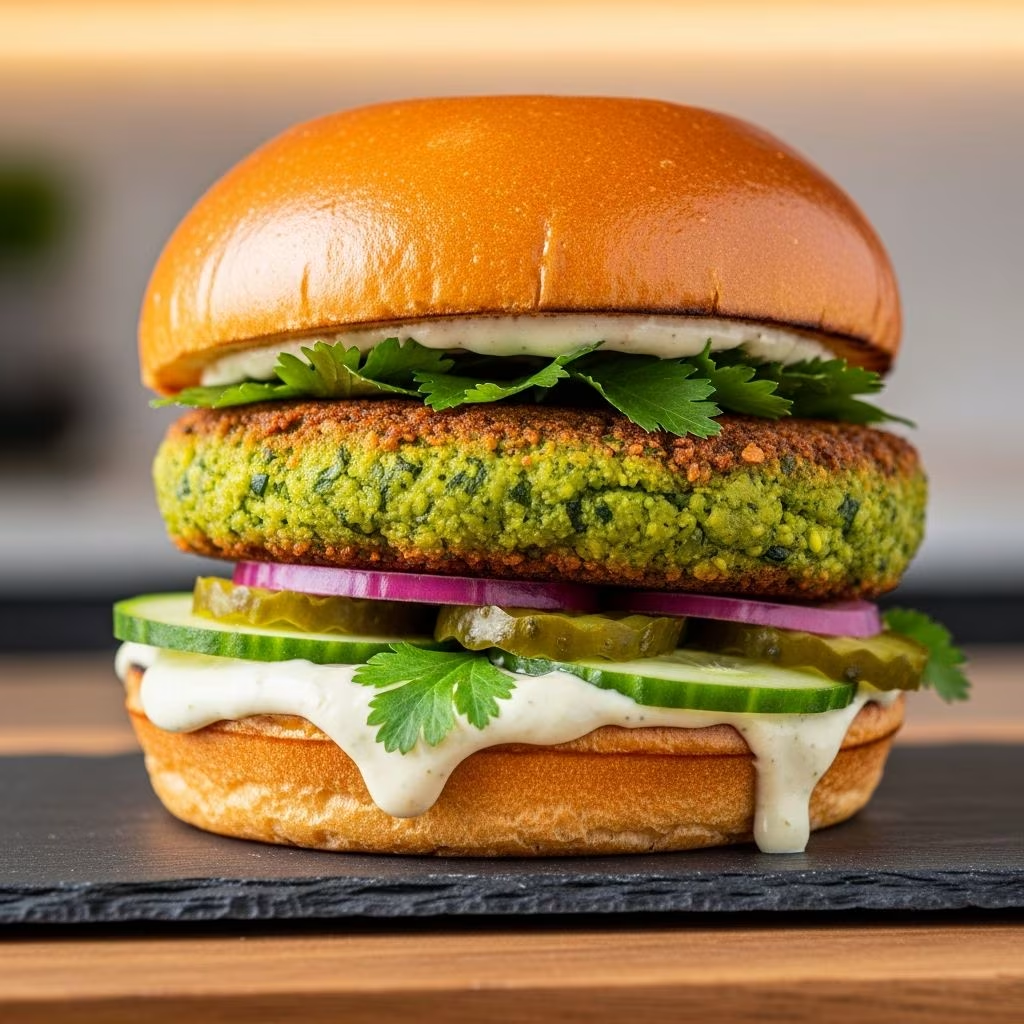
Falafel has long been celebrated as a cornerstone of Middle Eastern and Mediterranean cuisine, offering a satisfying, protein-rich alternative to traditional meat-based options. However, the contemporary culinary landscape continues to evolve, introducing innovative variations that expand the possibilities of this beloved classic. The green falafel smash burger represents one such evolution—a technique-driven preparation that combines the traditional flavors of falafel with the theatrical appeal and textural satisfaction of smash-cooked burgers. This preparation method delivers exceptional results by creating a crispy, caramelized exterior while maintaining a tender, flavorful interior.
Understanding the Foundation: What Makes Green Falafel Unique
Traditional falafel derives its characteristic appearance and earthy flavor from chickpeas or dried fava beans, but green falafel introduces a vibrant dimension by incorporating fresh herbs and leafy greens into the base mixture. The primary distinction lies not merely in color but in the complexity of flavors that these fresh components impart. Herbs such as parsley, cilantro, and dill contribute brightness and subtle aromatic qualities that distinguish green falafel from its conventional counterparts.
The incorporation of greens serves multiple culinary purposes. Beyond aesthetic appeal, these ingredients introduce nuanced flavor profiles that complement acidic, spiced, and creamy accompaniments. The ratio of greens to legumes determines both the intensity of herb flavors and the structural integrity of the finished patty, making this balance essential for successful preparation.
Essential Ingredients and Their Functions
Creating exceptional green falafel smash burgers requires careful ingredient selection and understanding each component’s contribution to the final product:
- Legume Base: Dried chickpeas serve as the structural foundation, providing protein and creating the characteristic texture when properly processed. Unlike canned chickpeas, dried varieties offer superior texture and binding capability.
- Fresh Herbs: Parsley constitutes the primary green component, though cilantro, dill, and mint add complexity. These herbs should be finely minced to distribute evenly throughout the mixture.
- Aromatics: Onion and garlic, finely minced or grated, contribute depth and pungency, while scallions add freshness and mild allium notes.
- Binding Agents: A combination of beaten egg and breadcrumbs (typically panko for texture) creates cohesion without rendering the patties dense or heavy.
- Spice Profile: Cumin, coriander, and red pepper provide warmth and complexity, while harissa paste introduces controlled heat and smokiness.
- Cheese Component: White cheddar or feta cheese adds richness and umami depth, contributing to flavor complexity and moisture retention.
- Condiments and Binders: Mayonnaise functions as both a moisture element and a carrier for additional flavor compounds.
Preparation Techniques and Methodology
Initial Mixture Development
Begin by soaking dried chickpeas overnight to achieve optimal hydration without cooking them until soft. This step is critical—fully cooked chickpeas will produce pasty, undesirable textures, whereas properly soaked chickpeas maintain structure while remaining workable. After soaking, drain thoroughly and pat dry.
Process soaked chickpeas in a food processor until they achieve a coarse, granular texture resembling wet sand. This consistency allows for better incorporation of other ingredients while maintaining textural interest in the finished patty. Avoid over-processing, which results in dense, heavy mixtures that do not achieve optimal crispness when cooked.
Combine processed chickpeas with finely minced fresh herbs, aromatics, and spices in a large mixing bowl. The distribution of these components directly influences flavor consistency across all patties. Gently fold in beaten egg and breadcrumbs until the mixture just comes together, taking care not to overwork the preparation, which develops gluten in the panko and creates undesired density.
Forming and Cooking Patties
Divide the mixture into four equal portions and gently shape each into a loose ball approximately 2 to 3 inches in diameter. Do not compact excessively at this stage. Place a cast-iron skillet over medium-high heat and allow it to reach optimal temperature—approximately 3 minutes for a preheated skillet at this setting.
Working carefully, place each falafel ball in the hot skillet and immediately apply firm, even pressure using the flat side of a spatula or burger press. This smashing technique creates direct contact between the patty and the cooking surface, promoting the Maillard reaction and developing a flavorful, crispy crust. Maintain pressure for approximately 2 to 3 minutes, allowing the exterior to develop golden-brown coloration and textural contrast.
Once the underside has achieved the desired crust, carefully flip the patty and cook the opposite side for an additional 2 to 3 minutes until both surfaces achieve uniform crispness. The interior should remain moist and tender while the exterior offers textural complexity.
Complementary Components and Assembly
Sauce and Spread Selection
The sauce layer significantly influences the overall flavor composition and textural experience of the finished burger. A harissa-infused mayonnaise provides controlled heat and complexity without overwhelming the delicate herb notes of the falafel. To prepare this sauce, combine three-quarters cup of mayonnaise with one teaspoon of harissa paste, mixing thoroughly to distribute the spice evenly.
Alternative sauce options include tahini-based preparations, which offer nutty richness and Mediterranean authenticity, or yogurt-based condiments infused with cucumber and dill for refreshing contrast. The selected sauce should complement rather than mask the falafel’s distinctive character.
Toasting and Bun Selection
Toast hamburger buns cut-side down in a dry skillet over medium heat until they achieve light golden coloration and textural crispness. This step serves multiple functions: it prevents absorption of excess moisture from the patty and sauce, creates tactile contrast, and develops subtle toasted flavors that enhance the overall composition.
Select buns with adequate structural integrity to support the weight and moisture of the filled burger without disintegrating. Brioche-style buns offer richness, while whole grain alternatives provide nutritional complexity and earthy flavor notes.
Layering and Assembly Strategy
Apply a modest layer of the harissa mayonnaise to both the bottom and top sections of the toasted bun. Position the cooked falafel patty on the bottom half. Layer complementary components including fresh lettuce, sliced tomato, thinly sliced red onion, and crumbled white cheddar or feta cheese. Crown with the top bun half, applying gentle pressure to secure all components.
The layering sequence influences moisture distribution and eating experience. Placing greens directly against the patty creates a barrier against excess moisture absorption, while positioning denser vegetables toward the outer portions ensures structural stability.
Flavor Profile Development and Customization
Spice Intensity Modification
The heat level delivered by harissa paste can be adjusted based on personal preference and anticipated audience tolerance. Beginning with three-quarters teaspoon and incrementally increasing allows for personalized calibration. Conversely, reducing harissa content and incorporating additional cooling elements such as yogurt-based sauces mitigates heat intensity for sensitive palates.
Herb Composition Variation
While parsley forms the traditional base for green falafel, experimentation with herb ratios yields interesting variations. Increasing cilantro content introduces citrus-like notes, dill addition imparts subtle sweetness, and mint inclusion contributes refreshing complexity. Maintaining the total herb volume while adjusting component ratios allows for creative expression without sacrificing structural integrity.
Cheese and Dairy Integration
Beyond white cheddar, feta cheese provides tangy brightness and traditional Mediterranean authenticity. Aged Gruyère introduces sophisticated nuttiness, while mild goat cheese offers delicate creaminess. Selecting dairy components based on intended flavor destination ensures cohesive, intentional taste profiles.
Common Challenges and Resolution Strategies
| Challenge | Likely Cause | Resolution |
|---|---|---|
| Patties crumble during cooking | Insufficient binding or overprocessed mixture | Increase egg content slightly or reduce processing time; ensure proper mixture consistency |
| Dense, heavy interior texture | Overworked mixture or cooked chickpeas | Minimize mixing and use soaked, uncooked chickpeas; process to coarse consistency only |
| Pale exterior lacking crust | Insufficient heat or inadequate pressure during smashing | Preheat skillet longer; apply firm, consistent pressure for entire cooking duration |
| Dry, unappetizing interior | Overcooking or insufficient fat content | Reduce cooking time; increase mayonnaise ratio in mixture slightly |
| Buns become soggy | Excess sauce or moisture migration | Toast buns thoroughly; apply sauce sparingly; position greens as moisture barrier |
Serving Recommendations and Accompaniments
Green falafel smash burgers pair exceptionally well with cooling side components that provide textural and flavor contrast. Crispy French fries, whether traditional or seasoned with Mediterranean spices, offer satisfying textural contrast. Tzatziki sauce, prepared from Greek yogurt, cucumber, and dill, provides cooling counterbalance to the smash burger’s inherent richness and any heat introduced by harissa.
Fresh salads composed of crisp greens, tomatoes, cucumbers, and red onions with lemon vinaigrette offer lighter accompaniment options. Roasted vegetables such as eggplant, zucchini, or bell peppers prepared with olive oil and Mediterranean seasonings provide substance without excessive heaviness.
Beverage selections should consider the burger’s flavor intensity. Citrus-forward options like lemonade or mineral water with lemon provide refreshment, while sparkling beverages cut through richness effectively. For adult contexts, light pilsner-style beers or crisp white wines complement these flavors harmoniously.
Make-Ahead Preparation and Storage Considerations
The falafel mixture can be prepared up to 24 hours in advance and stored in an airtight container in the refrigerator. This advance preparation allows flavors to meld and integration to improve. Formed patties, if intended for cooking within a few hours, can be refrigerated on parchment-lined baking sheets, facilitating efficient batch cooking.
Fully cooked falafel patties maintain quality for approximately three days when stored properly in airtight containers. Reheating can be accomplished through gentle warming in a low-temperature oven, which reestablishes crispness superior to microwave methods. Freezing cooked patties is possible; thaw in the refrigerator overnight and rewarm before serving.
Nutritional Considerations and Dietary Applications
Green falafel smash burgers deliver substantial protein content from chickpeas and eggs, making them satisfying for vegetarian and vegan-adjacent diets when egg content is adjusted accordingly. The legume base provides dietary fiber supporting digestive health. Fresh herb components contribute micronutrients and phytonutrients with potential antioxidant properties.
For individuals observing gluten-free protocols, panko can be replaced with gluten-free breadcrumb alternatives, or omitted entirely with minor adjustments to binding agent ratios. Dairy components can be eliminated or replaced with plant-based alternatives for vegan applications, though structural modifications may be necessary.
Professional Tips for Optimal Results
- Maintain skillet temperature consistency throughout cooking by allowing adequate time between batches for heat recovery.
- Use a meat thermometer if precision is desired; internal temperature should reach 165°F (74°C) for food safety.
- Prepare all components and garnishes before beginning the cooking process to ensure smooth assembly and prevent timing delays.
- Consider batch cooking for larger gatherings; this approach allows for quantity preparation while maintaining quality consistency.
- Taste the mixture prior to cooking to allow final seasoning adjustments if necessary.
- Invest in a quality smash tool or spatula; proper pressure distribution directly influences final texture and appearance.
Frequently Asked Questions
Can canned chickpeas be substituted for dried chickpeas?
While canned chickpeas offer convenience, dried soaked chickpeas produce superior texture and structural integrity in smash burger applications. Canned chickpeas tend toward mushiness when processed, resulting in dense, undesirable textures. If time constraints necessitate canned use, drain thoroughly, pat completely dry, and reduce processing time to coarse consistency.
What is the optimal texture for the falafel mixture?
The mixture should resemble coarse sand with visible herb pieces and chickpea particles. It should hold together when pressed but should not appear uniform or paste-like. This consistency allows moisture distribution while maintaining the discrete texture that distinguishes green falafel from related preparations.
How can heat intensity be controlled for mixed audiences?
Prepare the base mixture without harissa, adding it only to individual portions of mayonnaise for those preferring spice. This allows simultaneous service without compromising anyone’s dining experience. Alternatively, serve harissa mayo on the side, permitting individual sauce application.
Can the recipe be scaled for large gatherings?
Yes, ingredient ratios scale proportionally. Prepare the full-batch mixture and form additional patties as needed. Cook in sequential batches, allowing skillet temperature recovery between groups. Having multiple skilled hands in the kitchen significantly improves efficiency and consistency.
What distinguishes this preparation from traditional falafel sandwiches?
The smashing technique creates a dramatically different texture profile. Traditional fried falafel forms hollow centers with crispy exteriors, whereas smashed preparation yields uniformly dense, crispy patties with no hollow spaces. The cooking method also differs significantly, employing cast-iron searing rather than deep frying, resulting in less oil absorption and distinct flavor development.
References
- Legume Production and Nutritional Composition — Food and Agriculture Organization of the United Nations. 2023. https://www.fao.org/
- Culinary Techniques for Vegetable-Based Protein Preparations — Institute of Culinary Education. 2024. https://www.iceculinary.com/
- Mediterranean Herbs: Cultivation and Culinary Application — University of California Cooperative Extension. 2023. https://www.ucanr.edu/
- Food Safety Standards for Plant-Based Preparations — U.S. Food and Drug Administration. 2024. https://www.fda.gov/
- Spice Functionality and Heat Compound Analysis — Spice Board of India. 2023. https://indianspices.com/