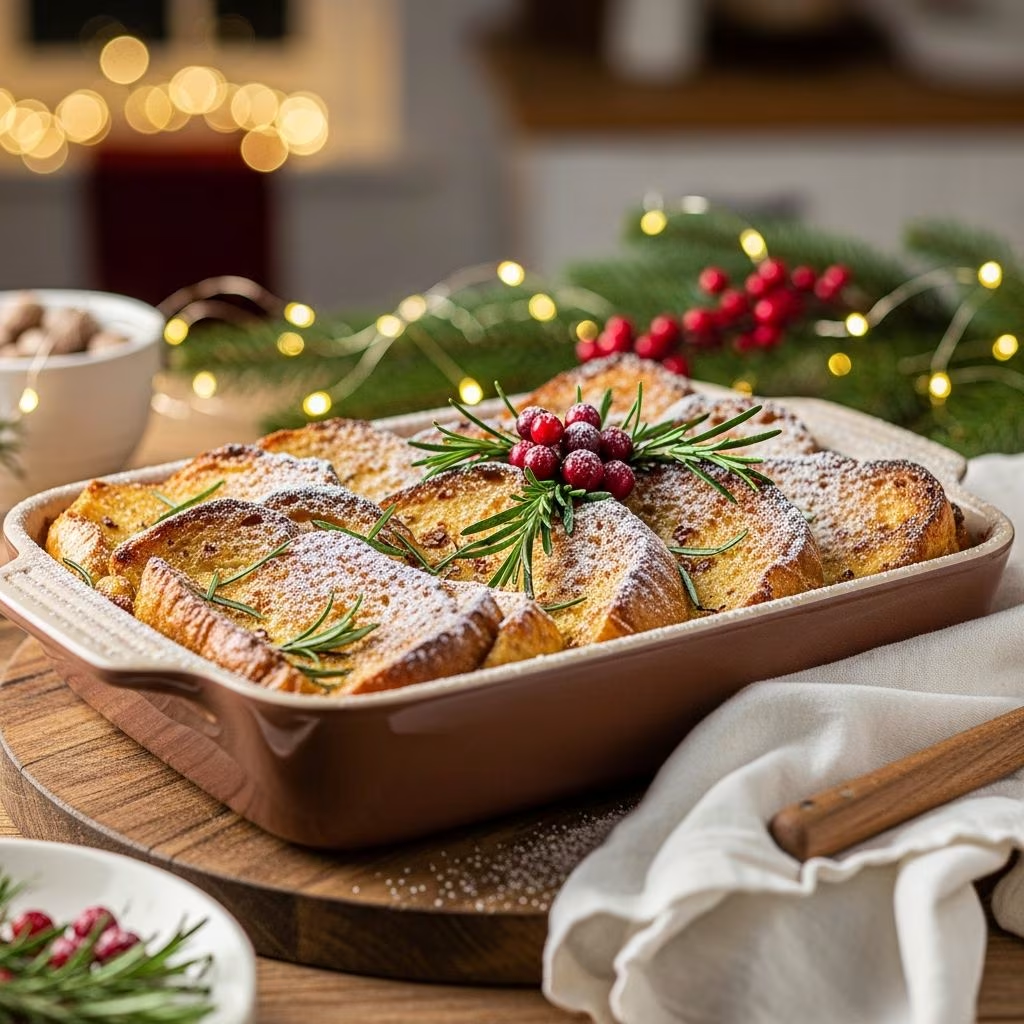
Holiday mornings demand a special touch, yet busy hosts rarely have time for elaborate breakfast preparations. An overnight eggnog French toast casserole bridges this gap perfectly, combining sophisticated flavors with genuine convenience. This make-ahead dish transforms simple ingredients into a showstopping breakfast that tastes like you spent hours in the kitchen, when in reality most of the work happens the night before.
The beauty of this casserole lies in its flexibility and advance-prep nature. You assemble everything on Christmas Eve or any convenient evening, refrigerate it overnight, and simply pop it into the oven the next morning. The result is a golden, custard-soaked bread creation with warming spices and rich eggnog flavor that immediately signals celebration and comfort.
Understanding the Core Components
A successful eggnog French toast casserole requires understanding how each ingredient contributes to the final dish. The foundation consists of quality bread, a custard base enriched with eggnog, and strategic layering that ensures proper texture throughout.
Selecting the Right Bread
Bread choice significantly impacts both texture and appearance. Challah bread offers a slightly sweet, rich crumb that pairs beautifully with eggnog’s creamy spice profile. Alternatively, brioche or a sturdy French bread work excellently. The ideal bread has enough structural integrity to soak up the custard without becoming mushy, yet enough richness to complement the holiday flavors.
Cut your chosen bread into thick slices or cubes depending on your presentation preference. Thicker pieces maintain their identity within the casserole, creating distinct layers, while cubes blend more seamlessly into a unified texture. Most recipes call for approximately one loaf, yielding enough bread to fill a standard 9-by-13-inch baking dish adequately.
The Eggnog Custard Base
The custard represents the dish’s soul. Combining eggs, prepared eggnog, brown sugar, and vanilla extract creates a rich mixture that transforms bread into something luxurious. Traditional recipes typically use six to eight large eggs with two cups of prepared eggnog, adjusting the ratio based on bread volume and desired custard density.
Brown sugar dissolves seamlessly into the liquid mixture while adding subtle molasses notes that enhance the eggnog’s natural caramel undertones. Vanilla extract rounds out the flavor profile, while warming spices like cinnamon and nutmeg echo the seasonal character of eggnog itself.
Optional Flavor Enhancements
While the classic preparation is magnificent, creative variations expand possibilities. Some recipes incorporate bourbon or rum flavoring to intensify the holiday essence. Others add heavy cream to the custard mixture, increasing richness and ensuring proper texture. Pumpkin pie spice offers an alternative to individual spices, combining cinnamon, nutmeg, ginger, and clove in one ingredient.
Step-by-Step Assembly Process
Proper assembly ensures even custard distribution and optimal texture development during overnight refrigeration.
Preparing Your Baking Vessel
Select a 9-by-13-inch baking dish or two 8-by-8-inch dishes for even heat distribution. Lightly grease the chosen vessel with softened butter or nonstick cooking spray, preventing the finished casserole from sticking while maintaining crispy edges.
Creating a Syrup Foundation
Some recipes create a brown sugar syrup layer that caramelizes during baking, creating a luxurious sauce beneath the bread. To prepare this optional element, melt butter over medium heat and stir in packed brown sugar with maple syrup. Allow the mixture to reach a gentle boil, then carefully pour into your prepared baking dish, creating an even layer across the bottom.
Arranging the Bread
Add bread pieces to your prepared dish, creating a single layer that covers the bottom completely. Arrange slices in slightly overlapping rows or distribute cubes evenly. Lightly season the bread with ground cinnamon and nutmeg, allowing these spices to penetrate during overnight soaking.
Preparing and Pouring the Custard
In a large mixing bowl, whisk together eggs thoroughly, then blend in the eggnog, brown sugar, and vanilla extract until completely smooth. Pour this custard mixture slowly and carefully over the bread, ensuring every piece receives adequate coating. Press gently on the bread to submerge it slightly, allowing maximum custard absorption.
Overnight Refrigeration
Cover your assembled casserole tightly with aluminum foil or plastic wrap. Refrigerate for a minimum of eight hours, though overnight refrigeration—typically twelve to sixteen hours—produces superior results. Extended soaking allows bread to absorb custard gradually, creating a uniform, creamy texture throughout rather than crispy edges with undersoaked centers.
Baking Instructions and Techniques
Morning preparation requires attention to temperature and timing for optimal results.
Initial Low-Temperature Baking
Remove your casserole from the refrigerator and allow it to sit at room temperature for approximately fifteen minutes while preheating your oven to 325°F. This gradual temperature transition prevents the center from remaining cold while edges cook. Place the foil-covered casserole in the preheated oven and bake for forty minutes.
The Temperature Adjustment Phase
After forty minutes, increase the oven temperature to 375°F and remove the aluminum foil. Continue baking uncovered for an additional five to ten minutes, until the top achieves a golden-brown color and a knife inserted into the center comes out clean or mostly dry.
This two-stage baking method ensures the custard sets properly throughout while creating an attractive golden crust without overcooking the top. The lower initial temperature allows gentle, even cooking, while the higher final temperature creates appealing browning and slight crispness on the surface.
Serving Suggestions and Accompaniments
The casserole stands beautifully on its own, requiring no additional syrup. However, thoughtful accompaniments elevate the presentation and provide complementary flavors.
- Fresh berries introduce tartness that contrasts with the sweet eggnog flavor
- Confectioners sugar dusting adds visual elegance and subtle sweetness
- Maple syrup provides traditional breakfast comfort for those who prefer it
- Citrus halves, such as grapefruit, offer bright acidity that balances richness
- Whipped cream provides luxurious indulgence and cooling contrast
- Fresh mint garnish adds visual appeal and subtle herbaceous notes
Allow the casserole to rest for five to ten minutes after removing from the oven. This brief resting period allows the custard to set slightly, making serving easier and preventing excessive spillage while maintaining warm, creamy texture.
Storage and Reheating Guidelines
Refrigerating Leftovers
Transfer remaining casserole to an airtight container and refrigerate for up to four days. The dish maintains quality throughout this period, though the custard becomes increasingly firm as flavors continue melding.
Freezing for Extended Storage
Cut casserole into individual portions and wrap each piece tightly with plastic wrap, then place in a freezer-safe container. Properly wrapped servings remain quality for up to one month. Thaw overnight in the refrigerator before reheating.
Restoring Quality Through Reheating
Preheat your oven to 350°F and reheat covered casserole for approximately fifteen minutes until warmed through. Covering prevents drying while allowing gentle, even heat distribution. The reheated casserole regains much of its fresh-baked appeal, with slightly firmer custard but maintained flavor complexity.
Ingredient Variations and Customizations
The basic formula adapts easily to personal preferences and dietary considerations. Some variations include adding heavy cream to increase richness, substituting challah with brioche for different crumb texture, or incorporating bourbon and rum flavoring for sophisticated depth. Pumpkin pie spice offers an autumn-inspired alternative to individual spices, while adding extracts like almond or maple introduce subtle background notes.
Common Questions Answered
Can I prepare this casserole two days ahead?
Yes, though refrigerating longer than twenty-four hours may cause bread to become excessively soft. If preparing two days ahead, refrigerate the assembled casserole for eight to twelve hours, then freeze it. Thaw overnight before baking, which typically adds ten to fifteen minutes to the baking time.
What if I don’t have eggnog available?
While eggnog creates the distinctive holiday character, heavy cream mixed with milk, enhanced with nutmeg and vanilla, provides an acceptable substitute. The result differs from the original but remains delicious.
Can I make this without overnight refrigeration?
While possible, overnight soaking produces superior texture and flavor integration. If necessary, refrigerate for a minimum of four to six hours, though results won’t match the full overnight version.
How many servings does this recipe yield?
A standard 9-by-13-inch casserole typically serves eight to ten people, depending on portion size. Individual appetite and accompanying dishes influence exact servings.
Is this recipe suitable for dairy-free diets?
Traditional preparation relies heavily on dairy through eggnog and butter. Dairy-free eggnog alternatives exist but may produce different results. Consulting dairy-free recipes specifically designed with alternative ingredients yields better outcomes.
Why This Dish Works for Holiday Entertaining
Overnight eggnog French toast casserole represents the intersection of elegance and practicality. It eliminates morning stress by shifting preparation to the previous evening, allowing hosts to enjoy breakfast rather than rush through kitchen duties. The sophisticated flavor profile—enhanced by warming spices and creamy eggnog—impresses guests while the simple ingredient list remains accessible to home cooks of various skill levels.
This casserole accommodates varying guest preferences through simple customization. Those preferring less sweetness benefit from tart fruit accompaniments, while traditionalists appreciate classic maple syrup. The make-ahead format enables hosts to focus on hospitality, conversation, and enjoying their guests’ company rather than anxiously monitoring stovetop preparations.
References
- Overnight Eggnog French Toast Casserole — FIVEheartHOME. Accessed April 2026. https://www.fivehearthome.com/overnight-eggnog-french-toast-casserole/
- Overnight Eggnog French Toast — Farmgirl Gourmet. Accessed April 2026. https://www.farmgirlgourmet.com/overnight-eggnog-french-toast/
- Overnight Eggnog French Toast — Our Best Bites. Accessed April 2026. https://ourbestbites.com/overnight-egg-nog-french-toast/
- Overnight Eggnog French Toast — Living Lou. Accessed April 2026. https://www.livinglou.com/overnight-eggnog-french-toast/
- Overnight Eggnog French Toast — Baker by Nature. Accessed April 2026. https://bakerbynature.com/overnight-eggnog-french-toast/