Brining chicken is a game-changing technique that infuses meat with moisture and flavor, ensuring tender, juicy results no matter the cooking method. By soaking poultry in a saltwater solution, often enhanced with sugars, herbs, and aromatics, you create a balanced environment that allows proteins to retain liquids during high-heat cooking. This guide dives deep into the essentials of chicken brining, from basic recipes to advanced variations, precise timing, and foolproof cooking applications.
Why Brine Chicken? The Science Behind Juicier Meat
At its core, brining works through osmosis and denaturation. Salt in the brine draws moisture into the chicken cells while dissolving muscle proteins, creating space for the liquid to be trapped. Sugar aids in caramelization for better browning, and aromatics impart subtle flavors. Studies from food science resources confirm that brined chicken can retain up to 20% more moisture compared to unbrined, reducing the risk of dry, tough results common in roasting or grilling.
Benefits extend beyond texture: brining seasons the meat evenly, enhances skin crispiness when roasted, and provides a buffer against overcooking. It’s particularly valuable for lean cuts like breasts, which dry out quickly.
Essential Ingredients for a Perfect Brine
A good brine starts with the right balance. Water forms the base, while salt is non-negotiable for moisture retention. Here’s a breakdown of core and optional components:
- Kosher salt: Preferred for its coarse texture and pure flavor; use about 1/4 to 1/2 cup per 4-8 cups water. Avoid table salt unless adjusting quantity downward due to finer grains.
- Sugar or honey: 2-4 tablespoons per 4 cups water promotes even browning and balances saltiness.
- Water: Cold, filtered for purity; 4-8 cups suffices for most home batches.
- Aromatics: Bay leaves, garlic cloves, peppercorns, fresh herbs like thyme, rosemary, or parsley for depth.
- Acid boosters: Lemon, lime quarters, or soy sauce for brightness and umami.
Proportions matter: aim for a 5-6% salinity solution, roughly 1/4 cup kosher salt per quart of water.
Step-by-Step: How to Make and Use Chicken Brine
Creating brine is straightforward and takes under 15 minutes of active time. Follow these steps for success:
- Heat 1-2 cups water in a pot. Stir in salt and sugar until fully dissolved.
- Add aromatics: smashed garlic, herbs, citrus, peppercorns. Simmer 1-2 minutes to release flavors.
- Remove from heat. Stir in remaining cold water (and ice if accelerating cooling) to drop temperature below 40°F.
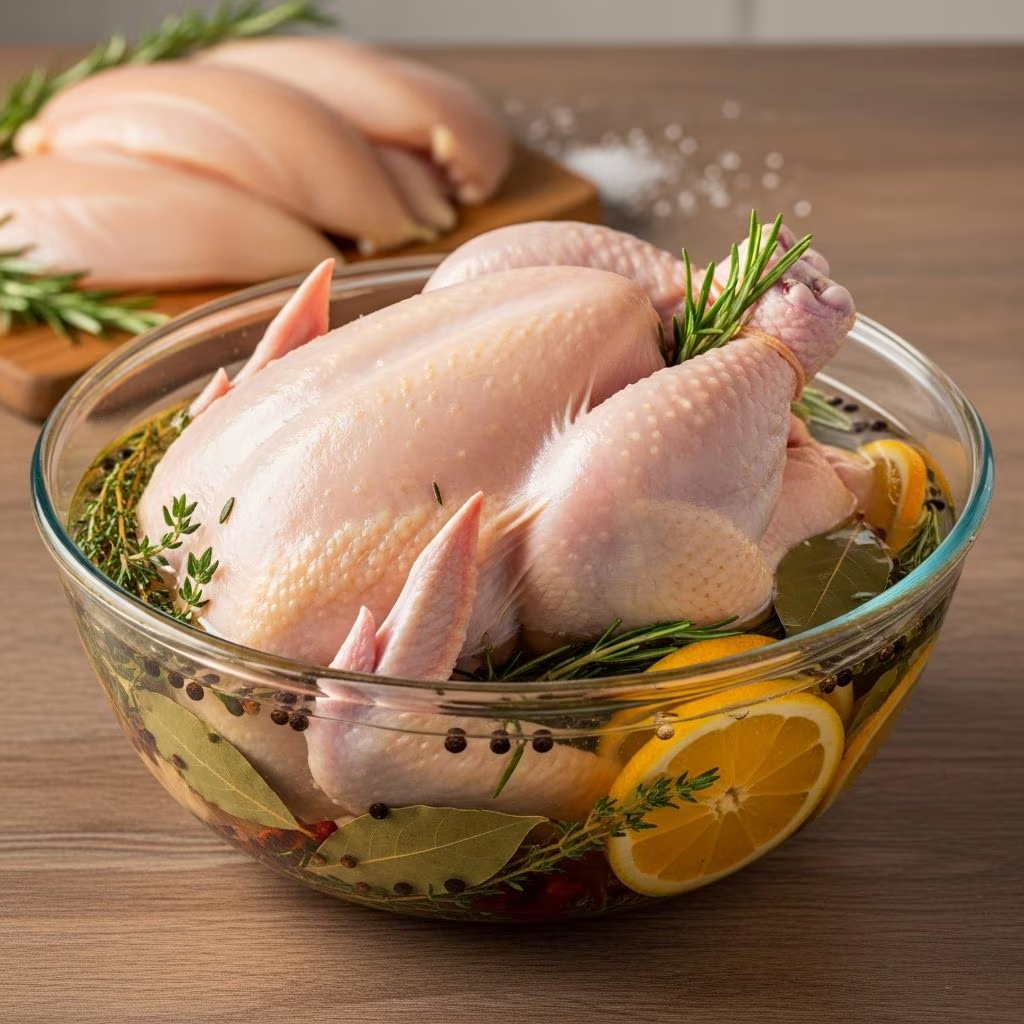
- Submerge chicken fully in a non-reactive container like glass, plastic, or stainless steel. Use a plate to weigh it down if needed.
- Refrigerate according to cut-specific times (detailed below). Rinse and pat dry before cooking.
Always chill brine completely before adding raw chicken to prevent bacterial growth.
Brining Times by Chicken Cut
Timing prevents mushiness or under-seasoning. Use this table as your reference:
| Chicken Cut | Minimum Time | Maximum Time | Notes |
|---|---|---|---|
| Boneless breasts | 30 minutes | 2 hours | Ideal for quick grilling; avoids over-salting. |
| Bone-in pieces (thighs, legs) | 1 hour | 4 hours | Enhances flavor penetration through bone. |
| Whole chicken (3-5 lbs) | 4 hours | 12-24 hours | Flip halfway for even brining; spatchcock for faster results. |
| Wings or tenders | 30 minutes | 1 hour | Perfect for frying or smoking. |
Never exceed 24 hours to avoid overly salty or mealy texture.
Basic Chicken Brine Recipe for Beginners
This simple formula yields enough for 4 breasts or one whole bird. Prep: 10 minutes. Brine: 30 min-12 hours.
- 4 cups cold water
- 1/4 cup kosher salt
- 2 tbsp sugar or honey
- Optional: 2 garlic cloves (smashed), 1 bay leaf, 1 tsp peppercorns
Instructions mirror the step-by-step above. Dissolve salt/sugar in warm water, cool fully, submerge chicken, and refrigerate. Rinse post-brine for balanced seasoning.
Flavor-Packed Variations to Try
Elevate your brine with these themed recipes:
Citrus-Herb Roast Brine
Ideal for oven roasting. Includes lemons, thyme, rosemary, garlic, and bay leaves in 8 cups water with 1/2 cup salt and 1/4 cup honey. Simmer aromatics, cool, brine whole chicken 8-24 hours. Pat dry, rub with herb butter, roast at 425°F for crispy skin.
Umami Grilling Brine
For BBQ mastery: Add soy sauce, lime, parsley, and peppercorns to base recipe (8 cups water, 1/2 cup salt, 2 tbsp honey). Brine bone-in pieces 1-4 hours. Grill over medium heat for juicy, charred results.
Sweet-Spicy Fry Brine
Brown sugar, garlic/onion powders, black pepper, and poultry seasoning in 1 quart water + 1 quart ice water, 1 cup each salt and sugar. Brine wings 1 hour, then fry for extra-crispy exteriors.
Cooking Brined Chicken: Methods and Tips
Roasting
Preheat to 415-425°F. Spatchcock for even cooking. Brush with butter, season lightly (brine provides most flavor), roast 45-60 minutes until 165°F internal. Rest 10 minutes.
Grilling
Medium heat, indirect zone. Oil grates, cook skin-side down first for sear, then flip. Target 165°F.
Frying or Air Frying
Pat extra dry for crispiness. Dredge in seasoned flour. Fry at 350°F or air fry 380°F.
Post-brine: Minimal additional salt; focus on pepper and fresh herbs. Dry skin thoroughly for superior crisp.
Common Mistakes and How to Avoid Them
- Not cooling brine: Risks foodborne illness; always chill first.
- Over-brining: Leads to mush; stick to time guidelines.
- Wrong salt: Table salt oversalts; measure kosher precisely.
- Skipping rinse: Results in overly salty meat; rinse and dry always.
- Reactive containers: Avoid aluminum; use non-metallic.
Storage and Make-Ahead
Brine up to 2 days ahead, stored cold. Brined chicken keeps 1-2 days in fridge pre-cooking. Freeze unbrined chicken; brine after thawing.
Nutrition Snapshot
Brining adds negligible calories (salt/sugar minimal), but enhances natural flavors, potentially reducing need for added fats. Per 4oz serving: ~140 calories, 25g protein, boosted moisture retention.
Frequently Asked Questions (FAQs)
Can I brine frozen chicken?
No; thaw fully first for even absorption.
Is brine the same as marinade?
No—brine focuses on salt for moisture; marinades emphasize acid/oil for flavor.
What if I don’t have kosher salt?
Use 2 tbsp table salt per 1/4 cup kosher equivalent.
Does brining work for turkey?
Yes; scale up (1 cup salt per gallon water) and brine 12-24 hours.
Can I reuse brine?
No; discard after one use due to contamination risks.
Advanced Tips from Seasoned Cooks
For ultra-crispy skin, air-dry brined chicken uncovered in fridge 4-24 hours post-rinse. Experiment with dry brines (salt rub, no water) for smaller cuts—apply 1 tsp kosher salt per lb, refrigerate 1-24 hours. Pair brined chicken with glazes like honey-mustard during final cook for shine.
Scaling for crowds: Double liquid, maintain salt ratio. Test salinity by floating an egg—it should hover midway.
References
- Chicken Brine Recipe | Juicy Every Time — Frato’s Catering. 2023. https://fratoscatering.com/juicy-chicken-recipe-hack/
- Chicken Brine Recipe (For The Juiciest Chicken!) — Hungry Huy. 2022-10-15. https://www.hungryhuy.com/chicken-brine/
- Chicken Brine Recipe — Dinner at the Zoo. 2023. https://www.dinneratthezoo.com/chicken-brine-recipe/
- Perfecting Juicy Chicken: The Ultimate Brine for Grilling Chicken — BBQ Pro Shop. 2024. https://www.bbqproshop.com/recipes/brine-for-grilling-chicken/
- Chicken Brine – for the juiciest roast chicken of your life! — RecipeTin Eats. 2021-05-20. https://www.recipetineats.com/chicken-brine-recipe/