When you want to impress guests or treat yourself to something special on a weeknight, few dishes strike the perfect balance between sophistication and simplicity quite like champagne chicken. This classic preparation transforms humble chicken breasts into something truly memorable through the magic of sparkling wine, earthy mushrooms, and a velvety cream sauce. The beauty of this dish lies not just in its refined flavors but in its surprising accessibility—it comes together in approximately 30 minutes with straightforward cooking techniques that don’t require professional culinary training.
The appeal of champagne chicken extends beyond its taste. The aroma that fills your kitchen as the sparkling wine reduces and mingles with cream creates an atmosphere of celebration, even on an ordinary Tuesday evening. Whether you’re planning a romantic dinner for two, hosting a small gathering of friends, or simply seeking to elevate your dinner routine, this versatile recipe adapts beautifully to your needs and preferences.
Understanding the Core Components
The success of champagne chicken rests upon understanding how each ingredient contributes to the final dish. Rather than viewing this as a complex recipe, think of it as a simple formula where quality ingredients and proper technique create something greater than the sum of their parts.
The Protein Foundation
Boneless, skinless chicken breasts serve as the canvas for this elegant sauce. The key to tender, juicy chicken lies in proper thickness. Most recipes call for horizontally slicing thicker breasts to create thinner, more uniform pieces that cook evenly and quickly. This preparation technique, known as butterflying or pounding, ensures that your chicken reaches the perfect doneness without drying out. The goal is achieving golden-brown exterior surfaces through quick searing while maintaining a moist interior.
The Star Ingredient: Sparkling Wine
The champagne or sparkling wine serves multiple purposes in this dish. Beyond adding flavor, the bubbles and acidity cut through the richness of the cream, preventing the sauce from feeling heavy. When you pour the wine into the hot pan, it immediately begins reducing, concentrating its flavor while cooking off excess alcohol. This reduction phase is crucial—simmering the champagne until it reaches approximately half its original volume allows the wine to mellow while intensifying its characteristic brightness. The choice between true champagne and other sparkling wines like prosecco or brut sparkling wine offers flexibility based on your budget and preferences.
Mushroom Complexity
Mushrooms contribute essential umami depth that prevents the dish from tasting one-dimensional. Baby portobello mushrooms, cremini mushrooms, or button mushrooms all work effectively, though many chefs prefer cremini for their more substantial flavor. The cooking process for mushrooms is equally important as the selection—sautéing them until they develop a golden-brown color creates depth and prevents them from becoming waterlogged in the sauce. Some recipes sauté mushrooms separately before combining them, while others cook them alongside aromatics; both approaches yield excellent results.
Aromatics and Seasoning
Shallots and garlic form the flavor foundation that supports the entire dish. Shallots provide sweetness and complexity that regular onions cannot match, while garlic adds pungent, savory notes. Fresh thyme brings an herbaceous quality that complements sparkling wine beautifully. Many recipes include cornstarch or flour to help thicken the sauce while creating a light coating on the chicken before searing, which also builds fond—the browned bits in the pan that deglaze into the sauce and add tremendous flavor.
The Cream Element
Heavy cream transforms the reduced wine into a luxurious sauce with silky texture. The fat in the cream rounds out flavors and provides richness, while the protein in cream helps stabilize the sauce. Some recipes use whole milk with cornstarch as a lighter alternative that still achieves satisfying results. The cream is always added after the champagne has reduced to prevent curdling and to ensure proper sauce consistency.
Technique Breakdown: Step-by-Step Process
Understanding the reasoning behind each cooking step helps you execute this dish successfully and adapt it confidently when needed.
Preparation Phase
Begin by gathering all ingredients and equipment—this mise en place approach prevents scrambling mid-cooking. Slice mushrooms to uniform thickness to ensure even cooking. Mince shallots and garlic finely so they distribute throughout the sauce. If preparing chicken breasts by butterflying them, work carefully to create even thickness. Season your chicken appropriately—salt and pepper applied just before cooking prevent the proteins from becoming tough through osmosis.
Searing the Chicken
Heat oil or butter in your skillet over medium-high heat until it shimmers but doesn’t smoke. Searing chicken at proper temperature creates a golden crust through the Maillard reaction, a chemical process that generates complex, savory flavors impossible to achieve through gentle cooking. Each side should sear for approximately 4-6 minutes, depending on thickness. The chicken will continue cooking later in the cream sauce, so achieving complete doneness at this stage isn’t necessary—this actually helps prevent overcooking. Remove the seared chicken to a plate and set aside.
Building the Sauce Foundation
In the same pan, add mushrooms and aromatics, scraping up the fond from the chicken. This fond contains concentrated flavor compounds that would otherwise be wasted. Cook mushrooms until they release their moisture and begin developing golden color. Add garlic during the final minute to prevent burning, which creates bitter flavors. The timing here is important—garlic only requires about a minute of cooking to release its aromatic compounds.
Deglazing and Reducing
Pour in your champagne or sparkling wine, using a wooden spoon to scrape the pan bottom and incorporate all the flavorful browned bits. This deglazing process is essential for sauce development. Allow the liquid to reach a gentle boil, then reduce heat to a simmer. The goal is reducing the volume by approximately 50 percent—watch for the liquid level to drop noticeably. This reduction concentrates flavors and cooks off the sharp edge of raw alcohol, leaving behind the wine’s pleasant characteristics.
Final Sauce Assembly
Add heavy cream, stirring constantly until the sauce reaches desired consistency. Simmer gently for a few minutes, then return the chicken to the pan. The final simmer, typically 5-10 minutes, allows all components to meld while ensuring the chicken heats through completely. The finished sauce should coat a spoon lightly and flow smoothly over the chicken and mushrooms.
Essential Ingredient Ratios and Variations
| Serving Size | Chicken Breasts | Champagne | Heavy Cream | Mushrooms |
|---|---|---|---|---|
| 2 servings | 2 breasts | 1/2 cup | 1/3 cup | 8 oz |
| 4 servings | 4 breasts | 1 cup | 2/3 cup | 1 lb |
| 6 servings | 6 breasts | 1.5 cups | 1 cup | 1.5 lbs |
These ratios provide a starting framework. The sauce should be rich but not heavy, with a balance between wine acidity and cream richness. If your sauce appears too thin, allow it to simmer longer to reduce, or whisk a small amount of cornstarch with cold water and stir it in. If the sauce seems overly thick, thin it with additional chicken stock or cream.
Serving Suggestions and Accompaniments
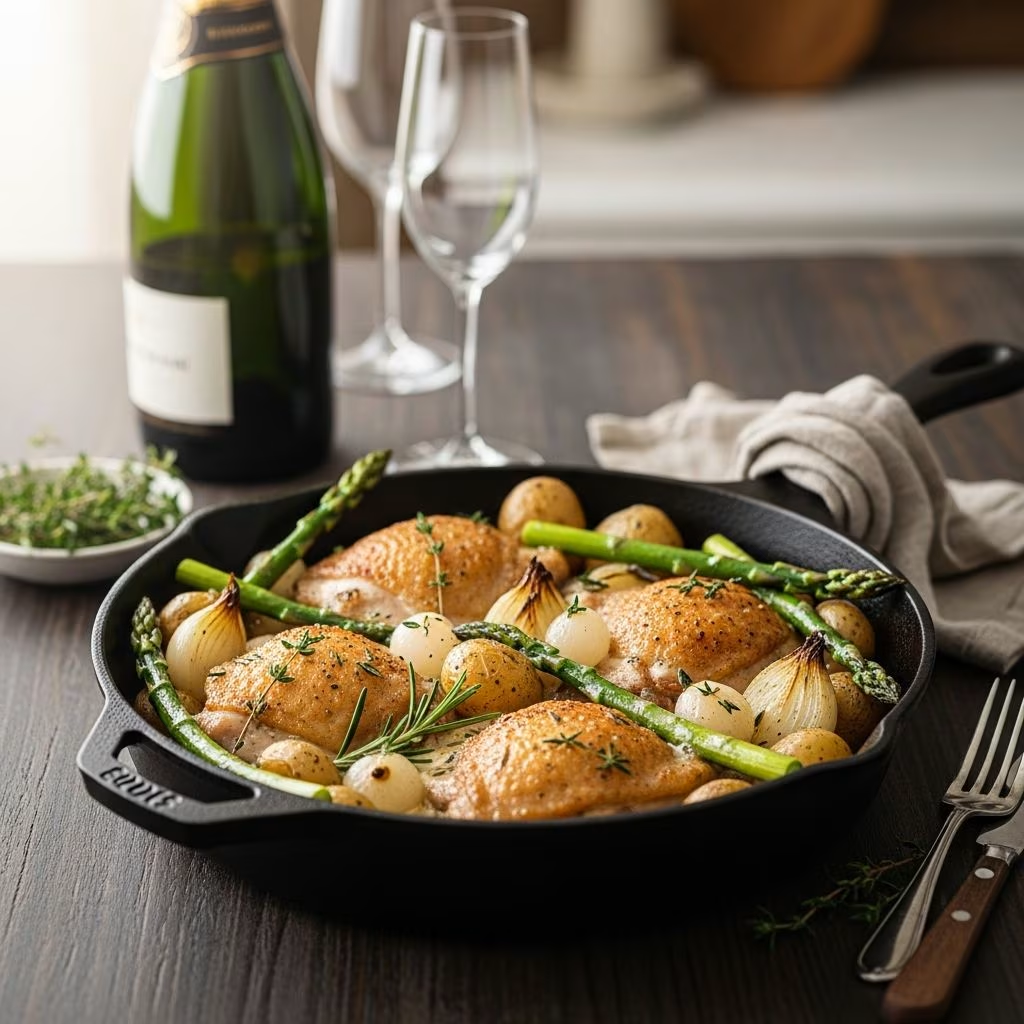
Champagne chicken’s elegant character pairs beautifully with several side dishes. Light starches work particularly well—egg noodles, rice, or small potatoes absorb the sauce without overwhelming the palate. Considering the richness of the cream sauce, vegetable sides should be fresh and bright: asparagus, roasted Brussels sprouts, or a simple green salad with lemon vinaigrette provide pleasant contrast. Fresh parsley garnish adds visual appeal and herbaceous freshness.
The wine pairing question arises naturally when champagne chicken is on the menu. Continuing with sparkling wine or choosing a crisp dry white wine like Sauvignon Blanc or Pinot Grigio complements the dish beautifully. The acidity in these wines cuts through the cream while echoing the flavors already present in the dish.
Frequently Asked Questions
Can I substitute champagne with other wines?
Absolutely. Brut sparkling wine, prosecco, and dry white wines like Pinot Grigio work effectively. Avoid sweet wines or wines with heavy oak aging, as they can overpower the dish. The wine should be something you would enjoy drinking, as its character becomes a significant flavor component.
What if I don’t have heavy cream?
Whole milk mixed with cornstarch creates a lighter sauce with similar appearance and reasonable texture. Half-and-half offers a middle ground if available. For dairy-free preparations, coconut cream or cashew cream provide richness, though they alter the flavor profile slightly.
How do I prevent the sauce from breaking or curdling?
Keep temperatures moderate—avoid boiling the cream directly. Add cream after reducing the wine, and stir gently rather than vigorously. If you notice any separation, remove the pan from heat and whisk constantly while adding cream slowly.
Can this dish be made ahead?
The sauce can be prepared several hours in advance and refrigerated. Reheat gently over low heat before serving. Cook the chicken fresh just before serving for optimal texture, or cook it ahead and warm it in the reheated sauce for 5-10 minutes.
What type of mushrooms work best?
Baby portobello, cremini, and button mushrooms all perform well. Mixed mushroom combinations create more complex flavor. Avoid delicate mushrooms like shiitake or oyster, which can become mushy. Slice mushrooms evenly for consistent cooking.
Mastering Execution and Troubleshooting
Common challenges in preparing champagne chicken typically relate to timing and temperature management. Overcooked chicken results from cooking too long during the initial sear or leaving chicken in the simmering sauce excessively. Remember that the final simmer only needs 5-7 minutes to heat the chicken through if it was already mostly cooked during searing.
Sauce that’s too thin usually indicates insufficient reduction of the champagne before adding cream. Conversely, sauce that’s too thick often means too much cornstarch or flour was used in the coating. Adjust future attempts based on these observations.
The temperature of your ingredients matters more than you might expect. Room-temperature cream added to boiling liquid risks breaking, while very cold cream can seize when introduced to hot pan contents. This is why gradually incorporating cream while stirring constantly prevents texture problems.
Why This Dish Deserves a Place in Your Rotation
Champagne chicken represents an intersection of accessibility and elegance that few recipes achieve. It requires no specialized equipment beyond a skillet, no advanced techniques beyond searing and simmering, yet it produces a dish that feels genuinely special. The 30-minute cooking time fits perfectly into busy weeknight schedules while the sophisticated flavors satisfy anyone seeking restaurant-quality dinner at home.
The formula adapts readily to ingredient variations based on what you have available or preferences you hold. Whether you choose different mushroom varieties, adjust cream ratios, or select alternative wines, the core technique remains sound and forgiving. This flexibility means you can build confidence in the dish through multiple iterations, gradually understanding how each variable influences the final result.
For home cooks seeking to expand their repertoire beyond basic chicken preparations, champagne chicken serves as an excellent gateway to understanding sauce-building fundamentals. The lessons learned here—about deglazing, reducing, and emulsifying—apply across countless other dishes in classical and contemporary cooking.
References
- Creamy Champagne Chicken — Cafe Delites. Accessed April 2026. https://cafedelites.com/creamy-champagne-chicken-recipe/
- Creamy Champagne Chicken Recipe — Georges Farmers Market. Accessed April 2026. https://georgesfarms.com/recipes/creamy-champagne-chicken/
- Creamy Champagne Chicken: Easy & Elegant — Fresh Coast Eats. Accessed April 2026. https://freshcoasteats.com/champagne-chicken/
- Champagne Chicken: 30-Minute Creamy Dinner — The Endless Meal. Accessed April 2026. https://www.theendlessmeal.com/champagne-chicken/
- Chicken au Champagne — French Women Don’t Get Fat. Accessed April 2026. https://frenchwomendontgetfat.com/recipe/chicken-au-champagne/