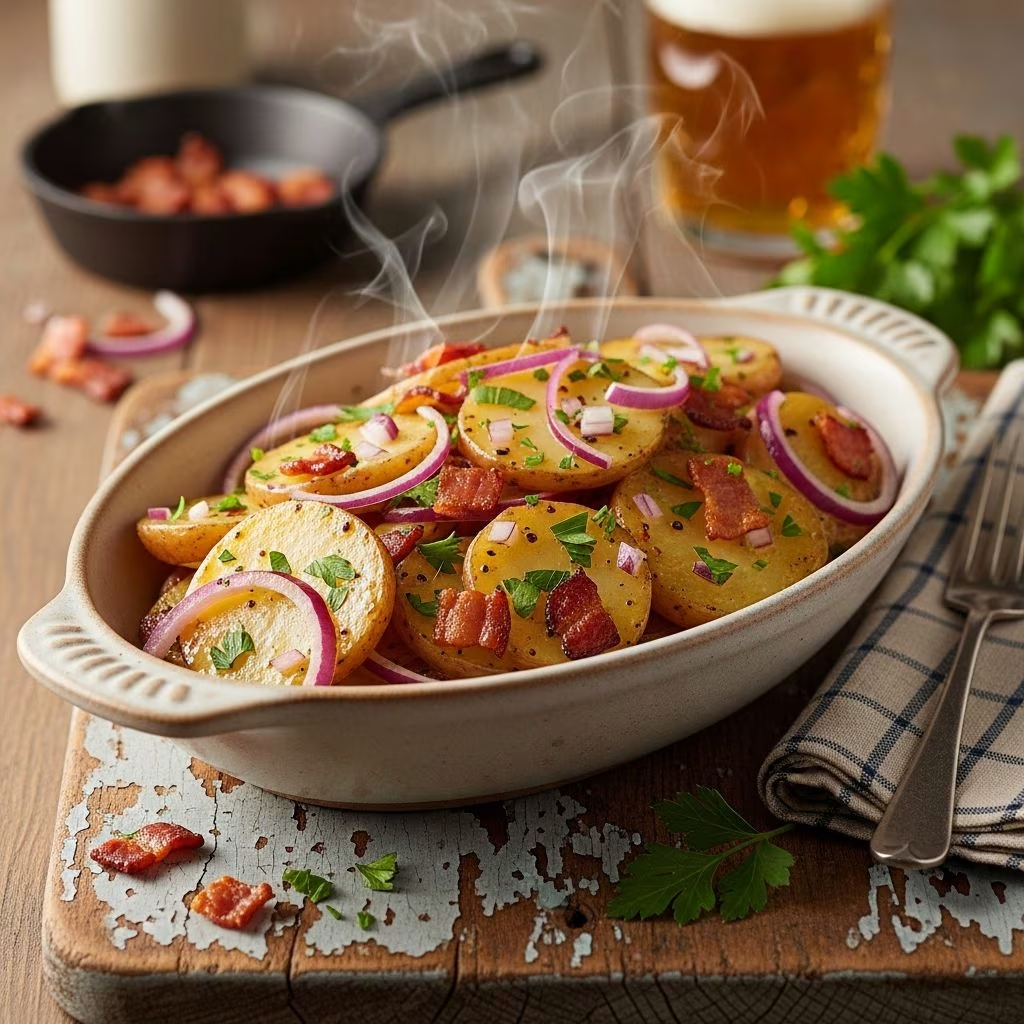
German potato salad, known as Kartoffelsalat in its native language, represents a cornerstone of Central European cuisine. Unlike the mayonnaise-heavy versions found in many American kitchens, the traditional German interpretation features a warm, tangy dressing that allows the natural flavors of quality potatoes to shine through. This beloved dish has graced dinner tables for generations, evolving through regional variations while maintaining its fundamental character of simplicity and bold flavor.
The appeal of German potato salad lies in its versatility and accessibility. Whether you’re preparing a casual weeknight dinner or hosting a larger gathering, this dish adapts beautifully to different occasions and ingredient preferences. The warm dressing allows the potatoes to absorb flavors more effectively than cold preparations, creating a depth of taste that improves as the dish sits.
Understanding the Essential Components
A successful German potato salad begins with understanding its core elements. Each component plays a crucial role in developing the final flavor profile and texture.
Selecting the Right Potatoes
The foundation of any outstanding potato salad starts with choosing the correct potato variety. Waxy potatoes such as red potatoes or yellow fingerlings work best because they maintain their structural integrity during cooking and slicing. These potato types contain less starch than their starchy counterparts, preventing them from becoming mushy or breaking apart when tossed with warm dressing.
Size consistency matters tremendously. Cutting potatoes into similar-sized pieces ensures even cooking throughout. If you’re working with mixed potato sizes, consider cutting larger potatoes in half before boiling to promote uniform tenderness. Most recipes call for potatoes to be cooked until just fork-tender, typically requiring 15 to 20 minutes of simmering in salted water.
The Role of Pork Products
Bacon or pancetta provides the savory backbone of German potato salad, contributing both flavor and rendered fat that becomes the base for the dressing. Traditional recipes typically call for cooking the pork product until it reaches a deeply browned, crispy state. The rendered fat is then used as the foundation for building the vinegar dressing, creating a cohesive flavor profile where every element works in harmony.
The amount of bacon varies by recipe preference, ranging from 6 slices for lighter versions to a full pound for more robust interpretations. Pancetta, an Italian-cured pork belly, serves as an excellent alternative to bacon and adds a slightly different but equally delicious dimension.
Creating the Signature Vinegar Dressing
The dressing represents the soul of German potato salad. This warm liquid mixture typically combines vinegar, broth, and a touch of sweetness. Apple cider vinegar appears frequently in recipes, providing a fruity acidity that complements the potatoes without overpowering them. Some regional variations employ red wine vinegar for a slightly more sophisticated taste profile.
The dressing incorporates broth—either beef or chicken—which adds savory depth and helps distribute flavors evenly throughout the dish. Sugar balances the acidity of the vinegar, creating complexity in the taste. Dijon mustard adds piquancy and helps emulsify the dressing components.
Step-by-Step Preparation Method
Understanding the proper sequence ensures optimal flavor development and texture.
Stage One: Cook the Foundation
Begin by scrubbing potatoes under cold running water to remove any soil. Place them in a large pot and cover with cold water, adding a generous pinch of salt—similar to how you would season pasta water. Bring the water to a rolling boil, then reduce heat to maintain a gentle simmer. This gradual cooking prevents the outer portions from becoming too soft while the centers remain firm.
Once the potatoes are fork-tender, drain them completely in a colander. Allow them to cool just enough to handle without burning your hands, but keep them warm. This is critical: warm potatoes absorb dressing more effectively than completely cooled ones.
Stage Two: Prepare the Dressing Components
While potatoes cook, cut bacon into strips and fry them in a large skillet over medium-high heat until deeply browned and crispy. Transfer the cooked bacon to a paper towel-lined plate, reserving the rendered fat in the pan.
Dice onions finely and add them to the bacon fat, cooking over medium heat until they become translucent and slightly caramelized. This process typically takes 5-8 minutes and develops the natural sweetness of the onions.
Stage Three: Build the Warm Dressing
With the onions ready, add your measured vinegar and mustard to the pan, stirring to combine. Let this mixture cook for approximately 2 minutes, allowing the vinegar’s sharp edges to mellow slightly and the mustard to integrate fully.
Next, incorporate your broth, sugar, and any additional seasonings specified in your chosen recipe. Some preparations add celery seeds or fresh herbs at this stage. Bring the entire mixture to a boil, then immediately remove from heat. This brief boiling ensures the dressing reaches the right temperature without cooking off too much acidity.
Stage Four: Combine and Infuse
Slice the cooled potatoes into thin rounds or half-moons, approximately ¼ to ½ inch thick. Layer these sliced potatoes in a large glass or ceramic bowl—avoid metal vessels as the acidic vinegar may react with the metal.
Pour the warm dressing directly over the potatoes and gently toss to ensure even coating. The warmth of the dressing helps the potatoes absorb the flavors more completely. Some recipes suggest allowing the potatoes to rest for 5 minutes before proceeding to the next step.
Stage Five: Final Assembly
Crumble the reserved crispy bacon over the potatoes and add any fresh herbs called for in your recipe—parsley and chives are traditional choices. Toss gently but thoroughly, taking care not to break apart the potatoes. Taste and adjust seasoning with additional salt and pepper as needed.
Regional Variations and Adaptations
German cuisine encompasses numerous regional interpretations of potato salad. The Swabian version, popular in the southwestern region, features a broth-based dressing that’s poured over potatoes and allowed to soak for at least an hour before serving. This extended infusion period allows deeper flavor penetration.
Some variations incorporate hard-boiled eggs and cornichons, adding textural contrast and additional complexity. Others include mayonnaise mixed with the vinegar dressing for a creamier consistency, though this represents a hybrid approach rather than a strictly traditional method.
Flavor Profile and Serving Suggestions
Authentic German potato salad delivers a multifaceted taste experience: tangy from the vinegar, savory from the bacon and broth, with subtle sweetness providing balance. The warmth of the dish makes it especially appealing during cooler months and as an accompaniment to grilled meats during warmer seasons.
This salad pairs exceptionally well with schnitzel, bratwurst, and other traditional German entrées. It also complements American barbecue beautifully, offering a lighter alternative to mayonnaise-based potato salads.
Storage and Make-Ahead Tips
One advantage of German potato salad is its improved flavor over time. The potatoes continue absorbing the dressing flavors for several hours after preparation, making it an excellent dish to prepare ahead. Many cooks report that this salad actually tastes better the next day after the flavors have fully melded.
Store leftovers in an airtight container in the refrigerator for up to three days. The potato salad can be enjoyed cold straight from the refrigerator or gently reheated in a covered pot over low heat, adding a splash of water if the consistency seems too thick.
Ingredient Ratio Reference Table
| Ingredient | Standard Recipe (2 lbs potatoes) | Larger Batch (5 lbs potatoes) |
|---|---|---|
| Potatoes | 2 lbs | 5 lbs |
| Bacon | 6-8 slices | 1 lb |
| Onion | 1 small | 2-3 medium |
| Apple Cider Vinegar | ¼ cup | ⅔ cup |
| Broth | ½ cup | 1½ cups |
| Sugar | 1-2 tablespoons | 3-4 tablespoons |
| Dijon Mustard | 1 tablespoon | 2-3 tablespoons |
Frequently Asked Questions
Can I make German potato salad ahead of time?
Yes, German potato salad is actually one of the best make-ahead potato salads. The flavor deepens significantly as the potatoes absorb the dressing over several hours. Prepare it up to one day in advance and store in the refrigerator. Gently reheat before serving if desired.
What’s the difference between German and American potato salad?
The primary difference lies in the dressing. German versions feature warm, vinegar-based dressings that keep the dish lighter, while American versions typically use mayonnaise, creating a creamier, heavier salad. German potato salad is also traditionally served warm, whereas American versions are usually chilled.
Can I use different vinegars?
Absolutely. While apple cider vinegar is traditional, red wine vinegar offers a more sophisticated profile, and white vinegar provides a sharper tang. Avoid balsamic vinegar, as its sweetness may unbalance the dish. For champagne vinegar, use slightly less due to its delicate flavor.
Is German potato salad gluten-free?
Most traditional recipes are naturally gluten-free. However, verify that all purchased ingredients, particularly broth and mustard, carry gluten-free certification if this is a dietary concern.
How long does German potato salad last in the refrigerator?
Properly stored in an airtight container, German potato salad maintains quality for three days. Beyond this period, the potatoes may become overly soft and the flavors may begin to deteriorate.
Troubleshooting Common Issues
Mushy potatoes: This occurs from overcooking. Reduce cooking time by a few minutes and aim for potatoes that are fork-tender but still hold their shape. Using waxy varieties prevents this problem.
Bland flavor: Ensure you’re salting the cooking water generously and that the dressing has enough vinegar. Remember that warm potatoes absorb flavors more readily, so check seasoning while the salad is still warm.
Soggy salad: If the salad becomes too wet over time, drain off excess liquid before serving. You can also reduce the amount of broth in future batches.
Conclusion
German potato salad represents accessible, satisfying cooking that celebrates quality ingredients and traditional techniques. By understanding the role of each component and following proper preparation methods, you’ll create a dish that rivals any professional restaurant version. The beauty of this recipe lies in its flexibility—while the core elements remain consistent, you can adjust sweetness, acidity, and richness to match your preferences and available ingredients.
References
- German Potato Salad With Pancetta — What’s Gaby Cooking. Accessed April 2026. https://whatsgabycooking.com/german-potato-salad/
- Warm & Tangy Classic German Potato Salad — Poetic Road. Accessed April 2026. https://poeticroad.com/classic-warm-german-potato-salad/
- German Potato Salad — Natalie Cooks. Accessed April 2026. https://nataliecooks.com/recipes/german-potato-salad/
- Authentic German Potato Salad – Swabian Schwabischer Kartoffelsalat — The Daring Gourmet. Accessed April 2026. https://www.daringgourmet.com/restaurant-style-schwabischer-kartoffelsalat-swabian-potato-salad/
- The BEST Hot German Potato Salad (EASY, too!) — FIVEheartHOME. Accessed April 2026. https://www.fivehearthome.com/german-potato-salad/
- Hot German Potato Salad (Kartoffelsalat) — Host The Toast. Accessed April 2026. https://hostthetoast.com/german-potato-salad-kartoffelsalat/