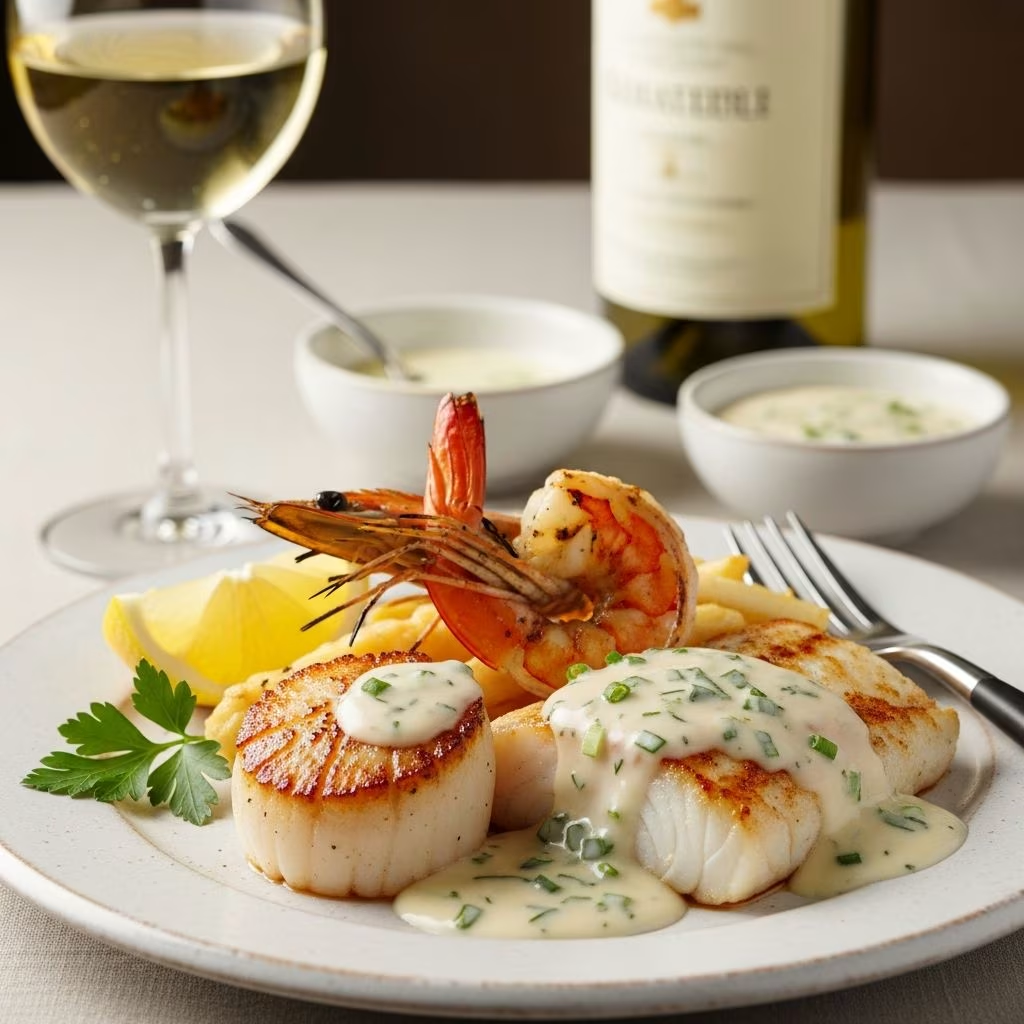
White wine sauces transform simple seafood into restaurant-worthy dishes by combining the acidity of wine with the creaminess of butter and the aroma of garlic. This versatile sauce pairs beautifully with shrimp, scallops, white fish like cod or halibut, and even pasta, offering a balance of tangy, rich, and fresh flavors.
The Allure of White Wine in Seafood Cooking
White wine serves as the backbone of many seafood sauces, cutting through the natural brininess of the ocean’s bounty while adding subtle fruit notes. Dry varieties such as Sauvignon Blanc, Pinot Grigio, or Chardonnay work best, as they reduce into a concentrated base without overpowering sweetness. The alcohol evaporates during cooking, leaving behind enhanced flavors that brighten delicate proteins.
Historically, French techniques like beurre blanc have popularized wine-based emulsions for fish, but modern adaptations incorporate garlic, cream, and herbs for broader appeal. These sauces cook quickly, often in under 15 minutes, making them ideal for weeknight dinners or entertaining.
Essential Ingredients for a Perfect Sauce
Building a superior white wine sauce starts with high-quality components. Focus on fresh aromatics and premium fats to achieve silkiness.
- White Wine: ½ to 1 cup dry white wine for reduction, providing acidity and depth.
- Butter: 4-8 tablespoons unsalted, cold-cut for emulsification, creating a glossy texture.
- Garlic: 2-6 cloves, minced or crushed, for pungent aroma without bitterness.
- Shallots or Onions: 1-2 tablespoons finely chopped, adding mild sweetness.
- Cream or Lemon: Optional ½ cup heavy cream for richness or lemon juice for brightness.
- Herbs and Seasonings: Fresh parsley, tarragon, salt, pepper, and a pinch of red pepper flakes.
These elements, drawn from classic recipes, ensure versatility—omit cream for a lighter version or add mustard for tang.
Step-by-Step Guide to Making the Sauce
Prepare this sauce in the same pan used for cooking seafood to infuse it with flavorful pan drippings.
- Sauté Aromatics: Melt 2 tablespoons butter over medium heat. Add minced shallots and garlic; cook 2-3 minutes until fragrant and soft, avoiding browning.
- Deglaze with Wine: Pour in ½ cup white wine, scraping up bits. Simmer on medium-high until reduced by half, about 3-4 minutes, concentrating flavors.
- Build the Emulsion: Lower heat to medium-low. Whisk in remaining cold butter cubes one by one until melted and sauce thickens. Add lemon juice, herbs, salt, and pepper.
- Finish and Adjust: Stir in cream if desired for creaminess, or pasta water for a lighter pasta sauce. Taste and balance acidity with a pinch of sugar if needed.
This method yields 1-1½ cups of sauce, enough for 1-2 pounds of seafood. Total time: 10-15 minutes.
Pairing the Sauce with Seafood Varieties
Match sauce style to seafood for optimal results. Lighter reductions suit lean fish, while creamy versions complement richer shellfish.
| Seafood Type | Recommended Sauce Variation | Why It Works |
|---|---|---|
| Shrimp & Scallops | Garlic-cream white wine | Butter and cream enhance sweetness; wine cuts richness. |
| White Fish (Cod, Halibut) | Lemon-herb reduction | Acidity brightens mild flesh without overwhelming. |
| Squid/Calamari | Spicy garlic-wine | Red pepper flakes tenderize and add excitement. |
| Mixed Seafood Pasta | Pasta water emulsion | Starchy water thickens sauce for perfect cling. |
Quick Recipe: Shrimp in Silky White Wine Sauce
Serves 4 | Prep: 5 min | Cook: 10 min
Ingredients
- 1 lb large shrimp, peeled and deveined
- 4 tbsp unsalted butter, divided
- 3 garlic cloves, minced
- 1 shallot, finely chopped
- ¾ cup dry white wine
- Juice of 1 lemon
- 2 tbsp fresh parsley, chopped
- Salt and pepper to taste
Instructions
- Season shrimp with salt and pepper. In a skillet over medium-high, melt 1 tbsp butter. Cook shrimp 1-2 minutes per side until pink. Remove and set aside.
- In same skillet, melt 1 tbsp butter. Sauté shallot and garlic 2 minutes.
- Add wine; simmer until reduced by half. Whisk in remaining butter and lemon juice until emulsified.
- Return shrimp to pan, toss to coat. Garnish with parsley. Serve over rice or pasta.
Nutritional perks: High in protein, low-carb option. Calories per serving: ~250.
Variations to Suit Every Palate
- Creamy Version: Stir in ½ cup heavy cream after reduction for mariscos al ajillo-style decadence.
- Herb-Infused: Add tarragon or dill for anise-like notes, ideal for fish.
- Spicy Kick: Include crushed red pepper for heat that pairs with prawns.
- Beurre Blanc Classic: Use white wine vinegar and extra shallots for a French emulsion.
- Non-Alcoholic: Substitute chicken stock or extra lemon juice.
Experiment with wines: Crisp Sauvignon Blanc for herbaceous lift, oaked Chardonnay for buttery depth.
Tips for Flawless Results Every Time
- Use cold butter to prevent separation; whisk constantly for emulsion.
- Don’t boil after adding dairy—gentle simmer preserves texture.
- Fresh herbs at the end maximize vibrancy; dried versions earlier.
- Reduce wine sufficiently to mellow alcohol sharpness.
- Pan size matters: Wide skillet for even evaporation.
Common pitfalls: Overcooking garlic (bitter) or high heat on butter (breaks sauce). Low and slow after reduction.
Perfect Wine and Side Pairings
Complement with the same wine used in cooking. For shrimp: Sauvignon Blanc. Fish: Pinot Grigio. Pair with:
- Crisp greens salad
- Roasted asparagus
- Garlic bread
- Risotto
These sides absorb sauce beautifully, extending flavors.
Storage and Make-Ahead Strategies
Store cooled sauce in an airtight container up to 3 days in fridge. Reheat gently over low heat, whisking in a splash of wine or cream to restore silkiness. Freezes up to 1 month; thaw overnight. Not ideal for long-term as emulsion may separate.
Frequently Asked Questions
What white wine is best for seafood sauce?
Dry whites like Chardonnay, Pinot Grigio, or Sauvignon Blanc. Avoid sweet wines.
Can I make this sauce dairy-free?
Yes, use olive oil instead of butter and coconut cream for richness.
How do I fix a broken sauce?
Whisk in cold butter or a teaspoon of hot water off-heat to re-emulsify.
Is cooking wine okay?
Better to use drinkable wine; cooking wine often contains salt and preservatives.
Can this sauce be used for chicken?
Absolutely—pairs well with poultry or veggies.
Nutritional Breakdown and Health Notes
Per ¼ cup serving: 180 calories, 16g fat, 2g carbs, 1g protein. Rich in omega-3s when paired with seafood. Moderate wine use adds antioxidants. Opt for low-sodium stocks if watching salt.
This sauce elevates everyday cooking to gourmet levels with minimal effort. Practice the technique, and you’ll master it for any occasion.
References
- Mixed seafood in a creamy garlic wine sauce {Mariscos al ajillo} — Laylita’s Recipes. Accessed 2026. https://www.laylita.com/recipes/seafood-in-a-creamy-garlic-wine-sauce-al-ajillo/
- Classic White Fish in White Wine Sauce — At the Immigrant’s Table. Accessed 2026. https://immigrantstable.com/classic-white-fish-in-white-wine-sauce/
- Seafood Pasta with White Wine Sauce — Weekday Pescatarian. Accessed 2026. https://weekdaypescatarian.com/seafood-pasta-recipe-with-white-wine-garlic-sauce/
- Fish with White Wine Sauce — RecipeTin Eats. Accessed 2026. https://www.recipetineats.com/fish-with-white-wine-sauce/
- White Wine Sauce for Pasta — Julie Blanner. Accessed 2026. https://julieblanner.com/white-wine-sauce/
- Creamy White Wine Sauce — Sugar Salt Magic. Accessed 2026. https://www.sugarsaltmagic.com/creamy-white-wine-sauce/
- Beurre Blanc – How to Make a White Wine Butter Sauce — Home Chef Seattle (YouTube). Accessed 2026. https://www.youtube.com/watch?v=zcVGYsSOOYw