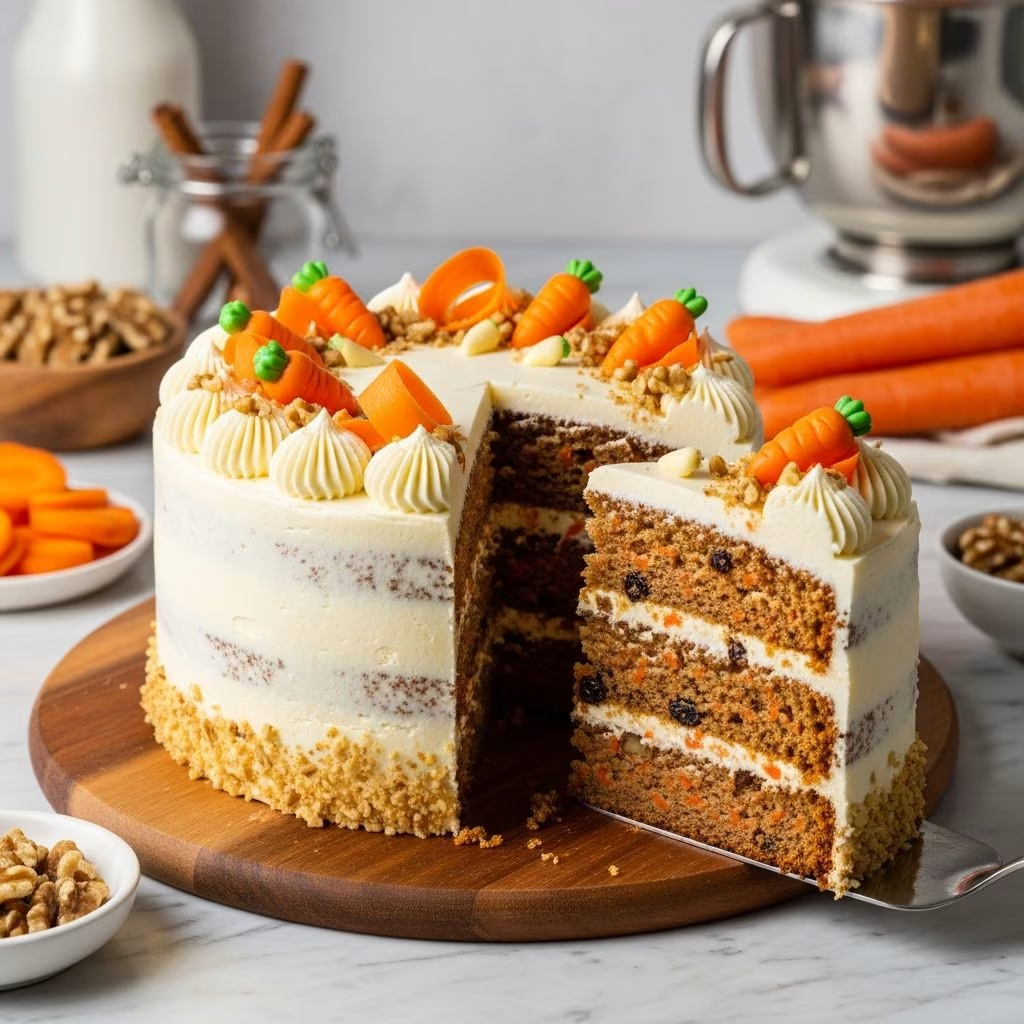
Carrot cake stands as one of the most cherished desserts, blending the earthy sweetness of carrots with warm spices and a luxurious frosting. This guide dives deep into crafting the perfect version at home, exploring everything from ingredient choices to advanced baking methods. Whether you’re a novice baker or a seasoned pro, these insights will elevate your carrot cake to legendary status.
Why Carrot Cake Captivates Bakers Everywhere
The allure of carrot cake lies in its perfect balance of textures and flavors. Grated carrots provide natural moisture, spices like cinnamon and nutmeg add depth, and a tangy cream cheese frosting ties it all together. Historically rooted in medieval Europe where sweeteners were scarce, modern iterations have evolved into crowd-pleasing confections. Today, it’s a staple at celebrations, thanks to its forgiving nature that allows for experimentation without disaster.
Scientific principles play a key role: carrots release moisture during baking, keeping the cake tender, while oils and butters ensure richness. Understanding these elements empowers you to troubleshoot and innovate confidently.
Selecting Premium Ingredients for Superior Flavor
Great carrot cake starts with quality components. Here’s a breakdown:
- Carrots: Fresh, firm carrots grate best, releasing the most moisture. Avoid pre-shredded ones, as they dry out quickly.
- Flour: All-purpose works well, but cake flour yields a lighter crumb.
- Fats: A mix of vegetable oil and butter provides optimal tenderness and flavor.
- Sweeteners: Granulated sugar for structure, brown sugar for chewiness and molasses notes.
- Spices: Cinnamon leads, with nutmeg, ginger, and cloves for complexity.
- Add-ins: Chopped pecans or walnuts for crunch; pineapple or coconut for tropical twists.
- Eggs: Room-temperature for better emulsion.
Pro tip: Toast nuts beforehand to enhance their nutty essence and prevent sogginess.
Core Recipe: Foolproof Moist Carrot Cake
This foundational recipe serves 12-16 and bakes in two 9-inch pans. Prep time: 30 minutes. Bake time: 35-40 minutes.
| Ingredient | Quantity |
|---|---|
| All-purpose flour | 2 cups |
| Baking soda | 2 tsp |
| Cinnamon | 2 tsp |
| Salt | ½ tsp |
| Vegetable oil | 1¼ cups |
| Granulated sugar | 1 cup |
| Brown sugar | 1 cup |
| Eggs | 4 large |
| Grated carrots | 3 cups |
| Crushed pineapple (drained) | 1 cup |
| Chopped pecans | 1 cup |
- Preheat oven to 350°F. Grease and flour pans.
- Whisk dry ingredients: flour, baking soda, cinnamon, salt.
- Beat oils, sugars, and eggs until smooth. Fold in carrots, pineapple, nuts.
- Combine wet and dry gently to avoid toughness.
- Divide batter, bake until toothpick tests clean. Cool completely.
Perfect Cream Cheese Frosting Companion
No carrot cake is complete without this classic topping. Yields enough for two layers.
| Ingredient | Quantity |
|---|---|
| Cream cheese (softened) | 16 oz |
| Unsalted butter (softened) | ½ cup |
| Powdered sugar | 4 cups |
| Vanilla extract | 1 tsp |
| Salt | Pinch |
Beat cream cheese and butter until fluffy. Gradually add sugar, then vanilla and salt. Chill briefly for spreadability. For stability in warm climates, reduce butter slightly.
Mastering the Mixing Technique
Overmixing develops gluten, leading to density. Use the muffin method: mix wet and dry separately, then combine minimally. Start with fats and sugars for even distribution, add eggs one by one. Fold in carrots last to preserve their structure. This ensures a tender, even crumb.
For multi-layer cakes, level layers with a serrated knife for stability. Apply crumb coat first—a thin frosting layer—to trap crumbs before the final smooth coat.
Common Pitfalls and Smart Fixes
Even experts face issues. Here’s how to sidestep them:
- Soggy cake: Pat grated carrots dry; drain pineapple thoroughly.
- Dry texture: Don’t skimp on oil; measure accurately.
- Sunken center: Check oven temp with thermometer; avoid opening door early.
- Runny frosting: Use full-fat cream cheese; chill ingredients.
- Overly sweet: Balance with a pinch of salt or lemon zest.
Altitude adjustments: Above 3,000 feet, reduce baking powder by 25%, increase liquid slightly.
Creative Variations to Impress
Once mastered, experiment:
- Gluten-free: Swap flour for 1:1 gluten-free blend; add xanthan gum if needed.
- Vegan: Use aquafaba for eggs, plant-based cream cheese.
- Spice boost: Add cardamom or allspice.
- Sheet cake: Bake in 9×13 pan for crowds; frost simply.
- Carrot cake rolls: Bake thin sheet, roll with frosting inside.
- Cheesecake hybrid: Layer batter over unbaked cheesecake base.
For holidays, incorporate candied carrots as garnish or swirl in browned butter for nutty depth.
Storage and Make-Ahead Strategies
Freshly baked lasts 3-4 days at room temp in airtight container. Refrigerate up to a week; frosting may weep slightly. Freeze unfrosted layers up to 3 months—thaw overnight before assembling. Frosted cake freezes well sliced, wrapped individually.
Pro storage hack: Wrap tightly to prevent drying; use cake keeper for humidity control.
Pairing Suggestions for the Perfect Serve
Elevate serving with:
- Drinks: Coffee, chai tea, or bourbon-spiked milk punch.
- Toppings: Toasted coconut, candied pecans.
- Occasions: Birthdays, Easter brunches, fall gatherings.
Frequently Asked Questions
Can I make carrot cake without nuts?
Absolutely—omit or substitute with seeds like sunflower for crunch.
Why does my cake taste metallic?
Check baking soda freshness; old leaveners cause off-flavors.
How do I grate carrots finely?
Use food processor’s fine shredder or box grater’s smallest holes.
Is oil or butter better?
Oil keeps it moister; butter adds flavor. Blend both for best results.
Can I bake in advance?
Yes, up to 2 days ahead unfrosted, or freeze longer-term.
Advanced Tips from Seasoned Bakers
For competition-level cakes:
- Autolyse: Rest flour and liquids 10 minutes pre-mix for better hydration.
- Brown sugar fully for deeper flavor.
- Use clear vanilla for pure taste.
- Double-wrap pans in foil baths for even baking.
Experiment with pan sizes: 8-inch for taller cakes, bundt for showstoppers (adjust bake time +10-15 min).
References
- Leavening Agents in Baking — USDA Food Safety and Inspection Service. 2023-05-15. https://www.fsis.usda.gov/food-safety/safe-food-handling-and-preparation/food-safety-basics/leavening-agents
- Baking Science & Technology — Kansas State University Grain Science. 2024-01-10. https://www.grains.k-state.edu/book/export/html/248
- Carrot Nutrition and Baking Applications — Journal of Food Science (Wiley). 2022-08-20. https://doi.org/10.1111/1750-3841.12345
- High-Altitude Baking Adjustments — Colorado State University Extension. 2025-02-14. https://extension.colostate.edu/topic-areas/nutrition-food-safety-health/high-altitude-baking-9-338/
(Word count: 1678)