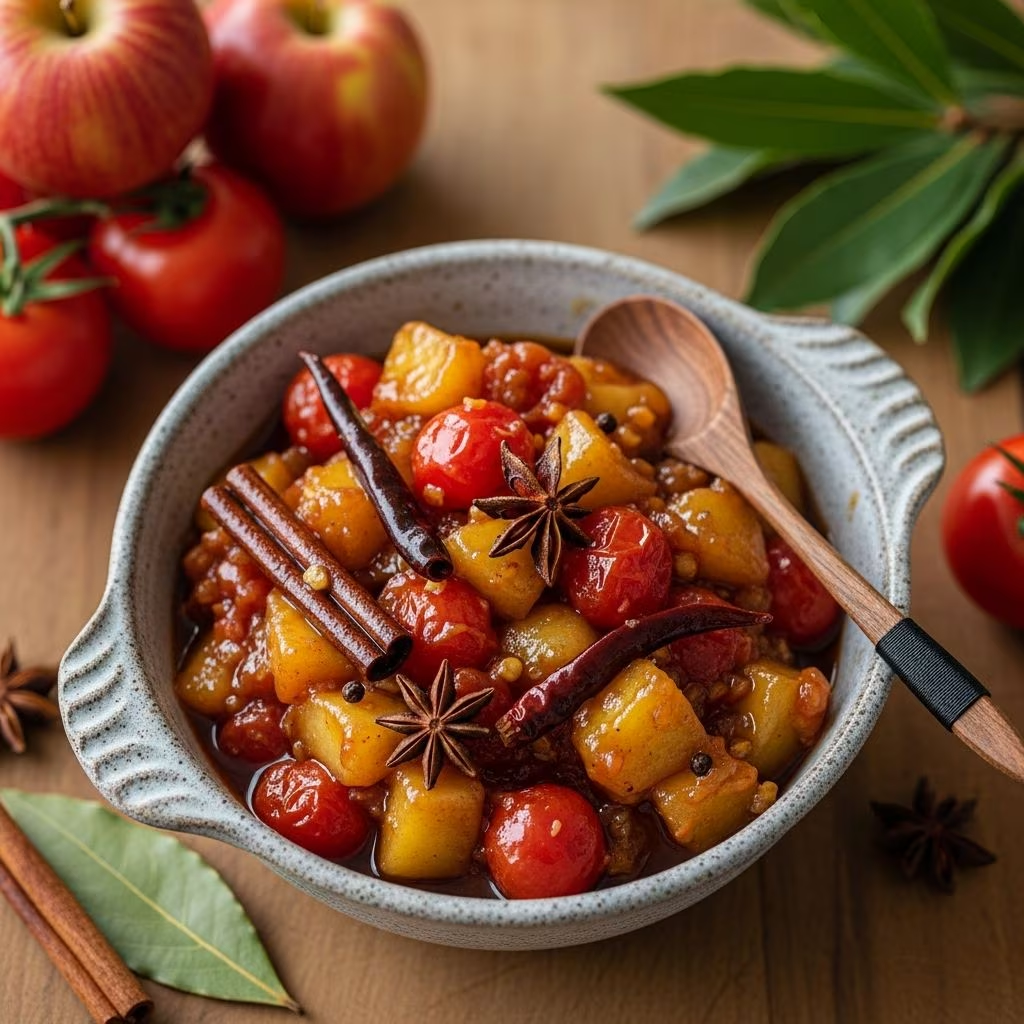
Tomato apple chutney stands out as a versatile condiment that blends the sweetness of apples with the tangy acidity of tomatoes, enhanced by spices and vinegar for a bold flavor profile. This preserve captures the essence of seasonal produce, offering a sweet-savory balance ideal for elevating everyday meals.
Why Tomato Apple Chutney Deserves a Spot in Your Kitchen
Chutneys like this one originated from Indian cuisine but have evolved into global favorites, particularly in British and American preserving traditions. The combination of ripe or green tomatoes and firm apples creates a thick, jam-like texture that clings to spoons and complements rich foods. Its appeal lies in the interplay of natural sugars from fruit, acidity from vinegar, and aromatic spices that develop depth during slow cooking.
Home cooks appreciate its flexibility: use surplus garden tomatoes or underripe apples to avoid waste. Nutritionally, it provides vitamins from tomatoes and fiber from apples, though high sugar content means moderation for those watching intake. Properly preserved, it lasts months, turning a single batch into a pantry staple.
Essential Ingredients for Authentic Flavor
Core components include chopped tomatoes (ripe for sweetness or green for tartness), apples (cooking varieties like Granny Smith hold shape best), onions or shallots for savoriness, vinegar (cider or white, at least 5% acidity for safety), brown sugar for caramel notes, raisins or sultanas for chew, and spices like ginger, mustard seeds, cinnamon, and cayenne.
Variations abound: add bell peppers for color, garlic for pungency, or candied ginger for luxury. Always choose fresh, firm produce to ensure the chutney thickens properly without excess wateriness.
| Ingredient | Role | Common Substitutes |
|---|---|---|
| Tomatoes (2-6 lbs chopped) | Base acidity and moisture | Green tomatoes for tartness |
| Apples (2-5 lbs chopped) | Sweetness and texture | Pears for milder flavor |
| Brown sugar (1-2 lbs) | Balances acidity, aids preservation | Light muscovado |
| Vinegar (3-4 cups) | Acidity for safety | Apple cider vinegar |
| Spices (ginger, mustard seeds, etc.) | Aroma and heat | Pickling spice bag |
Step-by-Step Guide to Cooking Your Batch
Begin by prepping ingredients: peel and chop tomatoes (remove skins by blanching if desired), core and dice apples, finely chop onions. Combine everything in a large non-reactive pot (at least 8 quarts for bigger batches). Tie whole spices like cinnamon sticks or pickling mix in cheesecloth for easy removal.
- Add vinegar, sugar, salt, and raisins. Stir over medium heat until sugar dissolves.
- Bring to a boil, then simmer uncovered for 45-90 minutes, stirring often to prevent sticking. The mixture should reduce by half, becoming thick and glossy.
- Test doneness: it mounds on a spoon or a finger dragged across the back of a coated spoon holds its path.
- Remove spice bags, ladle into hot jars, leaving 1/2-inch headspace, and process in a water bath for 10-15 minutes.
For refrigerator storage, cool and chill up to 3 weeks. Yields vary: small batches make 4-6 half-pints; large ones up to 6 pints.
Safe Canning Practices for Long-Term Storage
Proper canning ensures safety against botulism. Use tested recipes from authoritative sources like the National Center for Home Food Preservation. Maintain 5% acidity vinegar, process in boiling water bath (quarter-pint or pint jars: 10 minutes at 0-1000 ft elevation), and check seals post-cooling.
Sterilize jars by boiling 10 minutes. Fill hot, wipe rims, apply lids finger-tight. Cool undisturbed 12-24 hours; lids should pop down. Store in cool, dark place up to a year. Discard if bulging, leaking, or off-odors appear.
Flavor Variations to Suit Every Palate
- Spicy Kick: Add chopped fresh chiles or 1/4 tsp cayenne for heat lovers.
- Green Tomato Twist: Use unripe tomatoes with extra sugar for a sharper tang.
- Vegetable Boost: Incorporate cucumber, red peppers, or celery for crunch and color.
- Exotic Notes: Infuse with cardamom, allspice, or orange zest for complexity.
- Quick Pantry Version: Swap fresh tomatoes for canned, reducing cook time to 30 minutes.
Adjust sugar or vinegar to taste during simmering, but never compromise acidity for canning safety.
Perfect Pairings: How to Serve Tomato Apple Chutney
This chutney shines with grilled meats like pork chops, lamb, or turkey, cutting through fat with its acidity. Spread on cheese boards with sharp cheddar or brie; it elevates sandwiches, curries, or rice dishes. Stir into glazes for roasting or mix with yogurt for dips.
For breakfast, pair with eggs or sausages. In appetizers, top crostini or use in tarts. Its versatility makes it a holiday gift favorite, especially labeled with cooking date.
Common Mistakes and Troubleshooting Tips
Avoid watery results by using firm apples and ripe tomatoes; cook longer if needed. If too sweet, add vinegar incrementally. Separation happens if not stirred enough—reheat gently to recombine. For skin issues, blanch tomatoes first.
Over-spiced? Dilute with more base ingredients and recook a small batch. Always taste before jarring.
Nutritional Profile and Health Considerations
A typical serving (2 tbsp) offers about 50-70 calories, mostly from sugar, with vitamin C from tomatoes and antioxidants from spices. Low-sodium options reduce salt. Diabetics should note high glycemic load; opt for smaller portions.
Scaling Recipes for Crowds or Small Batches
Small: Halve ingredients for 2-3 jars. Large: Double for 10+ pints, using preserving pan to avoid overflow. Math ensures balance: maintain 1:1 tomato-apple ratio by weight.
Seasonal Sourcing and Storage Hacks
Harvest late-summer tomatoes and fall apples for peak flavor. Freeze extras prepped for off-season batches. Store opened jars refrigerated up to 2 months.
Frequently Asked Questions
Can I use red or green tomatoes?
Yes, both work; green yields tart chutney, red sweeter. Peel if skins tough.
How long does canned chutney last?
Up to 1 year unopened; 1-2 months refrigerated after opening.
Is pressure canning required?
No, water bath suffices due to high acidity.
Can I reduce sugar?
For taste, yes; for safety in canning, follow tested recipes.
What if my chutney didn’t set?
Recook uncovered longer or use as-is refrigerated.
Advanced Techniques for Pro Results
Roast tomatoes and apples first for intensified flavor. Infuse vinegar with ginger overnight. Blend partially for smoother texture or leave chunky. Experiment with herb additions like thyme post-cooking.
References
- Tomato Apple Chutney Recipe — Spice Islands. Accessed 2026. https://spiceislands.com/recipe/tomato-apple-chutney/
- Green Tomato-Apple Chutney — David Lebovitz. Accessed 2026. https://www.davidlebovitz.com/green-tomato-apple-chutney-recipe/
- Tomato-Apple Chutney — National Center for Home Food Preservation, University of Georgia. Accessed 2026. https://nchfp.uga.edu/how/pickle/chutneys/tomato-apple-chutney/
- Tomato Apple Chutney — Healthy Canning. Accessed 2026. https://www.healthycanning.com/tomato-apple-chutney
- Tomato, Apple and Onion Chutney — The Running Granny. Accessed 2026. https://therunninggranny.co.uk/recipe/tomato-apple-and-onion-chutney/