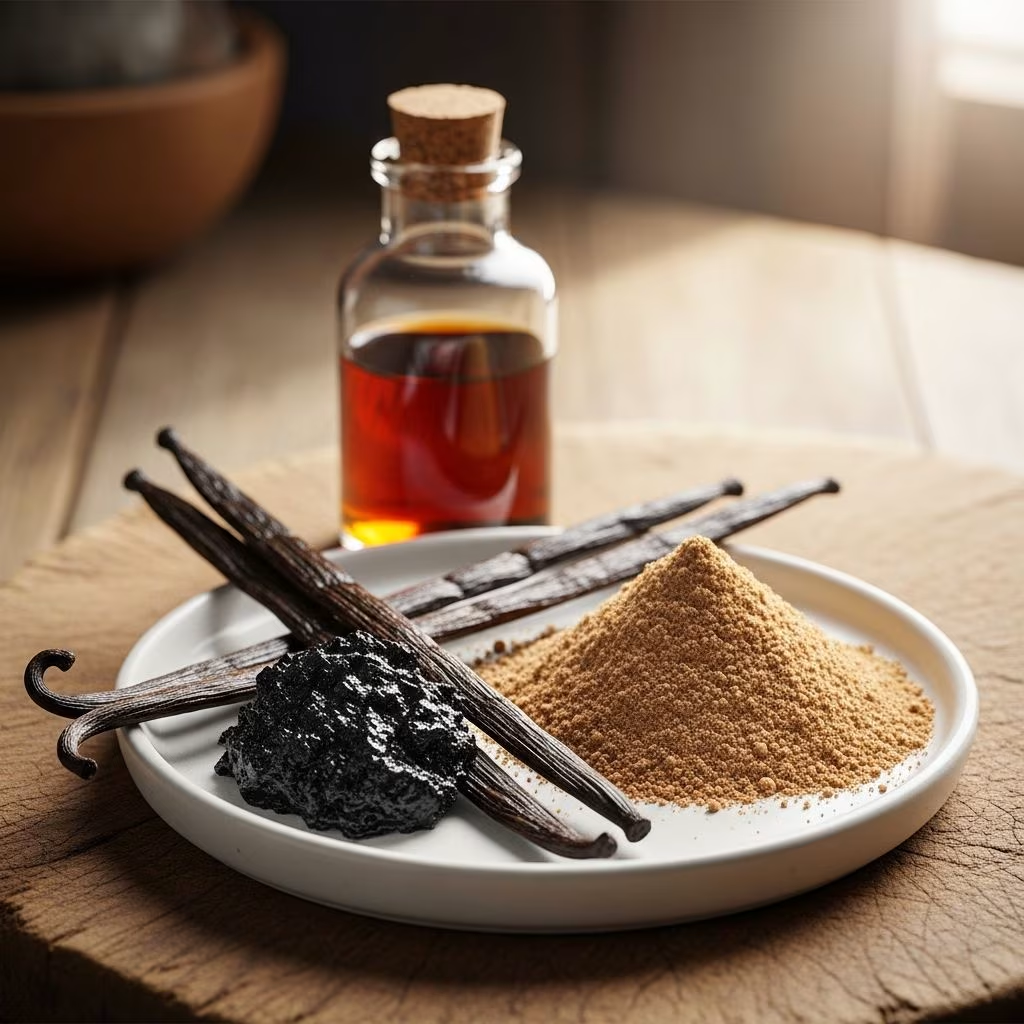
Vanilla stands as one of the most cherished flavorings in kitchens worldwide, prized for its warm, aromatic profile that elevates both sweet and savory creations. Beyond the familiar liquid extract, options like paste, powder, and whole beans offer distinct advantages in texture, intensity, and visual appeal. This guide delves into each form, explaining their compositions, ideal applications, substitution ratios, and storage methods to help you select the perfect vanilla product for any recipe.
Understanding Vanilla’s Core Forms
Vanilla products derive from the Vanilla planifolia orchid, primarily sourced from regions like Madagascar, Mexico, and Tahiti. Each form processes these beans differently, resulting in unique characteristics suited to specific culinary needs.
- Vanilla Extract: Alcohol-infused liquid from soaked beans, delivering consistent flavor in liquid-based recipes.
- Vanilla Paste: Thick blend of bean seeds, syrup, and extract, providing visible specks and concentrated taste.
- Vanilla Powder: Dehydrated, ground beans offering pure flavor without moisture.
- Whole Beans: Intact pods for scraping seeds or infusing, ideal for maximum freshness.
Choosing the right form depends on whether your dish requires liquid, dry stability, visual flecks, or heat resistance.
Vanilla Paste: The Versatile Speckled Star
Vanilla bean paste combines the intensity of whole beans with the convenience of extract. It features a syrupy texture loaded with tiny black seeds—often called ‘caviar’—that add both flavor depth and striking visual contrast in pale dishes.
Made by grinding vanilla beans with sugar, invert sugar, or honey, and a touch of extract, paste remains shelf-stable in a cool, dark pantry. Its stability makes it perfect for recipes where alcohol evaporation could alter taste.
Prime Applications for Vanilla Paste
Paste shines in creamy, no-bake, or visually driven desserts:
- Dairy treats like cheesecakes, ice creams, and whipped toppings, where specks create an elegant marbled effect.
- Custards, pastry creams, and sauces that benefit from bold vanilla notes without dilution.
- Frostings and glazes for cakes, lending a professional flecked appearance.
For substitutions, use paste at a 1:1 ratio with extract. In a recipe calling for one tablespoon of extract, add one tablespoon of paste directly.
Creative Twists with Paste
Beyond baking, incorporate paste into everyday items:
- Stir into half-and-half for homemade coffee creamer.
- Drizzle over pancakes, waffles, or fruit salads as a gourmet topping.
- Blend into smoothies, yogurts, or simple syrups for infused beverages.
In caramel sauce, add paste after butter for a speckled, aromatic finish.
Vanilla Powder: Dry Powerhouse for Precision
Vanilla powder, finely milled from dried beans, delivers unadulterated flavor without liquid or alcohol. This makes it indispensable in moisture-sensitive preparations.
Its heat stability ensures flavor integrity during high-temperature cooking, unlike extracts where alcohol can burn off.
Key Strengths of Vanilla Powder
| Attribute | Vanilla Powder Benefit |
|---|---|
| Moisture Impact | None—perfect for dry mixes and delicate batters. |
| Heat Tolerance | Excellent; retains flavor in roasting or baking. |
| Texture | Blends invisibly into powders, rubs, or sugars. |
| Substitution | Use 1/2 amount of extract called for (e.g., 1/2 tsp powder = 1 tsp extract). |
Ideal for white chocolate work, as it prevents seizing; dry rubs on meats; or macarons where liquid deflates meringue.
Unexpected Uses for Powder
- Infuse granulated sugar for vanilla finishing dust on cookies or pies.
- Mix into spice blends for grilling chicken, pork, or seafood.
- Incorporate into hot chocolate mixes or shortbread doughs for crisp results.
Powder excels in savory contexts, adding subtle warmth without overpowering other spices.
Vanilla Extract: The Reliable Everyday Choice
The most common form, pure vanilla extract steeps beans in alcohol (at least 35% by volume) for months, extracting vanillin and 200+ compounds. It’s versatile for batters, sauces, and beverages where liquid integrates seamlessly.
Opt for single-origin extracts like Madagascar (creamy) or Mexican (spicy) for nuanced profiles. Always choose pure over imitation for authentic taste.
Best Scenarios for Extract
- Baked goods like cakes, cookies, and quick breads.
- Creamy fillings, frostings, and ice cream bases.
- Cocktails, syrups, or any wet mixture.
Unlike paste or powder, extract adds minimal visual appeal but ensures even distribution.
Whole Vanilla Beans: Freshness at Its Peak
Nothing matches the potency of whole pods, split and scraped for fresh seeds or steeped for infusion. Grade A beans are plump and moist, ideal for visible specks or long infusions.
Store in airtight containers away from light. One pod equals about 1 tablespoon extract or paste.
Handling and Uses
- Slit pod lengthwise, scrape seeds.
- Reserve pod for infusions in milk or sugar.
- Perfect for custards, ganache, or homemade paste.
Substitution Chart for Seamless Swaps
| Recipe Calls For | Substitute With | Ratio |
|---|---|---|
| 1 Tbsp Extract | Paste | 1 Tbsp |
| 1 Tbsp Extract | Powder | 1.5 tsp |
| 1 Pod (Seeds) | Paste | 1 Tbsp |
| Paste | Extract | 1:1 |
| Powder | Extract | Double powder amount |
Adjust based on desired specks or dryness.
Storage and Shelf Life Essentials
- Extract: Indefinite in cool, dark place; alcohol preserves it.
- Paste: 2-3 years in pantry; refrigerate after opening.
- Powder: 3+ years airtight; avoid humidity.
- Beans: 6-12 months whole; freeze seeds for longevity.
Label with dates and check for aroma loss over time.
Recipe Roundup: Put Vanilla to Work
Vanilla Paste Ice Cream Base
Combine 2 cups cream, 1 cup milk, 3/4 cup sugar, 5 yolks. Heat, temper, add 2 Tbsp paste. Churn for speckled delight.
Powder-Infused Shortbread
Cream 1 cup butter, 1/2 cup sugar, 2 cups flour, 1 tsp powder. Bake at 325°F for 20 min. Crisp perfection.
Extract Whipped Cream
Whip 1 cup cream, 2 Tbsp sugar, 1 tsp extract. Instant topping.
FAQs
Can I make vanilla paste at home?
Yes: Chop 10 beans, simmer with water, sugar, corn syrup; blend and strain. Yields pro-level paste.
Is vanilla powder gluten-free?
Pure powder is, but check labels for additives.
Which form for vegan recipes?
Paste (sugar-based) or powder; alcohol-free extracts exist too.
How to tell if vanilla is pure?
Ingredients list beans/alcohol only; dark color, strong aroma.
Best for high-heat grilling?
Powder in rubs for stable flavor.
References
- How to Use Vanilla Paste — Cooks Vanilla. Accessed 2026. https://cooksvanilla.com/blogs/news/how-to-use-vanilla-paste
- My Top Vanilla Bean Paste Recipes — Pine & Palm Kitchen. Accessed 2026. https://www.pineandpalmkitchen.com/my-top-vanilla-bean-paste-recipes/
- Vanilla Extract vs Paste vs Powder — Vanillapura. Accessed 2026. https://www.vanillapura.com/blogs/vanilla-extract-making-101/vanilla-extract-vs-vanilla-paste-vs-vanilla-powder-when-to-use-each
- A Guide to Using Pure Vanilla Powder — Social Life Magazine. Accessed 2026. https://sociallifemagazine.com/the-archive/vanilla-powder/
- How To Make Vanilla Bean Paste & 3 Ways to Use It — Bigger Bolder Baking (YouTube). 2026. https://www.youtube.com/watch?v=qADH4uLnVs0
- Expert’s Guide to Vanilla — America’s Test Kitchen (YouTube). Accessed 2026. https://www.youtube.com/watch?v=ShOhVoBgJVE