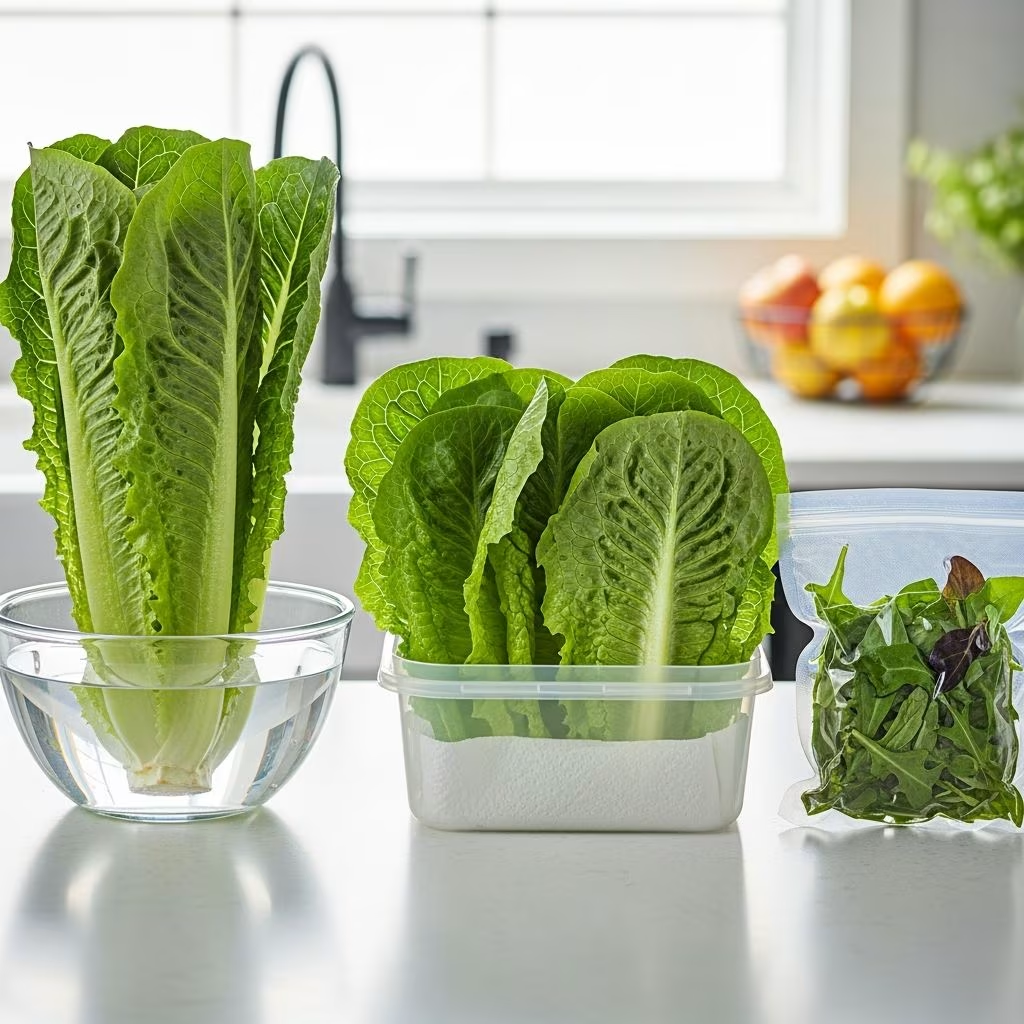
Lettuce is a staple in salads, sandwiches, and wraps, but it often wilts quickly after purchase, leading to unnecessary waste. Proper storage techniques can extend its freshness from days to weeks by controlling moisture, airflow, and ethylene exposure. This guide covers washing, drying, container choices, and type-specific methods to maintain crispness.
Understanding Why Lettuce Wilts
Lettuce contains high water content, making it prone to spoilage from excess moisture, bacteria, and gases from nearby fruits. Wilt happens when cells lose turgor pressure due to dehydration or microbial growth. Refrigerator crisper drawers with high humidity settings help by balancing moisture levels and restricting airflow to prevent drying out.
Key factors accelerating spoilage include:
- Residual water from washing that promotes bacterial growth.
- Trapped ethylene gas from apples or bananas speeding ripening.
- Inadequate drying, leading to slime or mold.
- Low-humidity fridge sections causing leaf edges to brown.
Essential Preparation Steps Before Storage
Start with thorough cleaning to remove dirt, pesticides, and pathogens like listeria. A vinegar solution effectively sanitizes without harsh chemicals.
Washing Lettuce Properly
- Separate leaves from the core, discarding any damaged ones.
- Submerge in a bowl with 1 cup vinegar per gallon of cold water for 2-5 minutes to kill bacteria.
- Rinse under running water, agitating gently.
- Avoid soaking whole heads too long to prevent waterlogging.
For bagged pre-washed lettuce, a quick refresh rinse removes any packing residues.
Drying Techniques for Crisp Results
Excess moisture is the top enemy. Use a salad spinner for best results: spin in short bursts to avoid bruising. Alternatives include patting with paper towels or air-drying on a clean towel for 15-30 minutes.
Pro tip: Layer leaves between towels and press lightly, then let sit until no water droplets remain. Completely dry leaves can last 2-3 weeks in the fridge.
Best Containers and Wrapping Methods
Choose storage that allows breathability while absorbing humidity. Paper towels or clean kitchen cloths act as moisture wicks—replace every 2-3 days.
| Container Type | Best For | Pros | Cons |
|---|---|---|---|
| Zip-top bags with paper towel | Loose leaves, chopped greens | Easy, reusable, good airflow | Can leak if overfilled |
| Perforated plastic/glass containers | Whole heads, mixes | Drains excess water, stacks well | Requires paper towel liner |
| Kitchen towel wrap in crisper | All types | No extra items needed, natural | Less protection from odors |
| Airtight bins | Delicate greens like arugula | Blocks ethylene, maintains humidity | Monitor for condensation |
Always store in the crisper drawer on high humidity to mimic ideal conditions.
Type-Specific Storage Strategies
Different lettuces have varying water contents and textures, requiring tailored approaches.
- Romaine: Unwashed heads in loose plastic bags; washed leaves tightly sealed with towel.
- Iceberg: Core intact in perforated bags for humidity retention.
- Leaf lettuces (green/red): Airtight containers or original packaging with towel.
- Chopped/shredded: Tightly wrapped in towels inside bags for quick access.
- Baby greens/mixes: Layered between towels in protective containers.
- Homegrown/hydroponic: Plastic wrap to prevent drying.
For shredded lettuce, quarter the head, slice thinly, and store in quart bags with half a towel—ideal for lunches.
Fridge Placement and Companion Rules
Position lettuce away from ethylene producers like apples, pears, and tomatoes. Use the back of the crisper for stable temperatures (32-40°F). Stem-side up in containers prevents moisture pooling at the base.
Avoid door shelves where temperature fluctuates. If space is tight, prioritize lettuce in dedicated zones.
Reviving Wilted Lettuce
Not all is lost for slightly limp greens. Soak in ice water for 15-30 minutes, then dry and store properly. This rehydrates cells temporarily, buying 1-2 extra days.
For browned edges, trim and refresh. Persistent slime means discard to avoid contamination.
Lunchbox and On-the-Go Tips
Pack salads separately from dressings to prevent sogginess—acids break down cell walls. Use ice packs and vented containers. Pre-portion shredded leaves in small bags for freshness until midday.
Can You Freeze Lettuce?
Freezing is not recommended due to high water content causing mushy texture upon thawing. Use frozen greens only in smoothies or cooked dishes, pureed first.
Common Mistakes to Avoid
- Storing wet leaves directly—leads to rot in hours.
- Ignoring crisper humidity—causes premature browning.
- Mixing with fruits—accelerates decay.
- Overpacking containers—traps moisture.
FAQs
How long does lettuce last in the fridge?
Properly stored whole heads last 2-3 weeks; cut leaves 7-10 days; bagged mixes 5-7 days.
What’s the best way to wash lettuce?
Vinegar-water soak followed by rinse and spin-dry.
Should I store lettuce in the crisper drawer?
Yes, on high humidity for optimal crispness.
Can I store different greens together?
Yes, but separate sturdy types like romaine from delicate ones like spinach.
How do I keep bagged lettuce fresh longer?
Add paper towel, reseal loosely, and replace towel daily.
Advanced Tips for Zero Waste
Buy whole heads over pre-cut for longer life. Rotate stock FIFO (first in, first out). Use stems in stocks or compost. Track freshness dates mentally to use peak produce first.
Experiment with beeswax wraps for eco-friendly moisture control. Monitor fridge temp with a thermometer for consistency below 40°F.
References
- How to Keep Lettuce Fresh Longer in the Refrigerator — Whirlpool. 2023-05-15. https://www.whirlpool.com/blog/kitchen/how-to-keep-lettuce-fresh.html
- How to Store Lettuce So It Lasts Longer — Laura Fuentes. 2022-08-10. https://www.laurafuentes.com/how-to-store-lettuce-in-fridge/
- How to Keep Your Lettuce FRESH for Weeks! — The Cross Legacy (YouTube). 2021-04-20. https://www.youtube.com/watch?v=jwa9Wu_Non8