The allure of fresh, warm cinnamon rolls on a weekday morning often seems incompatible with busy schedules. However, the technique of preparing cinnamon rolls in advance through overnight refrigeration transforms this indulgence into an achievable reality. This method leverages cold fermentation—a process where yeast dough develops flavor and rises slowly at low temperatures—allowing bakers to accomplish most of the work the evening before, leaving only the final baking step for morning.
Understanding Cold Fermentation in Dough Preparation
Cold fermentation fundamentally changes how yeast dough develops. When dough rests in the refrigerator overnight, the extended timeline allows yeast cells to work gradually at reduced temperatures, producing complex flavors that cannot develop during rapid room-temperature rises. This slow process also develops gluten structure more thoroughly, resulting in superior texture and elasticity in the finished product.
The refrigeration approach also offers practical advantages beyond flavor enhancement. It provides flexibility for busy mornings, reduces the total active preparation time needed, and allows home bakers to synchronize their baking schedule with family routines rather than adhering to the rigid timing requirements of traditional same-day preparation.
Crafting the Foundation: Dough Ingredients and Preparation
The foundation of exceptional overnight cinnamon rolls begins with a carefully balanced dough. The ingredient list typically includes warm milk, active dry yeast, sugar, eggs, melted butter, salt, and a combination of bread flour and all-purpose flour. This blend of flours creates a dough with sufficient structure and tenderness.
Initial dough preparation follows a specific sequence. Warm milk (between 105-110°F) combined with a small amount of sugar provides an ideal environment for yeast activation. Allow this mixture to sit for five to ten minutes until a foamy layer forms on the surface, indicating yeast viability. Once foaming occurs, incorporate the remaining ingredients gradually, mixing until the dough reaches a smooth, slightly tacky consistency through four to five minutes of kneading.
Determining Proper Dough Texture
The ideal dough should feel smooth and elastic but not sticky enough to cling excessively to hands or utensils. If the dough appears too wet, incorporate additional flour one tablespoon at a time. Conversely, if it feels dry or stiff, add small quantities of milk. This tactile assessment matters more than strict adherence to recipe measurements, as flour moisture content varies with humidity and storage conditions.
First Rise: Building Initial Volume and Structure
After mixing, allow the dough ball to rest in a covered bowl at room temperature for approximately one to two hours, or until it doubles in size. This first rise serves multiple purposes: it develops gluten further, allows yeast to multiply and establish colonies throughout the dough, and begins creating the open crumb structure that characterizes well-baked rolls.
The covering is essential during this phase. A damp kitchen towel or plastic wrap prevents the dough surface from drying and developing a crust that could interfere with uniform expansion.
Shaping and Filling: Creating Distinctive Swirls
Once doubled, gently deflate the dough by punching down and transfer it to a lightly floured work surface. Roll the dough into a large rectangle, approximately 18 inches long and 12 inches wide, aiming for consistent thickness throughout.
The Filling Application Process
Spread softened butter evenly across the entire dough surface. The butter should be malleable but not melted—soft enough to spread without tearing the dough yet firm enough to remain distributed. If butter has become too firm, microwave it briefly (five to ten seconds at a time) until reaching the correct consistency.
In a separate bowl, combine brown sugar and ground cinnamon in a ratio of approximately 3:1. Brown sugar contributes moisture and subtle molasses notes that white sugar cannot replicate, creating superior flavor depth. Distribute this mixture evenly across the buttered surface. A common approach involves sprinkling approximately three-quarters of the mixture first, then adding the remainder to ensure even coverage without over-concentration in certain areas.
Rolling and Portioning
Beginning from one long edge, roll the dough tightly toward the opposite side, using gentle pressure to eliminate air pockets while avoiding excessive compaction that would create dense rolls. Pinch the seam where the dough meets itself and seal it by pressing gently with your fingertips.
Using a sharp knife (or dental floss for cleaner cuts without compression), slice the rolled dough into 12 equal portions, each approximately 1.5 inches thick. Arrange these rolls in a greased 9×13-inch baking pan or similar vessel, spacing them about one-half inch apart to allow for some expansion without the rolls fusing together completely.
Overnight Refrigeration: The Transformation Period
This stage represents the critical departure from traditional same-day cinnamon roll preparation. Cover the pan of shaped rolls with plastic wrap or aluminum foil and place in the refrigerator. The rolls will undergo cold fermentation for eight to twelve hours (or up to 24 hours), during which yeast activity continues at a dramatically reduced pace while flavor compounds develop.
The cold fermentation period offers several advantages. The rolls rise slowly, developing better flavor complexity than rapid room-temperature rises. The extended timeline allows bakers to prepare everything the previous evening and simply complete the baking process in the morning. Additionally, cold dough is easier to handle when frosting is applied after baking, as the gluten structure remains more stable.
What Happens During Cold Storage
Inside the refrigerator, yeast cells continue metabolizing, though at a much slower rate than at room temperature. This gradual fermentation produces organic acids and flavor compounds that contribute complexity to the final product. Simultaneously, the rolls may rise slightly—they should increase in volume but need not double completely, as the final rise occurs during baking after the cold dough has warmed to room temperature.
Morning Preparation and Final Baking
Remove the covered pan from the refrigerator approximately 30 minutes before baking. This allows the dough to warm slightly, bringing it closer to room temperature. Preheat the oven to 350°F during this period.
The rolls may appear to rise slightly at room temperature, though they typically need not reach full doubling before baking. Bake at 350°F for 25 to 28 minutes, rotating the pan halfway through baking to ensure even browning. The rolls are finished when the tops achieve a light golden-brown color and the internal temperature reaches approximately 190°F when measured with an instant-read thermometer inserted into the center of a roll.
Preventing Over-Browning
If the tops brown too quickly—particularly around the edges—loosely tent aluminum foil over the pan during the first 15 minutes of baking. This prevents excessive color development on the exterior while the interior completes baking.
Frosting and Final Touches
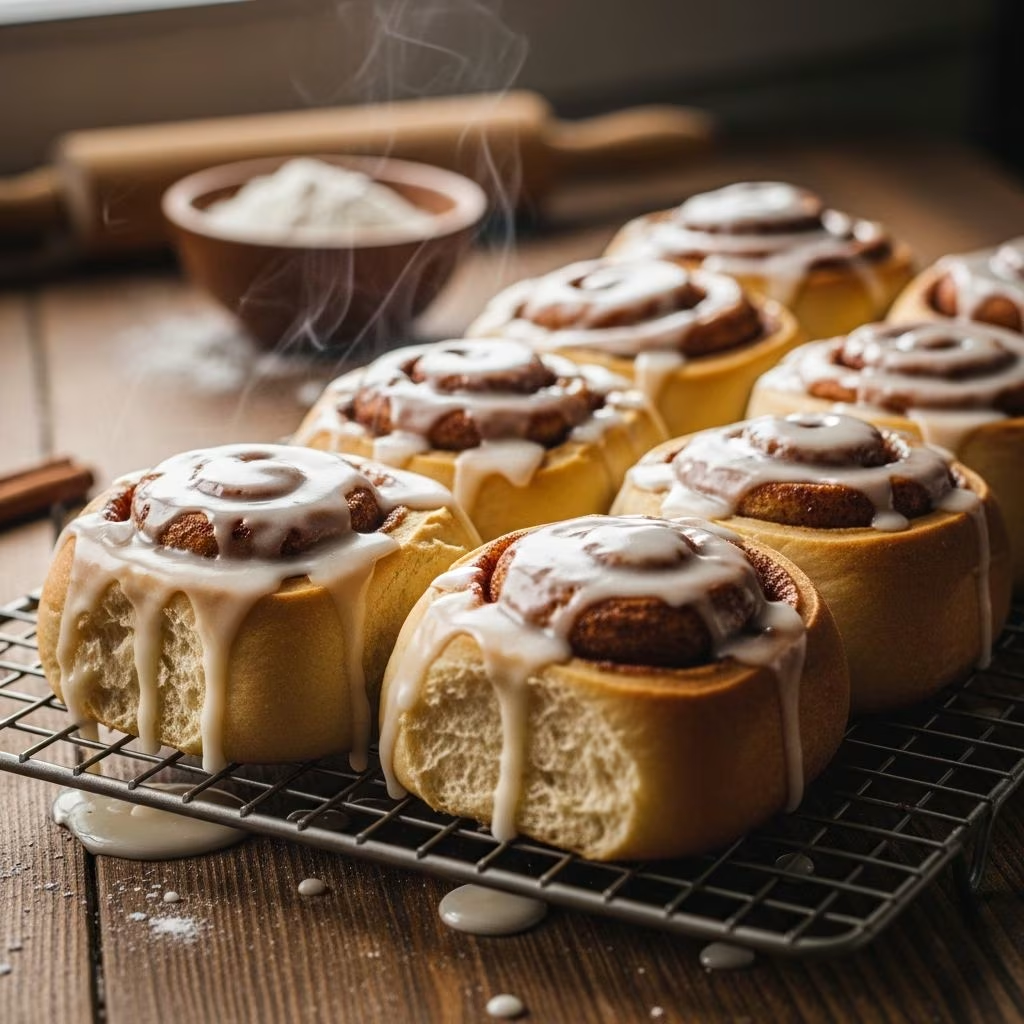
Cream cheese frosting complements overnight cinnamon rolls exceptionally well. Combine softened cream cheese, unsalted butter, powdered sugar, and vanilla extract, beating until smooth and spreadable. Some bakers include a tablespoon or two of milk to achieve a slightly thinner consistency that spreads more easily.
Allow the baked rolls to cool for five to ten minutes before applying frosting. This timing strikes a balance between rolls being warm enough that the frosting partially melts into them, creating gooey interior pockets, while cool enough that frosting doesn’t separate or become overly runny.
Storage and Reheating Considerations
Unfrosted rolls can be stored in an airtight container in the refrigerator for up to five days or frozen for up to three months. Frosted rolls keep satisfactorily for two to three days refrigerated. Reheat by wrapping individually in foil and warming at 350°F for approximately ten minutes, or by placing an unfrosted roll on a microwave-safe plate and heating for 20 to 30 seconds.
Research indicates that overnight cinnamon rolls actually reheat beautifully and maintain their texture and softness, making them excellent for advance preparation when serving guests or feeding large families.
Troubleshooting Common Issues
Rolls Did Not Rise Sufficiently Overnight
This typically results from either insufficient yeast, water temperature that was too cold (preventing yeast activation), or refrigerator temperature that was too cold. Ensure active dry yeast hasn’t expired, water temperature registers between 105-110°F when yeast is added, and refrigerator temperature stays between 35-40°F.
Rolls Are Dense or Heavy
Dense rolls usually indicate either excessive kneading during dough preparation (which over-develops gluten), insufficient first rise, or rolling the dough too tightly when shaping. Allow adequate time for the initial rise and use gentle pressure when rolling to incorporate filling.
Filling Separates or Leaks During Baking
This occurs when butter wasn’t adequately softened before spreading or when too much filling was applied. Use properly softened butter that spreads without tearing the dough, and distribute filling evenly rather than concentrating it in certain areas.
Variations on the Basic Method
Once comfortable with the fundamental technique, bakers can experiment with modifications. Maple cinnamon rolls incorporate maple syrup into the filling, while apple cinnamon variations layer thinly sliced apples with the cinnamon mixture. Pecan sticky buns transform overnight rolls through the addition of a caramelized pecan topping prepared separately and applied to the baking pan before adding rolls.
Comparing Overnight Rolls to Canned Alternatives
While refrigerated canned cinnamon rolls offer convenience, they cannot match the flavor complexity or texture achieved through overnight fermentation of homemade dough. However, the canned alternative can be enhanced through similar techniques: arranging rolls in a baking dish, pouring heavy cream over and around them, adding a brown sugar and cinnamon topping, and baking covered for 30 minutes before uncovering and baking an additional 10 minutes. This approach produces noticeably softer, more moist rolls than standard canned preparation, though they still lack the sophisticated flavor profile of cold-fermented homemade dough.
Making the Technique Part of Your Routine
Incorporating overnight cinnamon rolls into regular baking practice requires minimal adjustment to established schedules. Spend 20-30 minutes in the evening mixing, rising, and shaping. Place the prepared rolls in the refrigerator and complete the baking during morning coffee preparation. This approach yields bakery-quality results without requiring significant time commitment on the actual serving day.
The overnight cinnamon roll technique fundamentally transforms weekend entertaining and special breakfasts from stressful exercises requiring early morning starts into manageable endeavors where the most labor-intensive steps occur during the convenient evening hours.
References
- Homemade Overnight Cinnamon Rolls — Sally’s Baking Addiction. Accessed April 2026. https://sallysbakingaddiction.com/overnight-cinnamon-rolls/
- Overnight Cinnamon Rolls — Wood & Spoon. Accessed April 2026. https://thewoodandspoon.com/overnight-cinnamon-rolls/
- Canned Cinnamon Roll Hack — The BakerMama. Accessed April 2026. https://thebakermama.com/recipes/canned-cinnamon-roll-hack/
- TikTok Cinnamon Rolls Recipe (Canned Cinnamon Roll Hack) — House of Nash Eats. Accessed April 2026. https://houseofnasheats.com/tiktok-cinnamon-rolls/
- The Best Overnight Cinnamon Rolls — A Feast For The Eyes. Published December 2019. https://afeastfortheeyes.net/2019/12/the-best-overnight-cinnamon-rolls.html