Avocados bring creamy texture and nutty flavor to countless dishes, but their delicate nature demands careful handling to avoid waste. Proper storage techniques can extend their usability from days to months, depending on the method. This guide explores ripening, short-term preservation, and long-term freezing strategies, drawing from reliable practices to keep your avocados at peak quality.
Understanding Avocado Ripeness Stages
Avocados evolve through distinct phases: unripe (firm and green), ripe (yielding gently to pressure with dark skin), and overripe (mushy with off odors). Recognizing these stages is crucial for choosing the right storage approach. Unripe fruits need time and warmth to develop flavor, while ripe ones benefit from cooling to halt further softening.
- Unripe: Hard texture, bright green skin. Store at room temperature.
- Ripe: Slight give when squeezed, darker skin. Refrigerate to prolong freshness.
- Overripe: Deep dents, strong smell. Best used immediately or discarded if spoiled.
Factors like variety (Hass being most common) and harvest timing influence ripening speed. Most avocados ripen in 3-5 days at room temp, but environmental humidity and ethylene exposure can accelerate this.
Ripening Unripe Avocados Effectively
To speed up ripening, leverage the fruit’s natural ethylene gas production. Place unripe avocados in a brown paper bag to trap this gas, promoting uniform softening without excess moisture.
For faster results, add an apple or banana—these emit high ethylene levels. Check daily; ripeness arrives in 1-3 days with this boost. Avoid plastic bags, as they retain humidity leading to rot.
| Method | Time to Ripen | Tips |
|---|---|---|
| Countertop alone | 4-7 days | Out of direct sun, 65-75°F |
| Paper bag | 3-5 days | Loose fold at top |
| Bag + apple/banana | 1-3 days | Replace fruit if needed |
These methods ensure even ripening, preserving the fruit’s buttery consistency ideal for slicing or mashing.
Storing Whole Ripe Avocados
Once ripe, transfer whole avocados to the refrigerator crisper drawer. This slows enzymatic activity, extending usability by 2-7 days. Maintain temperatures around 40°F; warmer fridges may not suffice.
Do not refrigerate unripe avocados, as cold halts ripening and leads to chilling injury—blackened, pithy flesh. Daily checks prevent over-softening; use ripe ones promptly for best taste.
- Optimal fridge spots: Crisper drawer or middle shelf.
- Avoid door storage due to temperature fluctuations.
- Separate from strong odors like onions, as avocados absorb smells.
Preserving Cut Avocados
Oxidation causes browning in exposed flesh, but simple steps mitigate this. Immediately brush cut surfaces with lemon or lime juice; citric acid lowers pH, inhibiting enzymes.
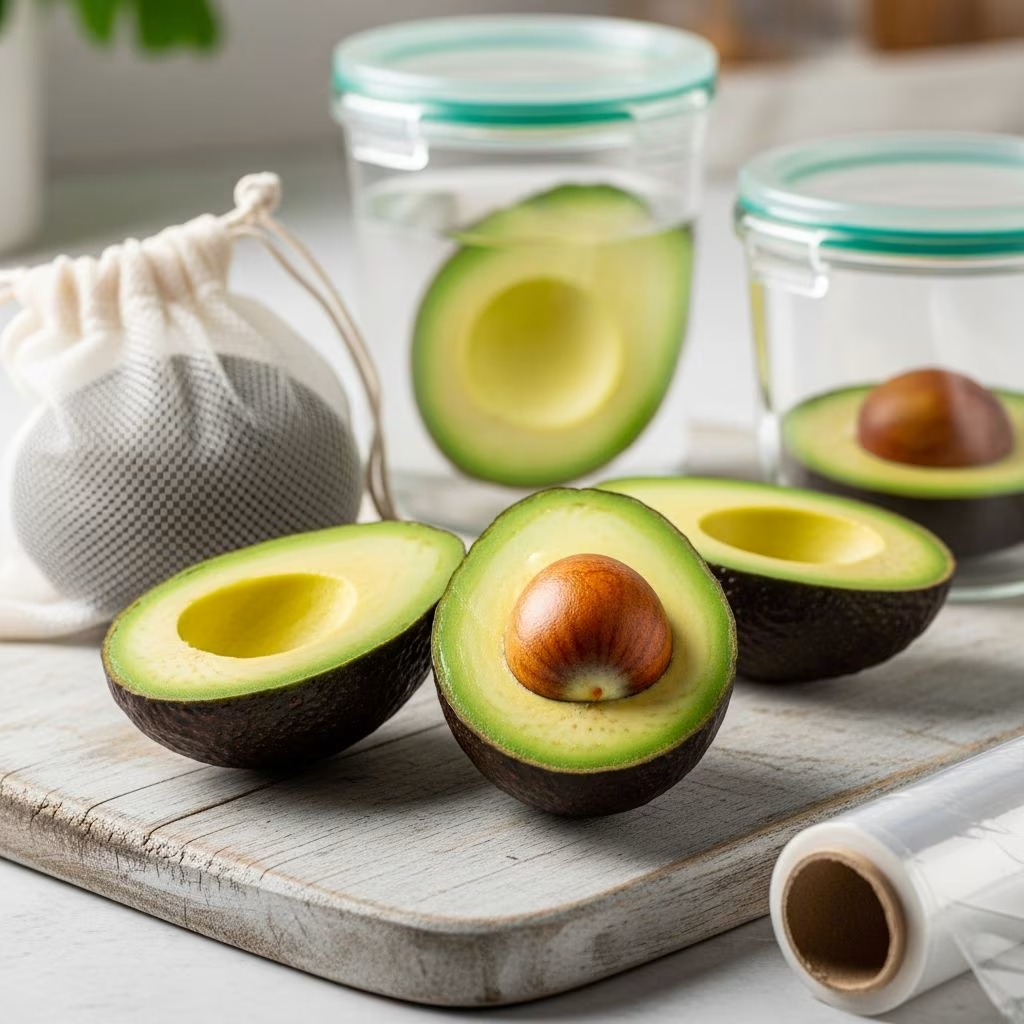
Wrap tightly with plastic wrap or press-and-seal film to exclude air. For halves, retain the pit—it shields the surrounding area. Refrigerate in an airtight container for 1-3 days of freshness.
Alternative: Submerge in water in a sealed jar, changing daily. This works for up to a week but may dilute flavor slightly. Oil coating (olive) creates a barrier but is less common.
Quick Guide for Cut Halves
- Sprinkle juice over flesh.
- Press wrap directly onto surface.
- Store pit-in if possible.
- Refrigerate and use within 48 hours.
Long-Term Freezing Options
Freezing preserves avocados for 3-6 months. Whole or halved fruits freeze poorly due to mushiness upon thawing, so process first.
Freezing Halves
Scoop flesh, coat with lemon juice, and freeze in airtight bags. Flatten for space efficiency. Thaw in fridge overnight; best for smoothies or purees, not salads.
Freezing Puree
Mash flesh with juice (1 tbsp per avocado), portion into bags or ice cube trays. Freeze solid, then transfer. Ideal for dips, dressings, or baking.
| Freezing Method | Prep | Best Uses Post-Thaw | Storage Time |
|---|---|---|---|
| Halves | Juice coat, bag | Smoothies, guac base | 3 months |
| Puree cubes | Mash + juice, tray | Sauces, baking | 6 months |
| Sliced | Flash freeze on sheet | Blends only | 2 months |
Thaw slowly in fridge to retain texture. Avoid microwaving, which worsens mushiness.
Recognizing Spoilage and Troubleshooting
Inspect regularly: Discard if mushy, moldy (especially stem end), or off-smelling (fermented or rancid). Stringy flesh indicates over-maturity.
Common issues:
- Browning despite efforts: Increase citrus or ensure airtight seal.
- Chilling injury: Never fridge unripe; warm to ripen first.
- Freezer burn: Use freezer bags, remove air fully.
Creative Uses for Stored Avocados
Beyond toast, stored avocados shine in recipes. Pureed frozen cubes make instant guacamole: Blend with cilantro, garlic, and salt. Halves top salads or become creamy dressings when whipped.
In baking, sub pureed avocado for butter in brownies or cookies. Smoothies gain silkiness without dairy. Experiment with infused oils for halved storage twists.
FAQs
Can I store avocados in the fridge if unripe?
No, refrigeration stalls ripening and damages texture. Keep at room temp until soft.
How long does a cut avocado last in the fridge?
1-3 days with proper wrapping and citrus treatment.
Is freezing avocados worth it?
Yes for purees; texture changes make them unsuitable for fresh eating.
Why do avocados brown so fast?
Enzymes react with oxygen; acid and barriers prevent this.
Best way to ripen multiple avocados?
Paper bag with ethylene producers like bananas.
Mastering these techniques reduces food waste—avocados account for significant household discards. With practice, you’ll always have fresh supply for meals.
References
- How to Store Avocados Once They’re Ripe — Glad. Accessed 2026. https://www.glad.com/articles/how-to-store-avocados-once-theyre-ripe/
- Longterm Avocado Storage — Instructables. Accessed 2026. https://www.instructables.com/Longterm-Avocado-Storage/
- How to Store Avocados — Avocados From Mexico. Accessed 2026. https://avocadosfrommexico.com/education/how-to/store-avocados/