Understanding the Philosophy of Spirit-Focused Mixology
The foundation of exceptional home bartending lies in a simple yet powerful principle: quality spirits and pantry essentials can combine to create drinks of remarkable complexity. Rather than requiring an extensive collection of specialty liqueurs and exotic ingredients, the most compelling approach focuses on selecting one premium spirit as the star and building around it with ingredients likely already present in most kitchens.
This methodology transforms the constraints of a home bar into creative advantages. By limiting yourself to core spirits and foundational ingredients, you develop a deeper understanding of flavor interactions and develop techniques that elevate simple combinations into sophisticated cocktails.
Why Cognac Deserves Pride of Place in Your Bar
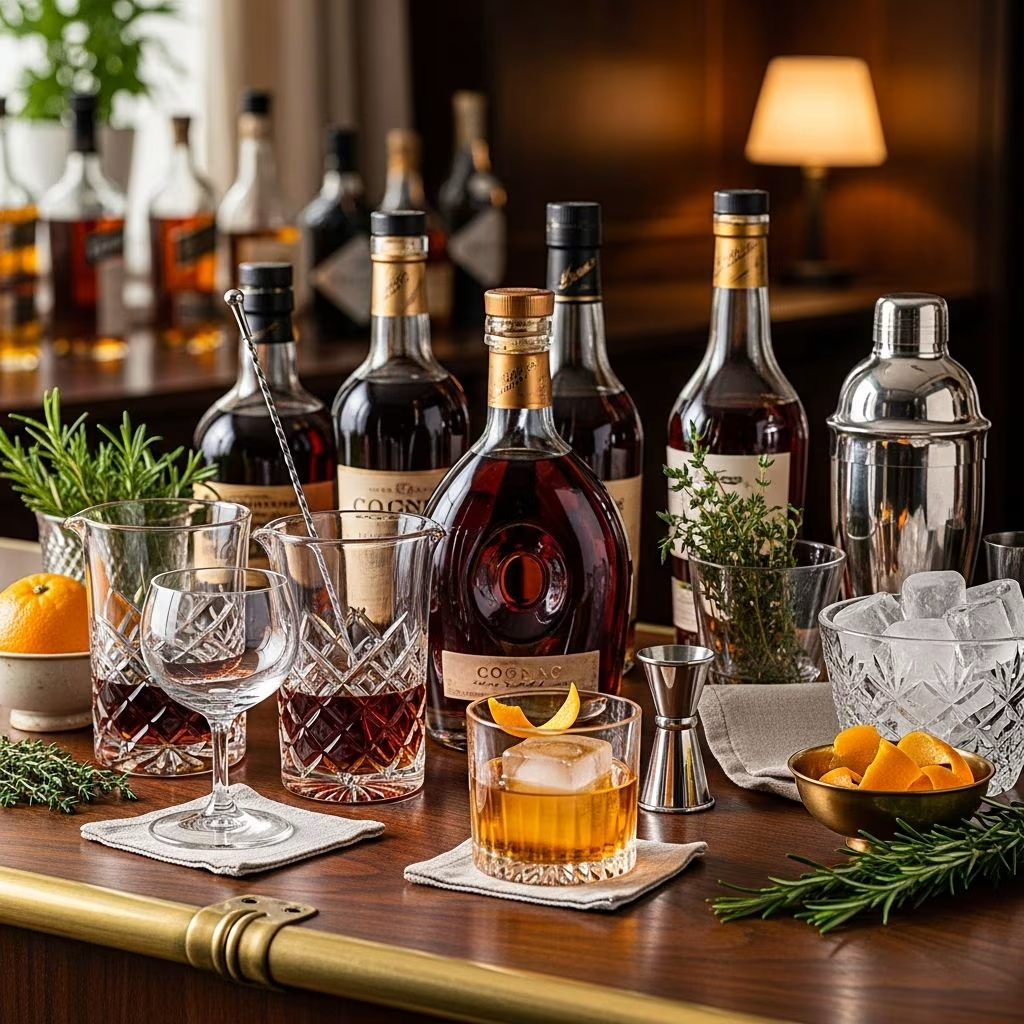
Cognac represents one of the most versatile spirits for home cocktail creation. Unlike some spirits that demand specific pairings, cognac’s complexity allows it to work harmoniously with both traditional mixers and unexpected pantry finds. The brandy’s natural notes of dried fruit, caramel, and subtle spice create a foundation upon which numerous flavor profiles can build.
When selecting cognac for cocktails, the choice of bottling matters significantly. Rather than reaching for the most expensive vintage, focus on well-crafted expressions that offer character without overwhelming other ingredients. Brands like Pierre Ferrand and Dudognon represent excellent middle grounds, providing quality and complexity suitable for mixed drinks without excessive cost.
The key consideration when shopping involves understanding that not all cognacs perform identically in cocktails. Younger expressions often possess more pronounced fruit and spice notes that interact dynamically with mixers, while aged versions may offer deeper complexity that can sometimes get lost in mixed drinks.
The Art of Building Layers Through Unexpected Ingredients
Professional bartenders have long understood that acidity provides the backbone for balanced cocktails. However, many home enthusiasts overlook how varied acidic elements can transform drinks. Vinegar, often dismissed as purely culinary, offers sophisticated possibilities when treated as a serious cocktail ingredient.
Champagne vinegar presents particular promise for cognac-based drinks. Its delicate acidity and subtle fruit undertones complement brandy without introducing harsh or vegetal notes. When used judiciously—beginning with quarter-ounce measurements—vinegar adds dimensionality that citrus alone cannot provide.
The hesitation many feel about vinegar reflects unfamiliarity rather than actual flavor conflict. Professional establishments regularly hide vinegar in preparations called shrubs and gastriques, applying the same principle of controlled acidity but under different names. Understanding this connection helps home bartenders approach vinegar with confidence rather than skepticism.
Natural Sweetness: Moving Beyond Simple Syrup
While simple syrup represents the foundational sweetener in most bars, natural alternatives offer distinctive flavor contributions that enhance specific drinks. Maple syrup, in particular, creates a synergy with cognac that citrus-based cocktails cannot achieve.
The importance of selecting authentic maple syrup cannot be overstated. Mass-produced corn syrup blends labeled with maple-adjacent names deliver little actual maple flavor and possess a thin, one-dimensional sweetness. Pure maple syrup, by contrast, contributes caramel notes, subtle woodiness, and a viscosity that affects both the texture and presentation of finished drinks.
When incorporating maple syrup into cocktails, dilute it slightly with water beforehand to achieve proper consistency and mixing capability. Undiluted syrup resists proper integration and creates uneven distribution throughout the drink. A ratio of one part water to one part maple syrup creates an ideal consistency for shaking or stirring.
Vanilla as a Secret Weapon in Spirit-Forward Drinks
Vanilla extract, a staple in most pantries, introduces aromatic complexity that sophisticated drinkers immediately recognize yet rarely identify. When used carefully—quarter-ounce measurements typically suffice—pure vanilla extract adds an almost imperceptible floral sweetness and aromatic depth.
The vanilla works through subtle mechanism rather than dominant flavor. It does not make the drink taste like dessert or artificial vanilla candy. Instead, it enhances the natural vanilla notes present in quality cognac, creating a rounder, more integrated final product. This technique relies on restraint and quality ingredients; inexpensive or imitation vanilla extract produces noticeably inferior results.
Consider vanilla as an optional component that transforms a good drink into something memorable. Many home bartenders begin by omitting it, then add it to individual serves after tasting the base combination.
Mastering Temperature Control and Technique
Professional-quality cocktails depend as much on proper technique as on ingredient selection. Temperature represents a frequently overlooked factor that dramatically affects the final product’s taste, texture, and presentation.
For drinks combining cognac with delicate ingredients like vinegar and vanilla, careful shaking ensures proper dilution without over-aerating. Fill your cocktail shaker with ice before adding ingredients, allowing the vessel and its contents to pre-chill. This preparation ensures that the relatively brief shaking period adequately chills the drink without requiring excessive shaking that introduces unwanted bubbles or texture changes.
The choice between shaking and stirring depends on the drink’s composition. Cocktails incorporating vinegar, syrup, and vanilla generally benefit from shaking, which helps these varied ingredients integrate smoothly. Strained into a pre-chilled coupe or cocktail glass, the result should display clarity without appearing over-diluted.
Adjusting Recipes to Your Preferences and Available Ingredients
Home bartending ultimately succeeds through flexibility and personal preference rather than rigid adherence to established recipes. Understanding how to modify drinks based on what you have available and your taste preferences transforms you from someone following instructions into someone creating intentional cocktails.
Acidity level presents the most common adjustment point. If you find the vinegar component too pronounced, begin with one-eighth ounce rather than one-quarter ounce, then gradually increase until you reach the balance you prefer. Different vinegar brands possess varying intensity levels, so this experimentation helps you understand your specific bottle’s characteristics.
Similarly, maple syrup depth varies by terroir and processing methods. Vermont maple syrup often displays different flavor profiles compared to Canadian sources. Experimenting with different producers helps you discover which style complements your cognac selection.
Building Your Essential Home Bar Setup
Creating sophisticated cocktails at home requires remarkably little equipment or expense. Focus on quality basics rather than accumulating specialized tools.
- Cocktail shaker: A standard stainless steel Boston shaker handles most mixing needs effectively
- Mixing glass and bar spoon: For stirred drinks requiring gentle mixing without aeration
- Strainer: A Hawthorne strainer works for most home applications
- Jigger: Accurate measurement ensures consistent results and proper ingredient ratios
- Bar towel: Maintains hygiene and helps manage condensation
- Channel knife or microplane: Allows proper citrus expression and garnish creation
Understanding Garnish as Integral Component
Garnishes serve functional rather than merely decorative purposes in well-designed cocktails. A lemon twist—the thin peel of citrus skin—releases essential oils when expressed over the drink’s surface, adding aromatic complexity that complements the other ingredients.
Creating proper twists requires a channel knife or microplane to produce thin, consistent strips. The peel should be expressed by holding it citrus-side-down over the drink and gently twisting, allowing oils to spray across the surface and into the glass. This technique seems minor but dramatically affects the sensory experience.
Frequently Asked Questions About Cognac Cocktail Creation
How much should I expect to spend on cognac suitable for cocktails?
Quality cognac suitable for mixed drinks typically ranges from $30 to $60 per bottle. Spending significantly more often represents wasted potential, as the complexities of expensive vintage cognacs get lost in mixing. Conversely, budget options below $25 often lack the character that makes cognac drinks interesting.
Can I substitute champagne vinegar with other vinegars?
While other vinegars contain acidity, champagne vinegar’s delicate profile pairs most naturally with cognac. Red wine vinegar introduces harsher, more astringent notes, while apple cider vinegar adds fruit sweetness that complicates the drink’s balance. If champagne vinegar is unavailable, a very light touch of white wine vinegar represents an acceptable temporary substitute.
What if I don’t enjoy acidity in cocktails?
Begin by reducing the vinegar component to one-eighth ounce and gradually increase it over several serves. This approach helps your palate acclimate to the ingredient. Alternatively, explore cognac cocktails that don’t rely on vinegar, such as those incorporating coffee liqueurs or fruit elements.
Does cognac quality significantly impact the final drink?
Yes, considerably. Inexpensive cognacs often possess harsh alcohol notes and minimal flavor complexity, resulting in drinks that taste primarily of alcohol rather than balanced cocktails. Mid-range options provide sufficient character and smoothness to create genuinely enjoyable drinks.
How should I store opened cognac bottles?
Cognac keeps indefinitely when stored upright in a cool, dark location away from direct light. The high alcohol content prevents spoilage. Unlike wine, cognac does not improve with exposure to air, so ensure bottles remain tightly sealed.
Moving Forward: Developing Your Mixology Skills
Mastering cognac cocktails opens pathways to broader bartending competency. The principles applied to these drinks—balancing acid, sweetness, and spirit character, understanding temperature effects, respecting ingredient quality—transfer directly to numerous other cocktails.
Begin by perfecting one recipe, understanding how each ingredient contributes and how adjustments affect the final result. This foundation enables you to approach new recipes with confidence and creativity rather than rigid formula-following.
As your skills develop, you’ll naturally begin experimenting—substituting vanilla extract for other aromatic elements, exploring different cognac expressions, or adjusting ingredient proportions based on personal preference. This evolution from novice to confident home bartender occurs gradually through consistent practice and intentional attention to results.
References
- Cognac Expert — All About Cognac Cocktails — Cognac Expert. 2024. https://blog.cognac-expert.com/all-about-cognac-cocktails/
- French Canadian Cocktail Recipe — Tuxedo No.2. https://tuxedono2.com/french-canadian-cocktail-recipe
- French Canadian — Cocktails Distilled — Cocktails Distilled. https://cocktailsdistilled.com/recipe/french-canadian/
- Cognac Cocktails: New Ways with an Old Spirit — Class Magazine. https://classbarmag.com/news/fullstory.php/aid/851/Cognac_cocktails:_New_ways_with_an_old_spirit.html