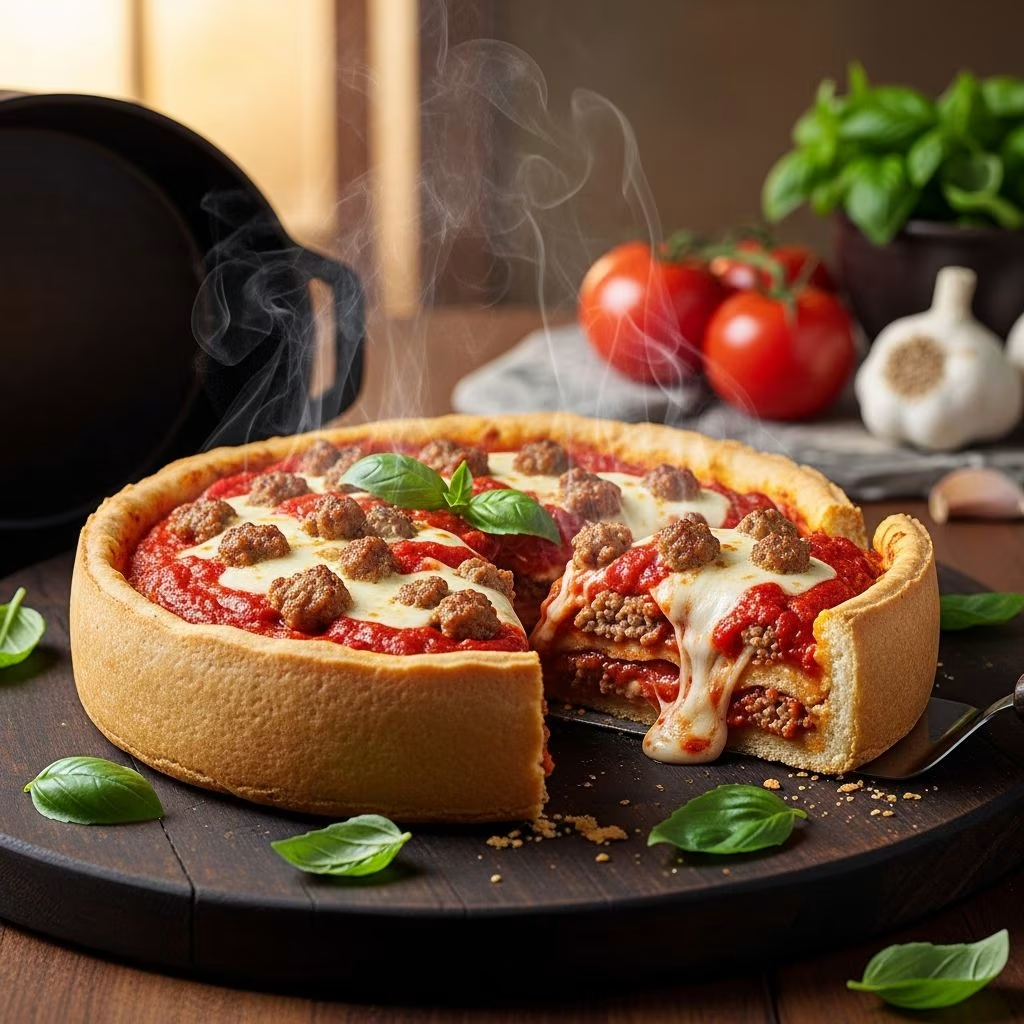
Chicago deep-dish pizza represents a distinct culinary tradition that stands apart from its New York-style counterpart. Unlike thin, crispy pizzas, this iconic preparation features a thick, airy crust baked in a specialized pan, creating layers of dough that provide structure for generous amounts of cheese and toppings. The signature construction method involves reversing the typical pizza assembly, with cheese placed directly on the crust, followed by meats and vegetables, and finally sauce drizzled on top. This approach prevents the crust from becoming soggy while allowing flavors to meld beautifully during baking.
Understanding the Foundation: Crafting the Ideal Dough
The success of any Chicago deep-dish pizza begins with developing a robust dough that can support substantial weight and create the desired texture. The dough requires careful consideration of ingredient ratios and fermentation timing to achieve the characteristic tender crumb with structural integrity.
Essential Ingredients for Pizza Dough
- All-purpose flour (approximately 3 to 3.25 cups) provides the gluten network necessary for dough elasticity and strength
- Cornmeal (roughly 0.5 cup) adds textural complexity and slight grittiness to the crust
- Instant or rapid-rise yeast (2 to 2.25 teaspoons) enables proper fermentation without requiring extended rising periods
- Fine sea salt (1.5 teaspoons) controls fermentation speed and enhances flavor development
- Granulated sugar (1 to 2 teaspoons) feeds yeast and adds subtle sweetness
- Warm water (1.25 to 1.5 cups at 90-110°F) activates yeast and hydrates flour
- Unsalted butter (3 to 4 tablespoons) contributes richness and promotes browning
- Olive oil (1 to 4 tablespoons additional) facilitates pan preparation and adds moisture to the dough
Dough Preparation Methodology
Begin by blooming the yeast in lukewarm water for approximately ten minutes, allowing it to activate and develop characteristic foam. While the yeast blooms, combine dry ingredients—flour, cornmeal, salt, and sugar—in a large mixing bowl or stand mixer equipped with a dough hook. Once yeast mixture becomes foamy, add it gradually to the dry ingredients while mixing on medium speed for five to six minutes. The resulting dough should appear slightly tacky and smooth, pulling away from bowl sides while maintaining enough moisture to work effectively.
After combining ingredients, knead the dough for several minutes to develop gluten strands that provide the necessary structure. The finished dough should feel elastic and smooth rather than sticky or dry. If dough appears too dry, add water gradually in small increments; conversely, if excessive moisture exists, incorporate additional flour by the tablespoon until achieving the proper consistency.
Developing the Sauce: Balancing Flavor Complexity
Chicago deep-dish pizza sauce differs significantly from typical tomato sauces used in other pizza styles. The sauce undergoes extended simmering to concentrate flavors and reduce liquid content, resulting in a thick, cohesive component that doesn’t saturate the crust or slide off during slicing.
Sauce Components and Preparation
| Ingredient | Quantity | Purpose |
|---|---|---|
| Unsalted butter | 2 tablespoons | Creates flavorful fat base for aromatics |
| Onion, grated | 1 medium onion | Adds sweetness and depth through caramelization |
| Garlic cloves, minced | 3 cloves | Provides savory aromatic backbone |
| Crushed tomatoes | 28-ounce can | Primary tomato component with consistent texture |
| Dried oregano | 0.25 teaspoon | Contributes herbal notes characteristic of Chicago style |
| Crushed red pepper flakes | 0.5 teaspoon (optional) | Adds subtle heat and complexity |
| Granulated sugar | 0.25 teaspoon | Balances acidity in tomatoes |
| Fresh basil | 2 tablespoons, chopped | Introduces bright herbal finishing note |
| Extra-virgin olive oil | 1 tablespoon | Enriches final sauce with premium flavor |
Sauce Development Process
Heat butter in a medium saucepan over medium heat until it melts completely. Add grated onion along with salt, oregano, and red pepper flakes if using. Allow this mixture to cook, stirring occasionally, until the onion becomes golden brown and liquid evaporates—typically five minutes. This browning process develops deeper, more complex flavors than simple sautéing.
Once onion reaches the desired color, add minced garlic and cook for thirty seconds until fragrant, then introduce crushed tomatoes and sugar. Increase heat to high momentarily to bring the mixture to a simmer, then reduce heat to medium-low and maintain a gentle simmer. Allow the sauce to reduce for thirty to forty minutes, stirring occasionally. The sauce should reduce to approximately 2.5 cups from the original volume, becoming noticeably thicker and more concentrated. Remove from heat and stir in fresh basil and extra-virgin olive oil, then season with salt and ground black pepper to taste.
Selecting and Preparing the Pizza Pan
The vessel used for baking dramatically influences the final product’s characteristics. Chicago deep-dish pizza traditionally uses specialized pans featuring sloped sides and adequate depth to accommodate layers of dough and toppings. Acceptable alternatives include twelve-inch deep-dish pizza pans, cast-iron skillets, or cake pans with minimum two-inch depth.
Before adding dough, thoroughly coat the interior with olive oil, ensuring complete coverage of the bottom surface and sides. This prevents sticking while contributing to crust browning. Some practitioners prefer using cooking spray for easier application, though traditional olive oil provides superior flavor development.
Assembly Techniques: Building Layers Strategically
Chicago deep-dish pizza construction follows a deliberate layering sequence that differs markedly from conventional pizzas. Understanding proper assembly ensures optimal flavor distribution and structural integrity throughout baking.
Step-by-Step Assembly Protocol
Preheat the oven to 400-425°F, depending on desired browning speed and crust thickness preference. Remove prepared dough from its resting location and place on a lightly floured work surface. Gently stretch and shape the dough into an approximate twelve-inch circle, then transfer to the prepared, oil-coated pan.
Using your hands, press the dough firmly across the pan’s bottom and up the sides, ensuring coverage approximately 1.5 inches up the pan’s walls. Work methodically to avoid tearing, as the dough needs to contain fillings and sauce without rupturing during baking. Create slight thickness variations, with marginally thicker perimeter walls to support the substantial weight of ingredients.
Begin the filling sequence by arranging mozzarella cheese slices directly on the dough surface, covering the entire bottom in a single layer. This crucial step prevents sauce from saturating the crust. Next, distribute cooked Italian sausage in an even layer, followed by any additional proteins like pepperoni slices, arranging them in a single overlapping pattern. This organization ensures even cooking and distribution throughout the pizza.
Pour the thickened tomato sauce over the meat layer, spreading it carefully to cover all toppings while leaving a small margin around the perimeter. Finish with additional grated Parmigiano Reggiano and a light drizzle of extra-virgin olive oil. Some practitioners add a thin layer of comté or additional mozzarella on the sauce surface for enhanced browning and flavor.
Baking Considerations and Timing
Place the assembled pizza into the preheated oven and bake for twenty to thirty minutes, monitoring progress carefully. The crust should achieve golden-brown coloration while the filling sets completely. After approximately fifteen minutes, if crust edges show signs of excessive browning, loosely cover the pizza with aluminum foil to prevent burning while interior continues cooking.
The pizza reaches completion when crust sides exhibit deep golden-brown coloring, cheese visibly bubbles at the surface, and sauce no longer appears soupy. The filling should feel set when gently pressed, indicating proper cooking throughout.
Cheese Selection and Layering Strategy
Cheese selection significantly impacts the final flavor profile and textural characteristics of Chicago deep-dish pizza. Authentic preparations traditionally employ a combination of cheeses rather than relying solely on mozzarella, creating more nuanced and complex flavor development.
Recommended Cheese Components
- Fresh mozzarella sliced to medium thickness creates the foundational creamy layer
- Comté cheese grated fresh adds distinctive nutty notes and superior melting properties
- Parmigiano Reggiano contributes sharp, crystalline character and enhanced browning
- Provolone sliced very thinly introduces subtle smoky undertones
The cheese-to-dough ratio should remain balanced, avoiding excessive cheese that prevents proper crust development or insufficient cheese that yields dry, bland results. Approximately twelve to fifteen ounces total cheese per pizza represents the standard proportion for deep-dish preparations.
Meat Topping Alternatives and Preparation
While Italian sausage and pepperoni represent classic Chicago deep-dish components, various proteins accommodate different preferences and culinary traditions. Ensure all meats reach proper internal temperatures through preheating before assembly, particularly for sausage, which requires thorough cooking to eliminate food safety risks.
Protein Options for Customization
- Hot Italian sausage provides traditional spice and robust flavor
- Mild Italian sausage offers similar characteristics with reduced heat intensity
- Premium pepperoni sliced thin creates crispy edges and concentrated flavor
- Salami introduces different curing characteristics and textural variation
- Cooked bacon crumbled adds smoky, savory depth
- Ground beef seasoned with Italian herbs accommodates diverse taste preferences
Troubleshooting Common Preparation Challenges
Frequently Encountered Issues and Solutions
Dough Shrinkage During Baking: If dough contracts significantly during cooking, allow adequate resting time after initial shaping. Dough that hasn’t fully relaxed retains tension and shrinks when exposed to oven heat. Alternatively, the oven temperature may be excessive; reduce temperature by fifteen to twenty-five degrees and extend baking time accordingly.
Crust Remains Pale or Undercooked: Insufficient browning suggests inadequate oven temperature or insufficient baking duration. Verify oven temperature accuracy using an independent thermometer, as many home ovens run cooler than settings indicate. Increase baking time by five to ten minutes, monitoring carefully to prevent overdrying.
Soggy Crust Despite Proper Baking: This typically results from excessive sauce or inadequate cheese barrier. Ensure substantial mozzarella coverage directly on the dough before adding sauce, and avoid oversaturating with sauce. Additionally, allow the pizza to rest five to ten minutes after removing from the oven, enabling residual heat to continue crust firming.
Filling Remains Soupy After Cooking: The sauce requires sufficient pre-baking reduction to achieve proper consistency. Simmer sauce for the full thirty to forty minute duration recommended, stirring occasionally to ensure even evaporation. Underdeveloped sauce results in excessive moisture in the finished pizza.
Serving and Storage Recommendations
Allow the freshly baked pizza to rest for five to ten minutes before slicing, enabling internal temperature stabilization and cheese setting. This resting period also facilitates cleaner slicing without dislodging toppings. Use a sharp knife or pizza cutter to portion the pizza into quarters or eighths depending on serving preferences.
Leftover pizza stores effectively in the refrigerator for three to four days when properly wrapped in airtight containers or covered with plastic wrap. Reheat by placing slices in a 350°F oven for approximately ten minutes, restoring crispy crust quality superior to microwave reheating. Alternatively, place slices in a cast-iron skillet over medium heat for three to four minutes, creating a restored crispy exterior.
Frequently Asked Questions
Can I prepare the dough in advance?
Yes, prepared dough benefits from extended cold fermentation in the refrigerator for up to forty-eight hours. This slow fermentation develops deeper flavor complexity in the finished crust. Remove dough from refrigeration thirty to forty minutes before assembly to allow room temperature adjustment.
What if I don’t have a deep-dish pizza pan?
Cast-iron skillets and standard cake pans provide acceptable substitutes. Ensure minimum two-inch depth to accommodate dough thickness and toppings. Quality and browning may vary slightly depending on the vessel’s heat distribution characteristics.
Can I make Chicago deep-dish pizza without meat?
Absolutely. Replace meat layers with additional vegetables like sautéed mushrooms, caramelized onions, roasted peppers, or spinach. Maintain the same assembly sequence with cheese foundation and sauce topping.
How can I achieve crispier crust edges?
Increase oven temperature by twenty-five degrees and reduce overall baking time slightly. Alternatively, brush crust edges with additional olive oil before baking or use higher-fat butter in the dough recipe.
References
- Chicago Deep Dish Pizza (New & Improved Recipe) — Brian Lagerstrom. 2024. https://www.brianlagerstrom.com/recipes/chicago-deep-dish-2
- Best Chicago-Style Deep Dish Pizza Recipe — Joshua Weissman. 2024. https://www.joshuaweissman.com/recipes/best-deep-dish-pizza-recipe
- Homemade Chicago-Style Deep-Dish Pizza — CarnalDish, adapted from Cook’s Illustrated. 2024. https://www.carnaldish.com/recipes/pizza/homemadechicago-style-deep-dish-pizza/
- Chicago-Style Deep Dish Pizza — Del’s Cooking Twist. 2024. https://www.delscookingtwist.com/chicago-style-deep-dish-pizza/
- Chicago-Style Deep Dish Pizza with Sausage & Pepperoni — Cooking with Cocktail Rings. 2024. https://cookingwithcocktailrings.com/deep-dish-pizza/
- Chicago-Style Deep Dish Pizza — Sally’s Baking Addiction. 2024. https://sallysbakingaddiction.com/how-to-make-chicago-style-deep-dish-pizza/