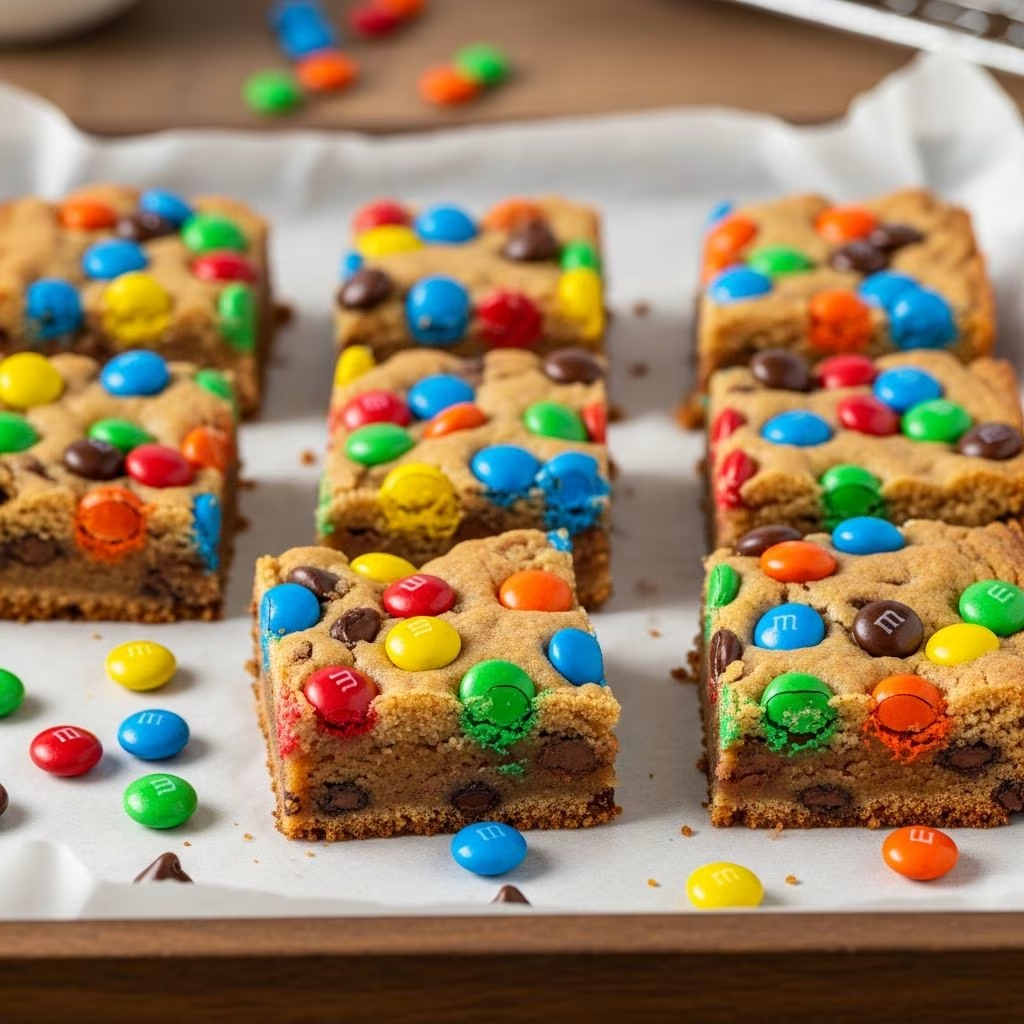
Cookie bars offer a convenient way to enjoy homemade sweets without the hassle of portioning individual cookies. Among the most popular varieties, M&M-topped bars combine soft, chewy dough with the delightful crunch of colorful candies, creating a treat that appeals to both children and adults. This versatile dessert works wonderfully for casual family gatherings, holiday celebrations, or bake sales. The combination of texture and flavor makes these bars a standout choice for anyone seeking an impressive yet achievable baking project.
Understanding the Fundamentals of Cookie Bars
Cookie bars differ from traditional cookies in their preparation and texture. Rather than shaping individual portions, bakers combine ingredients directly in a baking pan and cut the finished product into uniform squares or rectangles. This method reduces preparation time significantly while ensuring consistent results. The dough remains thicker than typical cookie dough, creating a denser, chewier final product that holds together well when cut.
The appeal of cookie bars lies in their simplicity and visual impact. When decorated with vibrant M&Ms before baking, they create an eye-catching presentation that makes them ideal for display tables at parties. The candies add not only color but also bursts of chocolate flavor throughout each bite, enhancing the overall eating experience.
Essential Ingredients and Their Roles
Creating successful M&M cookie bars requires understanding each ingredient’s contribution to the final product. The foundation consists of pantry staples that work together to produce the desired texture and flavor profile.
Foundation Ingredients
Flour provides structure and stability to the bars, with all-purpose flour serving as the standard choice. Many successful recipes incorporate cornstarch alongside flour, which increases tenderness and creates a more delicate crumb structure. Butter, preferably melted rather than creamed, contributes richness and promotes chewiness. Using melted butter instead of softened butter mixed with sugar produces softer, slicker dough that yields chewier results.
Brown sugar contains more moisture than white granulated sugar due to its molasses content, which directly impacts texture development. Recipes that emphasize higher proportions of brown sugar compared to white sugar produce noticeably softer and chewier bars. Eggs bind ingredients together while adding moisture and structure, with room-temperature eggs incorporating more smoothly into the dough.
Flavor Enhancement Components
Vanilla extract rounds out the flavor profile, providing depth and complexity to the sweet dough. Baking soda acts as the leavening agent, helping bars rise during baking and creating a slightly lighter texture. Salt balances sweetness and enhances other flavors in the recipe.
Textural Elements
The combination of M&Ms and chocolate chips creates layers of chocolate flavor and visual interest. M&Ms add crunch and sweetness, while chocolate chips contribute melting richness. Recipes typically incorporate both mini and regular-sized M&Ms, though either variety works successfully. The candies should be folded gently into the dough to prevent excessive color bleeding, though some color transfer is normal and creates an attractive marbled effect.
Preparation Techniques for Optimal Results
Mixing the Dough
The mixing process differs from traditional cookie dough preparation. Rather than creaming butter and sugar together with an electric mixer, the melted butter approach requires whisking wet and dry ingredients separately before combining them. This method reduces mixing time and gluten development, directly contributing to the chewier texture characteristic of exceptional cookie bars.
Wet ingredients—melted butter, sugars, eggs, and vanilla—should be whisked together until thoroughly combined and free of lumps. Simultaneously, dry ingredients including flour, cornstarch, baking soda, and salt should be whisked together in a separate bowl. Combining these two mixtures gently with a large spoon or silicone spatula prevents overmixing, which could toughen the final product.
Incorporating M&Ms and Chocolate Chips
The M&Ms and chocolate chips should be folded into the dough after wet and dry ingredients are combined. The melted butter creates a slick dough that resists holding candies firmly, but persistent gentle folding distributes them throughout. Some recipes recommend reserving a portion of candies to place on top of the dough before baking, creating a more appealing presentation and ensuring every bite contains visible colorful pieces.
Pan Preparation and Dough Distribution
Proper pan preparation prevents sticking and facilitates easy removal. Line a standard 9×13-inch baking pan with parchment paper, leaving overhang on two sides for convenient lifting after baking. Parchment paper works far better than wax paper or aluminum foil for this application, as it provides a non-stick surface without the potential melting or sticking issues associated with alternatives.
Transfer the thick dough into the prepared pan and press it into an even layer using the bottom of a measuring cup or an offset spatula. Even distribution ensures uniform thickness, which promotes consistent baking throughout the entire pan. Thinner edges may overcook while thicker centers remain underbaked if dough thickness varies significantly.
Baking Guidelines and Temperature Control
Most M&M cookie bar recipes call for baking at 325-350°F (163-176°C). The lower end of this range works better for glass baking dishes, which conduct heat more intensely than metal pans. Baking duration typically ranges from 23 to 30 minutes, with exact timing depending on oven characteristics and desired doneness level.
Visual cues help determine proper baking completion. The edges and top should be lightly browned, while the center remains slightly soft to the touch. Inserting a toothpick into the center should yield mostly clean results with a few moist crumbs—not wet batter. The bars will puff slightly during baking and settle as they cool, so slight underbaking prevents excessive dryness in the final product.
If the bars begin browning too quickly, covering the pan with aluminum foil reduces heat exposure and extends baking time. This technique prevents dark edges while allowing the center to finish cooking properly.
Cooling and Cutting Procedures
Allowing bars to cool completely before cutting ensures clean cuts and prevents crumbling. This process typically requires one to two hours at room temperature, though the cooling process can be accelerated by transferring the pan to the refrigerator after approximately 20 minutes of cooling.
Using a sharp knife and wiping it with warm water between cuts creates cleaner edges. A decisive cutting motion produces better results than sawing motions, which can drag and tear the bars. Drying the knife on a clean kitchen towel between each cut prevents moisture accumulation that can cause sticking.
Flavor Variation Possibilities
The basic M&M cookie bar formula accommodates numerous modifications and additions. Different colored M&Ms create themed variations for specific holidays—pastels for spring celebrations, orange and brown tones for fall festivities, or red and green for winter holidays. Some bakers incorporate butterscotch chips, white chocolate chips, or caramel bits alongside milk chocolate for complex flavor profiles.
For those seeking texture variation, adding quick oats creates additional substance and rustic character. Nuts such as walnuts or pecans introduce crunch, though they should be added judiciously to avoid overwhelming the chocolate elements.
Storage and Shelf Life
Properly stored M&M cookie bars maintain quality for several days. Cool bars completely before storing in an airtight container at room temperature. They typically remain fresh and chewy for up to five days when stored this way. For extended storage, refrigeration can preserve bars for up to a week, though the texture may become slightly firmer. Freezing is also possible—wrap bars individually in plastic wrap and store in freezer-safe containers for up to three months, allowing them to thaw at room temperature before serving.
Troubleshooting Common Issues
| Problem | Likely Cause | Solution |
|---|---|---|
| Bars are too dry | Overbaking or excessive flour | Reduce baking time by 2-3 minutes; measure flour by spooning and leveling |
| Bars are dense and heavy | Overmixing or insufficient melted butter | Mix gently with a spatula; ensure butter is melted and cooled before use |
| M&Ms lose color | Prolonged mixing or too much heat | Fold in candies gently at the end; monitor baking temperature with an oven thermometer |
| Uneven baking | Inconsistent dough thickness or hot spots in oven | Press dough into even layer; rotate pan halfway through baking |
| Difficult to cut | Bars not fully cooled | Cool completely at room temperature before cutting; chill if needed for cleaner cuts |
Presentation and Serving Suggestions
M&M cookie bars shine as centerpieces at dessert tables and bake sales. Their colorful appearance immediately attracts attention, and individually wrapped squares make convenient party favors or lunch box additions. Arrange bars on tiered cake stands or wooden serving boards for an elevated presentation. Pairing them with cold milk, hot chocolate, or coffee creates satisfying flavor complements that enhance the overall eating experience.
For gift-giving, stack bars in decorative boxes lined with parchment paper, creating an impressive homemade present that friends and family appreciate year-round. The combination of professional appearance and homemade quality makes these bars suitable for various occasions, from casual gatherings to more formal celebrations.
Frequently Asked Questions
Can I use a different size baking pan?
Yes, though it affects baking time and thickness. Smaller pans create thicker, chewier bars requiring slightly longer baking, while larger pans produce thinner bars that bake faster. Adjust baking time accordingly and monitor visually rather than relying solely on timing guidelines.
What if my oven runs hot or cold?
Invest in an oven thermometer to verify actual temperature, as many home ovens deviate from displayed temperatures. Adjust the oven setting accordingly or modify baking time based on how quickly the bars brown. Starting with a reduced temperature of 25°F helps identify your oven’s characteristics.
Can I make these bars without M&Ms?
Absolutely. Use additional chocolate chips, sprinkles, or other candy varieties. The chocolate chip quantity can be doubled or tripled depending on chocolate preference, creating equally delicious results.
Are there dairy-free or gluten-free versions?
Gluten-free all-purpose flour blends work as direct substitutes for regular flour. For dairy-free versions, use dairy-free butter and ensure all other ingredients meet dietary requirements. Results may vary slightly in texture due to different binding properties of specialty ingredients.
How do I prevent the bars from becoming too thick?
Ensure the dough is pressed into a thin, even layer using the bottom of a measuring cup. Thick dough creates dense bars; distributing the mixture evenly across the entire pan promotes uniform texture and prevents overly thick bars.
References
- Magic Bars Recipe (With M&Ms!) — Chelsea’s Messy Apron. Accessed April 2026. https://www.chelseasmessyapron.com/magic-bars/
- EASY M&M Cookie Bars — I Heart Naptime. Accessed April 2026. https://www.iheartnaptime.net/mm-cookie-bars/
- Soft M&M Cookie Bars Recipe — Sally’s Baking Addiction. Accessed April 2026. https://sallysbakingaddiction.com/mm-cookie-bars/
- Magic Cookie Bars with M&M’s — Angie’s Open Recipe Box. Accessed April 2026. https://angiesopenrecipebox.com/2022/02/23/magic-cookie-bars-with-m-ms/
- Christmas Magic Cookie Bars Recipe — Oh Sweet Basil. Accessed April 2026. https://ohsweetbasil.com/christmas-magic-cookie-bars-recipe/