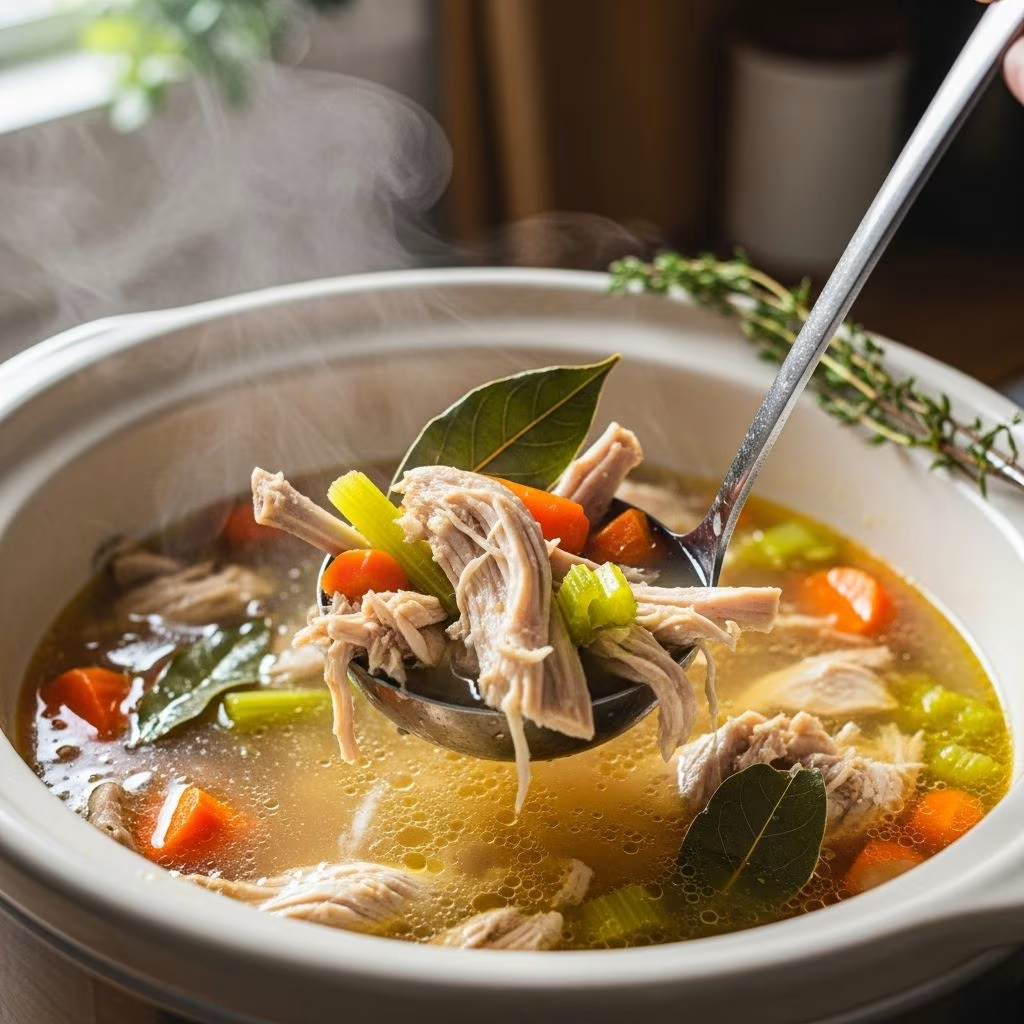
Making chicken broth at home is one of the most rewarding culinary projects you can undertake in your kitchen. Unlike store-bought versions that often contain preservatives and excessive sodium, homemade broth allows you to control every ingredient and customize the flavor profile to your preferences. The slow cooker has become an indispensable tool for this task, transforming what was once a day-long stovetop endeavor into a hands-off process that works perfectly overnight or during your work hours.
Understanding the Slow Cooker Advantage
The slow cooker excels at broth-making due to its unique cooking method. Unlike rapid boiling on the stovetop, the low, consistent heat of a slow cooker gently extracts gelatin, collagen, and other beneficial compounds from chicken bones and connective tissue over an extended period. This methodical approach yields a richer, more complex flavor while preserving heat-sensitive nutrients that would otherwise be lost during high-temperature cooking.
The extended cooking time—typically ranging from 8 to 24 hours depending on your preference—allows the water to gradually absorb the essence of the chicken and aromatics. Many home cooks appreciate that they can set their slow cooker before bed and wake up to finished broth, or start it in the morning and have it ready by evening. This flexibility makes homemade broth accessible to busy individuals who might otherwise resort to canned alternatives.
Selecting Your Chicken Base
The foundation of any good broth begins with choosing the right chicken. You have several options, each offering distinct advantages:
- Chicken carcasses: Left over from roasted chickens, these provide excellent flavor and body. The bones still contain marrow and connective tissue that contribute significantly to the broth’s richness and gelatinous quality.
- Raw chicken bones: Chicken wings, thighs, drumsticks, and leg quarters work beautifully. Dark meat tends to produce a deeper, more satisfying flavor than white meat.
- Whole chickens: While more expensive, using an entire bird allows you to cook the broth and then use the cooked meat for additional recipes, maximizing value.
- Rotisserie chicken remains: Already cooked store-bought chickens offer convenience and can be combined with vegetable scraps for a quick broth.
- Chicken feet: Often overlooked, these provide exceptional gelatin content, resulting in a broth that gels when cooled—a sign of quality and nutrient density.
The quantity matters as well. Most recipes call for 2 to 3 pounds of bones or meat for a standard 6-quart slow cooker, though you can adjust based on how concentrated you want your final broth to be.
Essential Aromatics and Flavor Builders
While chicken forms the base, aromatics and vegetables provide the flavor complexity that distinguishes homemade broth from a simple stock. The traditional holy trinity of mirepoix—onions, celery, and carrots—forms the foundation of most broths. These vegetables contribute natural sweetness, earthiness, and depth.
An important technique many cooks overlook is leaving vegetable skins intact. Leaving onion papery skin on adds a golden hue to the finished broth and contributes subtle flavor notes. Similarly, carrots need not be peeled. Garlic cloves should be left whole or simply crushed to release their oils without overwhelming the broth.
Beyond the basics, you might incorporate:
- Bay leaves for subtle herbal notes
- Whole black peppercorns for gentle spice
- Fresh thyme sprigs for earthy undertones
- Parsley stems for brightness
- Apple cider vinegar to enhance mineral extraction
- Chicken bouillon or poultry seasoning for concentrated flavor
Setting Up Your Slow Cooker
Preparation is straightforward but requires attention to proportion and arrangement. Begin by placing your chicken bones or pieces into the slow cooker crock. If using fresh vegetables, chop them into medium pieces—there is no need for fine mincing since they will be strained out anyway. Arrange the aromatics around and atop the chicken for even flavor distribution.
Next, add cold water until the ingredients are just submerged. Here’s a critical point: while it might seem logical to fill the cooker completely, doing so can result in overly diluted broth. Most recipes suggest using approximately 2 to 2.5 quarts of water for a full batch, though this depends on your cooker size and starting ingredient volume. It is preferable to have a few bones slightly exposed to the surface than to add excessive water that will weaken your final product.
If using apple cider vinegar—which some cooks swear by for enhanced mineral extraction—add 1 to 2 tablespoons now. The vinegar’s mild acidity helps break down bone structure and makes minerals more bioavailable.
Cooking Time and Temperature Options
One of the slow cooker’s greatest advantages is its flexibility with cooking times and temperatures:
| Cooking Method | Duration | Best For |
|---|---|---|
| Low Setting | 8–12 hours (standard); up to 24 hours (extended) | Overnight cooking; maximum nutrient extraction |
| High Setting | 4–5 hours | Same-day broth; shorter time frame |
The low setting is generally preferred because it allows gradual extraction of flavors and nutrients without the vigorous bubbling that occurs on high heat. However, if you need broth quickly, the high setting produces acceptable results in roughly half the time, though some cooks report slightly less developed flavor.
Timing is remarkably flexible—it is genuinely difficult to overcook broth in a slow cooker. Some experienced cooks regularly extend cooking to 20 or even 24 hours without negative consequences, finding that the extended time produces an even deeper flavor and better gel structure when cooled.
During the Cooking Process
Once your slow cooker is set, the process becomes largely passive. However, attentive cooks may choose to occasionally skim foam or impurities that rise to the surface during the first few hours of cooking. This step is optional—the foam is harmless—but some believe it produces a clearer, more refined final product.
Resist the urge to open the lid frequently. Each time you do, you release heat and extend the actual cooking time. Trust your slow cooker to do its job without constant monitoring.
Straining and Finishing Your Broth
Once cooking is complete, carefully strain the broth through a fine-mesh strainer or cheesecloth into a large pot or storage container. Work slowly to avoid splashing and allow gravity to do the work rather than pressing on the solids, which can force particles into your finished broth. Some cooks use a colander first to remove large pieces, then pour through a finer strainer for the final stage.
At this point, your broth may appear cloudy or have fat floating on the surface. The fat is not a flaw—it contains flavor and is perfectly safe to cook with, tolerating high heat well. If you prefer to remove it, refrigerate the broth for 4 to 12 hours until the fat solidifies on top, then simply lift it off with a spoon.
The typical yield from a standard recipe ranges from 4 to 6 cups of finished broth, though this varies based on starting liquid volume and cooking time. Longer cooking times produce more concentrated broth and may yield slightly less volume.
Storage and Preservation
Properly stored broth lasts remarkably well. In the refrigerator, it keeps for up to 5 days in an airtight container. For longer storage, freeze in quart-sized containers or ice cube trays for convenient portioning. Frozen broth maintains quality for several months. Many home cooks find that portioning into 2-cup servings in freezer bags provides convenient portions for recipes.
Using Your Homemade Broth
The applications for homemade chicken broth are virtually limitless. Use it as the foundation for soups, risottos, and grain dishes. It elevates sauces, gravies, and braises. Many health-conscious cooks simply warm a mug of broth as a nourishing beverage. The superior flavor of homemade broth compared to commercial versions becomes immediately apparent in any recipe where broth plays a starring role rather than merely supporting role.
Troubleshooting Common Issues
Broth lacks flavor: This usually means insufficient cooking time or too much water relative to solids. Try extending cooking time on future batches or reducing water quantity.Broth is too weak or thin: Use less water or more bones. Consider adding a tablespoon of chicken bouillon or reducing the finished broth on the stovetop.Broth appears cloudy: This is typically harmless and results from dissolved proteins. Fine-mesh straining or additional refrigeration can clarify it.Finished broth lacks gelatin structure: This indicates insufficient cooking time or too few bones. Adding chicken feet or wings to future batches enhances gelatin content.
Frequently Asked Questions
Can I use store-bought rotisserie chicken for broth?
Yes, rotisserie chicken carcasses and scraps work excellently for broth. Follow the same process, adjusting cooking time slightly as the bones have already been cooked once.
What if my slow cooker is smaller than 6 quarts?
Simply halve the recipe, using proportionally less chicken, vegetables, and water while maintaining the same ratios.
Is apple cider vinegar necessary?
No, it is optional. However, some cooks believe it enhances mineral extraction and improves the final broth quality.
Can I reuse bones after straining?
While technically possible, bones lose most extractable content after an extended cook. It is better to compost them or feed them to pets.
What temperature should broth be before freezing?
Allow broth to cool to room temperature before freezing to prevent temperature fluctuations in your freezer.
References
- Brooklyn Farm Girl — Brooklyn Farm Girl. Accessed 2026. https://brooklynfarmgirl.com/crockpot-chicken-broth/
- Slow Cooker Chicken Broth with Left Over Rotisserie Chicken — The Pinning Mama. Accessed 2026. https://www.thepinningmama.com/slow-cooker-chicken-broth-with-left-over-rotisserie-chicken/
- Slow-Cooker Chicken Broth — In the Kitchen with Kath. Adapted from America’s Test Kitchen’s Slow Cooker Revolution. Accessed 2026. https://inthekitchenwithkath.com/2012/12/30/slow-cooker-chicken-broth/
- Nourishing Chicken Bone Broth In A Slow Cooker — The Yummy Life. Accessed 2026. https://www.theyummylife.com/Slow_Cooker_Chicken_Broth
- Slow Cooker Chicken Bone Broth — Frugal Nutrition. Accessed 2026. https://www.frugalnutrition.com/easy-homemade-chicken-stock-slow-cooker-or-stove-top/
- How to Make Chicken Stock in your Slow Cooker — Hamilton Beach. Accessed 2026. https://blog.hamiltonbeach.com/slow-cooker-chicken-stock/