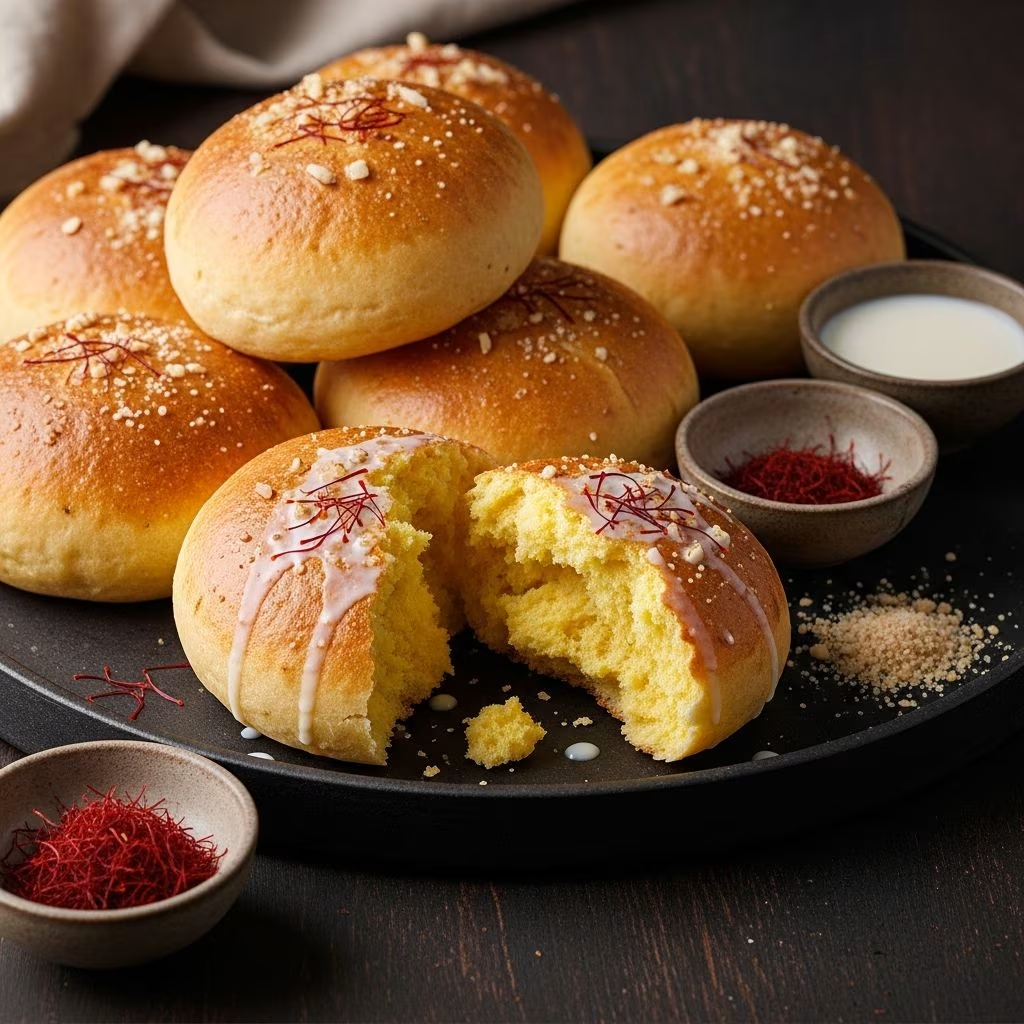
Shirmal, also known as Sheermal, stands as a testament to the rich tapestry of South Asian and Persian culinary traditions. This slightly sweet, saffron-infused flatbread captivates with its golden hue, tender crumb, and aromatic essence, making it a beloved staple in festive meals and everyday indulgences. Derived from the Persian words for “milk” (sheer) and “rub” (mal), reflecting its milk-kneaded dough, Shirmal bridges cultures through its flaky exterior and fluffy interior.
Origins and Cultural Journey of Shirmal
Shirmal’s story begins in ancient Persia, where it emerged as a luxurious bread enriched with milk, saffron, and ghee. As trade routes and empires expanded, particularly during the Mughal era, this delicacy journeyed to the Indian subcontinent. It found a permanent home in regions like Lucknow, Hyderabad, and Kashmir, especially within Muslim communities where it became synonymous with opulent feasts.
In Lucknow, Shirmal evolved into a street food icon, often adorned with nuts or raisins, baked in traditional tandoors to achieve its signature rustic charm. Hyderabad’s version leans sweeter, pairing seamlessly with spicy kebabs, while Kashmiri adaptations incorporate local spices. Today, it’s enjoyed across Pakistan, Bangladesh, and Iran, showcasing its enduring appeal. Historians note its presence in royal kitchens, symbolizing hospitality and refinement.
Key Ingredients That Define Shirmal’s Flavor
The magic of Shirmal lies in its simple yet potent ingredients, each contributing to its distinctive profile:
- All-purpose or bread flour: Provides structure for the soft, chewy texture. Bread flour yields a fluffier result due to higher protein content.
- Saffron strands: Infuses a luxurious golden color and floral notes; a pinch soaked in warm milk is essential.
- Warm milk: The base for kneading, imparting richness and tenderness, true to its name.
- Ghee or butter: Adds buttery layers and sheen; ghee offers an authentic nutty depth.
- Yeast: Ensures a light, risen dough; active dry yeast proofs quickly in lukewarm water.
- Sugar and salt: Balances sweetness with savoriness for that subtle sweet edge.
- Yogurt or egg (optional): Enhances moisture and richness; yogurt makes it eggless and vegan-friendly.
- Aromatics like rose water, kewra, or cardamom: Elevate the perfume, though optional for purists.
These elements create a bread that’s neither fully savory nor dessert-like, perfect for versatile pairings.
Step-by-Step Guide to Baking Authentic Shirmal
Preparing Shirmal at home is straightforward, requiring about 2-3 hours including rising time. This recipe yields 8-10 flatbreads, scalable for gatherings.
Prepare the Yeast Mixture
Warm 1/4 cup water to 105-115°F (40-46°C). Stir in 1 tsp active dry yeast and 1 tsp sugar. Cover and let sit 7-10 minutes until frothy. Discard if it doesn’t bubble, indicating inactive yeast.
Mix and Knead the Dough
In a large bowl or stand mixer, combine 2 1/4-3 1/4 cups flour, 2-3 tbsp sugar, and 3/4 tsp salt. Add proofed yeast, 1/2 cup warm milk, 1/4 cup melted ghee, 3 tbsp yogurt (or 1 beaten egg), and 1 tsp rose water or cardamom. Knead 8-10 minutes into a soft, smooth dough. If sticky, add flour sparingly; it should be pliable like naan dough.
First Rise
Grease the bowl, cover with a damp cloth, and let rise in a warm spot for 1-1.5 hours until doubled. Punch down gently to release air.
Shape the Flatbreads
Divide into 8-10 balls. Soak a few saffron strands in 2 tbsp warm milk for 5 minutes. On a floured surface, roll each ball into 6-8 inch ovals or rounds, about 1/4-inch thick. Prick with a fork to prevent puffing. Brush with saffron milk for color and aroma.
Bake to Perfection
Preheat oven to 375-400°F (190-200°C). Place on parchment-lined trays. Bake 10-15 minutes until golden, rotating midway. Brush hot breads with melted butter or ghee. For tandoor-like results, use a pizza stone or broiler briefly.
Cool on racks. Store airtight for 2 days or freeze up to a month.
Variations and Modern Twists on Classic Shirmal
While traditional Shirmal shines solo, creativity abounds:
| Variation | Key Additions | Best Pairing |
|---|---|---|
| Lucknowi Style | Raisins, nuts on top | Nihari curry |
| Hyderabadi Sweet | Extra sugar, cardamom | Tea or kebabs |
| Eggless Vegan | Yogurt substitute with plant milk | Vegetable curries |
| Sesame-Topped | Sesame seeds, ginger powder | Morning breakfast |
| Stovetop | Tawa grill instead of oven | Quick meals |
Experiment with whole wheat for nutrition or add nigella seeds for earthiness. Some infuse with kewra for a pandan-like twist.
Perfect Pairings: What to Serve with Shirmal
Shirmal’s mild sweetness complements bold flavors:
- Curries: Nihari (slow-cooked mutton), korma, or paneer masala cuts through richness.
- Tea Time: With masala chai or kahwa, as a breakfast treat.
- Meze Style: Dips like hummus, yogurt raita, or spicy chutneys.
- Festive: Alongside biryani or during Eid/Iftar.
For dessert, tear into pieces with clotted cream or honey.
Tips for Shirmal Success and Troubleshooting
- Use fresh yeast and precise temperatures to avoid dense bread.
- Don’t over-knead; gluten development is key but excess toughens.
- For even browning, position racks mid-oven.
- If dough resists rolling, rest 5 minutes.
- Common issues: Flat bread? Insufficient rise. Pale color? More saffron milk.
High-altitude bakers: Reduce yeast by 25% and increase liquid slightly.
Health Benefits and Nutritional Insights
Shirmal offers modest nutrition: A serving (1 flatbread) provides ~200 calories, carbs for energy, protein from flour/yogurt, and fats from ghee. Saffron boasts antioxidants, aiding mood and digestion per studies. Opt for whole grains or less sugar for healthier versions. Milk adds calcium, though lactose-free adaptations work well.
Shirmal in Festivals and Modern Kitchens
From Mughal banquets to Instagram feasts, Shirmal endures. It’s a Ramadan favorite, symbolizing abundance. Home bakers worldwide recreate it, fusing with global twists like cheese-stuffed or chocolate-dipped. Its versatility ensures a spot in contemporary fusion menus.
Frequently Asked Questions (FAQs)
Can I make Shirmal without an oven?
Yes, cook on a hot tawa (griddle) over medium flame, covered, flipping once for 3-5 minutes per side.
Is Shirmal gluten-free?
No, but substitute with gluten-free flour blends, adding xanthan gum for elasticity.
How long does homemade Shirmal last?
2-3 days at room temp, 1 week refrigerated, or freeze dough balls for later.
What’s the difference between Shirmal and Naan?
Shirmal is sweeter, milk-based, and saffron-scented; naan is plainer, yogurt-tangy.
Can I use instant yeast?
Yes, mix directly with dry ingredients, skipping proofing; reduce by 25%.
Shirmal invites bakers to explore heritage flavors with ease, transforming simple ingredients into golden treasures.
References
- Sheermal | Shirmal – Saffron Flavored Flat Bread — My Cooking Journey. 2023. https://www.mycookingjourney.com/sheermal-shirmal-saffron-flavored-flat-bread/
- We Knead To Bake #22: Sheermal/ Shirmal — My Diverse Kitchen. 2015-05-01. https://www.mydiversekitchen.com/we-knead-to-bake-22-sheermal-recipe
- Sheermal Recipe — The Delicious Crescent. 2022. https://www.thedeliciouscrescent.com/sheermal-recipe/
- Shirmal Bread Recipe (Sheermal Bread) — Aashpazi.com (YouTube). 2020. https://www.youtube.com/watch?v=3lAsejl-XYM
- Sheermal Bread – Naan Sheermal – Sweet Milk Bread — Imran Family Kitchen (YouTube). 2021. https://www.youtube.com/watch?v=2WGMr2GZUwI