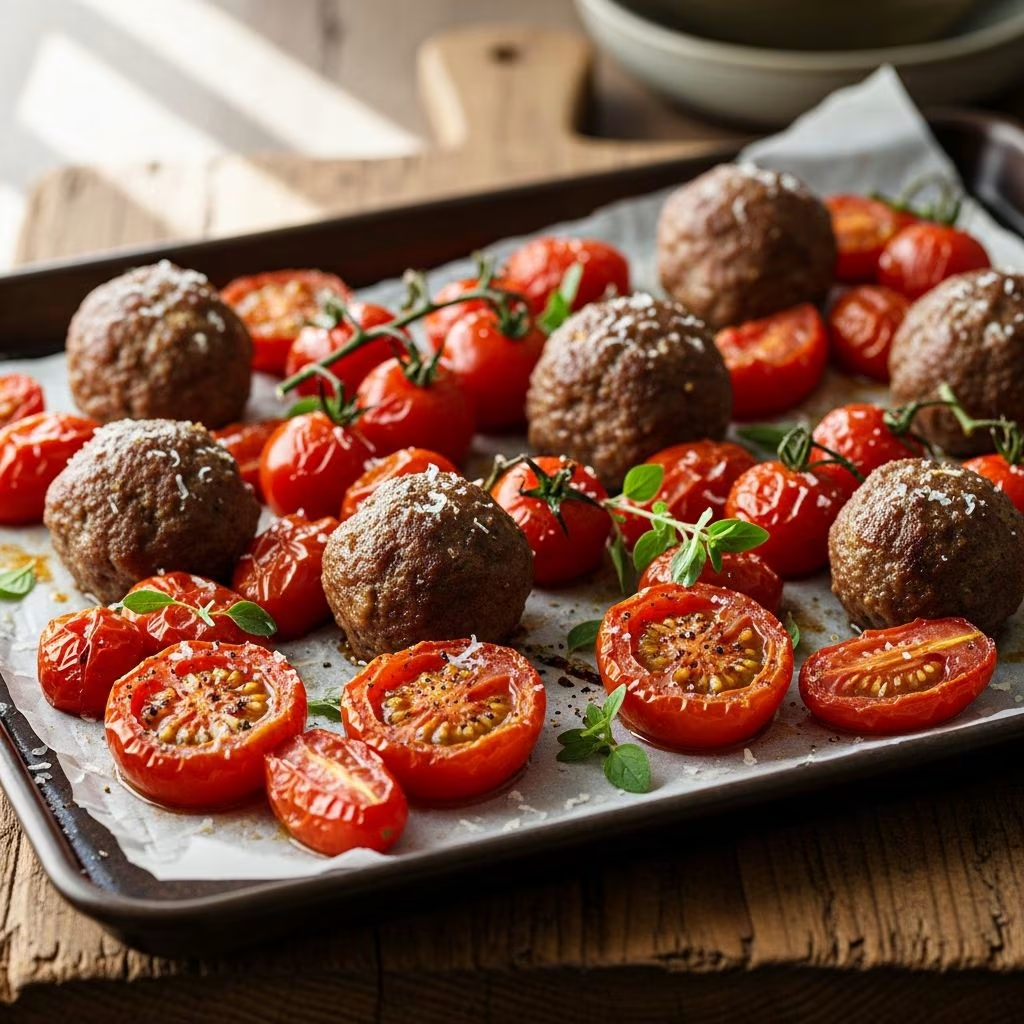
Modern home cooking demands efficiency without sacrificing quality. One-pan meals have revolutionized how home cooks approach dinner preparation, and sheet pan meatballs represent one of the most versatile and satisfying approaches to this cooking method. This recipe combines perfectly seasoned ground beef meatballs with naturally sweet burst tomatoes, savory roasted peppers, and crispy Parmesan-topped bread—all emerging from a single oven at precisely the right time. The beauty of this technique lies not only in the reduced cleanup but in how the various components develop complementary flavors as they roast together.
Understanding the Foundation of Quality Meatballs
The foundation of any exceptional meatball lies in balancing moisture, seasoning, and texture. Unlike traditional pan-fried meatballs, oven-roasted versions benefit from a slightly wetter mixture that prevents them from drying out during the cooking process. The combination of panko breadcrumbs, egg, and water creates what culinary professionals call a panade—a binding agent that distributes moisture evenly throughout the meat.
Fresh herbs play a critical role in elevating these meatballs beyond the ordinary. Basil and parsley introduce brightness and aromatic complexity that pairs beautifully with the natural acidity of tomatoes. Finely minced garlic provides depth without overpowering the delicate beef flavor. The key to incorporating these ingredients effectively involves gentle mixing; overworking the meat mixture develops gluten networks that result in dense, rubbery meatballs rather than tender spheres.
The Meatball Preparation Process
Creating uniform meatballs ensures even cooking throughout the batch. Rolling approximately 16 meatballs with 1½-inch diameters from one pound of ground beef provides optimal surface area for browning while maintaining a tender interior. This size allows for complete cooking within the specified timeframe without the risk of burnt exteriors and raw centers.
The seasoning profile combines kosher salt with abundant freshly ground black pepper, which contributes a pleasant bite that enhances both the beef and tomato components. Professional chefs recognize that salt distribution matters significantly; mixing it thoroughly with the binder ensures even seasoning throughout rather than creating salty pockets.
Key Meatball Ingredients
- One pound ground beef (80/20 blend provides optimal fat content)
- One large egg for binding
- One cup panko breadcrumbs for texture and moisture retention
- One cup fresh herbs (basil and parsley combination recommended)
- One finely grated garlic clove for aromatic depth
- Kosher salt and freshly ground black pepper to taste
- Three tablespoons water to create proper moisture balance
Building Flavor Through Multi-Component Roasting
This recipe employs a strategic timing approach that accounts for different cooking speeds of various components. Cherry tomatoes, roasted red peppers, and diced red onion form the vegetable base that requires initial roasting before meatballs are added. This head start allows the vegetables to soften and begin releasing their natural sugars through caramelization.
Cherry tomatoes contain natural pectin and sugars that intensify when exposed to high heat. As they roast, their skins split—creating what the recipe refers to as “burst” tomatoes—releasing concentrated juices that create a light pan sauce. The roasted red peppers, available jarred for convenience, contribute a naturally sweet counterpoint to the savory meatballs. The red onion provides textural contrast and a subtle sulfur-derived sweetness when roasted.
Vegetable Components and Preparation
- Three pints cherry tomatoes (approximately 5 cups total)
- One and a half cups jarred roasted red peppers, sliced
- One medium red onion, coarsely chopped
- Extra-virgin olive oil for coating and drizzling
- Salt and black pepper for seasoning
The Garlic Bread Component: Crispy Accompaniment
Garlic bread in this context transcends simple carbohydrate filler—it serves as an essential textural element that provides contrast to the juicy meatballs and soft vegetables. The preparation involves a compound butter composed of room-temperature unsalted butter, finely grated garlic, and excellent quality extra-virgin olive oil.
Room-temperature butter combines more readily with garlic and oil, creating a homogeneous spread that distributes evenly across the bread surface. The addition of oil prevents the butter from solidifying too quickly, ensuring better adhesion to the bread’s cut surface. A generous layer of finely grated Parmesan cheese adds umami depth and creates a golden, slightly crispy crust during roasting.
Cutting the baguette lengthwise and then into smaller sections creates multiple surface area opportunities for the garlic butter mixture. The cut-side placement ensures maximum contact between seasoning and bread during roasting, resulting in thorough flavor distribution and desirable crispness.
Oven Configuration and Temperature Strategy
This recipe employs dual oven racks at different positions, demonstrating sophisticated temperature management. Placing the garlic bread on the lower rack and the meatball-vegetable mixture on the upper rack accounts for heat distribution patterns within residential ovens. Upper racks receive more direct heat, optimizing browning of meatballs and vegetable caramelization. Lower positions allow the garlic bread to develop color and crispness without burning.
The oven temperature of 425 degrees Fahrenheit represents a sweet spot in the intermediate-high range. This temperature facilitates rapid moisture evaporation from vegetables (promoting the desired burst effect), thorough cooking of meatballs within the specified timeframe, and adequate browning of Parmesan-topped bread.
Execution Timeline and Coordinated Cooking
Successful execution of this recipe requires understanding the staggered timing that brings all components to completion simultaneously. The garlic bread is prepared and set aside before any cooking begins. The vegetable mixture starts roasting 15 minutes before meatballs are added, allowing initial softening and caramelization. The meatballs then join the vegetables for a 9-11 minute final roasting period. Meanwhile, the garlic bread bakes on the lower rack for 8-10 minutes, coordinating with the meatball completion time.
This staggered approach eliminates the common home-cooking frustration of components finishing at different times. By planning backward from the target completion time, all elements arrive at the table hot, properly seasoned, and optimally textured.
Cooking Timeline
| Step | Component | Duration | Temperature |
|---|---|---|---|
| 1 | Vegetables and garlic (pre-roasting) | 5-10 minutes | 425°F |
| 2 | Add meatballs and garlic bread | 9-11 minutes combined | 425°F |
| 3 | Pan-shake (meatball rotation) | Midway through | 425°F |
Finishing Techniques and Flavor Enhancement
The final plating approach respects the individual components while creating visual and flavor cohesion. Fresh basil leaves scattered over the finished dish provide aromatic brightness and vibrant green color contrast. Additional Parmesan shavings offer textural variety and emphasize the savory qualities developed during roasting.
The garlic bread serves alongside the meatball mixture, allowing diners to combine components according to preference. Some may create meatball and vegetable combinations on bread like open-faced sandwiches, while others prefer separate components on each plate.
Frequently Asked Questions
Can I prepare the meatballs ahead of time?
Yes, ground beef meatballs can be formed, refrigerated in an airtight container for up to 24 hours, or frozen for up to three months. Frozen meatballs require an additional 2-3 minutes roasting time. Forming meatballs in advance allows you to focus on vegetable preparation and timing coordination on cooking day.
What type of ground beef works best?
An 80/20 blend of lean to fat ground beef provides optimal moisture and flavor development. This ratio contains sufficient fat for juiciness without excess greasiness. Higher-fat blends produce oilier results, while extremely lean beef (90/10 or higher) often yields dry meatballs.
Can I substitute the cherry tomatoes?
Grape tomatoes work interchangeably with cherry tomatoes, offering similar size and burst characteristics. Halving larger heirloom or Roma tomatoes can also work, though cooking times may require adjustment based on size and moisture content.
How do I prevent the garlic bread from burning?
Placing the garlic bread on the lower oven rack insulates it from the most intense heat. Watching the final few minutes ensures golden-brown color develops without charring. If your oven runs hot, consider placing bread on the middle rack or reducing temperature by 25 degrees.
What should I serve alongside this dish?
A crisp green salad with acidic vinaigrette balances the rich components. Roasted or steamed green vegetables like broccoli or green beans add nutritional contrast. A light white wine with good acidity complements both meatballs and tomatoes beautifully.
Scaling and Adaptation Strategies
This recipe scales efficiently for larger gatherings. Doubling the recipe requires two full sheet pans rather than one, maintaining proper spacing for adequate air circulation and browning. The cooking time generally remains consistent when using properly sized sheet pans. For smaller portions, reduce ingredient quantities proportionally, though the minimum batch should yield approximately 12 meatballs for proper portion control.
Dietary modifications are readily accommodated. Ground turkey or pork can substitute for beef, adjusting seasoning slightly upward as these meats require additional salt for comparable flavor. Gluten-free panko performs identically to traditional breadcrumbs. Vegetable-based meat substitutes work acceptably, though cooking times may differ slightly.
Storage and Reheating Considerations
Leftovers keep refrigerated in an airtight container for three to four days. Reheat gently in a 350-degree oven for 8-10 minutes to prevent drying. Meatballs and vegetables combined in a small pot over medium-low heat with a splash of water also works effectively. Garlic bread may lose some crispness but remains enjoyable reheated in the oven at 375 degrees for 3-4 minutes.
Meatballs freeze exceptionally well for up to three months. Consider freezing them flat on a sheet pan before transferring to freezer bags, which allows using individual portions without thawing the entire batch. Frozen meatballs roast with an additional 3-5 minutes cooking time.
Professional Tips for Home Cooks
Investing in quality sheet pans with raised edges prevents oil and juices from dripping onto your oven floor. Rimmed pans also contain vegetables effectively throughout roasting. Using parchment paper eliminates cleanup time and prevents sticking, though it’s optional for experienced cooks with well-seasoned pans.
A meat thermometer removes guesswork regarding meatball doneness. Ground beef reaches food-safe temperatures at 160 degrees Fahrenheit. Checking several meatballs from different pan locations ensures thorough cooking throughout the batch.
Shaking the pan midway through meatball roasting ensures even browning on all sides without requiring individual flipping. This single motion rotates meatballs and redistributes heat distribution for consistent results.
References
- Food Safety and Inspection Service (FSIS) — Ground Beef Temperature Guidelines — U.S. Department of Agriculture. 2024. https://www.fsis.usda.gov/food-safety/safe-food-handling-and-preparation/food-safety-basics/safe-temperature-guide
- Panade: The Science Behind Tender Meatballs — Serious Eats (Harold McGee’s Food Science). 2023. https://www.seriouseats.com/what-is-panade
- Umami and the Maillard Reaction in Home Cooking — America’s Test Kitchen. 2023. https://www.americastestkitchen.com/articles/2117-the-maillard-reaction
- Oven Rack Positioning and Heat Distribution — The Kitchn (Cooking Science). 2024. https://www.thekitchn.com/tip-where-to-place-your-oven-racks-230849