Homemade salsa transforms simple ingredients into a vibrant, flavorful dip that’s endlessly versatile. Whether you’re pairing it with tortilla chips, topping tacos, or enhancing grilled meats, perfecting your salsa recipe elevates any meal. This guide draws from time-tested methods using canned tomatoes for convenience and fresh produce for brightness, delivering restaurant-quality results in minutes.
Why Make Salsa at Home?
Store-bought salsas often contain preservatives and excessive sodium, diluting authentic flavors. Homemade versions let you control heat, texture, and freshness. Key benefits include cost savings—using pantry staples like stewed tomatoes—and customization for dietary needs, such as low-sodium or vegan options. A single batch yields enough for parties, with leftovers lasting up to two weeks refrigerated.
Essential Ingredients for Perfect Salsa
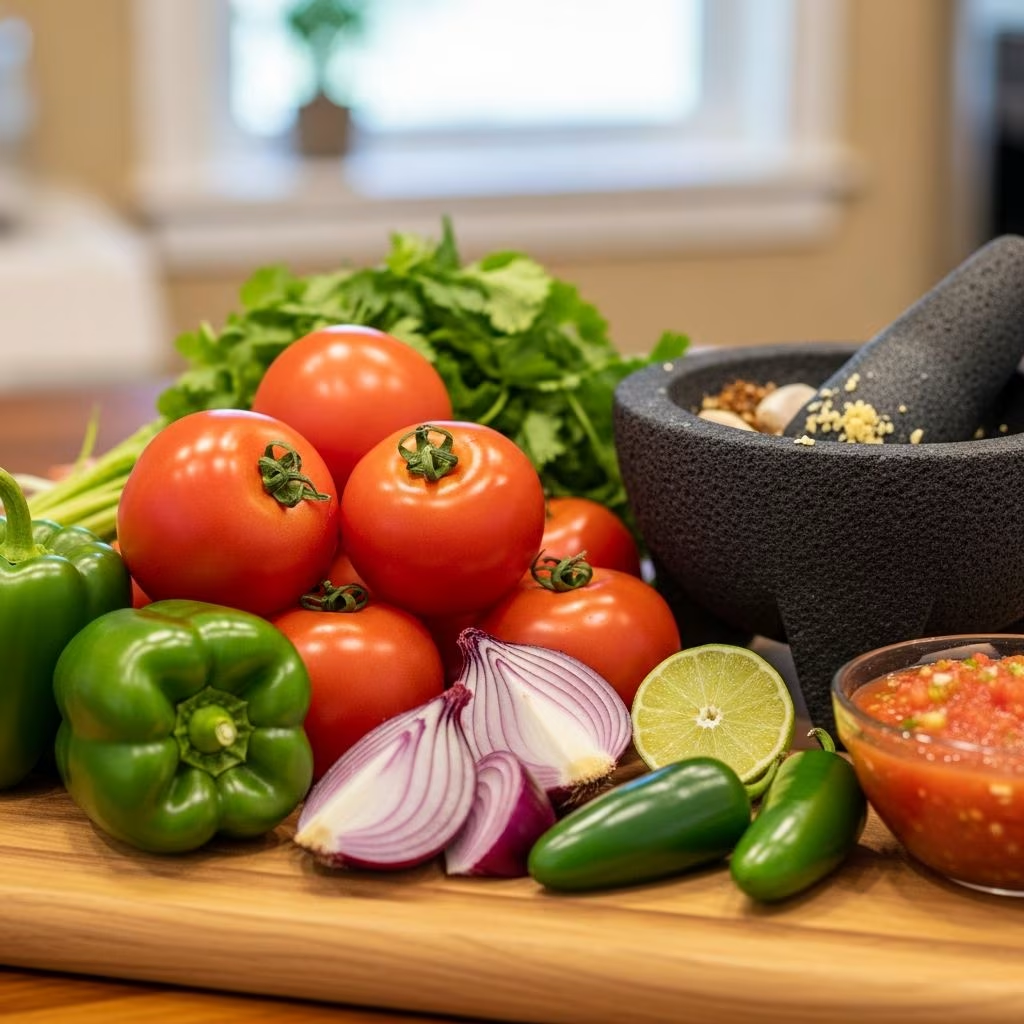
The foundation of great salsa lies in balancing acidity, heat, sweetness, and herbs. Start with high-quality canned tomatoes for consistent results year-round.
- Canned Tomatoes: Whole peeled, stewed, or fire-roasted (28 oz can) provide the base. Stewed varieties add built-in seasoning.
- Onions: Red or yellow (1/2 medium) for sharpness; dice finely for even distribution.
- Garlic: 1-2 cloves, minced or grated, for pungent depth.
- Jalapeños or Green Chiles: 1-2 peppers or 1/4 cup canned, adjust for spice level.
- Cilantro: 3 Tbsp fresh chopped, for earthy freshness (omit for haters).
- Lime Juice: From 1/2 lime, cuts richness and brightens flavors.
- Salt: 1 tsp kosher or sea salt, to taste.
- Optional Boosters: Cumin (3/4 tsp), smoked paprika (1 tsp), sugar (1 tsp if tomatoes are tart).
These components create harmony: tomatoes’ juiciness tempers onion bite, while lime and cilantro add zing.
Step-by-Step Recipe: Classic Blender Salsa
This foolproof method yields 4-6 cups in under 10 minutes. No cooking required.
- Prep Produce: Roughly chop onion, garlic, jalapeño (remove seeds for mild), and cilantro.
- Load Blender: Add undrained canned tomatoes, prepped veggies, lime juice, salt, and spices.
- Pulse Carefully: Use low speed or pulse button 5-10 times for chunky texture. Avoid over-blending into sauce.
- Taste and Adjust: Sample; add more lime for tang, salt for balance, or jalapeño for heat.
- Chill: Refrigerate 1-24 hours for flavors to meld. Serve cold or at room temp.
Yield: 4 cups | Prep Time: 10 minutes | Total Time: 10 minutes (plus chilling)
Texture Variations to Suit Your Taste
Salsa texture influences its use—from dip to topping. Experiment with these techniques:
| Style | Method | Best For |
|---|---|---|
| Chunky | Hand-chop all ingredients | Tacos, salads |
| Restaurant-Style | Food processor pulse (short bursts) | Chips, nachos |
| Smooth | Blender on medium 30 seconds | Enchiladas, soups |
For chunkier results, dice tomatoes by hand after pulsing liquids. Pulse button prevents mushiness.
Spice Level Guide and Heat Hacks
Customize heat without overpowering other flavors:
- Mild: 1 seeded jalapeño or 1/4 cup green chiles.
- Medium: 1-2 jalapeños with seeds.
- Hot: Add serrano peppers or dashes of hot sauce.
Pro Tip: Wear gloves when handling peppers to avoid skin burn. Taste incrementally—heat intensifies post-chill.
Flavor Twists and Creative Variations
Elevate your base recipe with these inspired twists:
Smoky Chipotle Salsa
Swap 1/4 tomatoes for chipotles in adobo; add 1 tsp smoked paprika. Ideal for grilled meats.
Vegan Roasted Salsa
Char fresh tomatoes, onions under broiler 5 minutes before blending. Boosts umami.
Sweet Pineapple Salsa
Mix in 1 cup diced pineapple. Pairs with fish tacos.
Green Tomatillo Salsa (Salsa Verde)
Use 1 lb husked tomatillos instead of tomatoes; boil 5 minutes first.
Each variation maintains the quick-prep ethos while introducing global flair.
Storage, Freezing, and Make-Ahead Tips
Fresh salsa keeps 1-2 weeks in an airtight jar in the fridge. Flavors peak after 24 hours. For longer storage:
- Freezing: Portion into ice cube trays; transfer to bags. Thaw overnight; use within 3 months.
- Make-Ahead: Prep veggies day before; blend fresh for max crunch.
- Food Safety: Always use clean tools; discard if mold appears or smell sours.
Pairing Ideas: Beyond Chips
Salsa shines in diverse dishes:
- Apps: Chips, quesadillas, empanadas.
- Mains: Tacos, burritos, grilled chicken/steak.
- Breakfast: Huevos rancheros, migas.
- Healthy Twists: Veggie sticks, baked tortilla chips.
Nutrition Breakdown
Per 1/4 cup serving (based on classic recipe):
| Nutrient | Amount | % Daily Value |
|---|---|---|
| Calories | 25 | 1% |
| Carbs | 5g | 2% |
| Protein | 1g | 2% |
| Sodium | 300mg | 13% |
| Vitamin C | 15mg | 17% |
Low-calorie, antioxidant-rich from tomatoes and cilantro. Vegan, gluten-free.
Frequently Asked Questions (FAQs)
Can I use fresh tomatoes?
Yes, but roast or boil first for best texture. Canned offer superior consistency.
Why is my salsa too watery?
Drain some tomato juice or pulse less. Hand-chopping helps control moisture.
No cilantro? What substitute?
Parsley or basil works; skip for neutral flavor.
How do I make it thicker?
Add diced cucumber or reduce blending time.
Is it safe to leave out overnight?
No—refrigerate immediately to prevent bacteria.
Pro Tips from Seasoned Cooks
– Use room-temp ingredients for even blending.
– High-speed blenders excel; food processors for volume batches.
– Double salt if using low-sodium tomatoes.
– Gift in mason jars with ribbon for holidays.
Mastering salsa opens doors to culinary creativity. Experiment boldly—your perfect blend awaits.
References
- USDA FoodKeeper App: Salsa Storage Guidelines — United States Department of Agriculture. 2023-05-15. https://www.foodsafety.gov/keep-food-safe/foodkeeper-app
- Nutritional Data for Tomato-Based Salsas — USDA FoodData Central. 2024-01-10. https://fdc.nal.usda.gov/fdc-app.html#/food-details/169959/nutrients
- Food Safety Guidelines for Fresh Salsas — FDA Fresh Produce Safety. 2023-08-22. https://www.fda.gov/food/buy-store-serve-safe-food/safe-food-handling