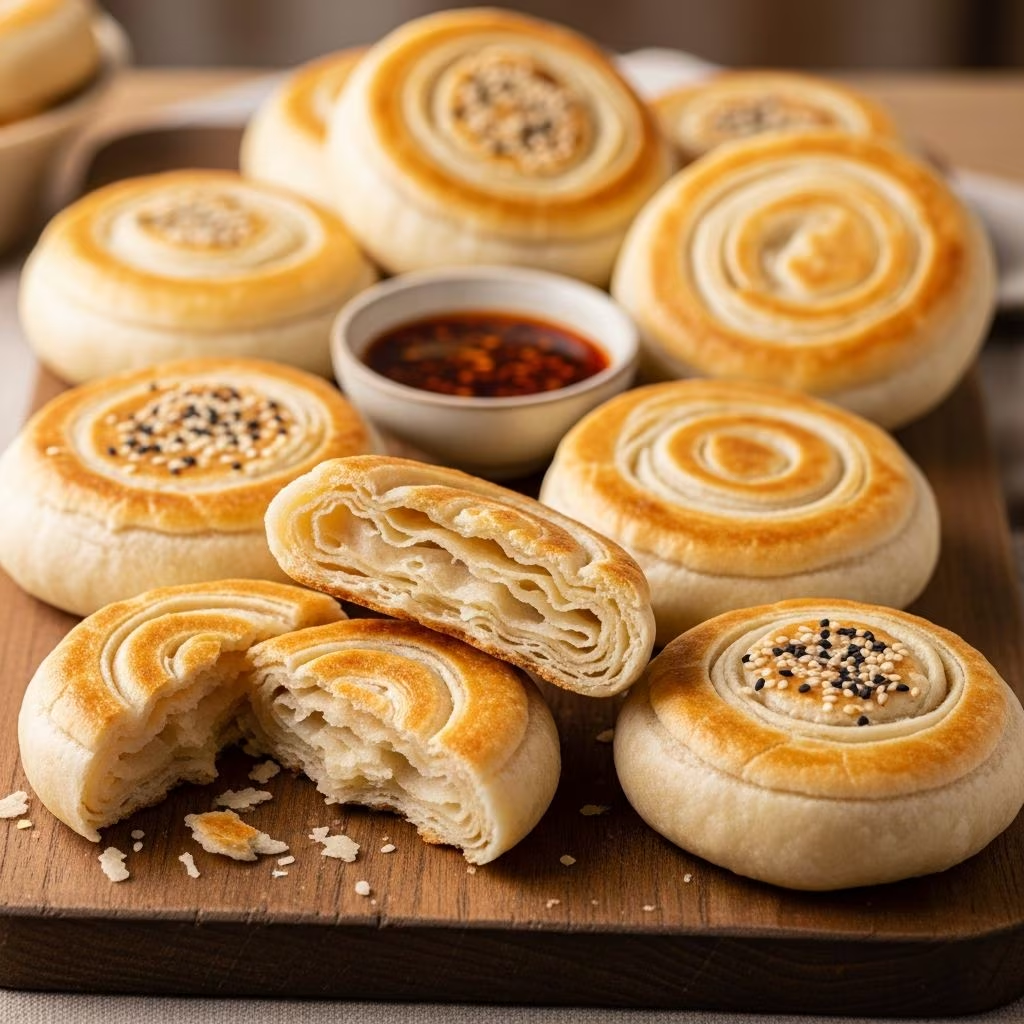
Shao bing stands as a cornerstone of Chinese street food culture, particularly in northern regions and Taiwan, where its golden, sesame-studded exterior and tender, multi-layered interior captivate eaters daily. This unleavened flatbread, often called huoshao or clay oven rolls, embodies simplicity elevated through technique, offering a canvas for both plain enjoyment and inventive fillings. Whether savored solo with morning porridge or split open for juicy meats and vegetables, shao bing delivers unmatched texture and aroma.
The Allure of Shao Bing in Chinese Cuisine
Rooted in ancient traditions, shao bing traces its flaky perfection to layered dough methods that create steam pockets during baking, resulting in crisp outsides and soft centers. Popular as breakfast fare, it complements salty soy milk or Chinese crullers, transforming a basic bread into a satisfying meal. Its versatility shines in regional adaptations—from Beijing’s sesame and peppercorn versions to Taiwan’s aromatic sesame breads—making it a staple across diverse Chinese food landscapes.
Street vendors bake these flatbreads in clay ovens or on griddles, filling the air with toasty sesame scents. At home, replicating this involves precise dough handling and oil layering, but the reward is fresh, customizable loaves that rival any market find. Nutritionally, a typical shao bing offers around 320 calories, with balanced protein, fats from sesame oil, and carbs, plus fiber from seeds.
Essential Ingredients for Authentic Shao Bing
Crafting shao bing relies on pantry staples transformed by quality and ratios. The base dough uses all-purpose or cake flour for tenderness, hot water to gelatinize starches for chew, and cold water for structure. Key is the oil roux or paste—sesame oil infused with salt, five-spice, or peppercorns—that laminates layers like puff pastry.
- Flour: 2-3 cups all-purpose or cake flour for a soft, pliable base.
- Oils: Sesame for aroma, neutral oil like grapeseed for roux cooking.
- Seasonings: Salt, sugar, Sichuan peppercorn powder for numbing heat.
- Toppings: Toasted sesame seeds for crunch and visual appeal.
- Optional leaveners: Baking soda or powder in some modern recipes for lift.
For filled versions, prepare boiled lamb, green onions, or soybean sauce. Historical recreations even use sour liquids mimicking ancient ferments.
Step-by-Step Guide to Shao Bing Dough
Begin with dough preparation, the foundation of flakiness. Mix flour and salt, pour in boiling water to form a shaggy mass, then incorporate cold water. Knead briefly until tacky—not sticky—then rest covered for 15-30 minutes. This autolyse step relaxes gluten for easy rolling.
- Combine 2 cups flour and 1 tsp salt in a bowl.
- Add 3/4 cup boiling water; stir with chopsticks into flakes.
- Mix in 1/4 cup cold water; knead 2-3 minutes.
- Rest dough 20 minutes under a damp cloth.
Meanwhile, craft the roux: Heat 1/4 cup oil until shimmering, add flour, and cook to golden, nutty paste with seasonings like 1 tsp Sichuan pepper and five-spice. Cool slightly.
Layering Techniques for Maximum Flakiness
The magic of shao bing lies in lamination. Divide rested dough into 4-8 pieces. Roll each into a thin rectangle, brush generously with roux, and sprinkle sesame or onions. Fold like a letter or roll into a tight spiral, then flatten gently. This traps oil between layers, expanding into crisp sheets when baked.
- Spiral method: Roll dough thin, apply paste, roll up like a cigar, coil into a snail, flatten to 1/4-inch.
- Three-fold: Brush, fold thirds, rotate 90 degrees, repeat for more layers.
- Brush tops with egg wash or water, press into sesame seeds.
Avoid overworking to preserve layers. For softer results, add extra water or bake; for crisp, reduce water and pan-fry.
Baking and Cooking Methods
Traditional clay oven baking yields smoky char, but home ovens or skillets work well. Preheat oven to 425°F or medium-hot skillet. Bake coiled discs 10-15 minutes until puffed and golden, flipping midway for even toast.
| Method | Temperature/Time | Texture Outcome |
|---|---|---|
| Oven Bake | 425°F, 12-15 min | Evenly soft interior, crisp exterior |
| Skillet Pan-Fry | Medium, 5-7 min/side | Ultra-crispy, chewy edges |
| Clay Oven (Trad.) | High heat, 8-10 min | Smoky char, authentic street vibe |
Monitor closely; overbaking dries it out. Fresh from heat, shao bing steams open beautifully.
Popular Fillings and Serving Ideas
Plain shao bing shines with soup, but fillings elevate it. Split warm bread for youtiao (crullers), egg, or braised beef. Beijing-style pairs with porridge; Taiwanese versions host lamb or scallions.
- Classic: Chopped green onions, sesame paste.
- Meat Lovers: Boiled lamb leg soaked in broth, soybean sauce.
- Vegetarian: Walnuts, pine nuts, cilantro roux.
Serve sliced with congee or as wraps for juicy contrasts to the bread’s dryness.
Regional Variations Across China and Taiwan
Shao bing evolves by locale. Northern China favors stiff, peppery rounds; Taiwan’s are softer, sweeter with heavy sesame. Historical texts note sour leaveners and lamb in dynastic recipes, while modern twists add chili or nuts.
In Sichuan, peppercorn dominates; Cantonese versions lean lighter. These differences highlight shao bing’s adaptability, from unleavened purity to yeasted puffs.
Troubleshooting Common Issues
Dough too sticky? Add flour sparingly. Layers not flaking? Ensure thin rolling and ample roux. Dense results? Rest longer or use hotter oven. Soggy bottoms? Dry skillet first.
- No puff: Insufficient steam—use hotter water in dough.
- Tearing: Over-knead; handle gently post-rest.
- Bitter roux: Cook oil paste low and slow.
Nutritional Profile and Dietary Adaptations
Per shao bing: 320 kcal, 7g protein, 14g fat (unsaturated sesame), 42g carbs, 2g fiber. Vegan as-is; swap lard for oil. Sweeten with sugar for dessert versions topped in honey-nuts.
Storage and Make-Ahead Tips
Store baked shao bing airtight up to 2 days; reheat in oven for crispness. Freeze unbaked coils, thaw before baking. Roux keeps refrigerated a week.
Frequently Asked Questions (FAQs)
What is shao bing made of?
Primarily flour, water, sesame oil, salt, and sesame seeds, with optional spices and fillings for layers and flavor.
Can I make shao bing without sesame oil?
Yes, substitute neutral oil, but lose aromatic depth. Allergen-free? Use sunflower seeds.
How do I achieve flaky layers?
Layer thin dough with oil paste, fold or coil tightly, and bake hot to steam layers apart.
Is shao bing gluten-free?
No, wheat-based. Adapt with gluten-free flour blends, though texture changes.
Best way to serve shao bing?
With porridge, split for fillings, or alongside soy milk for breakfast.
Advanced Twists for Home Bakers
Experiment with matcha roux for green tea notes, cheese for fusion, or sourdough discard for tang echoing ancient methods. Ferment dough overnight for chewier results.
References
- Crispy Fragrant Chinese Shao Bing Recipe — ichina.alibaba.com. 2023. https://ichina.alibaba.com/recipes/xiangsubing
- Shao Bing Through the Dynasties: A Comparative Study — kitchenstudiofactory.com. 2022. https://www.kitchenstudiofactory.com/rework-project/oaxnd1lhoqrpa9scmet1krr5tvlods
- Learning Chinese Cooking from the Best: Green Onion Shao Bing — planksandsticks.com. 2014-05-13. https://planksandsticks.com/2014/05/13/learning-chinese-cooking-from-the-best/
- Shaobing — chinasichuanfood.com. 2023. https://www.chinasichuanfood.com/shaobing/
- Shao Bing, Chinese Sesame Flatbread — assortedeats.com. 2023. https://www.assortedeats.com/shao-bing/
- Shao Bing (Chinese Sesame Flat Bread) — whattocooktoday.com. 2023. https://whattocooktoday.com/shao-bing-chinese-sesame-flat-bread.html
- ShaoBing Recipe — curatedkitchenware.com. 2023. https://curatedkitchenware.com/blogs/soupeduprecipes/shaobing-recipe