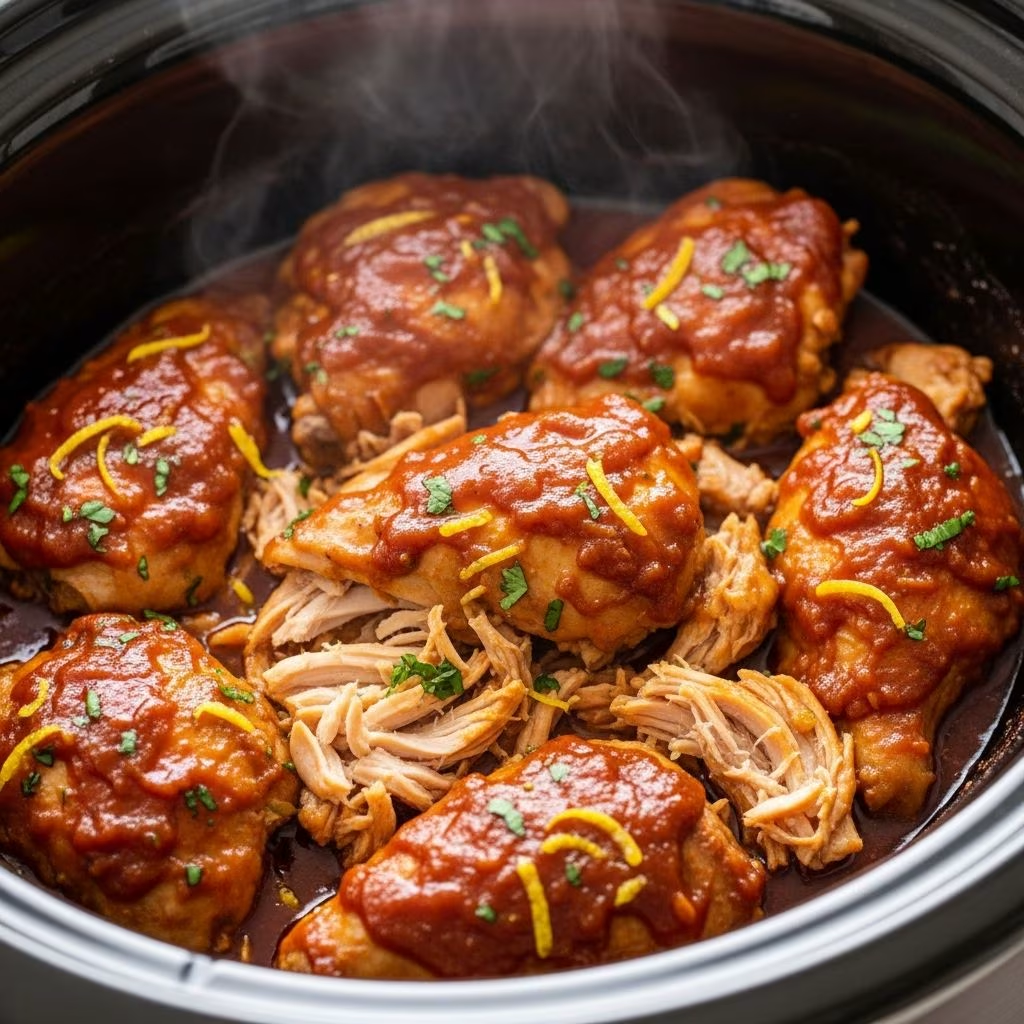
When time is limited but flavor demands cannot be compromised, slow cooker recipes offer an ideal solution for busy households. One particularly versatile and satisfying option is zesty slow cooker chicken barbecue—a dish that transforms basic ingredients into tender, sauce-laden poultry that serves as the foundation for countless meal variations. This cooking method requires minimal preparation time while delivering maximum taste and texture, making it an excellent choice for family dinners, meal prep sessions, and casual entertaining.
Understanding the Foundation of This Dish
The beauty of zesty slow cooker chicken barbecue lies in its simplicity and adaptability. At its core, the recipe combines boneless skinless chicken breasts with a carefully balanced sauce that develops flavor over hours of gentle heat. The slow cooker’s moist cooking environment ensures the chicken remains juicy while absorbing the complex flavors of the sauce components. Unlike traditional oven-roasted or grilled preparations, this method produces consistently tender results without risk of drying out the meat.
The sauce base typically incorporates commercial barbecue sauce enhanced with complementary flavors that elevate the finished dish beyond what store-bought sauce alone could provide. Italian salad dressing contributes herbal notes and acidity, while Worcestershire sauce adds umami depth. Brown sugar rounds out these elements with subtle sweetness that caramelizes slightly during the long cooking process, creating layers of flavor that develop and intensify as the hours progress.
Essential Ingredients and Their Roles
Success with this recipe begins with understanding how each component contributes to the final result. The primary protein—boneless skinless chicken breasts—serves as the canvas upon which other flavors paint. These cuts cook relatively quickly and shred easily once tender, making them ideal for this preparation method. Most recipes call for three to six breasts depending on serving size and slow cooker capacity.
The barbecue sauce forms the flavor backbone, providing smokiness and slight char notes reminiscent of outdoor grilling. Choosing a quality sauce makes a noticeable difference in the finished dish. Italian dressing, whether homemade or bottled, introduces garlic, oregano, and vinegar that complement the smoky sauce. Worcestershire sauce, derived from fermented ingredients including anchovies, soy, and tamarind, contributes savory complexity that prevents the dish from tasting one-dimensional.
Brown sugar serves multiple purposes beyond sweetness. As it dissolves into the liquid, it helps create a glaze that clings to the shredded chicken and develops richer flavor notes through the long cooking process. Some cooks prefer light brown sugar for a more delicate sweetness, while others opt for dark brown sugar for deeper molasses undertones.
Preparation Methods and Cooking Techniques
The preparation phase requires only minutes of active work. Begin by arranging chicken breasts in the bottom of a slow cooker that has been lightly coated with cooking spray or oil to prevent sticking. In a separate bowl, combine all sauce components—typically one cup of barbecue sauce, one-quarter to one cup of Italian dressing depending on desired sauce consistency, one-quarter cup brown sugar, and one to two tablespoons of Worcestershire sauce. Using a wire whisk ensures the brown sugar dissolves evenly and prevents lumps in the finished sauce.
Pour the prepared sauce over the chicken, ensuring all pieces receive adequate coating. This step prevents dry spots and ensures even flavor distribution throughout the cooking time. Cover the slow cooker and set it to the low heat setting for six to eight hours, or high heat for three to four hours, depending on your schedule and desired cooking timeline.
| Cooking Setting | Time Required | Chicken Texture | Best For |
|---|---|---|---|
| Low Heat | 6-8 hours | Extremely tender, easily shredded | Morning preparation, overnight settings |
| High Heat | 3-4 hours | Tender with slight firmness | Same-day cooking, shorter timelines |
Cooking Time Variations and Flexibility
The flexibility of slow cooker cooking means this recipe accommodates various schedules. Starting the dish in the morning allows it to cook throughout the workday, ready for dinner preparation upon arrival home. For those with unpredictable schedules, the low heat setting permits extended cooking without quality degradation—the chicken actually becomes more tender with additional time.
High heat cooking suits situations where dinner timing is compressed. The faster cooking time means checking on the dish periodically ensures optimal doneness. Chicken reaches food-safety temperature at 165 degrees Fahrenheit, though visual inspection typically reveals when the meat becomes fully cooked and easily separable with forks.
Finishing Techniques and Texture Control
Once the cooking time completes, the chicken should pull apart easily with two forks when gently pressed. Remove pieces from the slow cooker and shred them directly into bite-sized pieces, then return the shredded chicken to the pot with the sauce. Stirring thoroughly ensures even sauce distribution and allows the chicken to reabsorb flavorful liquid for ten to fifteen minutes before serving.
Those preferring larger pieces or whole breasts can skip the shredding step entirely, serving the chicken intact and ladling sauce over individual portions. This approach works particularly well for composed presentations where chicken rests atop buns, nachos, or baked potatoes rather than being mixed throughout.
Serving Suggestions and Complementary Dishes
The versatility of this preparation extends far beyond traditional barbecue sandwiches. Pile the zesty chicken and sauce onto toasted hamburger buns for classic pulled chicken sandwiches, adding coleslaw or pickles for texture contrast. Top baked potatoes with generous portions for a hearty, satisfying meal. Layer the chicken onto nachos with cheese, jalapeños, and sour cream for an elevated appetizer or casual dinner.
Salads benefit tremendously from warm, saucy chicken—particularly heartier varieties featuring grains, legumes, or roasted vegetables that withstand the moisture. Grain bowls incorporating rice, quinoa, or farro transform the chicken into a complete meal when paired with fresh vegetables and appropriate dressings. Open-faced sandwiches on thick bread or toasted English muffins provide another elegant presentation option for entertaining.
Storage and Make-Ahead Planning
This dish excels as a make-ahead option for meal planning. Cool the fully cooked chicken and sauce completely before transferring to freezer bags or airtight containers. Properly stored zesty barbecue chicken keeps frozen for approximately three months without quality loss. Thaw overnight in the refrigerator before reheating gently in a slow cooker on low heat or in a saucepan on the stovetop, stirring occasionally to ensure even warming.
Refrigeration preserves the dish for three to four days when kept in covered containers. The flavors actually develop further during storage as ingredients continue melding together. This characteristic makes it an excellent choice for batch cooking, allowing you to prepare a large batch for multiple meals throughout the week.
Customization and Ingredient Variations
While the basic formula remains consistent, several variations allow customization to personal preferences. Adding chicken bouillon cubes intensifies savory depth and increases umami characteristics. Spice enthusiasts might incorporate hot sauce, cayenne pepper, or sriracha for heat levels ranging from subtle to intense.
Experimenting with barbecue sauce varieties offers another dimension of customization. Vinegar-based sauces create tangier results, while mustard-forward versions add tangy complexity. Some cooks prefer bourbon-flavored or hickory-infused sauces for deeper smokiness reminiscent of regional barbecue traditions.
Using frozen chicken breasts simplifies preparation further—they thaw and cook simultaneously in the slow cooker, adding approximately one to two hours to the total cooking time depending on the size and thickness of the frozen pieces. This convenience factor makes the dish even more accessible for genuinely busy schedules.
Common Questions About Preparation and Technique
Can this recipe accommodate dietary modifications?
Yes. For reduced-sodium versions, seek low-sodium barbecue sauce and Italian dressing options. Sugar-conscious cooks can substitute regular brown sugar with alternative sweeteners, though this may slightly alter flavor complexity. Those avoiding processed ingredients can create homemade barbecue sauce and dressing bases for complete control over components.
What if the sauce seems too thin or too thick?
Thin sauce can be addressed by increasing the cooking time, allowing more liquid to evaporate naturally. Alternatively, mix cornstarch with water to create a slurry and stir it into the sauce during the last thirty minutes of cooking. For overly thick sauce, add small amounts of chicken broth or water during the reheating process.
Does this recipe work with bone-in chicken pieces?
Absolutely. Bone-in, skin-on pieces develop richer flavor and produce more tender results, though they require longer cooking times. Increase the low heat cooking time to nine to ten hours or high heat time to five to six hours. The meat will literally fall from the bones when fully cooked.
How does slow cooker size affect cooking results?
A six-quart slow cooker accommodates larger batches without crowding, promoting even cooking and sauce distribution. Smaller four-quart models work equally well for four to five chicken breasts but may need reduced sauce quantities to prevent overflow.
Why This Recipe Deserves a Regular Place in Your Rotation
Zesty slow cooker chicken barbecue represents the ideal intersection of convenience, flavor, and versatility. The minimal preparation time, long unattended cooking period, and exceptional results make it accessible to cooks of varying skill levels. Whether feeding a family, preparing for meal prep, or hosting casual gatherings, this dish delivers consistent satisfaction with minimal stress.
The technique itself teaches valuable slow cooker principles applicable to countless other recipes. Understanding how moisture, temperature, and time interact in a slow cooker environment builds confidence for culinary experimentation. Once mastered, this foundational approach becomes the springboard for countless variations and personalized creations that reflect individual tastes and preferences.
References
- Food Safety and Inspection Service (FSIS) — Safe Internal Temperature Guide — U.S. Department of Agriculture. 2024. https://www.fsis.usda.gov/food-safety/safe-food-handling-and-preparation/food-safety-basics/safe-temperature-chart
- Slow Cooker Food Safety Guidelines — Centers for Disease Control and Prevention. 2024. https://www.cdc.gov/foodsafety/keep-food-safe/index.html
- Worcestershire Sauce Flavor Profile and Culinary Applications — Institute of Culinary Education. 2023. https://www.ice.edu/recipes
- Proper Food Storage and Freezing Guidelines — U.S. Department of Agriculture Food Safety and Inspection Service. 2024. https://www.fsis.usda.gov/food-safety/safe-food-handling-and-preparation/food-safety-basics
- Slow Cooker Cooking Times and Temperature Control — National Center for Home Food Preservation. 2023. https://nchfp.uga.edu/how/general/slowcookers.html