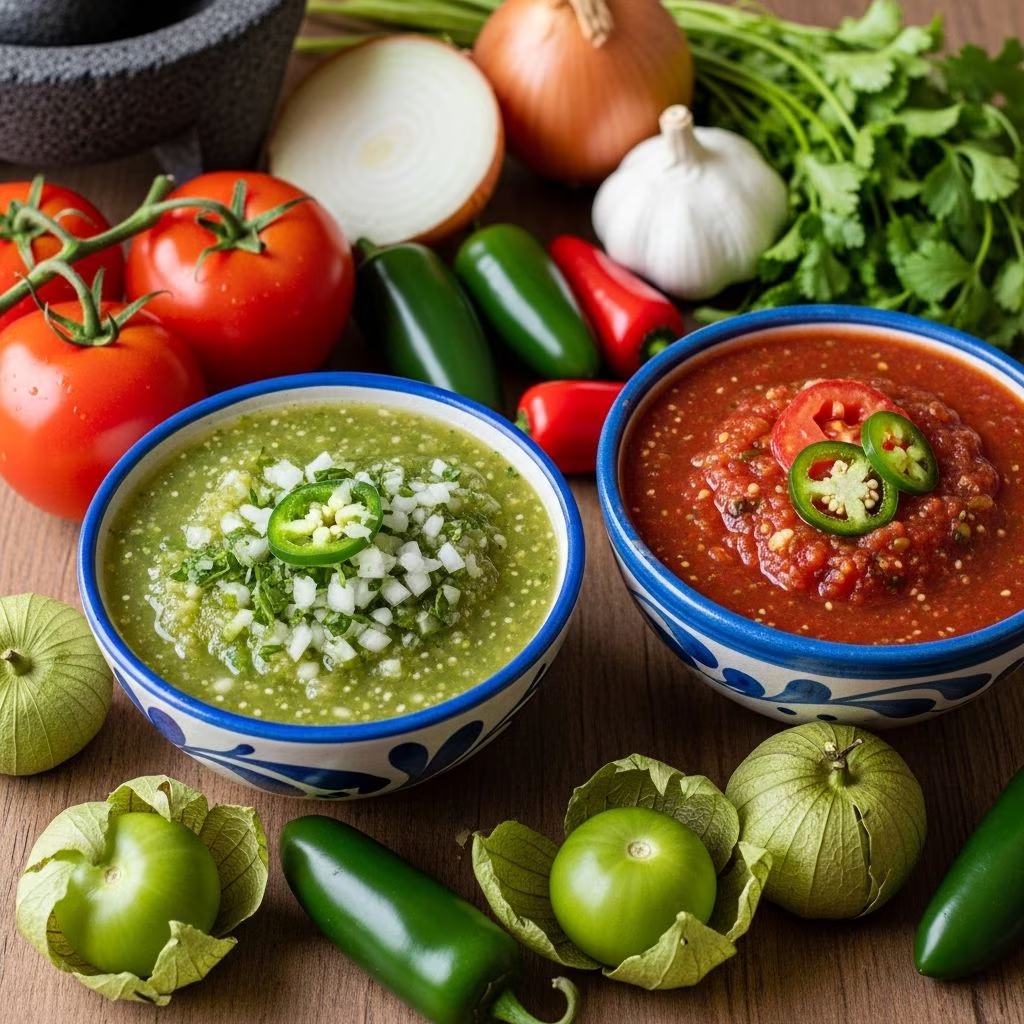
Raw salsas represent the essence of Mexican cuisine’s freshness and vibrancy, offering bright acidity and herbaceous notes without the need for cooking. These versatile condiments, particularly salsa verde cruda and salsa roja, transform simple dishes into flavorful experiences. Salsa verde cruda relies on uncooked tomatillos for its tangy profile, while salsa roja often incorporates roasted elements for depth. This guide provides original recipes, preparation techniques, and serving suggestions drawn from traditional methods.
Understanding the Foundations of Raw Salsas
Raw salsas differ from cooked versions by preserving the pure, sharp flavors of fresh ingredients. Tomatillos, the star of salsa verde, have a tart, citrus-like taste that balances heat from chiles. In contrast, salsa roja draws from tomatoes or roasted peppers for a richer, smokier base. Both benefit from cilantro, garlic, onion, and lime, creating layers of taste that enhance tacos, grilled meats, or crudités.
Key benefits include minimal prep time—often under 10 minutes for verde—and superior freshness compared to jarred options. Adjusting heat with jalapeño seeds or milder serranos allows personalization.
Essential Ingredients for Authentic Flavor
Selecting quality produce is crucial. For salsa verde cruda:
- Tomatillos: Husked and rinsed under hot water to remove bitterness.
- Chiles: Jalapeños or serranos for adjustable spice.
- Avocado: Optional for creaminess to mellow acidity.
- Cilantro, garlic, onion, lime: For aromatic brightness.
Salsa roja typically uses fire-roasted tomatoes, poblanos, and jalapeños for a balanced smokiness.
| Ingredient | Salsa Verde Cruda | Salsa Roja |
|---|---|---|
| Base | Tomatillos (1/2 lb) | Fire-roasted tomatoes (15 oz can) |
| Chiles | 1 jalapeño | 1 poblano + 1 jalapeño |
| Herbs | 1/4 cup cilantro | 1/2 cup cilantro |
| Acid | Juice of 1 lime | Juice of 2 limes |
| Optional Creaminess | 1/2 avocado | None typical |
Step-by-Step Recipe: Salsa Verde Cruda
This no-cook salsa yields about 2.5 cups in less than 10 minutes, perfect for spontaneous meals.
- Prepare tomatillos: Peel husks, rinse under hot water, rubbing to remove sticky residue that imparts bitterness.
- Blend base: In a food processor, combine tomatillos, avocado (if using), lime juice, cilantro, garlic, and most of the jalapeño (reserve seeds for heat control). Process until smooth.
- Season: Taste and add jalapeño seeds/veins for spice, then salt incrementally—start with 1/4 tsp, aiming for about 1 tsp smoked sea salt.
- Rest and serve: Let sit 5 minutes for flavors to meld. Ideal with fatty tacos or chicharrones.
Pro tip: For a chunkier texture, pulse briefly instead of fully blending.
Step-by-Step Recipe: Salsa Roja
Ready in 30 minutes, this version introduces roasting for complexity, making about 2.5 cups.
- Roast peppers: Char poblano and jalapeño over a flame or under broiler until skins blacken (10-15 minutes). Steam in a covered bowl for easy peeling.
- Peel and prep: Remove blackened skins, stems, and seeds (save seeds for heat). Reserve peppers.
- Blend: Process roasted peppers, fire-roasted tomatoes, lime juice, cilantro, onion, and garlic until smooth. Pulse for chunkiness or blend fully.
- Adjust and chill: Add reserved seeds for spice, salt to taste. Refrigerate 15 minutes to intensify flavors.
This salsa pairs excellently with chips or as a table sauce.
Customizing Heat and Texture
Heat levels vary by chile type and quantity. Remove veins/seeds for mild; include for fire. Árbol chiles add intense heat to verde.
- Mild: Seedless jalapeños or poblanos.
- Medium: Serranos or seeded habaneros.
- Hot: Full seeds or árbol chiles.
Texture preferences: Smooth for drizzling, chunky for scooping. Blending techniques control this seamlessly.
Storage and Make-Ahead Tips
Both salsas store in airtight containers in the fridge for 4-5 days. Verde may darken slightly due to tomatillos; stir before serving. Freeze in ice cube trays for portions up to 3 months. Thaw overnight.
Avoid metal containers to prevent acidic reactions. For best taste, consume within 48 hours.
Creative Serving Ideas and Pairings
These salsas shine beyond chips:
- Tacos: Verde cruda cuts richness in suadero or carnitas; roja enhances grilled chicken.
- Meats: Spoon over steaks, pork, or chicharrones.
- Breakfast: Top huevos rancheros or migas.
- Snacks: With tostadas, veggies, or queso fresco.
- Fusion: Mix into guacamole or as pizza topping.
For taqueria-style, thin with water and serve in squeeze bottles.
Common Mistakes and How to Avoid Them
- Bitter tomatillos: Always hot-rinse husks off.
- Uneven heat: Test blend incrementally with seeds.
- Watery salsa: Use minimal liquid; drain canned tomatoes.
- Over-blending: Pulse for texture control.
Nutritional Profile and Health Benefits
Low-calorie (about 20-30 kcal per 1/4 cup), these salsas pack vitamins C and A from peppers/tomatoes, antioxidants from cilantro, and fiber. Tomatillos aid digestion.
| Per Serving (1/4 cup) | Salsa Verde | Salsa Roja |
|---|---|---|
| Calories | 25 | 30 |
| Vitamin C (% DV) | 20% | 15% |
| Sodium | 150mg | 200mg |
Frequently Asked Questions (FAQs)
Can I make these salsas without a food processor?
Yes, use a blender or finely chop by hand with a molcajete for rustic texture.
Are these salsas vegan?
Absolutely, all ingredients are plant-based.
How do I reduce acidity?
Add more avocado to verde or a pinch of sugar to roja.
Can I use fresh tomatoes for roja?
Yes, roast them first for similar depth.
What’s the difference between cruda and cooked salsas?
Cruda is brighter and raw; cooked versions are deeper and mellower.
Advanced Variations for Home Chefs
- Smoky Verde: Add charred garlic.
- Creamy Roja: Blend in avocado post-roasting.
- Herbed Twist: Incorporate epazote or mint.
- Fruit-Infused: Mango or pineapple for sweetness.
Experiment with regional chiles like guajillo for roja.
References
- Homemade Salsa Two Ways: Salsa Verde Crudo and Salsa Roja — WhatsCookingKelli. 2020-09-18. https://whatscookingkelli.com/2020/09/18/homemade-salsa-two-ways-salsa-verde-crudo-and-salsa-roja/
- Raw Tomatillo Salsa (Salsa Verde Cruda) — Edible Communities. N/A. https://ediblecommunities.com/recipes/raw-tomatillo-salsa-salsa-verde-cruda/
- Salsa Verde Cruda (Raw Tomatillo Salsa) — Chef Rick Martinez, Sazón. N/A. https://chefrickmartinez.substack.com/p/salsa-verde-cruda
- The ONLY 2 Creamy Salsas Your Tacos Will Ever Need — Cooking Con Claudia (YouTube). N/A. https://www.youtube.com/watch?v=5YdpMxJZk6A
- How to Make Salsa Roja, Verde, Taquera & Loca — YouTube. N/A. https://www.youtube.com/watch?v=nJ4aoRdVFBU