When temperatures rise and appetites shift toward lighter fare, few dishes satisfy like a well-crafted gazpacho. This Spanish delicacy transcends the simple categorization of soup, offering instead a canvas for culinary creativity while remaining elegantly straightforward to prepare. Whether you’re hosting a summer dinner party or seeking a refreshing lunch option, understanding the fundamentals of gazpacho preparation transforms this humble dish into something truly memorable.
Understanding the Origins and Cultural Significance
Gazpacho represents more than just a recipe—it embodies centuries of Mediterranean culinary tradition. This chilled soup emerged from the practical needs of agricultural communities in Andalusia, where resourceful cooks transformed surplus produce into sustaining meals. The dish gained prominence during periods of intense heat when cooking over flames became unbearable, making cold preparations essential for survival and comfort. Today, gazpacho remains deeply woven into Spanish culture, particularly in southern regions where summer temperatures demand refreshment.
The beauty of gazpacho lies in its adaptability. While traditional versions follow established patterns, regional variations reflect local ingredient availability and family preferences passed through generations. This flexibility makes gazpacho an ideal dish for home cooks seeking to honor tradition while expressing personal taste.
Essential Ingredients and Quality Selection
The foundation of exceptional gazpacho begins with ingredient selection. Unlike recipes requiring complex preparations or specialized components, gazpacho’s success depends on choosing the finest available produce at peak ripeness.
Primary Components
- Tomatoes: Select ripe, flavorful varieties—heirloom or vine-ripened options provide superior taste compared to greenhouse specimens. The tomato quality directly impacts the final soup’s character.
- Cucumbers: Fresh, crisp cucumbers add textural contrast and cooling properties. English or Persian varieties work beautifully for their lower seed content.
- Bell Peppers: Red, yellow, or green peppers contribute sweetness, color, and nutritional value. Each color offers distinct flavor profiles worth exploring.
- Onions: Red onions provide sharpness and visual appeal, while white varieties offer milder flavor characteristics.
- Garlic: A small quantity awakens other flavors without overwhelming the palate. Fresh cloves make a measurable difference.
- Quality Olive Oil: Extra-virgin varieties with robust flavor enhance the soup’s complexity and richness.
- Vinegar: Red wine or sherry vinegar provides brightness and acidity essential for flavor balance.
- Bread: Traditional recipes incorporate day-old bread as a thickening agent, adding body without cream.
Preparation Techniques and Methods
The Foundation: Proper Chopping and Processing
Gazpacho preparation begins with understanding how you want your final texture to develop. Some prefer entirely smooth results achieved through thorough blending, while others appreciate a more rustic consistency maintaining vegetable pieces. Your choice of preparation method influences both texture and presentation.
Begin by washing all produce thoroughly under cool running water. Remove stems and seeds from tomatoes and peppers. Cut vegetables into manageable pieces suitable for your food processor. The order of processing matters—begin with softer items like tomatoes, which yield quickly, before moving to denser vegetables requiring longer processing time.
Achieving Optimal Flavor Balance
Temperature plays a crucial role in flavor perception. Cold temperatures suppress certain flavor notes while emphasizing others. Therefore, taste gazpacho at serving temperature rather than at room temperature. This prevents over-seasoning, as spices and seasonings taste more pronounced when warm.
Layer flavors gradually. Add salt incrementally, tasting frequently to prevent excessive saltiness. Vinegar should provide brightness without dominating—start conservatively and adjust upward. The bread’s role extends beyond thickening; it mutes aggressive flavors from raw vegetables, creating a more harmonious blend. Incorporate bread gradually until you achieve your desired consistency.
Chilling and Storage Considerations
Allow gazpacho to chill for at least four hours before serving, preferably overnight. Extended refrigeration permits flavors to meld and mature, creating a more sophisticated final product. Cold temperatures also make tasting easier and more accurate. Store gazpacho in airtight containers for up to three days, though freshness diminishes with time as raw vegetables begin deteriorating.
Creative Variations to Explore
White Gazpacho Reimagined
Moving beyond traditional red versions, white gazpacho utilizes almonds, bread, and white vegetables to create an entirely different experience. This variation provides a creamier mouthfeel and subtle nuttiness that appeals to different palates. Blanched almonds form the base, combined with cucumber, garlic, and gentle vegetable stock.
Fruit-Infused Approaches
Modern interpretations incorporate watermelon, strawberries, or stone fruits for unexpected sweetness and complexity. These variations work particularly well as starter courses for upscale dinners, offering visual appeal alongside refreshing qualities. The fruit doesn’t overwhelm but rather complements vegetable notes, creating intricate flavor layers.
Protein-Enhanced Versions
Traditional gazpacho serves as an excellent base for adding substance. Consider incorporating shrimp, grilled chicken, or legumes for heartier meals. These additions transform gazpacho from side dish to complete lunch or light dinner.
Serving Strategies and Presentation Ideas
Temperature Management at the Table
Serve gazpacho in pre-chilled bowls to maintain optimal temperature throughout consumption. Oversized soup spoons enhance the experience, allowing proper flavor appreciation with each bite. Some traditions call for serving gazpacho in glasses as a refreshing beverage, creating a more casual and interactive dining experience.
Garnish Selection and Accompaniments
| Garnish Option | Flavor Profile | Texture Contribution |
|---|---|---|
| Diced Tomatoes | Fresh, bright | Soft, juicy pieces |
| Cucumber Cubes | Crisp, cooling | Crunchy contrast |
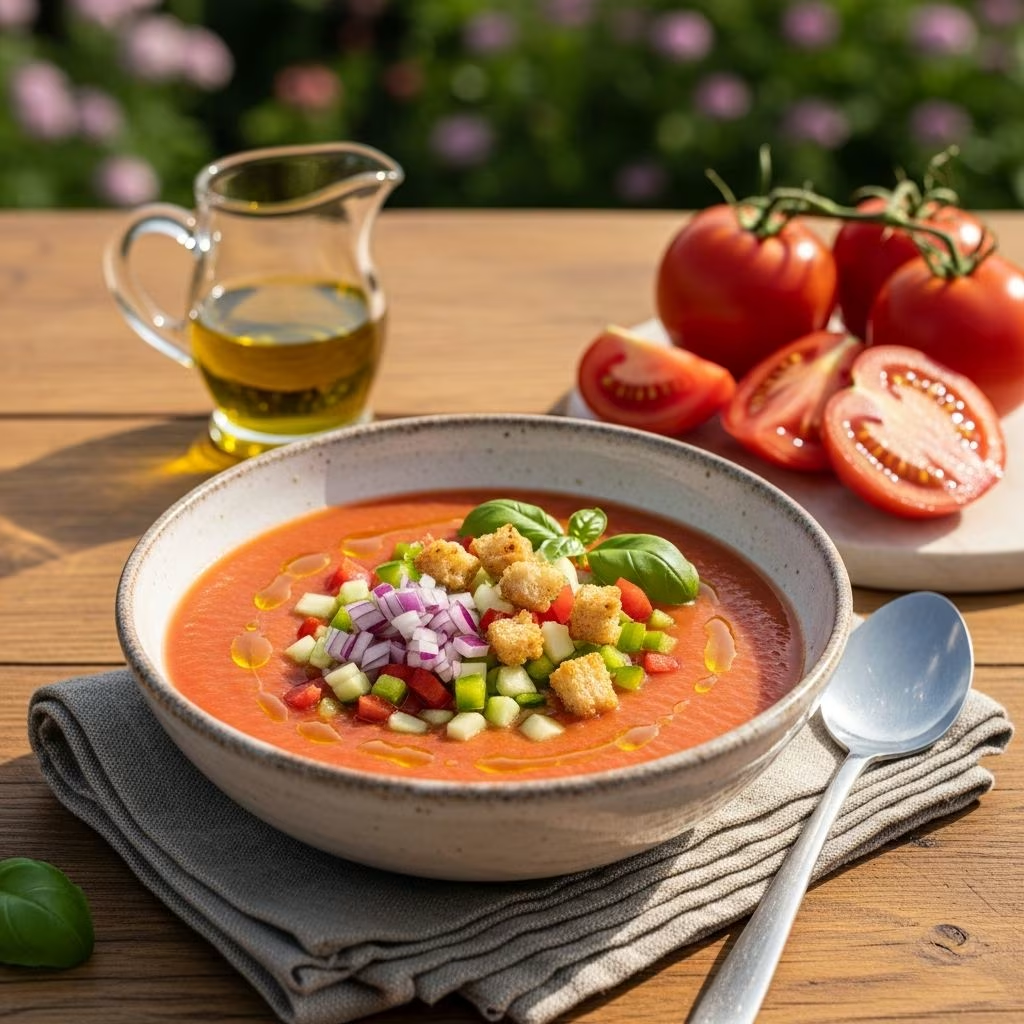
| Croutons | Nutty, toasted | Crispy exterior |
| Hard-Boiled Eggs | Rich, creamy | Soft, structured pieces |
| Basil Leaves | Herbaceous, aromatic | Delicate, fragrant |
Arrange garnishes in small bowls, allowing guests to customize their portions. This approach transforms gazpacho into an interactive experience where diners create personalized variations. Some prefer minimal garnishing while others stack toppings generously—accommodating both preferences elevates the dining experience.
Nutritional Considerations and Health Benefits
Gazpacho offers significant nutritional advantages beyond its refreshing qualities. The uncooked vegetables retain heat-sensitive vitamins and enzymes that cooking destroys. Tomatoes provide lycopene, a powerful antioxidant associated with various health benefits. Cucumbers offer hydration and minerals, while peppers contribute vitamin C and fiber. This combination makes gazpacho both satisfying and nourishing.
The inclusion of olive oil provides heart-healthy monounsaturated fats and polyphenols. Traditional preparation methods avoid cream or butter, making gazpacho naturally lower in saturated fats than many soup alternatives. For those monitoring sodium intake, controlling salt additions during preparation ensures gazpacho remains a wholesome choice.
Troubleshooting Common Preparation Challenges
Managing Excessive Thickness
If your gazpacho becomes too thick, gradually incorporate chilled vegetable stock or tomato juice rather than water. This maintains flavor integrity while achieving better consistency. Adding more liquid slowly prevents overshooting desired thickness.
Addressing Flavor Imbalances
Too acidic? A small pinch of sugar balances vinegar’s sharpness. Excessive garlic intensity? Blend in additional vegetables or bread to dilute strong flavors. Under-seasoned soup improves significantly through proper salt additions made just before serving. Remember that cold temperatures diminish perceived saltiness, so adjustments should be conservative.
Preventing Separation and Oxidation
Gazpacho may separate when stored, with liquid rising above solids. Gentle stirring before serving restores proper consistency. Brown discoloration indicates oxidation—prevent this by storing gazpacho in airtight containers away from light. Consume within three days of preparation for optimal quality.
Frequently Asked Questions
Can gazpacho be prepared in advance?
Absolutely. Gazpacho actually improves with overnight refrigeration as flavors meld. Prepare up to twenty-four hours ahead for convenience. Avoid preparing more than three days in advance, as vegetable quality deteriorates and flavors become muted.
What if I don’t have a food processor?
Traditional hand-chopping methods work perfectly, resulting in a more rustic texture. The additional effort pays dividends in satisfaction and customizable consistency. For exceptionally smooth results without a processor, try a blender in batches.
Does gazpacho contain raw garlic?
Yes, traditional preparation uses raw garlic for pronounced flavor. Those sensitive to raw garlic can reduce quantities or roast garlic beforehand for milder, sweeter notes. Alternatively, allow gazpacho to sit several hours—raw garlic becomes less aggressive as it macerated in acidic liquid.
Is gazpacho always vegetarian?
Traditional gazpacho contains no animal products, making it vegetarian and vegan-friendly. Modern interpretations may include seafood, meat broths, or other proteins. Check specific recipes to verify ingredients match your dietary preferences.
Can frozen vegetables be used?
Fresh produce delivers superior results, but frozen vegetables offer convenience and year-round availability. Thaw frozen vegetables completely before processing to achieve proper texture and eliminate excess water affecting consistency.
Conclusion: Embracing Gazpacho’s Versatility
Gazpacho represents an accessible entry point into Spanish culinary traditions, requiring minimal technical skill while rewarding ingredient quality and flavor consciousness. Whether you prepare classic tomato-based versions or experiment with innovative variations, gazpacho transforms summer meals into celebrations of seasonal produce and straightforward elegance. The next time warm weather arrives, gather quality ingredients, follow fundamental principles, and discover why this ancient dish continues enchanting diners across generations. Your appreciation for gazpacho deepens with each preparation, building confidence and personal style into this timeless recipe.
References
- Lycopene: Health Benefits and Antioxidant Properties in Tomatoes — National Institutes of Health (NIH). 2023. https://www.ncbi.nlm.nih.gov/pmc/articles/PMC6479177/
- Mediterranean Diet and Cardiovascular Health — American Heart Association. 2024. https://www.heart.org/en/healthy-living/healthy-eating/eat-smart/nutrition-basics/mediterranean-diet
- Polyphenols in Extra Virgin Olive Oil: Composition and Potential Health Effects — Food & Function, Royal Society of Chemistry. 2022. https://doi.org/10.1039/d2fo00106c
- Raw Vegetables and Heat-Sensitive Nutrient Retention — Journal of Agricultural and Food Chemistry. 2023. https://doi.org/10.1021/acs.jafc.3c00123