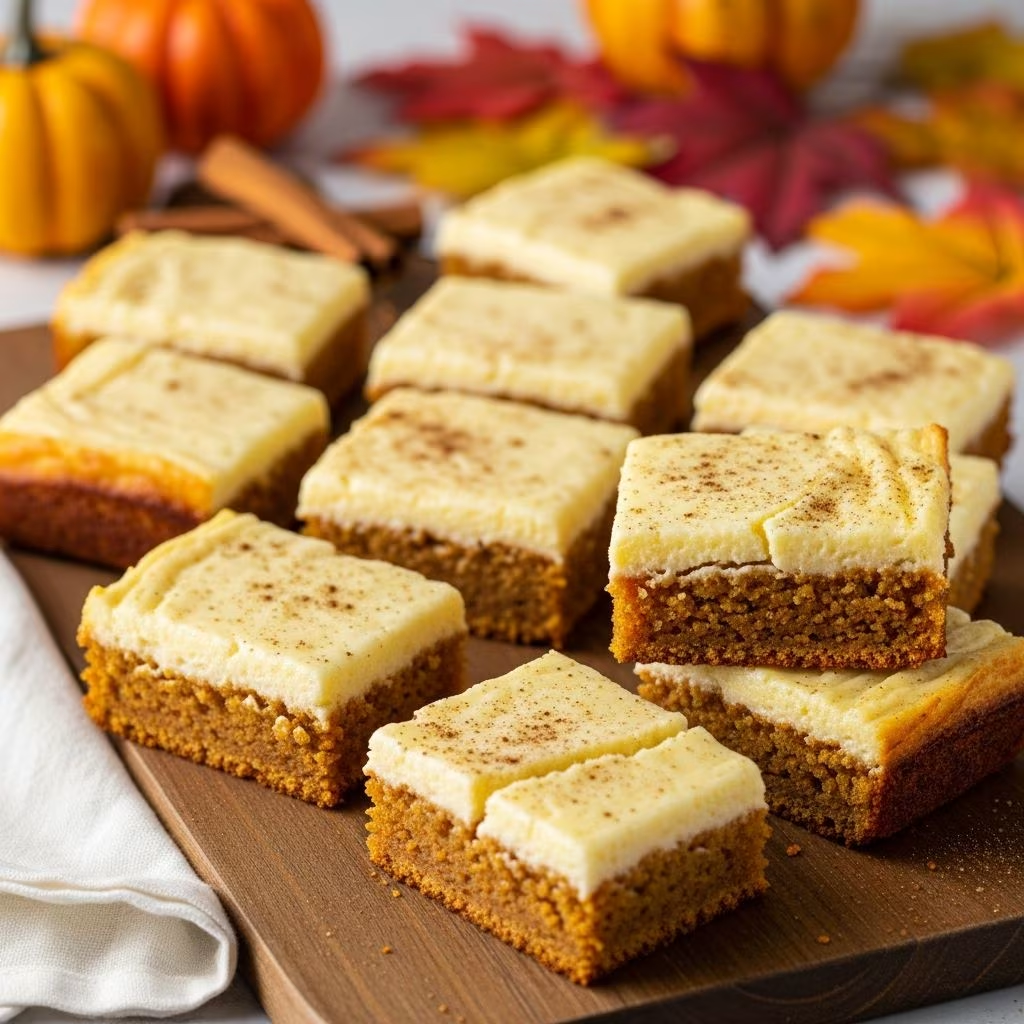
When autumn arrives, few treats capture the season’s essence as effectively as pumpkin-spiced desserts. Among these, sheet pan bars offer an elegant solution for serving multiple guests while maintaining simplicity in preparation. This guide explores the creation of distinctive pumpkin-based cake bars layered with a sophisticated cream cheese frosting, a combination that transforms straightforward ingredients into an impressive centerpiece for any fall gathering.
Understanding the Foundation: Core Components
The success of these bars relies on understanding how three distinct elements work together harmoniously. The base layer provides structure and moisture, the spicing creates warmth and depth, and the frosting delivers richness and tang that balances the sweetness of the cake itself.
Selecting Quality Pumpkin Puree
The foundation of exceptional pumpkin bars begins with choosing appropriate pumpkin products. While canned pumpkin puree offers convenience and consistency, distinguishing between pure pumpkin and pumpkin pie filling remains crucial. Pure pumpkin puree contains solely processed pumpkin with minimal additives, whereas pie filling includes added spices and sweeteners that would disrupt the recipe’s carefully calibrated flavor profile. A single 15-ounce can typically provides sufficient volume for standard batch recipes. When possible, selecting organic or regional pumpkin products can enhance both flavor complexity and nutritional value.
Dry Ingredient Composition
The structural components of the cake require precise measurement and combination. All-purpose flour serves as the primary binder, typically ranging from two to two and one-half cups depending on desired density. Leavening agents—both baking powder and baking soda—work synergistically to create the characteristic light, cake-like crumb that distinguishes quality bars from dense alternatives. The aromatic profile develops through combinations of ground cinnamon, pumpkin pie spice, and occasionally additional nutmeg or clove. A pinch of fine salt enhances flavor perception while balancing the natural sweetness of pumpkin puree.
Wet Ingredient Balance
Creating moisture and richness without heaviness demands careful attention to wet ingredients. Eggs contribute structural support and emulsification properties essential for achieving uniform crumb. Vegetable oil—whether traditional, canola, avocado-based, or coconut varieties—provides consistent moisture and tender texture. Granulated sugar dissolves completely into the mixture, contributing sweetness and hygroscopic properties that help retain moisture throughout storage. Vanilla extract adds subtle complexity without dominating the pumpkin-forward flavor profile.
Crafting the Perfect Cream Cheese Frosting
The topping transforms these bars from pleasant to memorable. A successful frosting balances tanginess, sweetness, and spreadability while complementing rather than overwhelming the spiced cake base.
Ingredient Preparation and Ratios
Both cream cheese and butter require softening to room temperature before combining. This critical step ensures smooth mixing and prevents lumpy texture in the finished frosting. Typical recipes employ eight ounces of cream cheese with four to six tablespoons of unsalted butter, creating a frosting with pronounced tanginess and stability. Powdered sugar serves as the primary sweetening component, with quantities ranging from two to six cups depending on desired consistency and sweetness level.
Adding dairy elements such as heavy cream, half-and-half, or milk creates a spreadable consistency without compromising structural integrity. Vanilla extract provides subtle flavor enhancement, while a minimal pinch of salt amplifies other flavors through flavor bridging mechanisms. Some variations incorporate cinnamon directly into the frosting, creating additional spice complexity that echoes the cake base.
Mixing Technique and Texture Development
Achieving smooth, fluffy frosting requires methodical mixing rather than aggressive beating. Beginning with cream cheese at medium speed creates a uniform base before introducing butter gradually. Once these components reach light and fluffy consistency, powdered sugar integration should proceed gradually, adding one cup at a time and mixing between additions to ensure even distribution. Over-beating at high speeds introduces excess air and can cause the frosting to become grainy or separated.
Step-by-Step Preparation Process
Pre-Baking Preparation
Successful bar preparation begins with oven preheating to 350 degrees Fahrenheit, allowing adequate time for the heating element to reach target temperature. During this preheating period, prepare the baking vessel by lining it with parchment paper or applying even coating of cooking spray. A 9-by-13-inch rectangular pan accommodates standard batch quantities, though larger jelly roll pans (approximately 12-by-17 inches) create thinner, more cake-like bars with reduced baking time.
Gathering all ingredients—known as mise en place in culinary practice—streamlines the mixing process and prevents omissions. Room temperature ingredients mix more uniformly and incorporate air more effectively than cold components.
Wet and Dry Combination
In a large mixing vessel, combine eggs with sugar and oil, whisking these components until thoroughly integrated. Add pumpkin puree and vanilla extract, continuing to mix until uniform coloration indicates complete combination. The mixture should appear homogeneous with no visible streaks of unmixed pumpkin.
In a separate medium-sized bowl, whisk together flour, baking powder, baking soda, cinnamon, pumpkin pie spice, and salt, ensuring dry ingredients distribute evenly throughout. This separate mixing prevents activation of leavening agents prematurely while allowing dry components to combine fully before contact with wet ingredients.
Gently fold or stir the dry mixture into the pumpkin mixture using minimal strokes. Over-mixing activates gluten development, creating tough, dense bars rather than tender, cake-like texture. The batter should appear uniformly combined with no visible dry flour pockets, yet individual mixing strokes should remain visible.
Baking and Cooling
Transfer batter to prepared baking vessel, spreading evenly with an offset spatula or the back of a spoon to ensure uniform thickness. Tapping the filled pan gently on the counter releases trapped air bubbles that could create uneven crumb structure. Bake for 25 to 35 minutes depending on pan size and oven characteristics, with smaller adjustments for home ovens that run warm or cool.
Visual cues indicate doneness: edges should begin turning golden brown, and a toothpick inserted in the center should emerge clean or with only minimal crumb adherence. Internal temperature should reach approximately 190 degrees Fahrenheit when measured with an instant-read thermometer.
Complete cooling before frosting application remains essential. Frosting spreads on warm cake will melt into the warm crumb rather than creating the desired decorative layer. Cool bars to room temperature on a wire rack, then refrigerate frosting application to stabilize it before serving.
Frosting Application and Finishing
Once bars have cooled completely, spread prepared frosting in an even layer across the entire surface. An offset spatula facilitates smooth, professional-appearing application. For decorative presentation, several finishing options enhance visual appeal: colorful fall-themed sprinkles, candied pumpkin pieces, a light dusting of cinnamon, or crushed cookies create textural variety.
Storage, Serving, and Make-Ahead Considerations
Shelf Life and Storage Conditions
Unfrosted bars maintain quality for three to four days when stored in airtight containers at room temperature. Refrigeration extends this to one week while potentially affecting texture slightly. Frosted bars benefit from refrigeration, which stabilizes the cream cheese topping and extends storage to five to seven days. Frozen storage preserves bars for up to three months, though frosting separation may occur with multiple thaw-freeze cycles.
Advanced Preparation Strategies
Bars can be prepared completely one day in advance, allowing flavors to meld and develop additional complexity. Some bakers prefer unfrosting bars for up to four days, then frosting shortly before serving for optimal appearance and frosting texture. Alternatively, frosted bars can be frozen individually on a sheet tray, then transferred to freezer storage bags, enabling single-serve portions for extended enjoyment.
Helpful Guidance and Problem-Solving
Frequently Asked Questions
What distinguishes pumpkin puree from pumpkin pie filling?
Pure pumpkin puree contains only processed pumpkin with no additives, while pie filling includes sugar, spices, and thickeners. Using pie filling in bar recipes creates excessive sweetness and unwanted spice combinations that override the baker’s intended flavor balance.
Can alternative sweeteners replace granulated sugar in these bars?
While brown sugar substitutes produce slightly denser, moister bars with enhanced molasses flavor, direct substitution of artificial sweeteners creates inconsistent results due to different volume and hygroscopic properties. Honey or maple syrup modifications require recipe adjustments for liquid ratios.
How can I achieve lighter, fluffier bars?
Incorporating an additional half teaspoon of baking soda and ensuring room temperature ingredients maximizes leavening. Slightly reduced oil quantity (reducing by one tablespoon) creates less dense crumb without sacrificing moisture.
What causes grainy frosting texture?
Insufficient beating of cream cheese and butter initially, or over-beating after powdered sugar addition, creates this undesirable texture. Gradual powdered sugar incorporation and mixing at medium speed prevents this issue.
Can I prepare these bars without cream cheese frosting?
Yes—alternative toppings include simple glaze made from powdered sugar and milk, cinnamon-sugar coating brushed onto warm bars, or traditional buttercream frosting. However, the cream cheese topping’s tanginess provides distinctive flavor that complements the warm spice profile uniquely.
Ingredient Substitution Guide
| Original Ingredient | Substitution Option | Impact on Final Product |
|---|---|---|
| Vegetable Oil | Melted Coconut Oil | Subtle coconut flavor, slightly different moisture retention |
| All-Purpose Flour | Gluten-Free Blend | Requires additional moisture; creates denser crumb |
| Cream Cheese Frosting | Mascarpone Alternative | Slightly sweeter, less tangy topping |
| Vanilla Extract | Almond Extract (half quantity) | Adds subtle almond note without overwhelming |
Professional Tips for Optimal Results
- Line baking pans with parchment paper extending beyond edges for easy removal and cutting
- Use room temperature ingredients for more uniform mixing and better texture development
- Insert toothpick in multiple locations to verify complete baking, as bars occasionally bake unevenly
- Cool bars completely before cutting; warm bars crumble and appear ragged
- Use sharp, wet knife for clean cuts; dip blade in water between each cut for best appearance
- Prepare frosting ingredients in advance, allowing softening time before mixing
- Sift powdered sugar before adding if lumpy; this prevents streaky frosting texture
Conclusion
Creating exceptional pumpkin bars with cream cheese frosting represents an achievable goal for bakers of varying skill levels. Success depends on quality ingredient selection, understanding how components interact, and employing proper techniques rather than complicated processes. These bars offer versatility for casual family gatherings or more formal entertaining occasions, providing advance preparation possibilities while delivering consistent, impressive results. The combination of warm spices, moist cake, and tangy frosting captures the essence of autumn in a format that feeds crowds effortlessly while maintaining individual portion control.
References
- Pumpkin Puree vs. Pumpkin Pie Filling: Understanding the Difference — United States Department of Agriculture. 2023. https://www.usda.gov/
- Pumpkin Bars with Cream Cheese Frosting — Gimme Some Oven. 2024. https://www.gimmesomeoven.com/pumpkin-bars-with-cream-cheese-frosting/