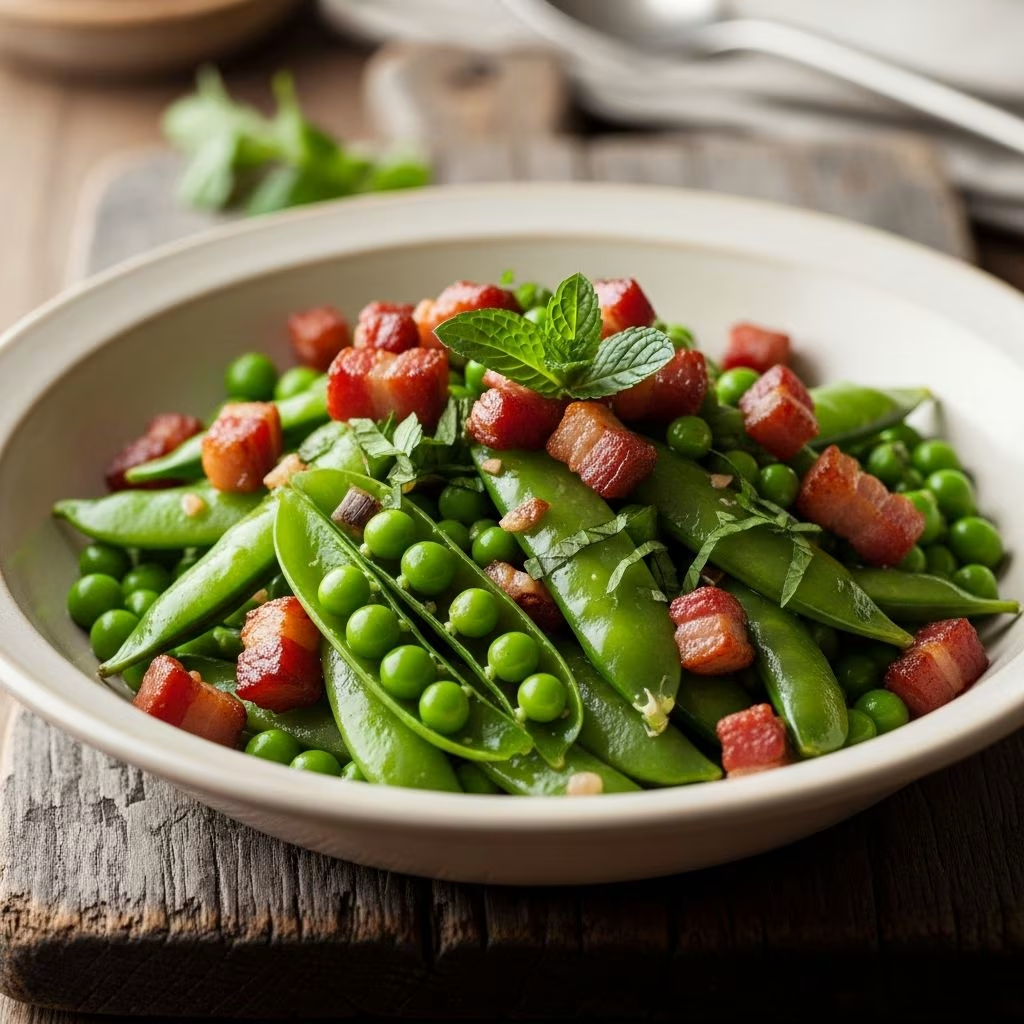
The combination of sweet green peas with crispy, salty pancetta represents one of the most versatile and approachable side dishes in contemporary cooking. This preparation transcends cultural boundaries, appearing in Italian kitchens, French bistros, and American home dining rooms with equal grace. The beauty of this dish lies in its remarkable simplicity—requiring minimal ingredients and straightforward technique—while delivering sophisticated flavor that complements an impressive range of main courses. Whether you’re planning a casual weeknight dinner or preparing for a formal holiday celebration, understanding how to properly execute this classic pairing provides a reliable addition to your culinary repertoire.
Understanding the Core Components
The foundation of this dish rests upon three primary elements that work in harmonious balance. Each ingredient plays a distinct role in creating the final flavor profile, and understanding their individual characteristics helps achieve optimal results.
The Role of Pancetta in This Dish
Pancetta serves as the flavor anchor for this preparation. This Italian cured pork product differs significantly from American bacon, featuring a more delicate seasoning profile and higher fat content that renders slowly during cooking. When diced into quarter-inch cubes, pancetta releases its rendered fat gradually, creating a flavorful cooking medium that infuses the entire dish. The goal is achieving crispy, golden-brown pieces that provide textural contrast and concentrated pork flavor. Approximately 4 ounces of pancetta provides adequate seasoning without overwhelming the sweeter vegetable components.
The Sweetness of Green Peas
Green peas bring natural sweetness and tender texture to this preparation. Both fresh and frozen varieties work successfully, though each requires slightly different handling. Fresh peas benefit from brief blanching before final cooking to ensure tender results, while frozen peas can transition directly from the freezer to the pan. The inherent sugar content in peas creates a pleasant contrast with the salty pancetta, establishing the fundamental flavor tension that makes this dish memorable. Quality matters significantly—premium frozen peas often surpass mediocre fresh specimens in both flavor and texture.
Aromatic Vegetables and Seasonings
Shallots or onions provide aromatic foundation and mild sweetness that bridges the pancetta’s saltiness and the peas’ delicate flavor. When sliced thinly and cooked until softened, these alliums become almost translucent, melding seamlessly into the final dish. Additional flavor dimensions emerge from fresh herbs like mint or parsley, which brighten the overall composition. Citrus elements—including lemon juice and zest—add complexity that prevents the dish from feeling one-dimensional, while subtle heat from red pepper flakes can enhance the seasoning if desired.
Ingredient Selection and Preparation
Success with this dish begins before cooking starts. Proper ingredient selection and preparation techniques establish the foundation for outstanding results.
Choosing Quality Pancetta
Select pancetta that is thinly sliced and freshly cut from the butcher counter when possible. Pre-packaged pancetta often contains excess moisture and preservatives that affect the final texture. Look for uniform thickness to ensure even cooking—pieces that are too thick will remain chewy, while extremely thin slices may burn before rendering properly. Approximately four ounces provides adequate seasoning without overwhelming other components.
Pea Selection Guidelines
For frozen peas, choose packages that feel loose rather than solid, indicating the peas were individually frozen rather than block-frozen. This allows better control during cooking. If using fresh peas, select pods that feel firm and heavy for their size, indicating optimal maturity. Fresh peas require brief blanching—approximately three to four minutes in boiling salted water—before being added to the pan, which sets their color and ensures proper texture development.
Preparation Steps Before Cooking
Dice pancetta into quarter-inch cubes, ensuring uniform sizing for consistent cooking. Halve shallots lengthwise and slice them thinly against the root, which helps them hold together during cooking. Juice and zest any citrus elements just before cooking to preserve aromatic oils. Chop fresh herbs immediately before use to maximize their flavor impact. These preparatory steps, though seemingly minor, significantly influence the final dish’s quality.
Fundamental Cooking Technique
Understanding the sequential steps and proper timing ensures this preparation delivers consistent excellence.
Initial Pancetta Cooking Phase
Begin by heating olive oil in a large skillet over medium heat. Add diced pancetta and allow it to cook gently, stirring occasionally, until the fat renders and the meat turns golden brown. This process typically requires five to seven minutes and should proceed at a moderate pace—aggressive heat risks burning the pancetta before the fat fully renders. The rendered fat becomes the cooking medium for subsequent ingredients and provides essential flavor.
Building Aromatic Layers
Once pancetta reaches proper color and crispness, add sliced shallots (or diced onions) directly to the pan. The residual heat and rendered fat will begin softening these aromatics immediately. Stir frequently to prevent sticking and encourage even cooking. Within three to four minutes, the shallots should appear translucent and tender. This is the optimal moment to introduce any additional aromatic elements like sliced garlic, lemon zest, or red pepper flakes—the heat will bloom their flavors efficiently.
Adding the Peas
Introduce the peas to the pan along with any liquid components such as lemon juice or pasta water if desired. Stir well to combine thoroughly, then reduce heat to medium-low. Cook for approximately four to five minutes, stirring occasionally, until the peas reach desired tenderness. Be cautious not to overcook, as excessive heat causes peas to wrinkle and shrink noticeably. Taste and adjust seasonings appropriately—pancetta contributes significant saltiness, so additional salt may be unnecessary.
Flavor Variations and Creative Adaptations
While the classic preparation remains timeless, several variations expand the possibilities of this fundamental technique.
Citrus-Enhanced Versions
Orange juice or frozen orange juice concentrate creates an unexpected but harmonious variation. The citrus acidity brightens the rich pancetta while adding subtle sweetness. Lemon variations remain eternally popular, with juice and zest providing piercing acidity that cuts through fat and enhances the peas’ natural flavor. These citrus elements should be introduced near the end of cooking to preserve their aromatic qualities.
Pasta Integration
The peas-and-pancetta combination translates beautifully into a quick pasta dish. Using ditalini or other small pasta shapes, combine cooked pasta with the prepared peas and pancetta along with reserved pasta cooking water to create a sauce. Finishing with grated Parmigiano-Reggiano cheese creates a complete, satisfying meal that maintains the original pairing’s essential character.
Heat and Spice Considerations
Red pepper flakes introduce warming heat that complements rather than overwhelms the other flavors. A quarter teaspoon to a half teaspoon typically provides noticeable but not aggressive spice. Fresh herbs like mint add brightness and sophistication, while parsley provides subtle vegetal notes that balance the dish’s richness.
Ingredient Ratios and Quantities
| Component | Quantity | Notes |
|---|---|---|
| Pancetta | 4-6 ounces | Diced quarter-inch; adjust based on desired salty intensity |
| Green Peas | 10 ounces to 1 pound | Fresh or frozen; adjust based on serving size |
| Shallots | 2-3 shallots or ½ onion | Halved and thinly sliced; provides aromatic foundation |
| Olive Oil | 2 tablespoons | Optional if pancetta provides adequate fat |
| Seasonings | Variable | Salt, pepper, red pepper flakes to taste |
| Herbs | 1 tablespoon fresh | Mint, parsley, or combination; added at conclusion |
Serving Suggestions and Pairing Opportunities
The versatility of this dish extends beyond its fundamental preparation to its numerous applications at the dinner table.
Holiday and Formal Occasions
This preparation appears frequently on holiday tables, particularly during spring celebrations. Its elegant presentation and refined flavor profile complement roasted poultry, lamb, and pork main courses. The dish’s bright color adds visual interest to festive plates while its savory character prevents the overall meal from becoming overly heavy.
Casual Weeknight Integration
As a quick side dish prepared in under twenty minutes, peas and pancetta fits seamlessly into busy weeknight schedules. It pairs naturally with roasted fish, grilled chicken, or pan-seared beef. The preparation requires minimal active cooking time, allowing attention toward other menu components.
Standalone Pasta Application
When incorporated into pasta preparations, this combination becomes a complete light main course. The combination of carbohydrates, protein, and vegetables creates nutritional balance while maintaining the preparation’s essential character and sophistication.
Common Challenges and Solutions
Understanding potential pitfalls helps avoid disappointment and ensures consistent success.
Pancetta Texture Issues
If pancetta fails to crisp properly, the cooking temperature may be insufficient. Ensure the pan reaches adequate heat before adding pancetta, and maintain medium rather than low heat throughout the rendering process. Conversely, if pancetta burns before rendering, reduce heat and stir more frequently to prevent direct contact with the pan surface.
Overcooked Peas
Excessive cooking causes peas to wrinkle and lose their vibrant color and tender texture. Monitor cooking time carefully—four to five minutes typically suffices for both fresh blanched and frozen peas. The moment peas become uniformly hot signals readiness for service; additional cooking provides no benefit.
Insufficient Seasoning
Taste the preparation before serving and adjust seasonings as needed. Because pancetta contributes significant saltiness, taste before adding additional salt. Acid from lemon juice or other citrus should be noticeable but not aggressive—the juice should brighten flavors without dominating them.
Nutritional Considerations
While not an austere health food, this preparation provides meaningful nutritional value. Green peas contribute fiber, vitamin C, and plant-based protein. Pancetta provides fat-soluble vitamins and selenium. The dish’s balanced composition of protein, complex carbohydrates from legumes, and healthy fats from olive oil creates a satisfying element that prevents overconsumption of other less wholesome foods.
Storage and Make-Ahead Possibilities
This dish maintains quality when prepared ahead and reheated gently. Store covered in the refrigerator for up to three days. Reheat gently in a low oven or carefully over low stovetop heat, adding small quantities of pasta water or vegetable broth if the mixture appears dry. Adding fresh herbs after reheating preserves their aromatic qualities better than including them during initial cooking.
Frequently Asked Questions
Can I substitute bacon for pancetta?
While bacon provides similar flavor, it differs in texture and cure. Pancetta’s higher fat content and milder seasoning create superior results, though bacon works acceptably as a substitute when pancetta is unavailable.
Must I use frozen peas, or do fresh work better?
Either works well with proper technique. Fresh peas require brief blanching, while frozen peas transition directly to the pan. Premium frozen peas often yield superior results compared to subpar fresh specimens.
How far ahead can I prepare this dish?
Prepare components ahead and combine shortly before serving. Cook pancetta and shallots up to several hours beforehand, then combine with peas and finish just before service to preserve optimal texture.
What wine pairs well with this dish?
Light, crisp white wines—particularly Pinot Grigio, Sauvignon Blanc, or Albariño—complement the dish’s flavors beautifully. If serving as part of a larger meal with red wine, the peas and pancetta integrate naturally into the wine pairing.
References
- Pancetta Production and Culinary Applications — Italian National Institute for Foreign Trade. Updated 2024-06-15. https://www.ice.it/en
- Shallot Cultivation and Flavor Profile — University of California Cooperative Extension. 2023-03-22. https://celosangeles.ucanr.edu
- Rendering Animal Fats in Cooking — Culinary Institute of America. Updated 2024-01-10. https://www.ciachef.edu
- Citric Acid in Culinary Applications — Journal of Culinary Science & Technology. 2023-11-05. https://www.tandfonline.com/doi/full/10.1080/15428052.2023.2280566
- Quick Preparation Cooking Techniques — Serious Eats (America’s Test Kitchen). Updated 2024-05-20. https://www.seriouseats.com