Beef bourguignon stands as one of France’s most celebrated culinary contributions to world cuisine. This slow-cooked stew combines tender beef with aromatic vegetables, all unified by a deep, wine-infused sauce that speaks to centuries of French gastronomic tradition. What makes this dish particularly appealing to home cooks is its elegant simplicity—despite its refined reputation, the preparation relies on straightforward techniques and readily available ingredients. The magic emerges through patience and proper technique rather than complicated procedures.
Understanding the Foundation of This French Stew
At its core, beef bourguignon represents a marriage of rustic ingredients treated with careful attention. The dish originated in Burgundy, a region renowned for both its beef cattle and exceptional wines. The name itself reveals the cooking method: “bourguignon” translates to cooking in the style of Burgundy, which historically meant braising tough cuts of meat in local red wine until they transformed into silky tenderness. This technique emerged from practicality—tougher cuts became affordable proteins that benefited from extended, moist cooking methods.
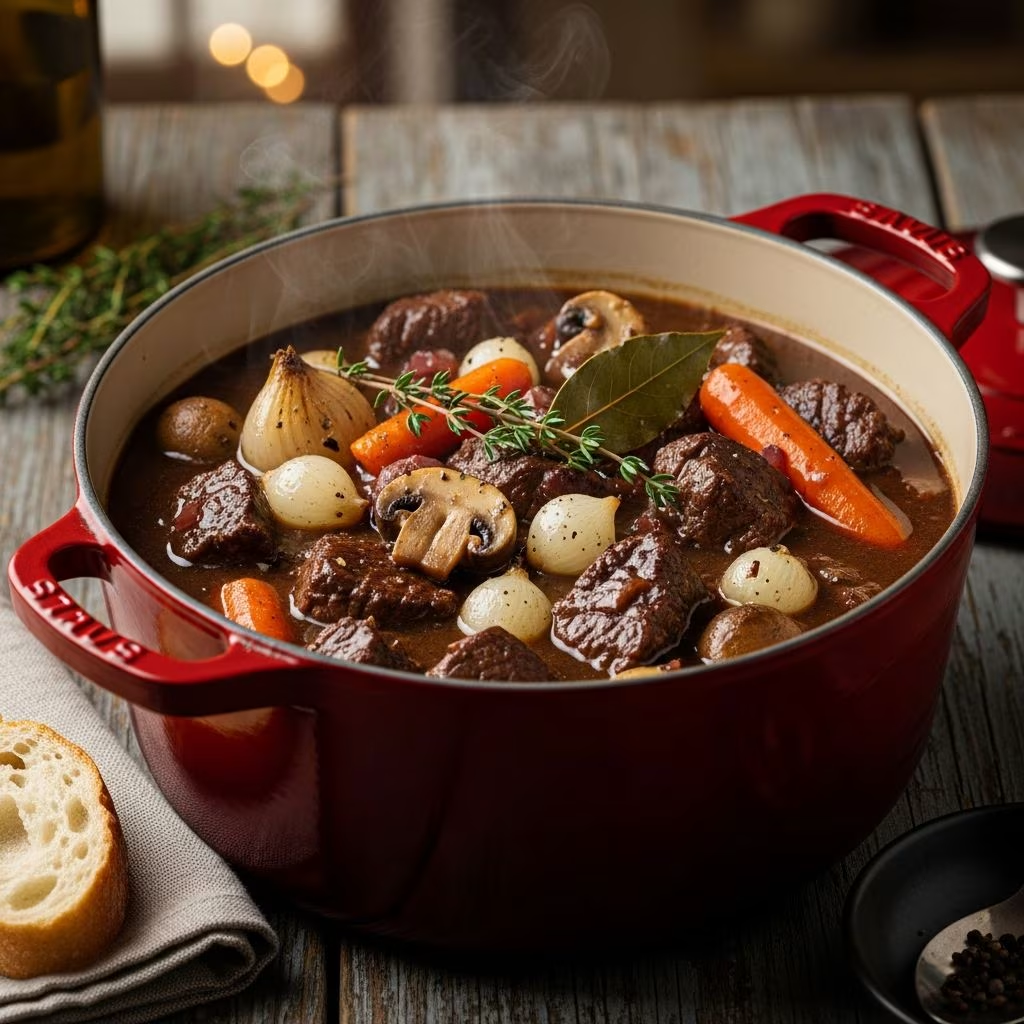
The traditional formula involves braising beef in red wine alongside pearl onions, mushrooms, and bacon, creating layers of umami-rich flavors that deepen as the stew simmers. Modern adaptations maintain this core structure while sometimes adjusting cooking times or methods for convenience. Whether prepared in a Dutch oven over hours or in a slow cooker, the fundamental chemistry remains unchanged: low heat and time transform challenging ingredients into something transcendent.
Selecting and Preparing Your Protein
The choice of beef determines much of your final result. Chuck roast emerges as the preferred cut among experienced cooks, prized for its balanced marbling and connective tissue that breaks down into natural gelatin during cooking. This gelatin enriches the sauce, creating body and silkiness that cannot be replicated with leaner cuts. When selecting chuck, look for pieces showing generous fat distribution throughout rather than concentrated in one area.
Cut your beef into uniform pieces, typically ranging from one to two inches depending on your preference. Uniformity matters because it ensures even cooking—smaller pieces may become stringy while oversized chunks might remain tough in the center when others reach optimal tenderness. Many cooks appreciate the satisfaction of cubing their own roast rather than purchasing pre-cut stew meat, which often contains irregular sizing and sometimes comes from less ideal sections of the animal.
Before cooking, trim excess surface fat but preserve the marbling within. Season generously with kosher salt and freshly ground pepper. This initial seasoning flavors the meat directly rather than relying solely on sauce seasoning to carry the flavor profile. Some cooks prefer drying the beef surface with paper towels before seasoning, which promotes better browning during the initial searing stage.
Building Flavor Through Strategic Layering
The cooking sequence matters tremendously in beef bourguignon preparation. Rather than combining all ingredients at once, each component enters the pot at precisely calculated moments, allowing flavors to develop progressively.
Begin with bacon, rendering it slowly in your Dutch oven until fat releases and the meat achieves crispness. This bacon fat becomes the cooking medium for subsequent steps, imparting subtle smokiness that permeates the entire dish. Set the cooked bacon aside for later reintroduction.
Next, sear your beef pieces in batches, resisting the urge to crowd the pan. Crowding prevents proper browning and traps moisture, creating steam that inhibits the formation of appetizing brown crust. Work in stages, allowing each batch to develop deep browning on all sides before transfer to a holding plate. This Maillard reaction—the chemical browning that occurs when proteins meet heat—creates hundreds of new flavor compounds that form the foundation of the stew’s complexity.
After beef searing, introduce vegetables. Carrots and onions begin the aromatic base, sautéing until they soften and begin caramelizing at the edges. Add minced garlic and tomato paste, stirring continuously for a minute to cook out raw garlic harshness and allow tomato paste to caramelize slightly, deepening its umami contribution. This step prevents the burnt-tasting bitterness that results from insufficient cooking of tomato paste.
The Role of Red Wine and Liquid Components
Red wine performs multiple functions in beef bourguignon beyond adding flavor. The acidity helps tenderize collagen in the meat, converting it to gelatin. Wine also provides a flavor foundation distinctly different from water or stock alone. Burgundy wine traditionally serves this role, though any dry red wine of reasonable quality works admirably. The wine need not be expensive—save premium bottles for drinking rather than cooking—but select something you would enjoy consuming, as inferior wine contributes inferior flavor.
When adding wine, pour it partially into the pan with browned beef, scraping the bottom with a wooden spoon to incorporate browned bits (called fond) that cling to the pot. This process, known as deglazing, recovers concentrated flavor compounds that would otherwise remain stuck. Add remaining wine after returning the beef to the full complement of vegetables and aromatics.
Beef broth supplements the wine, providing additional moisture and savory depth without overwhelming the wine’s presence. The liquid should barely cover the solid ingredients when the stew reaches the oven. Too much liquid results in a thin, soupy consistency; too little risks drying out the meat or burning during extended cooking.
Herbs and Seasonings That Define the Profile
Traditional beef bourguignon relies on a specific herbal framework. Fresh thyme contributes earthy, slightly peppery notes that complement beef without competing with the wine sauce. Bay leaves add subtle aromatic complexity and a hint of astringency. These herbs typically bind together into a bouquet garni—a small bundle tied with twine or contained in cheesecloth—that can be easily removed at the end of cooking. This presentation prevents dried herb fragments from interrupting the eating experience while allowing their flavors to infuse throughout the cooking process.
Salt and pepper require particular attention because their impact intensifies during the long cooking process. Begin with conservative seasoning, adjusting toward the end once you can taste the full developed flavor profile. Adding salt too early can result in over-salting as liquid reduces during braising.
Executing the Low and Slow Cooking Method
Once your beef, vegetables, wine, and stock combine in the pot, transfer to an oven preheated to 250 degrees Fahrenheit. This gentle heat environment allows collagen to convert to gelatin at an optimal rate without toughening the muscle fibers. The Dutch oven’s heavy construction and tight-fitting lid trap steam, creating a self-basting environment where the meat cooks in a combination of braising liquid and gentle steam.
Cooking duration typically ranges from 90 minutes to three hours depending on beef chunk size and your oven’s characteristics. Begin checking for doneness around the 75-minute mark by removing a piece and tasting it. The meat should offer no resistance when pierced with a fork—it should practically fall apart. Undercooked beef remains chewy and tough; over-cooked beef becomes stringy and loses its appealing texture.
Some cooks prefer stirring occasionally during this phase to ensure even cooking and flavor distribution. Others prefer not opening the oven, believing that preserving the internal environment produces superior results. Both approaches work; consistency matters more than choosing one method.
Completing the Dish with Finishing Components
While the beef braises, prepare the finishing vegetables. Pearl onions and fresh mushrooms should not cook for the entire duration, as extended heating renders them mushy and flavorless. Instead, sauté them separately in butter until they achieve light golden browning, concentrating their flavors. Pearl onions add subtle sweetness and visual appeal, while mushrooms contribute earthy notes and a meaty texture that enhances the beef’s presence.
When the beef reaches desired tenderness, return the pot to the stovetop over medium heat. If the sauce appears too thin, create a paste from softened butter and flour (called beurre manié), stirring it into the simmering liquid until it thickens to glossy, sauce-like consistency. This flour coating should cook for several minutes after incorporation to eliminate raw flour taste while achieving silky texture.
Fold in the sautéed mushrooms and pearl onions, along with the reserved bacon pieces. Bring the stew to a gentle simmer, cooking just until these additions warm through and integrate with the sauce. Taste and adjust seasoning as needed, remembering that salt, pepper, and acidity should balance rather than any single element dominating.
Serving and Presentation
Beef bourguignon reaches its peak presentation shortly after completion, when the sauce maintains its glossy richness and the meat remains at optimal tenderness. Serve in shallow bowls to showcase the beautiful components, garnishing with fresh parsley and perhaps a final pinch of fleur de sel. Crusty bread or buttered egg noodles provide ideal accompaniments, inviting diners to capture every drop of the luxurious sauce.
The dish improves with time, as flavors continue merging and deepening. Many experienced cooks prepare beef bourguignon a day ahead, refrigerate it overnight, and gently reheat before serving. This resting period allows fats to solidify, making them easily removable if desired, while flavors settle into equilibrium.
Troubleshooting Common Challenges
Tough meat after cooking: This typically indicates either insufficient cooking time or a problem with the meat source. Chuck roast should become tender; if it remains chewy, continue cooking. Occasionally, very poor quality beef simply will not tenderize properly, though this rarely occurs with reasonable-quality meat.
Greasy sauce: If fat rises visibly to the surface, skim it away or refrigerate overnight and lift the solidified fat layer from the cooled stew. Some fat is desirable for richness; excessive amounts suggest using a fattier beef cut than optimal.
Thin, watery sauce: Beurre manié (butter-flour paste) provides the standard solution. Alternatively, remove the meat and vegetables temporarily, then simmer the sauce uncovered until it reduces and concentrates to desired consistency.
Burnt or bitter flavor: This usually results from tomato paste cooking insufficiently before liquid addition or from the oven temperature running too hot. Monitor your oven with a separate thermometer to ensure accuracy.
Variations and Adaptations
While tradition matters in French cooking, beef bourguignon accommodates thoughtful modifications. Some cooks substitute brandy for a portion of the wine, adding complexity. Others incorporate different mushroom varieties or add root vegetables like potatoes or parsnips. A slow cooker adaptation requires cooking on low for 8-10 hours, though purists argue the oven method produces superior results through more controlled heat distribution.
References
- Beef Bourguignon Recipe — WellPlated.com. Retrieved 2026-04-09. https://www.wellplated.com/beef-bourguignon/
- Beef Bourguignon (World’s Best Beef Stew) — Sip and Feast. Retrieved 2026-04-09. https://www.sipandfeast.com/beef-bourguignon/
- Beef Bourguignon Recipe — The Modern Proper. Retrieved 2026-04-09. https://themodernproper.com/beef-bourguignon
- The Ultimate Comfort Food: Easy Beef Bourguignon — Carla Hall. Retrieved 2026-04-09. https://carlahall.com/the-ultimate-comfort-food-easy-beef-bourguignon/