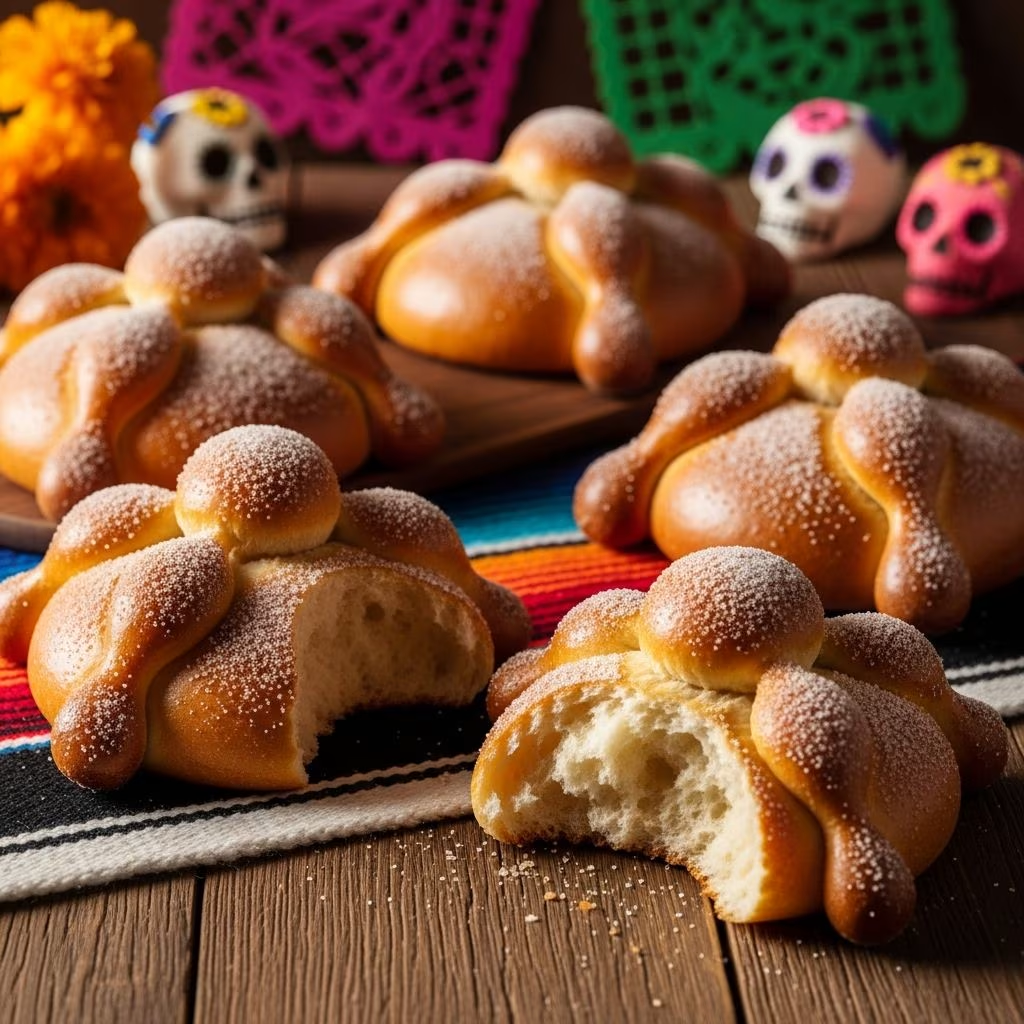
Pan de muertos stands as one of Mexico’s most cherished culinary traditions, representing a profound cultural connection to Día de los Muertos celebrations. This distinctively flavored sweet bread, with its characteristic bone-shaped decorations and orange-infused crumb, has been baked in Mexican households for generations. The preparation of this bread extends beyond simple baking—it embodies family traditions, regional variations, and the spiritual significance of honoring deceased loved ones during this important holiday.
Understanding the Cultural Significance
Pan de muertos transcends ordinary bread-making, serving as a symbolic offering placed on family altars alongside marigolds, candles, and photographs. The bread’s round shape represents the cycle of life, while the bone-shaped pieces adorning the top symbolize the structure of human mortality. During Día de los Muertos celebrations, families gather to share this bread with coffee or hot chocolate, creating moments of remembrance and connection across generations. The tradition reflects indigenous Mesoamerican practices blended with Spanish colonial influences, creating a uniquely Mexican expression of honoring the deceased.
Essential Ingredients and Their Roles
Creating authentic pan de muertos requires understanding how each ingredient contributes to the final product’s distinctive character. The foundation begins with quality all-purpose flour, which provides the structure necessary for the bread’s soft yet stable crumb. Active dry yeast serves as the leavening agent, creating the characteristic light texture through fermentation. The flavor profile emerges from a carefully balanced combination of orange elements and aromatic spices that define this bread’s identity.
- Flour (4-5 cups): Forms the structural foundation, absorbing liquids and developing gluten networks that create the bread’s tender crumb structure
- Active dry yeast (1-2 tablespoons): Ferments the dough, producing carbon dioxide bubbles that create volume and lightness throughout the bread
- Sugar (1/2-3/4 cup): Provides sweetness while feeding yeast during fermentation and contributing to browning during baking
- Butter (1/2-3/4 cup): Creates richness, improves texture, and contributes to the bread’s luxurious crumb and golden exterior
- Eggs (3-4 large): Bind ingredients together, add structure, and create the bread’s characteristic golden color and rich flavor
- Orange zest (1-2 oranges): Infuses the dough with bright citrus notes that define the bread’s distinctive flavor profile
- Anise seed (1/4-1 teaspoon): Adds subtle licorice undertones that complement the orange and create complex flavor depth
- Milk (1 cup warm): Hydrates the dough while contributing subtle sweetness and richness to the crumb
- Salt (1/2 teaspoon): Enhances flavor perception and strengthens gluten development for better structure
The Dough Development Process
Successful pan de muertos begins with properly developing the dough, a process requiring attention to temperature, timing, and technique. The journey from individual ingredients to cohesive dough involves multiple stages of mixing, hydration, and fermentation. Understanding each phase ensures the final bread achieves the desired tender crumb and proper rise.
Initial Mixing and Yeast Activation
Begin by warming milk to approximately 110 degrees Fahrenheit, a temperature that activates yeast without killing it through excessive heat. Combine this warm milk with active dry yeast and a small amount of sugar in a separate bowl, allowing the mixture to sit for 5-10 minutes until it becomes foamy and fragrant. This blooming process confirms yeast viability and jumpstarts fermentation. In the meantime, combine flour, remaining sugar, and salt in the bowl of an electric mixer fitted with a dough hook attachment.
Progressive Butter Integration
Once the yeast mixture is ready, add it to the dry ingredients along with beaten eggs and orange zest. Begin mixing on low speed until all components combine into a shaggy dough. Rather than adding all butter at once, which would overwhelm the mixture, incorporate it in three equal portions. Add the first portion and mix for approximately one minute until absorbed, then repeat with the second portion, followed by the final addition. This gradual integration allows the dough to properly absorb each addition, creating a smooth, elastic texture that pulls away cleanly from the bowl.
Achieving the Perfect Dough Consistency
Continue mixing on medium-low speed for 6-8 minutes total, incorporating the anise seed and orange blossom water or essence during the latter stages of mixing. The finished dough should feel smooth, elastic, and slightly sticky without clinging excessively to the bowl or hands. This consistency develops proper gluten networks while maintaining the richness contributed by butter and eggs. The dough at this stage should have a satiny appearance and feel slightly resilient when pressed gently.
Fermentation and Rising Techniques
After mixing, proper fermentation develops the bread’s flavor complexity and creates the light, open crumb structure characteristic of quality pan de muertos. Transfer the dough to a lightly greased bowl, cover with plastic wrap or a clean kitchen towel, and place in a warm, draft-free location. The ideal temperature ranges between 75-80 degrees Fahrenheit, which promotes steady yeast activity without accelerating fermentation excessively.
Allow the dough to rise until doubled in volume, typically requiring 1.5 to 2 hours depending on ambient temperature and yeast activity. You can test whether fermentation has progressed adequately by gently poking the dough with a floured finger—if the indentation springs back halfway, the dough has reached optimal proof.
Shaping Techniques and Decorative Elements
The distinctive appearance of pan de muertos emerges during the shaping process, where individual pieces of dough are transformed into the bread’s characteristic form. After the first rise, gently remove the dough from the bowl and divide it into appropriate portions for your desired yield. Most recipes yield 4-8 individual loaves, though this depends on desired size.
Creating the Round Foundation
For each loaf, reserve approximately one ounce of dough for creating the decorative bones. Roll the remaining dough into a tight ball by cupping it in your hands and rolling against the work surface with a gentle rocking motion. Place each shaped round on a parchment-lined baking sheet, leaving approximately two inches between loaves for expansion during the second rise.
Forming the Signature Bone Decorations
From the reserved dough portions, roll small pieces between your palms to create elongated logs approximately 2-3 inches long, resembling small bones. Arrange two bone pieces in an X pattern across the top of each round, then place a small ball of dough in the center intersection. This traditional arrangement creates the visual symbol of mortality central to the bread’s cultural meaning. Some bakers prefer to slightly flatten the main round before adding decorations, creating a more pronounced dimensional effect.
The Second Rise
Cover the shaped loaves with a clean kitchen towel and allow them to rise again in a warm location for approximately 45 minutes to 90 minutes, depending on room temperature and dough composition. During this period, preheat your oven to 350 degrees Fahrenheit. The loaves should increase noticeably in volume, becoming puffy and soft to the touch.
Preparing for Baking Success
Before transferring loaves to the oven, prepare an egg wash to create the bread’s characteristic golden-brown exterior. Combine one beaten egg with one tablespoon of water or milk and a pinch of salt, mixing until uniform. Using a pastry brush, gently coat each loaf with this mixture, ensuring even coverage while being careful not to deflate the risen dough.
Some bakers prefer to sprinkle a small amount of granulated sugar directly onto the egg-washed surface, which creates a sparkly, textured crust reminiscent of traditional presentations. This optional step adds visual appeal and contributes subtle textural contrast to the final bread.
Baking and Finishing Techniques
Transfer the prepared loaves to the preheated 350-degree oven and bake for 25-30 minutes, until the exterior achieves a deep golden-brown color. The exact timing varies depending on oven characteristics, loaf size, and individual oven calibration. A useful indicator of doneness involves tapping the bottom of a loaf—properly baked bread should produce a hollow, resonant sound. If loaves brown too quickly, loosely tent them with aluminum foil to prevent the exterior from darkening excessively before the interior completes baking.
Once removed from the oven, transfer the hot loaves to a wire cooling rack and allow them to cool to room temperature before finishing. This cooling period allows the interior crumb structure to set properly, preventing a gummy texture.
The Traditional Sugar Finish
The final step transforms cooled pan de muertos into the iconic finished product recognized throughout Mexico and diaspora communities. Once completely cool, brush each loaf generously with softened butter, then dust liberally with granulated sugar. Some regional traditions substitute colored sugar for visual distinction, while others incorporate cinnamon into the sugar mixture for added warmth and spice complexity. The butter serves as an adhesive for the sugar coating while contributing additional richness to the bread’s exterior.
Ingredient Variations and Regional Adaptations
While the core recipe remains consistent across Mexico, regional and family variations reflect local preferences and available ingredients. Some families incorporate orange blossom water for intensified floral-citrus notes, while others emphasize anise seed for more pronounced licorice undertones. Certain regions add rose water, creating a distinctly perfumed character. A few creative bakers experiment with cardamom, nutmeg, or cloves for warming spice dimensions.
Sesame seed sprinkled over the egg wash before baking adds textural interest and visual authenticity to traditional presentations. Some contemporary variations incorporate whole wheat flour for nutritional enhancement, though this modifies the traditional tender crumb structure.
Troubleshooting Common Challenges
| Challenge | Likely Cause | Solution |
|---|---|---|
| Dense, heavy crumb | Insufficient fermentation or expired yeast | Ensure warm rising environment; verify yeast freshness; extend rising time |
| Bread fails to rise adequately | Temperature too cold or insufficient yeast activation | Use warmer environment; verify milk temperature; ensure yeast foaming stage |
| Overly dry texture | Over-baking or insufficient butter proportion | Reduce baking time; verify ingredient measurements; ensure proper mixing |
| Uneven browning | Oven hot spots or inconsistent loaf size | Rotate pan halfway through baking; shape loaves uniformly |
| Decorative bones separate during baking | Insufficient egg wash adhesion | Apply generous egg wash; press bones gently into dough before washing |
Storage and Longevity
Properly stored pan de muertos maintains quality for several days after baking. Allow loaves to cool completely before storing in an airtight container at room temperature, where they remain fresh for up to three days. For longer preservation, wrap cooled loaves individually in plastic wrap and freeze for up to one month. When ready to enjoy frozen bread, thaw at room temperature and warm briefly in a low oven to restore the soft crumb and aromatic qualities.
Serving Suggestions and Cultural Context
Pan de muertos traditionally accompanies hot beverages during Día de los Muertos celebrations. Mexican hot chocolate, prepared with cinnamon and often whipped into a frothy consistency, pairs beautifully with the sweet, aromatic bread. Coffee also complements the bread’s flavor profile, allowing the orange and anise notes to shine while providing subtle bitterness that balances sweetness. Some families tear the bread into pieces and enjoy it throughout the day, while others reserve it as a special treat enjoyed during evening gatherings and remembrances.
Frequently Asked Questions
- Can I prepare pan de muertos ahead of time?
- Yes, the dough can be prepared a day ahead, refrigerated overnight, and shaped and baked the following day. Cold dough may require an additional 30 minutes of rising time after shaping.
- What if my kitchen is too cold for proper fermentation?
- Place the dough in a turned-off oven with the light on, or use a proofing box set to 75-80 degrees Fahrenheit. Alternatively, place the bowl in warm water to maintain appropriate temperature.
- Is it necessary to use orange blossom water?
- Orange blossom water intensifies floral-citrus qualities, but orange zest alone provides adequate flavor. Substitute orange extract or water if blossom water is unavailable.
- Can I make eggless pan de muertos?
- Yes, substitute eggs with applesauce or commercial egg replacement products, though this modifies the traditional crumb structure and color slightly.
- Why does my bread taste different from authentic Mexican versions?
- Regional variations exist throughout Mexico. Experiment with ingredient proportions, fermentation times, and sugar finishes to achieve your preferred flavor balance.
References
- Pan de Muerto (Day of the Dead Bread) – Isabel Eats — Isabel Eats. Accessed 2026. https://www.isabeleats.com/pan-de-muerto/
- Pan De Muerto (Day Of The Dead Bread) – Muy Delish — Muy Delish. Accessed 2026. https://www.muydelish.com/pan-de-muerto/
- Day of the Dead Bread | Pan de Muerto – Traditional Mexican Recipes — Mexico In My Kitchen. Accessed 2026. https://www.mexicoinmykitchen.com/pan-de-muerto-mexican-bread-of-dead/
- Pan de Muerto (Day of the Dead Bread) Recipe — King Arthur Baking. Accessed 2026. https://www.kingarthurbaking.com/recipes/pan-de-muerto-day-of-the-dead-bread-recipe
- Día de los Muertos: Pan de Muerto Recipe — Latino Foodie. Accessed 2026. https://www.latinofoodie.com/featured-blog-posts/pan-de-muerto-recipe/