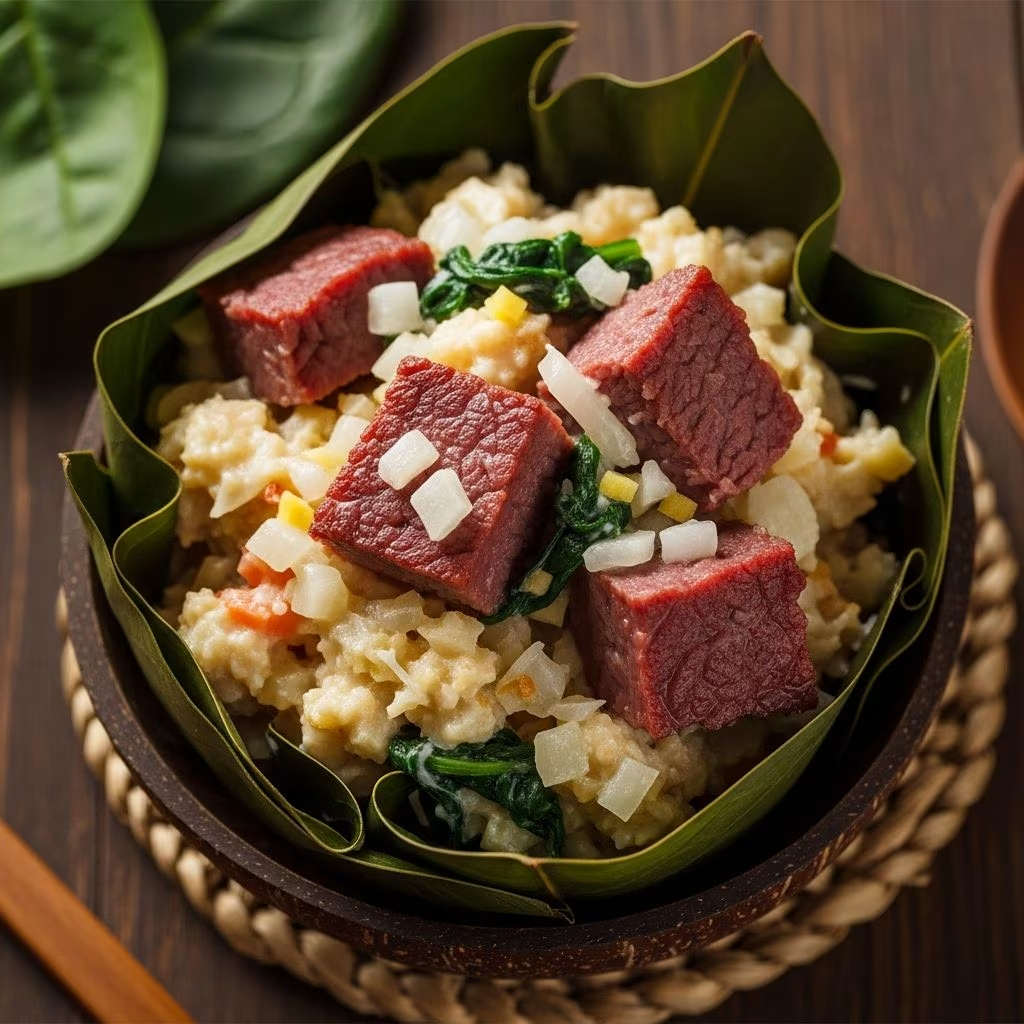
Palusami stands as a cornerstone of Samoan cuisine, embodying the island’s deep connection to fresh, local ingredients and communal cooking traditions. This dish, primarily made from young taro leaves enveloping a rich coconut cream mixture often enhanced with onions or proteins, is steamed to achieve a tender, flavorful result that melts in the mouth. Rooted in Polynesian heritage, palusami transcends a simple recipe, serving as a symbol of hospitality and family gatherings across Samoa, Fiji, and beyond.
The Cultural Heart of Palusami in Samoa
In Samoan culture, food is more than sustenance; it’s a vessel for storytelling and unity. Palusami frequently graces the umu, the traditional earth oven used for feasts called to’ona’i, where entire communities come together. The preparation involves wrapping ingredients in banana leaves and burying them in hot stones, a method passed down through generations that infuses the dish with smoky depth. Similar preparations appear in neighboring cultures—known as laulau in Hawaii or lovo dishes in Fiji—highlighting shared Polynesian roots where taro and coconut form the backbone of many meals.
Historically, palusami evolved from pre-colonial staples relying on taro (lu’au leaves) and coconut, with modern twists incorporating accessible canned goods like corned beef, introduced during colonial times. This adaptation makes it versatile for both rural villages and urban kitchens worldwide.
Essential Ingredients for Authentic Palusami
Creating genuine palusami starts with sourcing quality components. The star is fresh young taro leaves, prized for their pliability and mild earthy flavor that softens beautifully when cooked. Coconut cream provides the luxurious, creamy base, while simple additions like onions add savoriness.
- Taro leaves (luau): 20-30 young leaves, stems removed to avoid toughness.
- Coconut cream: 2-3 cans (thick variety for richness).
- Onions: 2-3 large, finely chopped for texture.
- Salt: To taste, enhancing natural flavors.
- Optional proteins: Corned beef, tuna, or mutton for heartiness.
- Wrappers: Banana leaves or aluminum foil for steaming.
Vegetarian versions omit meat, relying on greens like spinach or Swiss chard as substitutes when taro is unavailable.
Traditional Preparation: Step-by-Step Guide
Mastering palusami requires patience and technique, mirroring the communal effort of Samoan cooking. Begin by prepping the leaves: rinse thoroughly, remove thick veins, and blanch briefly in boiling water to soften if they’re mature—this prevents itchiness from raw taro oxalates.
- Prepare the filling: In a bowl, combine coconut cream, salt, chopped onions, and optional protein like flaked corned beef. Mix until creamy and well-seasoned. Some add minced garlic or a dash of hot sauce for extra kick.
- Assemble packets: Stack 3-4 taro leaves, place 2-3 tablespoons of filling in the center. Fold like an envelope, ensuring the seam is up to trap steam. Secure with banana leaf strips or foil.
- Steam traditionally: Layer packets in a steamer basket or umu pit over hot stones. Cook for 1-2 hours until leaves are silky and filling bubbles.
- Rest and serve: Allow to cool slightly before unwrapping to preserve integrity.
This method yields about 10-15 servings, ideal for gatherings.
Modern Kitchen Adaptations
Not everyone has access to an umu, so oven and stovetop methods make palusami accessible. Preheat oven to 350°F (175°C), place foil-wrapped packets on a baking sheet, and bake for 30-45 minutes until tender. For a casserole style, layer leaves, filling, and cream in a dish, cover tightly, and bake similarly—perfect for crowds.
Stovetop steaming works in a large pot with a steamer insert: add water below, bring to boil, and steam covered for 40-60 minutes. Microwave options exist for small batches but compromise authenticity.
| Method | Time | Equipment | Best For |
|---|---|---|---|
| Traditional Umu | 1-2 hours | Earth oven | Feasts |
| Oven Bake | 30-45 min | Baking sheet/foil | Home cooks |
| Stovetop Steam | 40-60 min | Steamer pot | Quick prep |
| Casserole | 45-55 min | Oven dish | Vegetarian/large groups |
Variations Across Polynesia
Palusami’s adaptability shines in regional twists. In Fiji, it’s often meat-heavy with corned beef and garlic, baked in a lovo oven. Hawaiian laulau swaps in pork or fish, wrapped in ti leaves. Samoan versions stay purist with onions and cream, sometimes adding mayonnaise for creaminess as seen in traditional demos. Vegan adaptations use spinach, chard, or kale with extra coconut milk.
- Fijian Palusami: Heavy on corned beef, garlic, pepper.
- Vegetarian Samoan: Onions, coconut cream, greens only.
- Tongan Lu Pula Pula: Similar wrapping with corned beef.
Nutritional Profile and Health Considerations
Palusami offers a nutrient-dense profile: taro leaves provide fiber, vitamins A and C, and potassium, while coconut cream delivers healthy fats and electrolytes. A serving with corned beef packs protein (around 25g), but watch sodium from canned meats.
Per approximate serving (1 packet): 750 kcal, 67g fat (mostly saturated), 22g carbs, 26g protein, high in vitamins. For heart health, opt for low-sodium versions or plant-based fillings, as endorsed by wellness organizations. Taro’s oxalates require cooking to neutralize, making it safe.
Perfect Pairings and Serving Suggestions
Serve palusami hot, unwrapped alongside starchy sides like boiled taro, rice, breadfruit, or green bananas. It’s a natural with palusami’s richness cutting through fried fish or barbecued meats at fa’alavelave (family events). Drizzle extra coconut cream on top for indulgence.
For drinks, pair with refreshing coconut water or fa’a Samoa punch. Leftovers reheat well in steam for next-day meals.
Common Mistakes and Pro Tips
Avoid overfilling packets to prevent leaks; use thick coconut cream to avoid watery results. If leaves tear, double-wrap. Test doneness by piercing—leaves should yield softly.
- Blanch mature leaves to remove irritants.
- Fresh banana leaves impart authentic aroma; thaw frozen ones.
- Scale filling ratios: 1 part protein to 2 parts cream.
Frequently Asked Questions (FAQs)
What if I can’t find taro leaves?
Substitute Swiss chard, collard greens, or spinach; they mimic the texture when layered.
Is palusami gluten-free?
Yes, naturally gluten-free; confirm canned ingredients.
How long does it keep?
Refrigerate up to 3 days; freeze wrapped packets for 1 month.
Can I make it vegan?
Absolutely—skip meat, amp up onions and garlic.
What’s the difference from laulau?
Laulau often includes pork/fish; palusami emphasizes coconut cream.
Bringing Samoa to Your Table
Palusami invites you into Samoan warmth, blending simplicity with profound flavor. Whether steaming traditionally or adapting modernly, it connects eaters to Polynesian soul. Experiment confidently, honoring the dish’s legacy.
References
- Palusami Recipe – History, Tips & Serving Ideas — The Koko Samoa. N/A. https://thekokosamoa.com/blogs/recipes/palusami-recipe-history-tips-serving-ideas-the-koko-samoa
- Palusami – The Sweet Fiji Corned Beef Feast — Dinner By Dennis. N/A. https://dinnerbydennis.com/palusami/
- Palusami Recipe — Feed the People SF. N/A. https://www.feedthepeoplesf.org/food/palusami-recipe
- Samoan Coconut Creamed “Spinach” | Palusami — Global Table Adventure. N/A. https://globaltableadventure.com/recipe/recipe-samoan-coconut-creamed-spinach-palusami/
- Making Samoan Palusami (Traditional Recipe) And Tongan Lu — YouTube (Samoan Foodsurfer). N/A. https://www.youtube.com/watch?v=Er8I21HDBH8
- Palusami Recipe: Polynesian Cultural Center — YouTube (Polynesian Cultural Center). N/A. https://www.youtube.com/watch?v=otJzEp6VoDc
- Palusami | Healthy Samoan dish recipe — Heart Foundation NZ. N/A. https://www.heartfoundation.org.nz/wellbeing/healthy-recipes/palusami