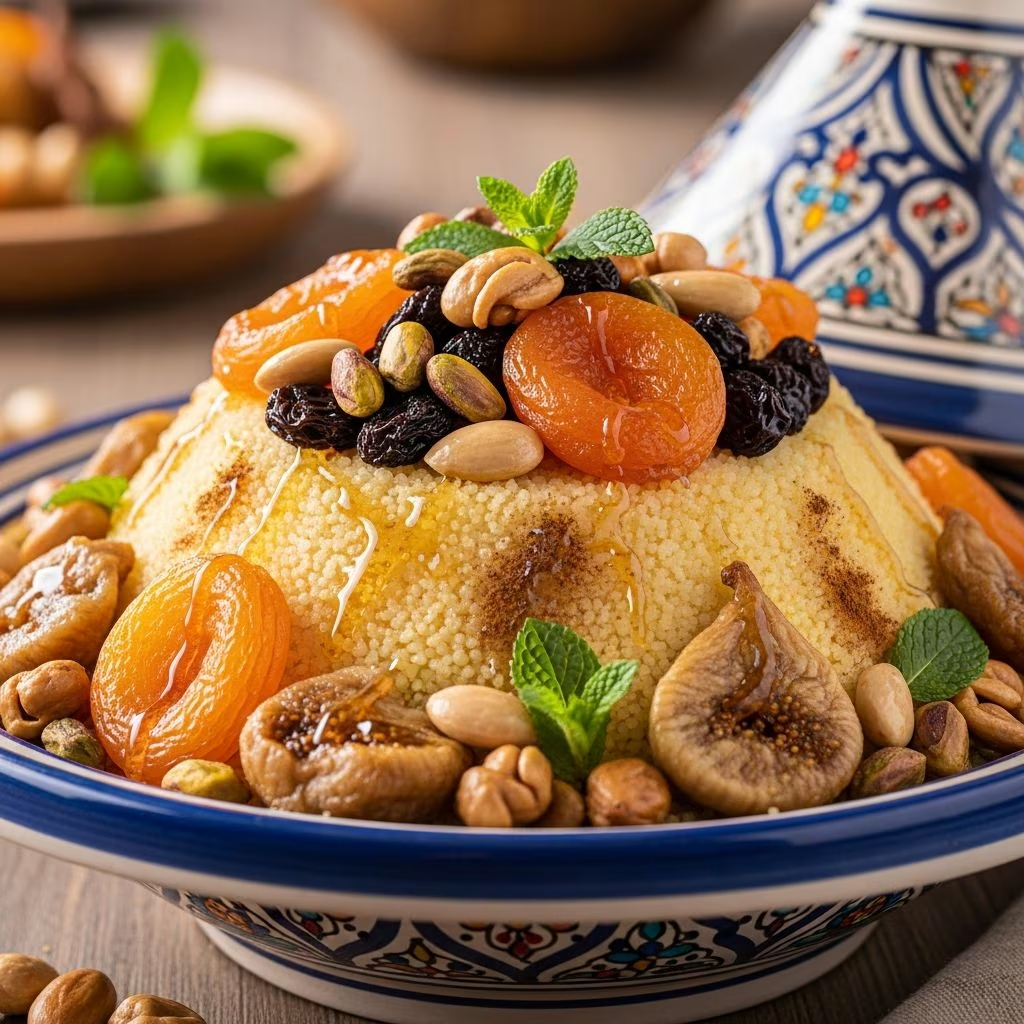
Indulge in the captivating taste of Moroccan sweet couscous, a dish that fuses the fluffiness of steamed grains with the crunch of toasted nuts and the chewiness of dried fruits. This recipe draws from North African culinary traditions, where couscous transcends its savory roots to become a cherished sweet treat for celebrations, family gatherings, or even everyday indulgence. With simple ingredients like cinnamon, butter, and a medley of nuts and fruits, it offers a symphony of textures and flavors that’s both nourishing and joyful.
The Allure of Moroccan Culinary Heritage
Moroccan cuisine is renowned for its masterful use of spices, dried fruits, and nuts, creating dishes that balance sweet, savory, and aromatic elements. Sweet couscous, often prepared for special occasions like weddings or religious holidays, highlights the region’s abundance of dates, apricots, raisins, and almonds. Historically, these ingredients were pantry staples, preserved through sun-drying and toasting to enhance their natural sweetness and longevity. This dish embodies hospitality, served in generous portions to welcome guests with warmth and generosity.
In traditional settings, couscous is steamed multiple times in a special steamer called a couscoussier, allowing grains to absorb flavors gradually. While modern home cooks simplify this with boiling or soaking methods, the essence remains: light, fluffy grains elevated by buttery richness and spice-infused sweetness. Variations abound, from vegan adaptations using oil instead of butter to richer versions with milk or almond extract for creaminess.
Essential Ingredients for Authentic Flavor
Creating Moroccan sweet couscous starts with high-quality basics. The star is fine or medium couscous, preferably the instant variety for ease, though traditional trigi or pearl couscous adds a chewy texture. Key components include:
- Couscous: 1-1.5 cups dry, yielding fluffy results when properly hydrated.
- Dried fruits: Raisins, chopped apricots, dates, prunes, or a mix (about 1-1.5 cups) for natural sweetness and chew.
- Nuts: Toasted almonds (slivered or chopped, 1/3 cup), pine nuts (2 tbsp), or walnuts for crunch.
- Spices: Ground cinnamon (1/2-1 tsp) as the hero, sometimes with ginger, coriander, or a pinch of nutmeg.
- Sweeteners and fats: Butter or margarine (2-4 tbsp), sugar or honey (1/4-1/2 cup), and optional orange zest or almond extract.
- Liquid: Water, milk, or broth (1.5-2 cups) to steam or boil the grains.
These elements create a harmonious profile: the caramel-like depth from toasted nuts, fruity bursts, and a warm spice blanket over buttery couscous.
Step-by-Step Preparation Guide
Mastering this dish requires attention to grain separation and flavor infusion. Here’s a reliable method serving 4-6 people.
- Prepare the couscous base: In a large bowl, combine 1.5 cups couscous with 1 tbsp oil or melted butter and a pinch of salt. Add 1.75 cups boiling water or broth mixed with 1/2 tsp cinnamon. Cover and let steam for 10-15 minutes until liquid absorbs. Fluff with a fork to prevent clumping.
- Toast the nuts: In a dry skillet over medium heat, toast 1/3 cup almonds and 2 tbsp pine nuts for 2-4 minutes until golden and fragrant. Set aside to cool, enhancing their nutty essence.
- Melt and infuse flavors: In a small pan, melt 3 tbsp butter. Stir in 1/4 cup sugar or honey, 1/2 tsp cinnamon, and optional 1 tsp almond extract or orange zest. This syrup coats the couscous beautifully.
- Incorporate fruits and nuts: Plump 1 cup mixed dried fruits (raisins, apricots, dates) in warm water for 5 minutes, then drain. Fold into the fluffed couscous along with toasted nuts and the spiced butter mixture. Add a splash of milk if needed for moisture, but avoid sogginess.
- Shape and garnish: Mound the couscous into a pyramid on a platter. Dust with extra cinnamon, top with date halves, pomegranate seeds, or slivered apricots for visual appeal.
Total time: 25-40 minutes. Pro tip: For advanced texture, steam twice—rub grains with water after first steam, then repeat.
Nutritional Profile and Health Benefits
This dish isn’t just delicious; it’s nutrient-dense. Couscous provides complex carbs for sustained energy (about 176 calories per cup cooked), while nuts deliver healthy fats, protein, and vitamins like E and magnesium. Dried fruits contribute fiber, iron, and antioxidants—raisins aid digestion, apricots support vision with beta-carotene.
A single serving (1 cup) offers roughly:
| Nutrient | Amount | % Daily Value* |
|---|---|---|
| Calories | 350 | 18% |
| Protein | 8g | 16% |
| Fiber | 5g | 20% |
| Healthy Fats | 12g | 15% |
| Iron | 2.5mg | 14% |
Opt for whole-grain couscous to boost fiber, or use plant-based butter for vegan compatibility. Moderation is key due to natural sugars.
Creative Variations to Suit Every Palate
Adapt this recipe endlessly. For a vegan twist, swap butter for coconut oil and milk for almond milk. Add savory notes with caramelized onions, spiced chickpeas, or turmeric for a hybrid dish. Breakfast style: Layer with Greek yogurt and fresh berries. Festive upgrade: Infuse with rose water, saffron, or powdered sugar for seffa-inspired elegance.
- Chocolate version: Stir in dark chocolate chips post-fluffing.
- Tropical spin: Use mango, pineapple chunks, and coconut flakes.
- Gluten-free: Substitute quinoa or millet.
- Protein boost: Top with roasted chickpeas or yogurt.
These tweaks keep the dish versatile for dietary needs or seasonal ingredients.
Perfect Pairings and Serving Ideas
Serve warm as a dessert after tagine or grilled meats, contrasting savory spices. For breakfast, pair with herbal tea or coffee. In summer, chill and enjoy with mint yogurt. During holidays, present in a large tajine for sharing.
Complements include:
- Spiced Moroccan tea.
- Fresh fruits like oranges or pomegranates.
- Creamy dips such as labneh.
- Ice cream for decadent sundaes.
Portion generously—it’s meant for communal joy.
Frequently Asked Questions (FAQs)
Can I make this ahead of time?
Yes, prepare up to 24 hours in advance. Store covered in the fridge; reheat gently with a splash of water to restore fluffiness.
What’s the best couscous type?
Fine Moroccan couscous for tenderness; Israeli (pearl) for chewiness. Avoid quick-cook if seeking authenticity.
How do I prevent mushy couscous?
Measure liquid precisely (1:1.25 ratio), fluff immediately, and don’t overmix.
Is it kid-friendly?
Absolutely—the sweet fruits and mild spices appeal to all ages.
Can I freeze leftovers?
Freeze in airtight containers for up to 1 month. Thaw overnight and reheat steaming.
Tips from Seasoned Cooks
– Toast nuts just before use to maximize aroma.
– Use brown sugar for deeper caramel notes.
– Experiment with vanilla bean or orange blossom water for luxury.
– For large crowds, double nuts and fruits; grains multiply when hydrated.
This Moroccan sweet couscous delight captures the soul of North African feasting—simple yet profound, inviting you to savor every spiced bite.
References
- Moroccan Inspired Sweet Couscous Recipe — On Foodie Trail. 2023. https://www.onfoodietrail.com/moroccan-seffa-sweet-couscous/
- Moroccan Sweet Couscous with Dried Fruits and Nuts — Cooking and More. 2022. https://cookingandmore.com/moroccan-sweet-couscous-with-dried-fruits-and-nuts/
- Sweet and Savory Moroccan Couscous Chicken with Moroccan Spices — May I Have That Recipe. 2021. https://mayihavethatrecipe.com/sweet-and-savory-moroccan-couscous-chicken-with-moroccan-spices/
- Sweet & Nutty Couscous — Kitchen Kat. 2014-06-18. https://www.kathylhunt.com/2014/06/18/sweet-nutty-couscous/
- Easy Moroccan Couscous Recipe — Simply Whisked. 2023. https://www.simplywhisked.com/easy-moroccan-couscous-recipe/
- Moroccan Sweet Couscous with Mixed Dried Fruits — Reform Judaism. 2020. https://reformjudaism.org/reform-jewish-life/food-recipes/moroccan-sweet-couscous-mixed-dried-fruits