Cilantro pesto represents a modern evolution of traditional Mediterranean sauces, bringing bright herbaceous notes and versatility to countless dishes. Unlike its basil-based predecessor, this vibrant green condiment captures the distinctive peppery essence of fresh cilantro, transforming simple ingredients into a sophisticated flavor enhancer suitable for weeknight dinners and special occasions alike.
Understanding the Foundation: Core Ingredients
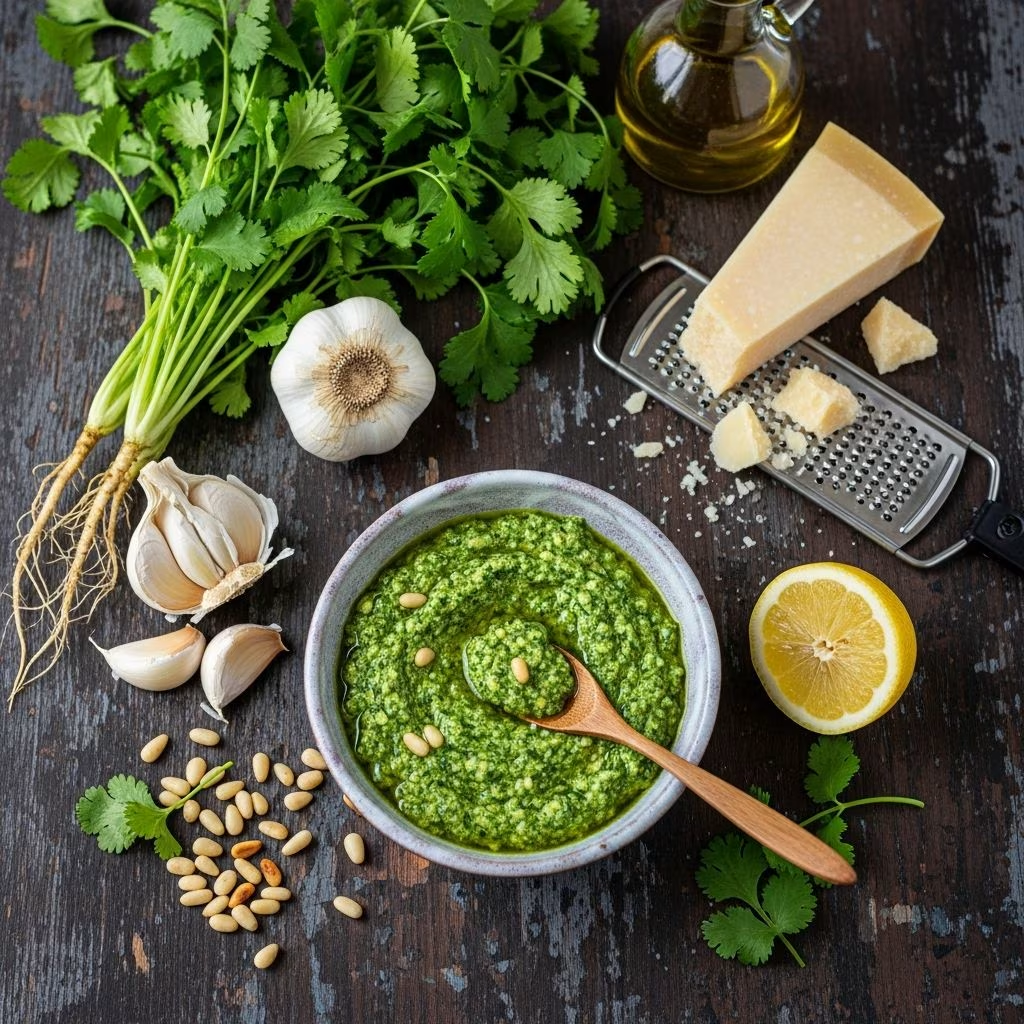
The success of any cilantro pesto begins with understanding its fundamental components and how they work together harmoniously. Each ingredient plays a specific role in creating the sauce’s texture, flavor profile, and nutritional value.
The Star Player: Fresh Cilantro
Fresh cilantro serves as the undisputed foundation of this sauce. The herb’s distinctive character combines peppery and citrusy notes, creating a flavor profile that distinguishes cilantro pesto from traditional basil varieties. The herb’s vibrant green color remains one of its most appealing visual characteristics, making any dish more appetizing. When selecting cilantro for pesto preparation, choose bunches with firm stems and brightly colored leaves, avoiding any brown spots or wilting. The quality of your cilantro directly impacts the final product’s flavor intensity and shelf life.
Nutty Components for Texture and Body
While traditional pesto relies on pine nuts, cilantro pesto allows for creative substitutions that can enhance flavor while managing costs. Multiple nut options provide similar textural benefits:
- Pine nuts: Deliver buttery richness and complement cilantro’s peppery notes
- Almonds: Offer neutral flavor and creamy texture without overpowering the cilantro
- Pistachios: Contribute natural green coloring and subtle sweetness
- Pepitas (pumpkin seeds): Provide texture and nutritional density while being widely available
- Walnuts: Add earthiness and are typically budget-friendly
These nuts should be toasted before use when possible, as this step intensifies their flavors and creates a more complex taste profile. Toasting also helps nuts release their natural oils, contributing to the sauce’s creamy consistency.
Acidic Elements and Citrus Balance
Acid components brighten cilantro pesto and prevent the sauce from becoming heavy or overwhelming. Two primary options dominate most recipes:
- Lime juice: Provides bright, tropical acidity that pairs exceptionally well with cilantro’s peppery character
- Lemon juice: Offers more subtle acidity with a slightly floral undertone
Always use freshly squeezed juice rather than bottled varieties, as fresh citrus provides superior flavor and prevents metallic aftertastes. The juice’s acidity not only enhances flavor but also acts as a natural preservative, extending the pesto’s refrigerated shelf life.
Binding Agents and Creaminess
Olive oil serves as the primary binding agent, creating the pesto’s characteristic smooth, spreadable consistency. Extra-virgin olive oil is recommended for its superior flavor and nutritional profile. Some recipes accommodate avocado oil as an alternative for those seeking a lighter taste or different nutritional properties. The oil quantity affects both texture and intensity—more oil creates a thinner, milder sauce, while less oil produces a concentrated, intensely flavored condiment.
Umami and Savory Depth
Parmesan cheese adds savory umami notes and slight saltiness that rounds out the sauce’s flavor profile. Some recipes omit cheese entirely for vegan applications, while others incorporate it as an optional enhancement. The cheese also contributes to the sauce’s body and helps it cling to pasta more effectively.
Exploring Heat and Spice Variations
While not always included, spicy peppers can elevate cilantro pesto with warming intensity and complexity. Recipe variations demonstrate flexibility in this category:
- Serrano peppers: Deliver moderate heat with fruity undertones
- Jalapeños: Provide adjustable spice levels depending on seed inclusion and quantity
- Fresh chilies: Offer regional authenticity and customizable intensity
The decision to include heat depends entirely on personal preference and the intended application of the pesto.
Preparation Techniques and Methods
Creating quality cilantro pesto requires minimal equipment but demands attention to technique details that prevent oxidation and preserve the herb’s bright color and fresh flavor.
Equipment Requirements
A food processor represents the standard choice for cilantro pesto preparation, offering control over texture while minimizing oxidation compared to blenders. The wider bowl provides better ingredient circulation, and the pulsing function allows for precise texture development. Alternatively, a high-powered blender works effectively, though it may require more frequent scraping to ensure even distribution.
Step-by-Step Preparation Process
Ingredient preparation: Begin by removing large cilantro stems, keeping only the tender upper portions and leaves. Roughly chop garlic cloves to facilitate even processing. If using nuts, ensure they’re already toasted and cooled. Prepare all wet ingredients by measuring lime or lemon juice.
Dry ingredient combination: Add cilantro, nuts, garlic, cheese (if using), salt, and pepper to the food processor bowl. Pulse six to ten times to break down ingredients into smaller pieces without creating a paste.
Wet ingredient integration: With the processor running at low speed, slowly add olive oil through the feed tube in a steady stream, allowing it to incorporate gradually. This controlled addition prevents the mixture from becoming too thin and helps achieve the desired creamy consistency.
Final adjustments: Stop periodically to scrape down the bowl sides using a spatula, ensuring all ingredients incorporate evenly. Taste and adjust seasoning with salt, pepper, or additional citrus juice as needed.
Achieving the Perfect Texture
Cilantro pesto should reach a consistency that’s thick enough to cling to pasta or vegetables but spreadable enough to apply easily. This balance prevents the sauce from being overly chunky or excessively smooth. The herb leaves should break down into the mixture while maintaining slight texture variation that provides mouthfeel and visual interest.
Versatile Applications and Serving Ideas
One of cilantro pesto’s greatest strengths lies in its remarkable versatility across numerous culinary applications. This bright sauce enhances dishes from multiple cuisines and flavor profiles.
Pasta and Grain Dishes
While cilantro pesto departs from traditional Italian pasta applications, it performs exceptionally well tossed with various pasta shapes and grain bases. Reserve approximately half a cup of pasta cooking water before draining, then toss with one to two tablespoons of pesto per serving, adding pasta water gradually to reach desired consistency. This technique prevents the sauce from clumping and ensures even distribution. Cilantro pesto also works beautifully with rice, quinoa, and couscous for light, flavorful side dishes.
Protein Enhancement
Grilled meats, particularly chicken and fish, benefit tremendously from cilantro pesto application. The bright herbs cut through rich proteins while the nuts add textural contrast. Use pesto as a marinade component, finishing sauce, or serving accompaniment. Cilantro pesto also enhances vegetarian proteins including tofu, tempeh, and legume-based dishes.
Vegetable Accompaniments
Roasted vegetables become more interesting when drizzled with cilantro pesto after cooking. The sauce’s acidity complements caramelized vegetable exteriors while adding fresh brightness. Raw vegetable platters, salads, and grain bowls all benefit from cilantro pesto as a dressing or drizzling sauce.
Condiment and Spread Applications
Cilantro pesto functions beautifully as a sandwich spread, layering on bread with proteins and vegetables for flavor enhancement. Tacos receive a fresh element when finished with a dollop of cilantro pesto. The sauce also works as a dip for vegetables, chips, or bread, making it suitable for entertaining and casual snacking.
Breakfast and Egg Dishes
Cilantro pesto elevates breakfast preparations by adding herbs and umami to scrambled eggs, omelets, and egg salads. The sauce also complements avocado toast and breakfast grain bowls, providing additional flavor complexity without heaviness.
Storage Solutions and Shelf Life Management
Proper storage extends cilantro pesto’s usability, allowing home cooks to prepare larger batches and enjoy the sauce throughout the week.
Refrigeration Techniques
Transfer freshly prepared cilantro pesto to an airtight glass container, pressing plastic wrap directly onto the sauce’s surface to minimize air exposure. This technique prevents oxidation, which causes browning and flavor degradation. Cilantro pesto will maintain quality for one to two days when refrigerated, though some recipes suggest checking consistency and flavor after 24 hours.
Oil Preservation Layer
Adding a thin layer of olive oil across the pesto’s surface creates a protective barrier against oxidation and drying. This simple step significantly extends shelf life while maintaining vibrant color and fresh flavor.
Freezing for Extended Storage
Cilantro pesto freezes successfully, allowing batch preparation and long-term storage. Spoon portions into ice cube trays, freeze until solid, then transfer frozen cubes to freezer bags for convenient single-serving access. Frozen pesto maintains quality for several months and thaws quickly in the refrigerator or directly into warm dishes.
Ingredient Freshness Impact
Using fresh, high-quality cilantro directly influences how long the finished pesto remains vibrant and flavorful. Fresher starting ingredients allow the sauce to maintain superior quality throughout its storage period.
Customization and Recipe Variations
Cilantro pesto welcomes creative modifications that accommodate dietary preferences, ingredient availability, and personal taste preferences. These variations maintain the sauce’s essential character while offering different eating experiences.
Dairy-Free and Vegan Options
Omitting Parmesan cheese creates a dairy-free version while the nuts, cilantro, and oil remain entirely plant-based. The sauce develops excellent flavor without cheese, though some cooks add nutritional yeast for additional umami depth and B vitamins.
Herb Combinations
Combining cilantro with parsley creates additional complexity while mellowing cilantro’s intensity for those sensitive to its bold flavor. Basil, mint, or tarragon can appear in smaller quantities for subtle flavor variations.
Nut and Seed Substitutions
Budget-conscious cooks appreciate substituting expensive pine nuts with more affordable almonds, walnuts, or pepitas while maintaining excellent results. Each option brings slightly different flavor and textural characteristics that create unique variations worth exploring.
Spice Level Adjustment
Recipes easily accommodate heat preference by including, excluding, or varying pepper quantities. Creating mild versions for conservative eaters and spicier batches for enthusiasts ensures universal appeal.
Nutritional Considerations
Cilantro pesto combines herbs and nuts that contribute valuable nutrients alongside its impressive flavor profile. Cilantro provides vitamins A, K, and C along with antioxidants, while nuts deliver healthy fats, protein, and mineral content. The olive oil contributes heart-healthy monounsaturated fats.
Frequently Asked Questions
Can cilantro pesto be made without a food processor?
While a food processor provides optimal results, a blender works effectively with more frequent stopping and scraping. Some cooks use mortar and pestle for small batches, though this method requires significant arm effort.
Why does my cilantro pesto turn brown?
Oxidation occurs when cilantro pesto sits exposed to air and light. Minimize browning by using fresh ingredients, storing in airtight containers with oil surface protection, and consuming within one to two days of preparation.
Is cilantro pesto better fresh or after sitting?
Cilantro pesto tastes brightest when used immediately after preparation, though flavors do develop and mellow slightly after a few hours. Personal preference determines whether you prefer the sauce’s fresh intensity or slightly integrated character.
How much pesto should I use per serving?
One to two tablespoons per serving provides flavorful enhancement without overwhelming other ingredients. Adjust quantities based on personal taste preferences and the intended application.
Can I substitute lime juice with lemon juice?
Yes, lemon juice works as a direct substitute, though the sauce will develop slightly different flavor characteristics. Lime provides tropical brightness while lemon offers more subtle, floral acidity.
References
- 5-Minute Cilantro Pesto Recipe — Nurtured Homes. Accessed April 2026. https://nurturedhomes.com/cilantro-pesto
- Cilantro Pesto Recipe — Wyse Guide. Accessed April 2026. https://www.wyseguide.com/cilantro-pesto/
- Cilantro Pesto {Fresh & Easy!} — Two Peas & Their Pod. Accessed April 2026. https://www.twopeasandtheirpod.com/cilantro-pesto/
- Cilantro Pesto (dairy free, vegan) — Simply Whisked. Accessed April 2026. https://www.simplywhisked.com/cilantro-pesto/
- Cilantro Pesto that Brings Back Memories — Real Life Delicious. Accessed April 2026. https://reallifedelicious.com/blast-cilantro-pesto/
- Cilantro Pesto — The Dainty Dot. Accessed April 2026. https://thedaintydot.com/2012/07/09/cilantro-pesto/