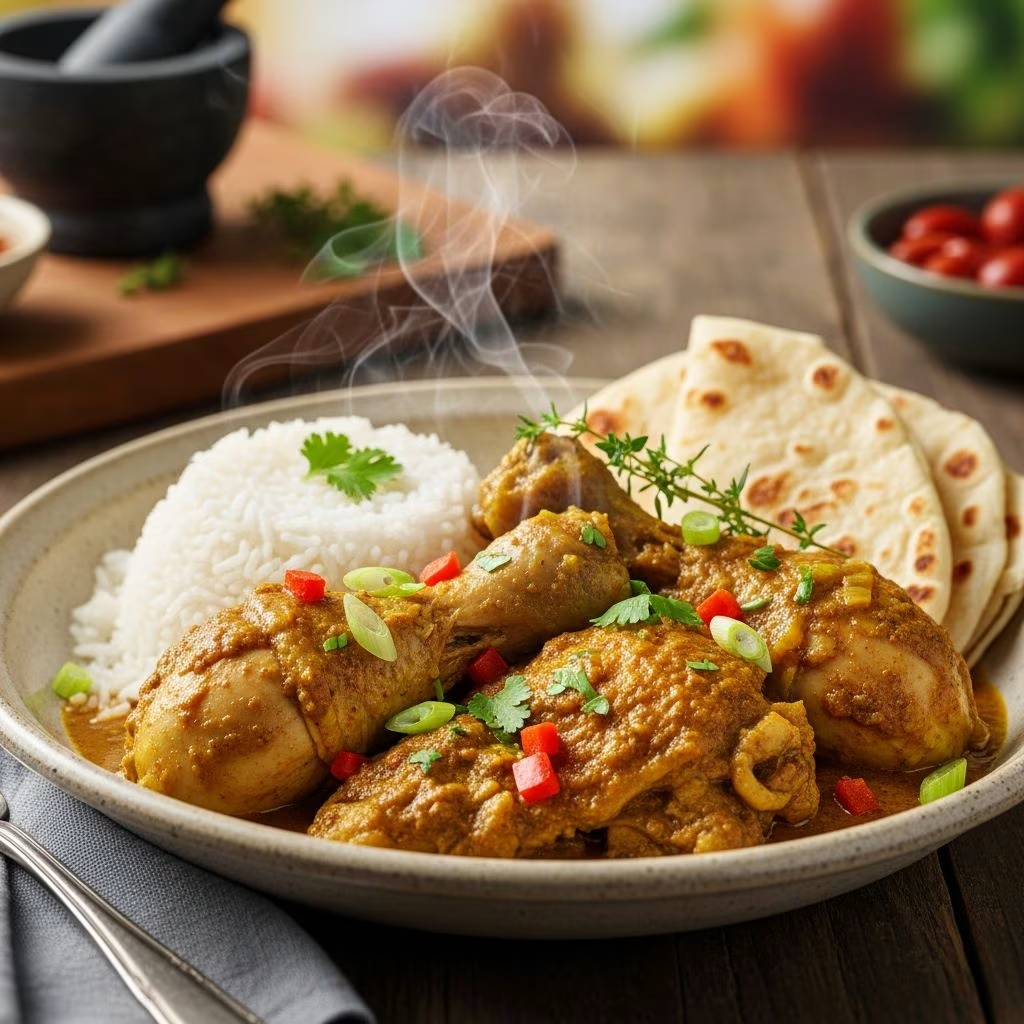
Trinidadian curried chicken represents one of the Caribbean’s most beloved comfort foods, bringing together bold spices, aromatic herbs, and tender meat in a harmonious dish that has graced family dinner tables for generations. This West Indian staple showcases the region’s culinary heritage through its sophisticated blend of flavors, where curry powder serves as the foundation for a richly layered sauce that clings to every piece of chicken. Whether served over rice, with roti, or accompanied by traditional dhal, this dish exemplifies Caribbean home cooking at its finest.
Understanding the Foundations of Caribbean Curry Cooking
Caribbean curry cuisine differs significantly from its Indian counterparts, having developed its own distinct character through generations of island cooks adapting spices and techniques to local ingredients and preferences. The curried chicken tradition in Trinidad emerged from a blend of cultural influences, creating a cooking style that emphasizes building deep, complex flavors through careful layering of aromatics and spices. Unlike some curry preparations that rely on coconut milk or cream-based sauces, Trinidadian versions typically feature a drier, more concentrated curry paste that adheres to the meat and creates a richly flavored coating throughout the cooking process.
The preparation philosophy behind Caribbean curry chicken centers on maximizing flavor development through two critical stages: the marination phase and the controlled cooking process. This methodical approach allows the chicken to absorb preliminary seasoning while the curry paste develops its full aromatic potential during the cooking phase, resulting in meat so infused with flavor that it practically melts on the tongue.
Essential Ingredients for Authentic Preparation
Creating an authentic Trinidadian curried chicken begins with gathering quality ingredients that form the backbone of this dish. The following components work together to create the complex flavor profile that defines this Caribbean classic:
- Chicken: Drumsticks, thighs, or a combination of leg and thigh pieces provide the richest flavor and best texture. Drumsticks offer convenient handling, while thighs deliver superior moistness and taste compared to breast meat.
- Curry Powder: Trinidadian curry powder serves as the primary spice base, though Indian curry blends work well as substitutes. The quality of the curry powder directly impacts the final dish’s depth of flavor.
- Fresh Aromatics: Yellow onions, garlic cloves, and fresh ginger root form the aromatic foundation. These ingredients should be fresh and vibrant for maximum flavor contribution.
- Fresh Cilantro: This herb adds brightness and complexity to the curry paste, with some preparations reserving a portion for garnishing the finished dish.
- Hot Peppers: Scotch bonnet or habanero peppers provide heat and distinctive Caribbean flavor. These peppers should be handled with care due to their potency.
- Complementary Spices: Cumin, turmeric, and garam masala add depth and warmth to the curry powder base, creating a more nuanced spice profile.
- Cooking Medium: Vegetable oil serves as the cooking fat, facilitating the browning process and helping distribute flavors throughout the dish.
- Seasoning Basics: Salt and black pepper round out the ingredient list, with these staples allowing the primary flavors to shine.
Crafting the Curry Paste Foundation
The curry paste represents the heart of this dish, where all primary flavors are built and blended into a cohesive aromatic mixture. This foundational element requires careful preparation to achieve the proper texture and flavor balance that characterizes authentic Trinidadian curry chicken.
Begin by peeling fresh ginger root and cutting it into rough pieces, then peel garlic cloves and slice the yellow onion into manageable chunks. Add these prepared aromatics to a food processor along with fresh cilantro, your chosen hot pepper (seeds removed for less heat if desired), and the curry powder. Pulse these ingredients together until they reach a coarse, paste-like consistency that holds together while still maintaining some texture. The paste should cling readily to a spoon and coat the back of your hand when pressed gently against it.
Some cooks prefer to add a tablespoon or two of water to the food processor during this stage to help the ingredients combine more smoothly, though the natural moisture from the aromatics often suffices. The goal involves creating a thick paste that will adhere firmly to the chicken during marination and cooking.
The Marination Process and Its Critical Role
Marinating the chicken in the curry paste establishes the flavor foundation and begins breaking down the meat’s protein structure, resulting in more tender finished chicken. This preparatory stage should not be rushed, as adequate marination time directly correlates with final flavor intensity and meat tenderness.
Rub the prepared curry paste generously over each chicken piece, ensuring complete coverage from all angles. Transfer the coated chicken to a covered container or large zip-top plastic bag, then refrigerate for a minimum of one hour, though overnight marination delivers superior results. This extended time allows the spice mixture to penetrate the meat thoroughly, flavoring it from the exterior through to the center. Many experienced cooks prepare their chicken for marination in the evening, allowing it to rest in the refrigerator overnight before cooking the following day.
Executing the Cooking Process
The actual cooking of Trinidadian curried chicken involves two distinct phases: the initial browning and the gentle simmering that develops the final sauce. This two-stage approach ensures the chicken develops a flavorful exterior while remaining moist and tender throughout.
Heat vegetable oil in a large skillet or heavy-bottomed cooking vessel over medium-high heat until it shimmers and moves freely across the pan. Carefully add the marinated chicken pieces, working in batches if necessary to avoid overcrowding the pan. Allow each piece to make contact with the hot surface, developing a golden-brown crust that seals in moisture and creates deeper flavor through the Maillard reaction. Brown the chicken on all sides, typically requiring 3-4 minutes per side depending on the size of your pieces and the exact temperature of your cooking vessel.
Once the chicken achieves an attractive golden-brown color, add water to create a sauce that will simmer with the meat. Approximately one to one and a half cups of water typically creates an appropriately concentrated sauce, though the exact amount may vary based on your cooking vessel’s size and shape. Reduce the heat to medium or medium-low, allowing the curry to simmer gently for 45 minutes to one hour. During this extended cooking period, the chicken becomes increasingly tender while the sauce thickens and develops deeper flavor complexity through reduction.
Monitor the sauce level throughout cooking, adding small amounts of additional water if it reduces too dramatically and threatens to scorch. The finished sauce should be concentrated enough to cling to the meat but remain saucious enough to provide moisture and richness. In the final moments before serving, stir in any reserved fresh cilantro, which adds brightness and visual appeal to the finished dish.
Serving Suggestions and Accompaniments
Trinidadian curried chicken pairs beautifully with numerous traditional and contemporary side dishes that complement its bold spice profile and rich sauce. Rice serves as the classic accompaniment, absorbing the flavorful curry sauce and providing a neutral canvas for the chicken’s complex tastes. Some diners prefer the texture and slightly sweet flavor of coconut rice, while others opt for simple seasoned white or brown rice.
Roti, the traditional Indian flatbread adapted throughout the Caribbean, offers an alternative starch option that allows diners to wrap pieces of curry chicken within the bread for an interactive dining experience. This presentation style particularly appeals to families and casual meals where diners can customize each bite according to preference.
Additional serving options include:
- Dhal, the traditional lentil preparation that provides protein and earthiness
- Chutney made from fresh mangoes, coconut, or cilantro for additional flavor dimensions
- Steamed or roasted root vegetables like yams, plantains, or cassava
- Sautéed leafy greens such as callaloo or spinach
- Fresh salads featuring local vegetables like cucumber, tomato, and avocado
- Pickled vegetables that offer bright acidity to balance the rich curry
Customization and Personal Adaptation
While respecting traditional methods honors Caribbean culinary heritage, Trinidadian curried chicken welcomes thoughtful adaptations that reflect individual preferences and available ingredients. Some variations incorporate tomatoes for additional body and slight acidity, while others add potatoes or root vegetables for substance and texture contrast. Bell peppers, whether sweet or hot varieties, contribute color and varied flavor profiles that some cooks appreciate.
The heat level can be adjusted by modifying the amount of hot pepper included in the initial paste, allowing families with different spice tolerances to enjoy the dish together. Those preferring milder preparations might remove the pepper seeds before processing, while adventurous eaters might increase the quantity or choose a particularly potent pepper variety.
Frequently Asked Questions
What type of chicken works best for this recipe?
Drumsticks and thighs provide superior flavor and texture compared to breast meat due to their higher fat content. These cuts remain moist and tender throughout the extended cooking time while developing deeper flavor when cooked in curry sauce.
Can I prepare this dish ahead of time?
Yes, curried chicken actually benefits from advance preparation, as the flavors continue developing when stored in the refrigerator overnight. Simply reheat gently over medium-low heat before serving, adjusting sauce consistency with water if needed.
How spicy will this dish be?
The heat level depends entirely on your choice and quantity of hot pepper. Start conservatively if cooking for mixed preferences, remembering that heat can be added but cannot be removed once incorporated.
What is green seasoning and where can I find it?
Green seasoning represents a Caribbean blend of fresh herbs including cilantro, chives, and culinary herbs bundled together. While traditional recipes utilize freshly prepared green seasoning, substitute a combination of fresh cilantro, chives, and parsley if the traditional mixture is unavailable.
Can I use frozen chicken?
Frozen chicken works, though thawing completely before cooking ensures even heat distribution and proper marination. Allow frozen chicken to thaw in the refrigerator overnight rather than using rapid thawing methods.
Storage and Make-Ahead Considerations
Trinidadian curried chicken stores well in the refrigerator for up to four days when kept in an airtight container, making it an excellent choice for meal preparation and leftovers. The flavors actually intensify during storage as the spices continue permeating the meat and sauce. Reheat gently over medium-low heat, stirring occasionally and adding splashes of water if the sauce has thickened excessively during storage.
For longer-term storage, this dish freezes successfully for up to three months. Allow the curry to cool completely before transferring to freezer-safe containers, and thaw overnight in the refrigerator before reheating. The texture remains excellent following freezing, and the spice flavors remain vibrant and pronounced.
Conclusion
Mastering Trinidadian curried chicken opens doors to authentic Caribbean cooking that impresses family and guests while remaining approachable for home cooks of varying experience levels. This classic dish celebrates bold spices, fresh aromatics, and straightforward techniques that transform simple ingredients into extraordinary meals. Whether you’re cooking for your first time or drawing on years of experience, the fundamental principles of careful paste preparation, adequate marination, and patient cooking yield consistently delicious results that transport diners straight to the islands with every bite.
References
- Trinidad-Style Curry Chicken Recipe — The Black Peppercorn. https://www.theblackpeppercorn.com/trinidad-style-curry-chicken/
- Trinidadian Curry Chicken — GypsyPlate. https://gypsyplate.com/trinidadian-curry-chicken/
- Tom’s Trinidadian Chicken Curry — The Pioneer Woman. https://www.thepioneerwoman.com/food-cooking/recipes/a8910/toms-trinidadian-chicken-curry/
- Trinidad Style Curry Chicken — Spices Inc. https://spicesinc.com/recipes/trinidad-style-curry-chicken
- Trinidad Curry Chicken — TipBuzz. https://tipbuzz.com/trinidad-curry-chicken/