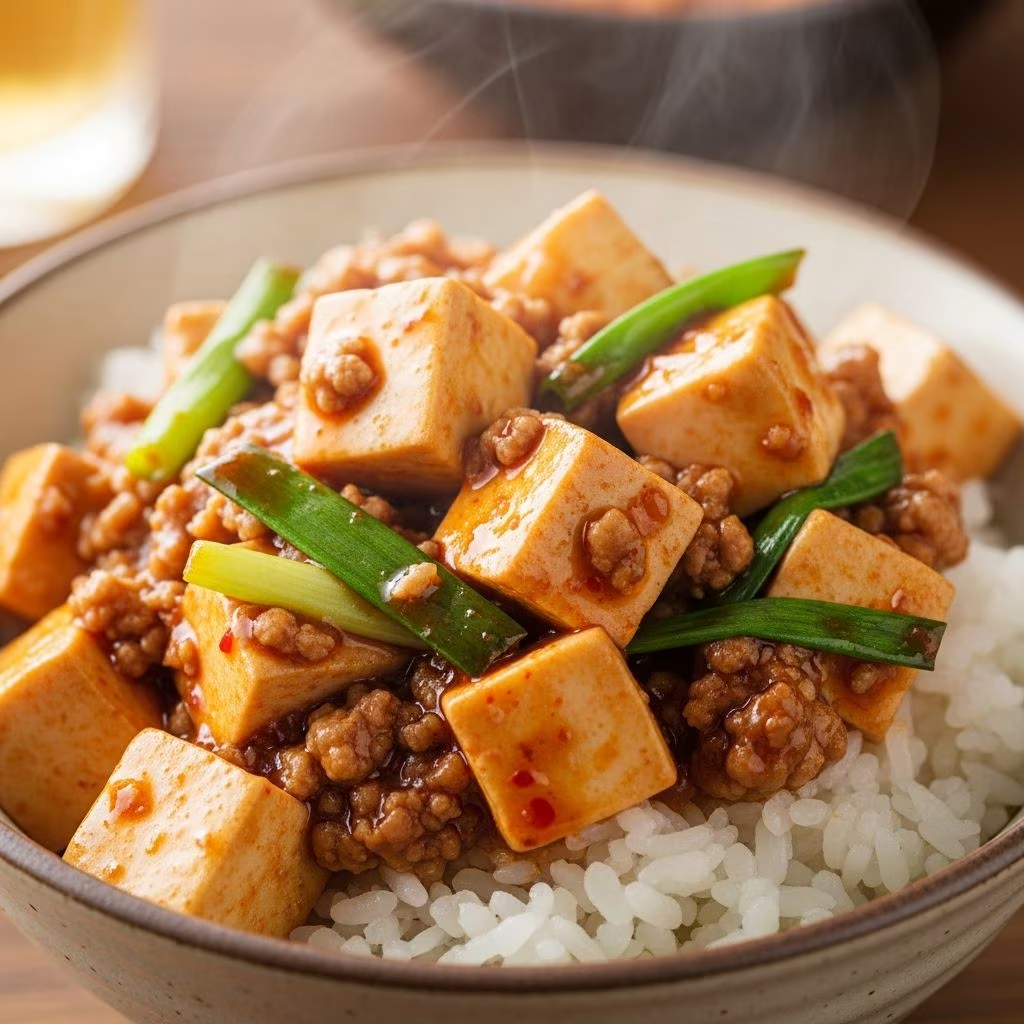
Japanese **Mabo Don** transforms the bold Sichuan classic Mapo Tofu into a comforting rice bowl that’s milder, umami-packed, and perfect for family meals. This dish combines tender tofu, savory ground meat, and a spicy sauce spooned over steaming rice, offering a balance of heat, silkiness, and depth that’s accessible yet authentic.
Origins and Cultural Journey of Mabo Don
Mabo Don, or Japanese-style Mapo Tofu served over rice, traces its roots to China’s Sichuan province, where Mapo Tofu (麻婆豆腐) emerged as a fiery dish featuring fermented bean paste, chili, and numbing Sichuan peppercorns. Introduced to Japan in the mid-20th century by chef Chen Kenmin at his Tokyo restaurant Shisen Hanten, it was adapted for local palates by reducing the intense spice and incorporating ingredients like miso and mirin.
Chen Kenmin, a Sichuan native who moved to Japan in the 1950s, popularized the dish in the 1970s. His version omitted the tongue-numbing peppercorns and fiery chilies, making it milder while retaining the dish’s signature ‘mabo’ (pockmarked) texture from tofu and ground meat. Today, Mabo Don is a staple in Japanese home cooking and izakayas, often customized for kids by dialing back the heat.
In Japan, it’s known as Mabo Dofu or simply Mabo, evolving into a donburi (rice bowl) format for quick meals. This adaptation highlights Japan’s culinary talent for blending foreign influences with domestic flavors, much like tonkatsu or karaoke.
Signature Ingredients That Define Mabo Don
The magic of Mabo Don lies in its harmonious ingredients, where fermented pastes and silky tofu create layers of flavor. Key components include:
- Tofu: Firm or silken varieties absorb the sauce; drain for 15-30 minutes to prevent watery results.
- Tobanjan (Doubanjiang): Fermented chili bean paste for umami and adjustable heat; non-spicy versions exist for milder tastes.
- Ground Pork or Beef: Provides richness; substitute mushrooms for vegetarian options.
- Aromatics: Ginger, garlic, and scallions build the base fragrance.
- Sauce Builders: Miso, soy sauce, oyster sauce (or vegetarian alternative), mirin, sake, and sesame oil add Japanese depth.
- Thickener: Potato starch or cornstarch slurry for glossy sauce.
- Garnishes: Green onions, cilantro, and sansho pepper for freshness and subtle numbness.
These elements create a sauce that’s savory, slightly sweet, and spicy without overwhelming, distinguishing it from its Sichuan ancestor.
Step-by-Step Recipe for Authentic Japanese Mabo Don
This recipe serves 4 and takes about 30 minutes. It’s scalable and forgiving for beginners.
Ingredients
| Category | Ingredient | Quantity |
|---|---|---|
| Protein | Firm tofu, cubed | 14-20 oz (400-600g) |
| Ground pork | ½ lb (225g) | |
| Aromatics | Ginger, minced | 1 Tbsp |
| Garlic, minced | 2 cloves | |
| Scallions, chopped | 3 | |
| Sauce | Tobanjan | 2-2.5 Tbsp |
| Miso | 1-2.5 Tbsp | |
| Soy sauce | ½-1 Tbsp | |
| Oyster sauce | 1 Tbsp | |
| Mirin or sake | 2 Tbsp | |
| Sesame oil | 1-2 tsp | |
| Other | Chicken stock | 1 cup |
| Potato starch slurry (1 tsp starch + 1 Tbsp water) | As needed | |
| Rice | Cooked Japanese rice | 4 bowls |
Instructions
Prepare sauce: Whisk tobanjan, miso, soy sauce, oyster sauce, mirin, sesame oil, and stock in a bowl. Set aside.
Drain and cube tofu; set aside. Mince aromatics and separate scallion whites from greens.
Heat 1 Tbsp neutral oil in a wok over high heat. Sauté ginger, garlic, and scallion whites for 1 minute until fragrant.
Add ground pork; break up and cook until browned, about 2-3 minutes.
Pour in sauce mixture; bring to a boil, then simmer. Add tofu gently; cook 3 minutes to infuse flavors.
Stir in slurry to thicken; cook 30 seconds more. Adjust spice with extra tobanjan if desired.
Spoon over hot rice in bowls. Garnish with scallion greens, cilantro, and sansho.
Serve immediately for best texture. Total calories per serving: ~500, high in protein from tofu and meat.
Customizations and Dietary Adaptations
Mabo Don’s versatility makes it ideal for various diets:
- Vegetarian/Vegan: Swap pork for mushrooms or TVP; use vegetarian oyster sauce.
- Kid-Friendly: Reduce or omit tobanjan; add sweetness with extra sugar.
- Spice Levels: Mild (1 Tbsp tobanjan), medium (2 Tbsp), hot (3+ Tbsp + chili oil).
- Protein Swaps: Beef, chicken, or seafood for variety.
- Low-Carb: Serve over cauliflower rice or zucchini noodles.
For gluten-free, ensure soy sauce and miso are certified. These tweaks maintain authenticity while suiting modern needs.
Pro Cooking Tips for Restaurant-Quality Results
Elevate your Mabo Don with these techniques:
- Press tofu between towels for 15 minutes to remove excess water, ensuring sauce clings perfectly.
- Sauté aromatics on high heat for aromatic oils without burning.
- Use a slurry for glossy, not gummy, sauce—add gradually.
- Caramelize meat slightly for deeper flavor, as noted in expert videos.
- Balance flavors: Taste before adding tofu; adjust salt/sweet/acid.
- Pair with sansho pepper for authentic ma-La (numbing-spicy) hint without full Sichuan intensity.
Common pitfalls: Overcooking tofu (turns mushy) or insufficient stock (dry sauce). Fresh ingredients yield the best results.
Pairing Suggestions and Meal Ideas
Mabo Don shines as a one-bowl meal but pairs well with:
- Starters: Cucumber salad or pickled vegetables for crunch.
- Sides: Steamed greens, miso soup, or gyoza.
- Drinks: Cold beer, green tea, or chilled sake to cut spice.
- Meal Prep: Stores 3 days in fridge; reheat gently with splash of stock.
Incorporate into weekly rotation: Double batch for lunch bowls. It’s nutritious, with tofu’s plant protein complementing meat.
Frequently Asked Questions (FAQs)
What is the difference between Mapo Tofu and Mabo Don?
Mapo Tofu is the spicy Sichuan original; Mabo Don is Japan’s milder rice bowl version with miso and less chili.
Can I make Mabo Don without tobanjan?
Yes, but flavor suffers—substitute gochujang or sriracha, though not authentic.
Is Mabo Don spicy?
Adjustable: Japanese style is milder than Chinese, suitable for most.
How do I store leftovers?
Refrigerate up to 3 days; freeze sauce separately from rice for 1 month.
What tofu works best?
Firm or medium-firm holds shape; silken for softer texture.
Nutritional Profile and Health Benefits
Per serving: 450-550 calories, 25g protein, 30g carbs, 25g fat. Tofu provides isoflavones for heart health; fermented pastes offer probiotics. Moderate spice boosts metabolism. Use lean meat and extra veggies for lighter versions.
References
- Mabo Tofu Japanese Style (Mabo Don) — Asian Inspirations. 2023. https://asianinspirations.com.au/recipes/mabo-tofu-japanese-style-mabo-don/
- Spicy beef and tofu rice bowl (Mabo don) recipe — Japan Centre. 2023. https://www.japancentre.com/en/recipe/382-spicy-beef-and-tofu-rice-bowl-mabo-don
- Mapo Tofu (Mabo Dofu) (Video) 麻婆豆腐 — Just One Cookbook. 2023-10-01. https://www.justonecookbook.com/mapo-tofu/
- Mabo Tofu — TOIRO Kitchen. 2023. https://toirokitchen.com/blogs/recipes/mabo-tofu
- How to Make Japanese Style Mapo Tofu (Mabo Dofu) — Sudachi Recipes (YouTube). 2023. https://www.youtube.com/watch?v=Z__oWPKFHZ0
- Japanese Mapo Tofu Recipe (マーボー豆腐 – Mabo Dofu) — No Recipes. 2023. https://norecipes.com/japanese-mapo-tofu/