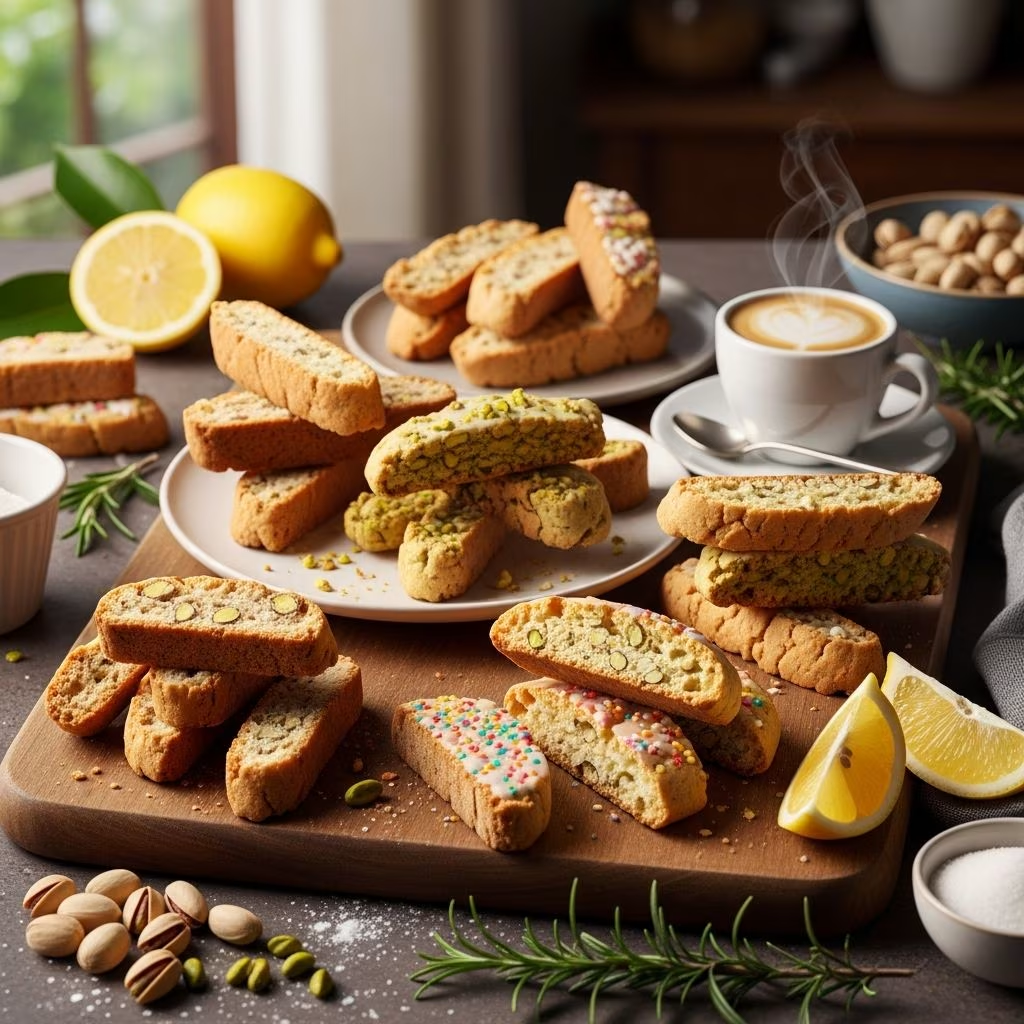
Italian Easter biscotti, known for their signature crunch and enduring shelf life, stand as a cornerstone of holiday baking traditions across Italy. These twice-baked cookies, often enriched with citrus zests, nuts, and subtle spices, evoke the joy of spring celebrations. Unlike soft pastries, biscotti achieve their texture through a unique double-baking process that removes moisture, making them ideal for dunking in coffee or wine. This guide dives into authentic variations, from classic anise-flavored logs to chocolate-infused twists and colorful Easter specials, providing everything needed to bake these treasures at home.
The Heritage of Easter Biscotti in Italian Culture
Biscotti trace their roots to ancient Roman times, where hardtack-like breads sustained soldiers and travelers. Evolving through the Renaissance, they became staples in Tuscan monasteries, where friars perfected the twice-baking method for long-lasting provisions. For Easter, regional adaptations emerged: Calabrian versions feature dyed eggs symbolizing rebirth, while Sicilian styles incorporate almonds for richness. These cookies transcend mere sweets, embodying family gatherings and Lenten fasts broken with indulgent treats. Today, they grace modern tables, blending nostalgia with contemporary flavors like malted candies or cocoa.
Essential Ingredients for Perfect Biscotti
Success in biscotti baking hinges on balanced ingredients that yield tenderness before the second bake crisps them. Flour forms the base, typically all-purpose for structure without heaviness. Eggs provide binding and lift, while fats like olive oil or butter add moisture and flavor—oil for authenticity, butter for creaminess. Sugar sweetens subtly, and leaveners like baking powder ensure gentle rise. Flavor enhancers such as orange zest, almond extract, or vanilla elevate the dough, with add-ins like nuts or chocolate chips offering texture contrast.
- Flour: 2-3 cups all-purpose, sifted for lightness.
- Fats: 1/3 cup olive oil or 10 tbsp butter, room temperature.
- Eggs: 3 large, for richness and structure.
- Sweeteners: 1-1.5 cups granulated sugar.
- Leaveners: 2-3 tsp baking powder, 1/2 tsp salt.
- Flavorings: Zests, extracts, and 1 cup add-ins like almonds or chocolate.
Quality matters: Use fresh citrus for vibrant aroma and unsalted butter to control saltiness.
Mastering the Twice-Bake Technique
The hallmark of biscotti is their double baking, creating logs first, then slicing and rebaking for crunch. Begin by creaming wet ingredients—eggs, sugar, fat—until pale and voluminous, about 5 minutes. Fold in dry mixtures gradually to avoid toughness. Shape into logs on parchment-lined sheets, chill for firmness, and bake at 325-350°F until firm, 25-30 minutes. Cool slightly, slice diagonally with a serrated knife at 45 degrees for maximum surface area, then bake cut-side up, flipping midway, for 15-20 minutes more. This process yields 1-inch thick, golden slices that store for weeks.
| Step | Temperature | Time | Purpose |
|---|---|---|---|
| Form and first bake logs | 325-350°F | 25-30 min | Set structure |
| Cool and slice | Room temp | 10-15 min | Easy cutting |
| Second bake, flip halfway | 325-350°F | 15-20 min/side | Dry for crunch |
Classic Citrus-Anise Easter Biscotti
This foundational recipe captures the essence of Southern Italian Easter tables, with bright orange zest and subtle anise cutting through buttery richness. Yields about 30 pieces.
Ingredients
- 3 cups all-purpose flour
- 1 cup sugar
- 3 large eggs
- 1/2 cup unsalted butter, softened
- Zest of 1 orange and 1 lemon
- 1 tsp anise extract or 1 tbsp anise seeds
- 2 tsp baking powder
- 1/2 tsp salt
- 1/2 cup slivered almonds (optional)
Directions
- Preheat oven to 350°F. Line two sheets with parchment.
- Beat butter and sugar until fluffy. Add eggs one by one, then zests and extract.
- Whisk flour, baking powder, salt; incorporate into wet mix. Fold in almonds.
- Divide dough into four logs, 12 inches long, 2 inches wide. Bake 25 minutes until golden.
- Cool 15 minutes, slice 3/4-inch thick. Bake slices 10 minutes per side.
- Cool completely on racks.
These store airtight for 2 weeks, softening slightly over time.
Chocolate Almond Olive Oil Biscotti
A Northern Italian twist uses olive oil for fruity depth and cocoa for indulgence, perfect for chocolate lovers at Easter brunches. Makes 24-28.
Ingredients
- 2 1/4 cups flour
- 1/2 cup cocoa powder
- 1 cup sugar
- 3 eggs
- 1/3 cup olive oil
- 2 1/2 tsp baking powder
- 1 tbsp orange zest
- 1 tsp almond extract
- 1 cup chocolate-covered almonds
Directions
- Mix eggs, sugar, oil 5 minutes until thick.
- Combine dry ingredients; add to wet with zest and extract. Fold in almonds.
- Shape two 4-inch wide logs, chill 15 minutes. Bake at 325°F for 30 minutes.
- Cool, slice 1-inch thick diagonally. Bake 15-20 minutes, flipping halfway.
The oil keeps them moist initially, crisping beautifully.
Colorful Malted Easter Egg Biscotti
Celebrate with pastel malted robin eggs embedded in the dough, mimicking Easter hunts in cookie form. Yields 40 small pieces.
Ingredients
- 3 1/4 cups flour
- 1 1/3 cups sugar
- 10 tbsp butter
- 3 eggs
- 2 tsp vanilla
- 1 tbsp baking powder
- 6 oz malted robin eggs, chopped
- Egg wash: 1 egg + 1 tbsp water
Directions
- Cream butter and sugar. Add eggs, vanilla.
- Mix in dry ingredients, then candies. Form two logs, brush with egg wash.
- Bake 350°F 25-30 minutes. Slice, rebake 10 minutes per side.
The candies melt slightly, creating sweet pockets.
Calabrian Easter Nest Cookies
Shaped as nests cradling dyed eggs, these soft-yet-crisp treats hail from Calabria, symbolizing fertility. Makes 8-10 large cookies.
Ingredients
- 500g type 00 or all-purpose flour
- 120g sugar
- 60g shortening
- 2 eggs + 70ml milk
- Zest of 1/2 orange
- 16g baking powder
- Uncooked dyed eggs and sprinkles for topping
Directions
- Blend dry ingredients, rub in shortening.
- Add wet to form smooth dough. Shape nests, insert eggs, sprinkle.
- Bake 350°F 25-30 minutes until edges crisp.
Eggs bake perfectly inside, no pre-boiling needed.
Tips for Troubleshooting and Storage
Avoid crumbling by not overbaking first round—logs should be firm, not hard. Sticky dough? Chill longer or flour hands lightly. For even slices, use a sharp serrated knife. Store in airtight tins; they last a month at room temp, longer frozen. Revive staleness by oven-toasting briefly.
- Too crumbly: Add 1 tsp milk to dough.
- Not crisp enough: Extend second bake 5 minutes.
- Spreading: Chill logs 30 minutes.
Variations and Flavor Pairings
Customize endlessly: Add pistachios and rose water for Sicilian flair, or dried cranberries for tartness. Dip ends in melted chocolate post-baking. Pair with Vin Santo for dunking, or serve alongside espresso. For gluten-free, swap flour with almond blend.
Frequently Asked Questions (FAQs)
What makes biscotti twice-baked?
The first bake sets the shape; the second dries for crunch, extending shelf life.
Can I use oil instead of butter?
Yes, olive oil yields authentic texture; butter adds richer flavor.
How long do biscotti last?
Up to 4 weeks airtight, ideal for holiday prep.
Are they vegan-friendly?
Substitute eggs with flax, oil for butter, and plant milk.
Why chill the dough?
Prevents spreading and eases slicing.
References
- Easy Italian chocolate biscotti recipe — Mia Kouppa. 2023. https://miakouppa.com/easy-italian-chocolate-biscotti-recipe/
- Italian Biscotti with Colorful Malted Robin Eggs — Mia’s Cucina. 2023. https://www.miascucina.com/italian-biscotti-with-malted-robin-eggs/
- Biscotti — Sugar Spun Run. 2023. https://sugarspunrun.com/biscotti/
- Calabrese Easter Cookies — Feasting on Italy. 2023. https://feastingonitaly.com/calabrese-easter-cookies/