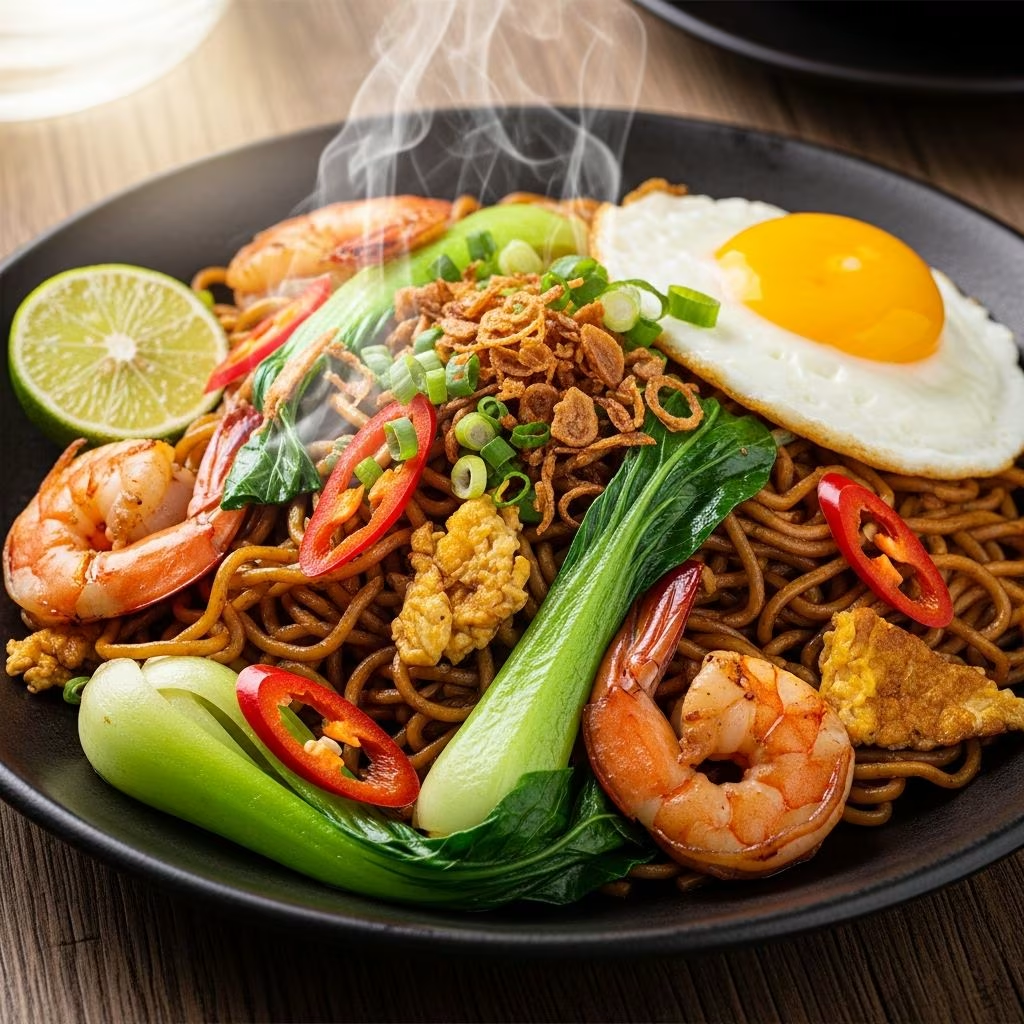
Indonesian Mie Goreng, or fried noodles, stands as a beloved street food and home staple across Indonesia. This dish combines chewy egg noodles with a harmonious blend of sweet, savory, and spicy sauces, tossed with fresh vegetables, proteins like shrimp or chicken, and scrambled eggs for richness. Its versatility makes it ideal for quick meals, adapting to vegetarian or vegan preferences while delivering bold, umami-packed flavors.
The Allure of Mie Goreng in Indonesian Food Culture
Mie Goreng traces its roots to Chinese influences in Indonesia, evolving into a distinctly local favorite. Commonly sold by street vendors, warungs, and home kitchens, it embodies the fast-paced, flavorful essence of Indonesian cuisine. The key to its appeal lies in the balance of kecap manis—a thick, sweet soy sauce—that coats the noodles in a glossy, caramelized finish. Paired with garlic, shallots, and chili, it creates a dish that’s comforting yet exciting.
Unlike drier stir-fries, Mie Goreng features a sticky sauce that clings to every strand, achieved through high-heat wok cooking. This method preserves the crunch of vegetables like cabbage and carrots while infusing proteins with aromatic depth. Whether enjoyed for breakfast, lunch, or dinner, its adaptability ensures it fits any occasion.
Essential Ingredients for Authentic Flavor
Building a great Mie Goreng starts with quality components. Here’s a breakdown of core elements:
- Noodles: Use fresh or cooked egg noodles, instant ramen (discard seasoning), or thin wheat noodles for the ideal chewy texture.
- Sauces: Kecap manis is non-negotiable for sweetness and color; combine with soy sauce, oyster sauce, and sambal oelek for umami and heat.
- Proteins: Shrimp, chicken, pork, or tempeh offer flexibility—cook them first to lock in juices.
- Vegetables: Cabbage, carrots, leeks, bean sprouts, and tomatoes add crunch and freshness.
- Aromatics: Garlic, shallots, and candlenuts (or macadamia) form the fragrant base.
- Eggs: Scrambled into chunks or ribbons for creamy texture.
| Ingredient | Quantity (Serves 4) | Role |
|---|---|---|
| Egg noodles | 500g cooked | Base |
| Kecap manis | 3-4 Tbsp | Sweetener & color |
| Shrimp/Chicken | 150-200g | Protein |
| Cabbage | 1-2 cups shredded | Crunch |
| Garlic & Shallots | 4 cloves + 2 shallots | Aromatics |
Step-by-Step Guide to Wok Perfection
High heat is crucial for that signature char and sauce reduction. Prep all ingredients mise en place style before firing up the wok.
Preheat the wok: Heat over high flame until smoking hot, then add 1 Tbsp oil. A cold start leads to soggy results.
Cook proteins: Stir-fry shrimp or chicken until just done (1-2 minutes), remove to prevent overcooking.
Scramble eggs: Add oil, crack eggs, let set 10 seconds, then scramble into large pieces. Set aside.
Sauté aromatics: Fresh oil, then garlic, shallots, and chilies until fragrant and golden (2-3 minutes).
Add hardy veggies: Toss in cabbage, carrots, leeks—stir 1-2 minutes until wilted but crisp.
Incorporate noodles and sauce: Add noodles, proteins, eggs, and sauce mix. Toss vigorously for 2 minutes until coated and caramelized.
Finish with soft elements: Stir in bean sprouts, tomatoes, green onions. Taste and adjust with more kecap manis or soy.
Total time: 20-30 minutes. Serve hot with fried shallots, lime, and extra chili.
Customizing Your Mie Goreng
Mie Goreng shines in its adaptability:
- Vegetarian: Skip meat, use tofu or tempeh, sub oyster sauce with mushroom sauce.
- Vegan: Omit eggs, use plant-based proteins and kecap manis.
- Spice levels: Adjust sambal oelek or fresh chilies from mild to fiery.
- Extras: Egg ribbons (thin omelet sliced), prawns, or pork for variety.
For Jawa-style, emphasize kecap manis and candlenuts; coastal versions might add more seafood.
Pro Tips for Restaurant-Quality Results
- Use a carbon steel wok for even heat and non-stick searing.
- Avoid overcrowding—cook in batches if needed.
- Day-old noodles fry better, absorbing less sauce.
- Fried shallots (bawang goreng) elevate texture and nutty flavor—make ahead.
- Balance sauces: Aim for sweet-savory-spicy in equal measure.
Nutrition and Serving Suggestions
A 1-cup serving offers ~400 calories, with 20g protein from eggs and shrimp, plus vitamins A and C from veggies. Pair with cucumber salad (acar) or satay for a full meal.
Frequently Asked Questions
What is kecap manis, and can I substitute it?
Kecap manis is Indonesian sweet soy sauce made from black soybeans, palm sugar, and spices. Substitute with soy sauce + molasses or brown sugar (2:1 ratio), but it won’t replicate the exact molasses-like depth.
Can I use spaghetti for Mie Goreng?
Yes, angel hair or spaghetti works in a pinch, cooked al dente for chewiness.
How do I store leftovers?
Refrigerate up to 2 days; reheat in a hot wok with a splash of water to revive texture. Freezing not recommended.
Is Mie Goreng gluten-free?
Use rice noodles and tamari instead of soy/oyster sauces.
What’s the best noodle type?
Fresh yellow egg noodles or instant ramen (no packet) for authenticity and wokability.
References
- The Best Indonesian Mie Goreng (Mie Goreng Jawa) — What to Cook Today. 2023-05-15. https://whattocooktoday.com/indonesian-mie-goreng.html
- Traditional Indonesian food: MIE GORENG — Come2Indonesia. 2022-11-10. https://come2indonesia.com/traditional-indonesian-food-mie-goreng/
- Mie Goreng (Indonesian Noodles) — Hot Thai Kitchen. 2021-08-20. https://hot-thai-kitchen.com/mie-goreng/
- Authentic Mie Goreng (Indonesian Fried Noodles) Recipe — Maddy’s Avenue. 2023-02-14. https://maddysavenue.com/indonesian-mie-goreng-recipe/
- Mie Goreng (Mee Goreng – Indonesian noodles) — RecipeTin Eats. 2020-06-03. https://www.recipetineats.com/mie-goreng/
- Mie Goreng: Indonesian Fried Noodles with Kecap Manis (Vegan) — The Foodie Takes Flight. 2022-09-12. https://thefoodietakesflight.com/vegan-mie-goreng/
- Indonesian Mee Goreng Noodles — Marion’s Kitchen. 2023-01-28. https://www.marionskitchen.com/indonesian-mee-goreng-noodles/