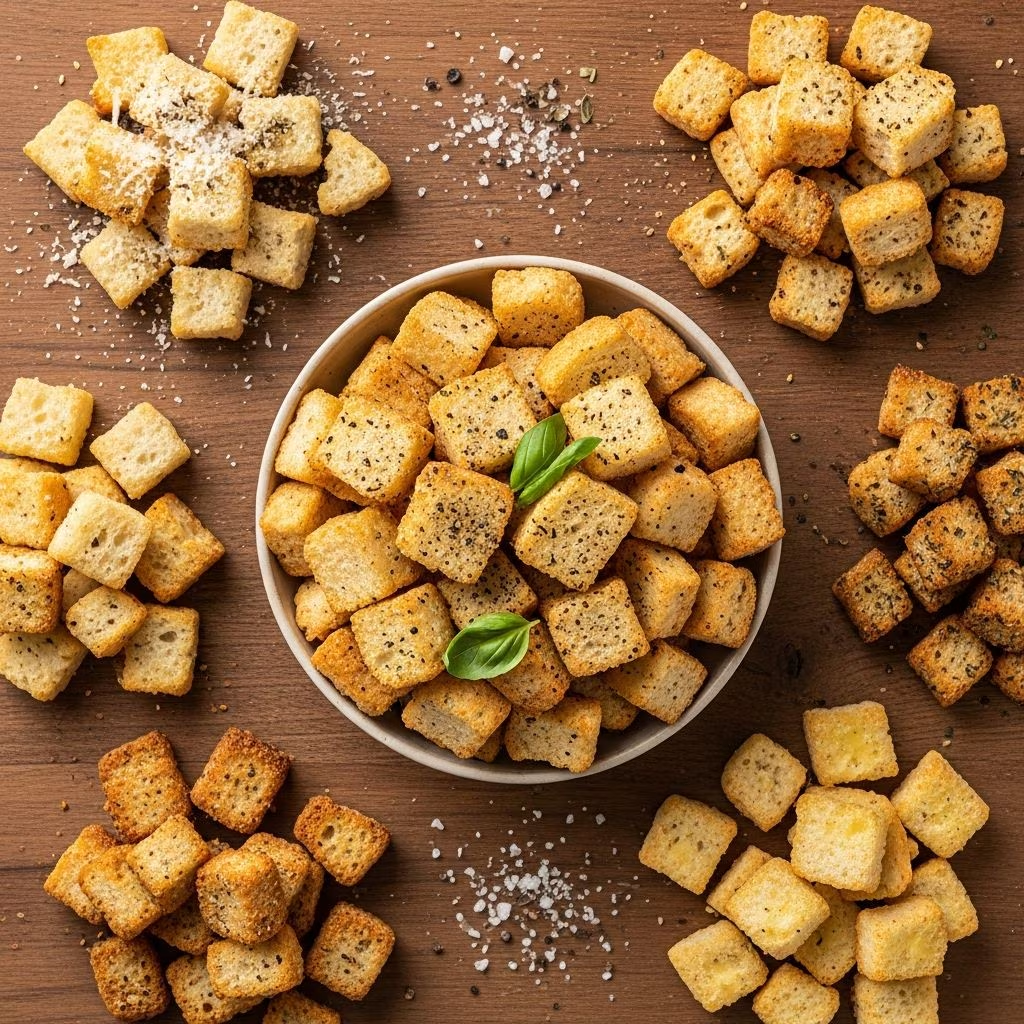
Croutons are those delightful, crunchy morsels that add texture and flavor to any dish. Whether you’re tossing them on a Caesar salad, floating them in a hearty soup, or snacking straight from the bowl, homemade croutons offer unmatched freshness and customization. Forget store-bought versions loaded with preservatives—this guide empowers you to create golden, seasoned bites using pantry staples. We’ll explore everything from bread selection to advanced flavor profiles, ensuring your croutons become a kitchen staple.
Why Make Croutons at Home?
Store-bought croutons often disappoint with their soggy texture or artificial tastes. Homemade ones shine because you control the ingredients, size, and crispiness. They’re cost-effective too—repurpose day-old bread to cut waste and save money. Nutritionally, you can opt for whole-grain breads or infuse healthy fats like olive oil. The process is quick, taking under 30 minutes, and scales easily for batches that store for weeks.
Health benefits include better portion control and avoidance of excess sodium. A study from the USDA highlights how homemade versions can reduce sodium intake by up to 50% compared to commercial products.1 Plus, the aroma of baking bread fills your home with warmth, turning a simple task into a sensory delight.
Choosing the Perfect Bread for Croutons
The foundation of great croutons starts with bread. Stale or slightly dry loaves work best, as they absorb oil and seasonings without turning mushy. Here’s a breakdown:
- French or Baguette: Classic choice for airy, crisp results. Its crust provides chew while the interior toasts evenly.
- Sourdough: Tangy flavor that pairs with creamy dressings. Dense crumb yields hearty croutons.
- Whole Wheat or Rye: Nutty, fiber-rich options for healthier twists. Great for autumn soups.
- Artisan Varieties: Ciabatta or focaccia add herbs or olives naturally.
Avoid soft sandwich bread—it burns easily. Aim for loaves 1-2 days old. Cube into ½- to 1-inch pieces for uniform toasting. Pro tip: Remove crusts for softer croutons or keep them for extra crunch.
Essential Ingredients and Tools
You need few items: bread, oil or butter, salt, and seasonings. Olive oil delivers fruity notes; butter adds richness. Garlic powder, herbs, and spices elevate basics.
| Ingredient | Amount (for 4 cups bread) | Purpose |
|---|---|---|
| Olive oil or melted butter | ¼ cup | Coats for crispiness |
| Salt | ½ tsp | Enhances flavor |
| Optional: Garlic powder, herbs | 1-2 tsp | Seasoning boost |
Tools: Baking sheet, parchment paper, large bowl for tossing. A rimmed sheet prevents oil drips.
Step-by-Step: Oven-Baked Croutons
Oven method yields consistent results. Preheat to 375°F (190°C).
- Cube bread into even pieces.
- Toss in a bowl with oil, salt, and seasonings until coated.
- Spread in a single layer on parchment-lined sheet.
- Bake 10-15 minutes, stirring halfway, until golden. Watch closely to avoid burning.
- Cool completely for maximum crunch.
Yield: 4 cups. Stores in airtight container up to 2 weeks or freezes for months.
Stovetop and Air Fryer Alternatives
No oven? Use stovetop: Heat oil in skillet over medium. Add cubes in batches; stir frequently 5-8 minutes until browned. Drain on paper towels.
Air fryer fans: 360°F for 6-8 minutes, shaking basket midway. This method uses less oil for lighter croutons.
Each technique suits different kitchens—stovetop for small batches, air fryer for speed.
Flavor Innovations for Every Palate
Basic salt-and-pepper is just the start. Experiment boldly:
- Garlic Parmesan: Garlic powder, grated Parmesan, black pepper.
- Herb Garden: Dried thyme, oregano, rosemary.
- Spicy Kick: Cayenne, smoked paprika, onion powder.
- Sweet Twist: Cinnamon, sugar, butter—for desserts or yogurt.
- Cheesy Bliss: Nutritional yeast for vegan umami.
Infuse oil with fresh garlic or chili for deeper flavors. Match to dishes: cheesy for soups, herby for salads.
Creative Ways to Use Croutons
Beyond salads, croutons shine everywhere:
- Soup toppers for cream of tomato or broccoli cheddar.
- Salad enhancers in Cobb or Greek.
- Bread pudding bases or casserole toppers.
- Snack mixes with nuts and pretzels.
- Stuffing components for holidays.
Crush into breadcrumbs for coating chicken or meatballs. Blend with cheese for a gratin crust.
Storage, Freezing, and Reviving Tips
Room temperature in sealed jars: 1-2 weeks. Freezer bags: 3 months. Revive soft ones by reheating at 350°F for 5 minutes.
Avoid moisture—don’t store near humid areas. Label bags with dates for freshness.
Common Mistakes and Fixes
Too oily? Pat excess before baking.
Not crispy? Single layer and full cooling.
Burnt edges? Lower temp, check often.
Flavorless? Generous seasoning.
Troubleshoot with these for pro-level results every time.
Nutritional Breakdown and Healthy Swaps
Per ½ cup (basic recipe): 150 calories, 10g fat, 15g carbs, 2g protein. Swap butter for avocado oil; use whole grains for fiber.
Harvard’s nutrition source notes whole-grain croutons boost satiety.2 Gluten-free? Rice or cornbread works.
Scaling Recipes for Crowds
Double ingredients for parties. Use multiple sheets; rotate pans. For 10 cups, bake in batches to ensure even toasting.
Seasonal Crouton Pairings
Summer: Lemon-herb on panzanella.
Fall: Sage-brown butter on butternut soup.
Winter: Cheesy garlic on chowder.
Spring: Dill and mustard on asparagus salad.
FAQ
What bread is best for croutons?
Stale French, sourdough, or artisan loaves for optimal crunch and flavor absorption.
Can I make croutons without oil?
Yes, dry-toast in oven at low heat, but oil enhances crispiness and taste.
How long do homemade croutons last?
Up to 2 weeks at room temp, 3 months frozen.
Are croutons gluten-free?
Use gluten-free bread; check seasonings for cross-contamination.
Can I use fresh bread?
Dry it out first by cubing and leaving overnight.
With these techniques, croutons transform everyday meals into gourmet experiences. Start simple, then innovate—your kitchen awaits!
References
- Sodium Intake from Processed Foods — USDA Agricultural Research Service. 2023-05-15. https://www.ars.usda.gov/research/publications/publication/?seqNo115=413456
- Whole Grains and Satiety — Harvard T.H. Chan School of Public Health. 2024-02-20. https://www.hsph.harvard.edu/nutritionsource/what-should-you-eat/whole-grains/
- Bread Baking Science — FDA Food Safety Guidelines. 2022-11-10. https://www.fda.gov/food/buy-store-serve-safe-food/bread-and-baked-products