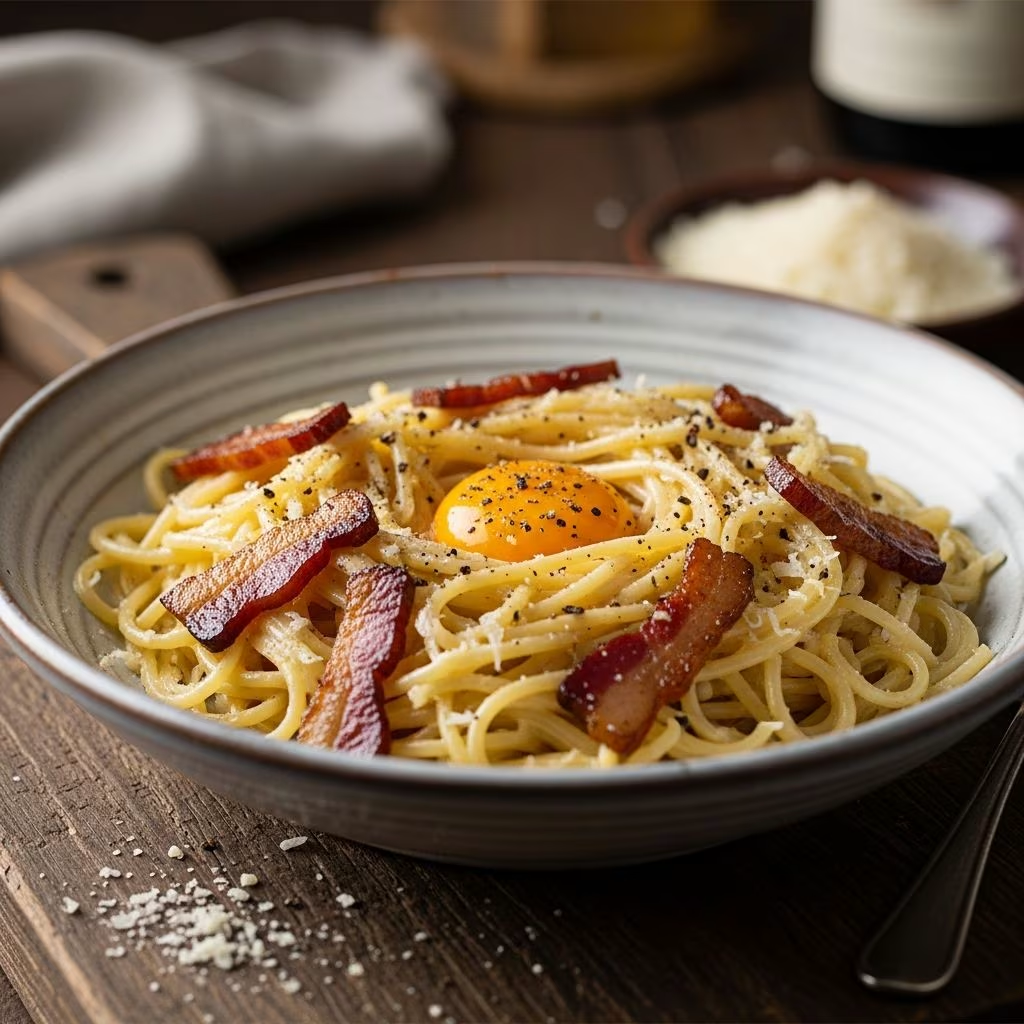
Pasta carbonara stands as one of Italy’s most beloved dishes, originating from Rome with a simple yet luxurious combination of eggs, cheese, cured pork, and black pepper. This guide provides everything needed to recreate the genuine version at home, emphasizing techniques that yield a silky sauce without cream.
The Rich History Behind Carbonara
Carbonara’s roots trace back to mid-20th century Rome, likely emerging among workers who used accessible ingredients like eggs and cured meats for a quick, hearty meal. While exact origins remain debated, it embodies post-war Italian ingenuity, blending pantry staples into something extraordinary. Traditional recipes insist on guanciale, the cured cheek of pork, distinguishing it from modern adaptations using bacon or pancetta.
Over decades, carbonara has evolved globally, but purists maintain the core: no garlic, onions, or cream, which dilute its essence. Roman chefs guard the recipe fiercely, viewing deviations as inauthentic. Understanding this history helps appreciate why precise methods matter for the signature creamy texture achieved through egg emulsification with hot pasta water.
Essential Ingredients for True Carbonara
Selecting quality components is crucial. Here’s a breakdown:
- Pasta: Choose thick strands like bucatini, rigatoni, or spaghetti (about 1 pound for 4 servings). Bucatini’s hollow center traps sauce perfectly.
- Guanciale or substitutes: 6-8 ounces of guanciale, cut into thin strips or 1/2-inch cubes. Pancetta works if unavailable; bacon is a last resort but renders smokier fat.
- Eggs: 4-5 yolks plus 1 whole egg for richness. Fresh, high-quality eggs ensure smoothness.
- Cheese: 1-1.5 cups grated Pecorino Romano (sheep’s milk) or a Pecorino-Parmesan mix. Grate fresh for better melt.
- Black pepper: Generously cracked, as it adds essential spice.
- Pasta water: Reserved starchy water to emulsify the sauce.
Avoid pre-grated cheese, which contains anti-caking agents that prevent proper sauce formation.
Step-by-Step Recipe for Perfect Carbonara
This foolproof method serves 4 and takes about 30 minutes.
- Prep ingredients: Dice guanciale. Whisk eggs, yolks, cheese, and pepper in a bowl until smooth. Set aside.
- Cook guanciale: In a large skillet over medium heat, render fat from guanciale until crisp (8-10 minutes). Remove from heat.
- Boil pasta: In salted water, cook pasta al dente (2 minutes under package time). Reserve 1-1.5 cups pasta water before draining.
- Temper eggs: Whisk 1/3-1/2 cup hot pasta water into egg mixture to prevent curdling.
- Combine: Add hot pasta to skillet with guanciale. Off heat, pour in egg mixture. Toss rapidly with tongs, adding pasta water gradually until creamy (1-2 minutes).
- Serve immediately: Plate with extra cheese and pepper.
Key tip: Residual pasta heat gently cooks eggs into a custard-like sauce.
Techniques for Silky, Emulsified Sauce
The magic lies in emulsification: hot pasta starch and water bind with eggs and cheese. Common errors include high heat scrambling eggs or insufficient tossing. Pile pasta high in the pan before adding eggs to minimize direct heat exposure. For extra creaminess, use bucatini and incorporate some whole eggs alongside yolks.
Practice “tempering” by slowly adding hot water to eggs first. If sauce breaks, more pasta water revives it. Timing is everything—serve instantly to avoid overcooking.
Common Mistakes and How to Fix Them
| Mistake | Why It Happens | Solution |
|---|---|---|
| Scrambled eggs | Pan too hot | Remove from heat; toss off burner |
| Dry sauce | Not enough pasta water | Add reserved water gradually while tossing |
| Lumpy texture | Pre-grated cheese | Grate fresh blocks only |
| Too greasy | Excess pork fat | Drain some fat; balance with cheese |
| Undercooked eggs | Pasta not hot enough | Cook pasta very al dente; use boiling water |
Authentic Variations and Modern Twists
Stay true with guanciale and Pecorino, but adapt:
- Vegetarian: Omit pork; use olive oil or smoked mushrooms.
- With veggies: Add peas post-toss for color (non-traditional).
- Spaghetti vs. bucatini: Spaghetti is lighter; bucatini holds more sauce.
- Cheese blends: Half Pecorino, half Parmesan for milder flavor.
Economical swaps like bacon maintain quality without cream.
Pairing Suggestions and Serving Ideas
Serve carbonara with crisp greens like arugula salad to cut richness. Pair with a light Roman white wine like Frascati. For family meals, scale up pasta; leftovers reheat gently with pasta water.
Frequently Asked Questions (FAQs)
Can I use cream in carbonara?
No—traditional recipes rely on eggs for creaminess. Cream makes it heavy and inauthentic.
Guanciale vs. pancetta vs. bacon?
Guanciale is ideal for its fatty jowl; pancetta is leaner belly; bacon adds smoke. All work.
How do I avoid raw eggs?
Pasta heat pasteurizes them safely when tossed properly. Use pasteurized eggs if concerned.
Best pasta shape?
Bucatini or tonnarelli for Romans; spaghetti universally loved.
Storage tips?
Best fresh, but refrigerate up to 2 days. Reheat with water over low heat.
Nutritional Insights
Per serving (1/4 recipe): ~600 calories, high protein from eggs/cheese/pork. Balanced with pasta carbs. Opt for whole grain pasta for fiber.
References
- Traditional Carbonara Recipe: Pasta from Rome — Cardamom Magazine. 2023. https://cardamommagazine.com/carbonara-rome-pasta/
- Classic Pasta Carbonara with Bacon — Familystyle Food. 2023. https://familystylefood.com/pasta-carbonara-recipe/
- BEST Carbonara Recipe (Authentic Carbonara Just Like Rome!) — Savory Experiments. 2023. https://www.savoryexperiments.com/authentic-carbonara/
- Best Pasta Carbonara Recipe — The Pioneer Woman. 2023. https://www.thepioneerwoman.com/food-cooking/recipes/a10649/pasta-carbonara/
- Best Pasta Carbonara Recipe — Delish. 2023. https://www.delish.com/cooking/recipe-ideas/a45771/easy-carbonara-recipe/
- Carbonara — RecipeTin Eats. 2023. https://www.recipetineats.com/carbonara/