Chocolate is a delicate confection that demands careful handling to retain its signature snap, smooth melt, and rich aroma. Improper storage leads to issues like bloom—a white, powdery coating—or off-flavors from odor absorption. This guide draws from established practices to help you maintain peak quality, whether you have bars, truffles, or boxed assortments.
Understanding Chocolate’s Sensitivity
Chocolate’s structure relies on a precise emulsion of cocoa solids, cocoa butter, sugar, and sometimes milk. Disruptions from heat, moisture, light, or air cause degradation. Cocoa butter, a natural fat, absorbs surrounding smells easily, while temperature swings trigger fat or sugar bloom. Bloom doesn’t make chocolate unsafe but alters its appearance and mouthfeel.
- Heat effects: Above 70°F (21°C), cocoa butter softens or melts, leading to a greasy texture.
- Moisture impact: High humidity above 55-65% causes sugar to migrate to the surface, forming bloom.
- Light exposure: UV rays promote photo-oxidation, dulling flavors over time.
- Air and odors: Oxygen oxidizes fats, while strong scents infiltrate the chocolate.
Prime Conditions for Everyday Storage
The foundation of good storage is consistency. Aim for a stable environment mimicking a professional chocolatier’s warehouse.
| Factor | Ideal Range | Why It Matters |
|---|---|---|
| Temperature | 60-70°F (15-21°C) | Preserves cocoa butter emulsion without melting or condensation. |
| Humidity | 50-55% RH (under 65% max) | Prevents sugar bloom and stickiness. |
| Light | Complete darkness | Avoids flavor degradation from photo-oxidation. |
| Air Exposure | Minimized | Blocks oxidation and odor transfer. |
Choose a pantry cupboard away from appliances, windows, or heat sources. In humid areas, add silica gel packets or dry rice to containers for extra protection.
Selecting the Right Containers
Containers act as the first line of defense. Original packaging works initially but transfer opened chocolate promptly.
- Airtight glass or plastic jars: Seal out air and odors; transparent glass needs a dark storage spot.
- Vacuum-sealed bags: Ideal for bulk or long-term holding, removing oxygen effectively.
- Aluminum foil or plastic wrap: Wrap individually before containerizing to block light and scents.
Label with purchase or opening dates to track freshness. Avoid storing near coffee, spices, onions, or garlic—cocoa butter soaks up aromas like a sponge.
Handling Hot Weather and Refrigeration
Summers or warm climates push room temps beyond ideal. Refrigeration becomes necessary but requires precautions to avoid condensation.
- Wrap chocolate tightly in plastic wrap or foil, ensuring no gaps.
- Place in an airtight container or freezer bag.
- Store on a middle shelf, not the door, for steady temps.
- To enjoy: Let warm to room temperature while still wrapped (1-2 hours) before unwrapping.
This method keeps chocolate viable for 3-6 months. Fridge humidity can still cause issues, so desiccants help.
Freezing for Extended Preservation
For 6-12 months or longer, freezing extends shelf life without quality loss if done right. It’s not first choice due to texture risks but viable for surplus.
Freezing Steps
- Wrap tightly in plastic wrap, then foil.
- Seal in airtight freezer bag or container.
- Place in the coldest, stable freezer zone.
Thawing Protocol
- Move to fridge for 24 hours (prevents shock).
- Transfer to counter, still wrapped, for 2-3 hours at room temp.
- Unwrap and consume.
Avoid refreezing. Boxed chocolates in original packaging can go into heavy-duty freezer bags for up to 18 months.
Chocolate Varieties and Tailored Storage
Not all chocolates store identically due to fat content and additives.
| Type | Key Challenge | Storage Adjustment |
|---|---|---|
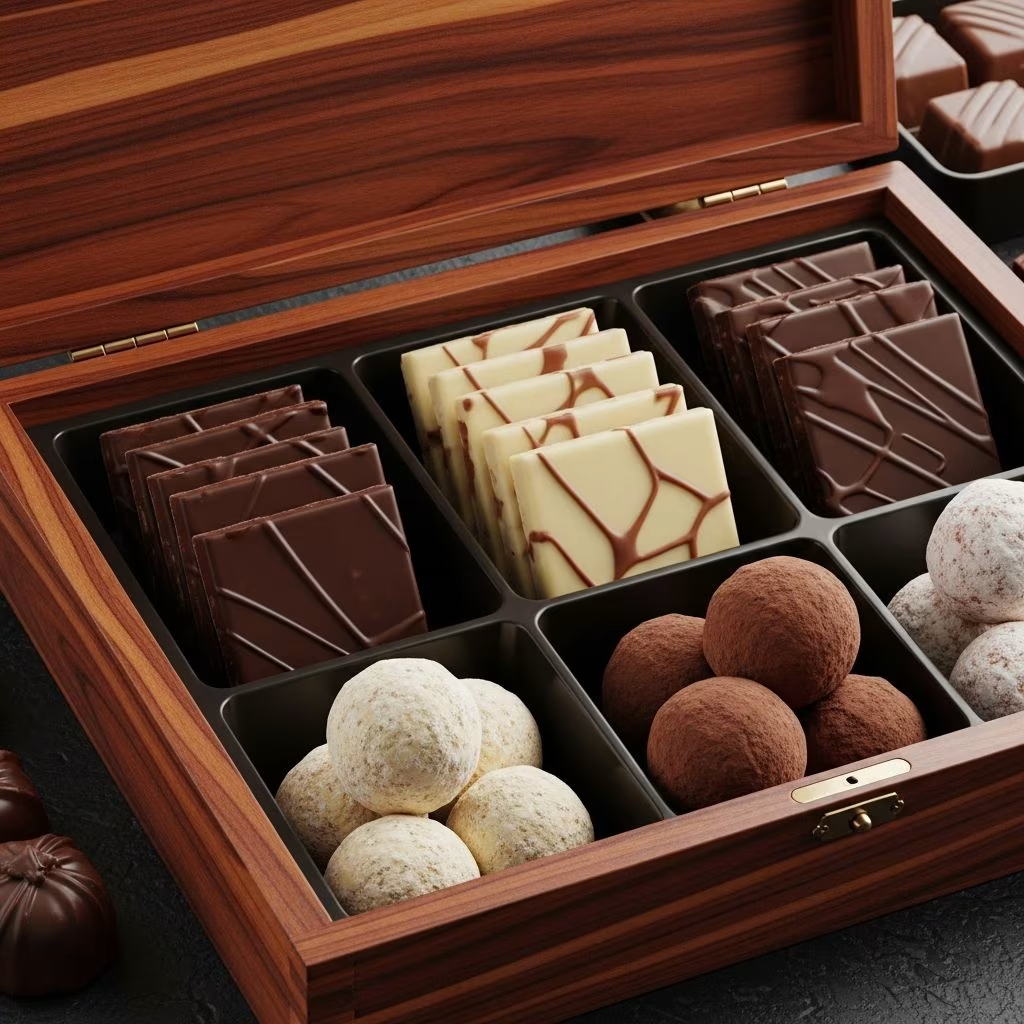
| Dark Chocolate | Lower milk fat, more sensitive to odors | Extra airtight sealing; 60-68°F ideal. |
| Milk Chocolate | Milk solids prone to rancidity | Cooler end of range (60-65°F); shorter fridge use. |
| White Chocolate | High cocoa butter, melts easily | Strict 60-70°F; avoid light to prevent yellowing. |
| Truffles/Filled | Ganache or creams absorb moisture fast | Room temp only short-term; freeze promptly if needed. |
Artisan bars without emulsifiers like soy lecithin are more finicky, demanding stricter controls.
Spotting and Fixing Storage Mishaps
Bloom appears as white streaks or spots. Fat bloom (grayish) from temp changes; sugar bloom (crystalline) from moisture. Both safe—melt for baking or eat as is.
- True spoilage signs: Rancid smell, mold, or bitter off-taste. Discard immediately.
- Recovery: Chop bloomed chocolate for cookies, sauces, or bark.
Regular checks prevent escalation. Consume within months for best flavor, even in perfect conditions.
Gifting, Travel, and Bulk Tips
For gifts or transport, original packaging shines—designed for protection. Add insulation like bubble wrap in hot weather.
- Short trips: Cooler bag with ice packs.
- Air travel: Carry-on to avoid heat in cargo holds.
- Bulk buys: Divide into portions for easier management.
Ship via expedited services with cool packs; inform recipients of storage needs.
Frequently Asked Questions
Can I store chocolate in the fridge year-round?
No—only when temps exceed 70°F. Routine fridge use risks condensation and odor pickup.
Does bloom mean chocolate is ruined?
No, it’s cosmetic. Taste and bake with it safely.
How long does properly stored chocolate last?
Room temp: 6-12 months; fridge: 3-6 months; freezer: up to 1 year.
Is freezing chocolate worth it?
Yes for long-term, if thawed correctly to preserve texture.
What if I live in a humid area?
Use airtight containers with desiccants; prioritize cool, dark spots.
Building Your Chocolate Storage Routine
Mastery comes from habits: Check temps with a thermometer/hygrometer, rotate stock FIFO (first in, first out), and taste-test periodically. Invest in quality containers for reliability. These steps ensure every piece delivers indulgence, from craft bars to holiday boxes.
References
- Mastering the Art of Chocolate Storage: Tips to Preserve Freshness and Flavor — Wiseman House Chocolates. 2023. https://www.wisemanhousechocolates.com/blog/mastering-the-art-of-chocolate-storage-tips-to-preserve-freshness-and-flavor
- How to Store Chocolate & Keep it Fresh — Lake Champlain Chocolates. 2024. https://www.lakechamplainchocolates.com/how-to-store-chocolate/
- The Ultimate Chocolate Storage Guide — Alter Eco Foods. 2023. https://www.alterecofoods.com/blogs/blog/the-ultimate-chocolate-storage-guide-%F0%9F%8D%AB
- How to Store Chocolate for Taste and Freshness — Compartés. 2024. https://compartes.com/blogs/journal/how-to-store-chocolate
- How to Store Chocolate: An Expert Guide — Ethel M Chocolates. 2023. https://www.ethelm.com/en-us/blog/chocolate-basics/how-to-store-chocolate