When fresh produce reaches peak ripeness, the clock begins ticking. Within days or even hours, vibrant fruits and vegetables can deteriorate, leaving home cooks with difficult choices about waste. However, modern food preservation techniques offer straightforward solutions that transform seasonal abundance into year-round pantry staples. By understanding multiple preservation methods, you can capture the nutritional value and flavor of fresh produce while building a more resilient food system in your home.
Understanding Your Preservation Options
Food preservation encompasses a spectrum of approaches, each suited to different produce types and desired end results. Rather than relying on a single method, savvy home cooks recognize that strategic preservation involves selecting the technique that best matches their ingredients, available equipment, and intended use. Some methods preserve produce for months, while others work best for shorter-term storage. Understanding these distinctions helps maximize both shelf life and quality.
The Foundation: Proper Preparation and Storage Assessment
Before applying any preservation technique, produce requires careful handling to ensure success. Thoroughly washing all fruits and vegetables removes dirt and potential pathogens that could compromise storage quality. After washing, allow produce to air dry completely on the counter before proceeding with your chosen method. This moisture removal proves especially critical, as residual water can accelerate spoilage or create suboptimal conditions for preservation.
When selecting items for preservation, consider their current ripeness level. Perfectly ripe produce works best for most preservation methods, while underripe items may not develop full flavor during storage. Conversely, overly soft or bruised produce should typically be consumed fresh rather than preserved, as damage may harbor spoilage organisms.
Freezing: The Convenient Preservation Powerhouse
Freezing represents one of the most accessible preservation methods for busy home cooks, requiring minimal equipment while preserving nutritional value effectively. Frozen foods maintain quality because most preparation occurs before freezing, eliminating ongoing degradation. This approach works exceptionally well for berries, sliced peppers, and leafy greens destined for soups, smoothies, and cooked dishes.
Preparation Steps for Optimal Freezing
Begin by washing and thoroughly drying your produce. Chop items into bite-sized pieces appropriate for your intended use. For vegetables that will be cooked, consider whether blanching is necessary—a preliminary step that deactivates enzymes responsible for degrading quality during freezer storage.
Blanching involves briefly immersing vegetables in boiling water before rapidly cooling them in ice water. This simple process maintains the bright color and crisp texture that would otherwise fade during months of freezer storage. Different vegetables require specific blanching times to achieve optimal results:
| Vegetable | Blanching Time |
|---|---|
| Asparagus | 2-4 minutes (depending on size) |
| Broccoli | 3 minutes |
| Brussels sprouts | 3-5 minutes (depending on size) |
| Cauliflower | 3 minutes |
| Carrots | 2 minutes |
| Corn | 4 minutes |
| Green beans | 3 minutes |
| Leafy greens | 2 minutes (3 for collard greens) |
The Freezing Process
After blanching and cooling, drain vegetables thoroughly before freezing. This step prevents ice crystal formation that can compromise texture. Individually quick freezing (IQF) offers superior results for many items—spread prepared vegetables on parchment-lined baking sheets in a single layer and freeze uncovered for 4-6 hours until solid. This approach allows you to pour out portions without thawing the entire batch.
Once vegetables are frozen solid, transfer them to airtight containers or freezer bags. Vacuum sealing extends shelf life considerably. Properly frozen produce remains high quality for up to 12 months in standard kitchen freezers, though chest freezers—which lack automatic defrost cycles—maintain quality for about a year without degradation.
Pro tip: Label all containers with contents and date frozen to prevent loss and ensure proper rotation.
Fermentation: Creating Probiotic Preservation
Beyond freezing and canning, fermentation offers an elegant preservation method that simultaneously enhances nutritional value. This ancient technique transforms vegetables through controlled microbial activity, producing tangy flavors while extending shelf life to months.
Fermentation requires minimal equipment—just fresh vegetables, salt, and water. Vegetables like cabbage and carrots ferment beautifully in simple saltwater brine solutions. The process creates beneficial probiotics while developing complex flavors impossible to achieve through other preservation methods. Fermented vegetables add nutritional depth to meals while supporting digestive health, making this approach particularly valuable for those interested in functional foods.
Dehydration: Concentrating Flavor and Extending Shelf Life
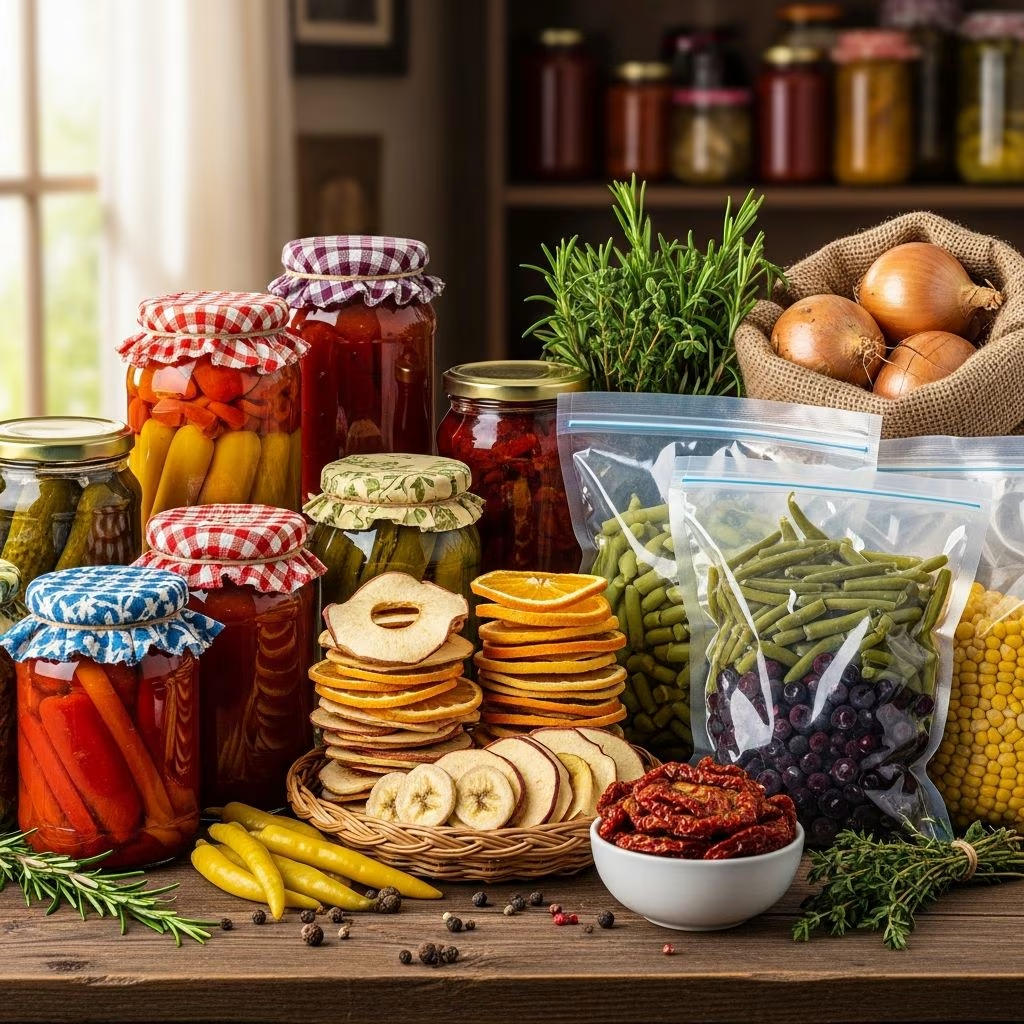
Dehydration preserves produce by removing moisture that supports spoilage organisms. This method works excellently for fruits and vegetables, creating versatile pantry ingredients. Dried apples become convenient snacks, while dehydrated kale transforms into crispy chips that satisfy cravings while providing concentrated nutrition.
Home cooks can dehydrate produce using dedicated dehydrators or standard ovens set to low temperatures. The key involves careful monitoring to prevent burning while achieving the desired moisture level. Dehydrated produce occupies minimal storage space while maintaining quality for extended periods, making this approach ideal for those with limited freezer capacity.
Canning: The Traditional Long-Term Solution
For those seeking maximum storage longevity, canning provides preservation lasting a year or longer. This heat-based method seals produce in jars, preventing spoilage through sterile conditions. While canning requires more equipment and careful attention to food safety protocols than other methods, the results justify the investment for serious home preservationists.
Successful canning combines proper equipment, accurate recipes, and careful technique. Processed jars maintain quality through an extended shelf life, allowing home cooks to build substantial pantries of homemade preserves. Jams, jellies, pickles, and other preserved products represent both practical pantry staples and thoughtful homemade gifts.
Strategic Refrigeration: Maximizing Fresh Storage
While not technically preservation, strategic refrigeration extends fresh produce life significantly before other methods become necessary. Different produce types require specific storage approaches to maintain optimal quality.
Fruit Storage Guidelines
Apples produce ethylene gas, so they must be stored separately from other produce to prevent premature ripening. These hardy fruits last up to a week on the counter or longer when refrigerated. Berries require delicate handling—store unwashed in dry, covered refrigerator containers, washing only immediately before consumption.
Stone fruits like peaches and nectarines benefit from counter storage in paper bags until ripe, then move to refrigeration for extended life. Citrus fruits store efficiently in refrigerator crisper drawers or mesh bags, maintaining quality for weeks. Avocados ripen on counters before moving to refrigeration, while bananas should remain at room temperature during ripening.
Vegetable Storage Best Practices
Leafy greens require loose refrigerator storage to maintain crispness and prevent premature decay. Conversely, hardy root vegetables like carrots and beets store well in refrigerator crisper drawers, while potatoes and winter squash prefer cool, dark, dry pantry spaces. Mushrooms must stay unwashed in refrigerators, as moisture accelerates sliminess.
Cucumbers remain fresher when stored away from ethylene-producing produce, lasting 1-2 weeks under proper conditions. Peppers keep best in low-humidity drawers for up to seven days, while cut peppers require airtight containers and consumption within three days. Corn stays fresh when stored in refrigerators within their husks.
Pantry Storage: Room-Temperature Preservation
Some produce thrives in pantry conditions without requiring refrigeration. Root vegetables like onions and garlic store exceptionally well in cool, dark, dry spaces, potentially lasting 6-12 months depending on storage conditions. Tomatoes maintain quality when stored at room temperature, lasting 1-2 weeks in loose bowls away from direct sunlight.
This straightforward storage method requires minimal intervention, making it ideal for high-volume preservation. Those growing substantial quantities of shelf-stable produce discover that simple storage in appropriate conditions often proves most practical.
Complete-Meal Freezing for Convenience
Beyond preserving individual ingredients, freezing complete meals in portions provides ultimate convenience. After preparing dishes incorporating fresh produce, portion them into individual containers and freeze for quick reheating later. This approach transforms preservation into meal preparation, streamlining busy weeknight cooking.
Frequently Asked Questions
How long do frozen vegetables typically remain safe to eat?
Properly frozen vegetables maintain high quality for up to 12 months in standard kitchen freezers. While technically safe beyond this timeframe, quality gradually deteriorates. Chest freezers, lacking automatic defrost cycles, maintain quality for approximately one year without significant degradation.
Do all vegetables require blanching before freezing?
No, some vegetables freeze successfully without blanching. Items like red peppers, kale, and tomatoes can be chopped and frozen directly in bags or containers. However, blanching significantly improves quality retention for vegetables sensitive to enzyme degradation.
What equipment do I need to start fermenting vegetables?
Fermentation requires minimal equipment—just fresh vegetables, salt, and water to create a simple brine. Many home cooks use mason jars or other glass containers, though dedicated fermentation vessels offer additional benefits.
Can I use my standard kitchen oven for dehydration?
Yes, standard ovens work for dehydration when set to low temperatures. However, careful monitoring proves essential to prevent burning. Dedicated dehydrators offer more consistent results and easier temperature control for serious preservationists.
How do I know which vegetables are best for each preservation method?
Consider your intended end use when selecting preservation methods. Vegetables destined for soups and sauces freeze well. Items valued for probiotic benefits ferment beautifully. Produce intended as snacks dehydrate excellently. High-volume storage favors simple room-temperature or refrigerator methods.
Maximizing Your Preservation Success
Strategic produce preservation extends beyond individual techniques—it encompasses understanding your household’s eating patterns, available storage space, and time commitment. Home cooks who successfully preserve produce typically employ multiple methods, selecting the approach best suited to each situation. Starting with freezing builds confidence and skills before progressing to more complex techniques like canning.
By mastering these preservation strategies, you transform seasonal abundance into year-round nutrition, reduce household food waste, and develop greater self-sufficiency in your food system. Whether you freeze berries for winter smoothies, ferment vegetables for probiotic benefits, or can preserves for long-term pantry staples, these techniques help you capture and extend the peak flavors of seasonal produce.
References
- Save the Season: Easy Ways to Preserve Produce — Save More Than Food. 2025. https://savemorethanfood.org/2025/08/save-the-season-easy-ways-to-preserve-produce/
- How to Store and Freeze Fresh Produce — McCormick. https://www.mccormick.com/blogs/how-to/how-to-store-and-freeze-fresh-produce
- Keep Fruits and Vegetables Fresher Longer — American Heart Association. https://www.heart.org/en/healthy-living/healthy-eating/add-color/keep-fruits–vegetables-fresher-longer
- Let’s Preserve: Freezing Vegetables — Penn State Extension. https://extension.psu.edu/lets-preserve-freezing-vegetables/
- 5 Easy Food Storage Methods Besides Canning — Creative Vegetable Gardener. https://www.creativevegetablegardener.com/food-storage-methods/