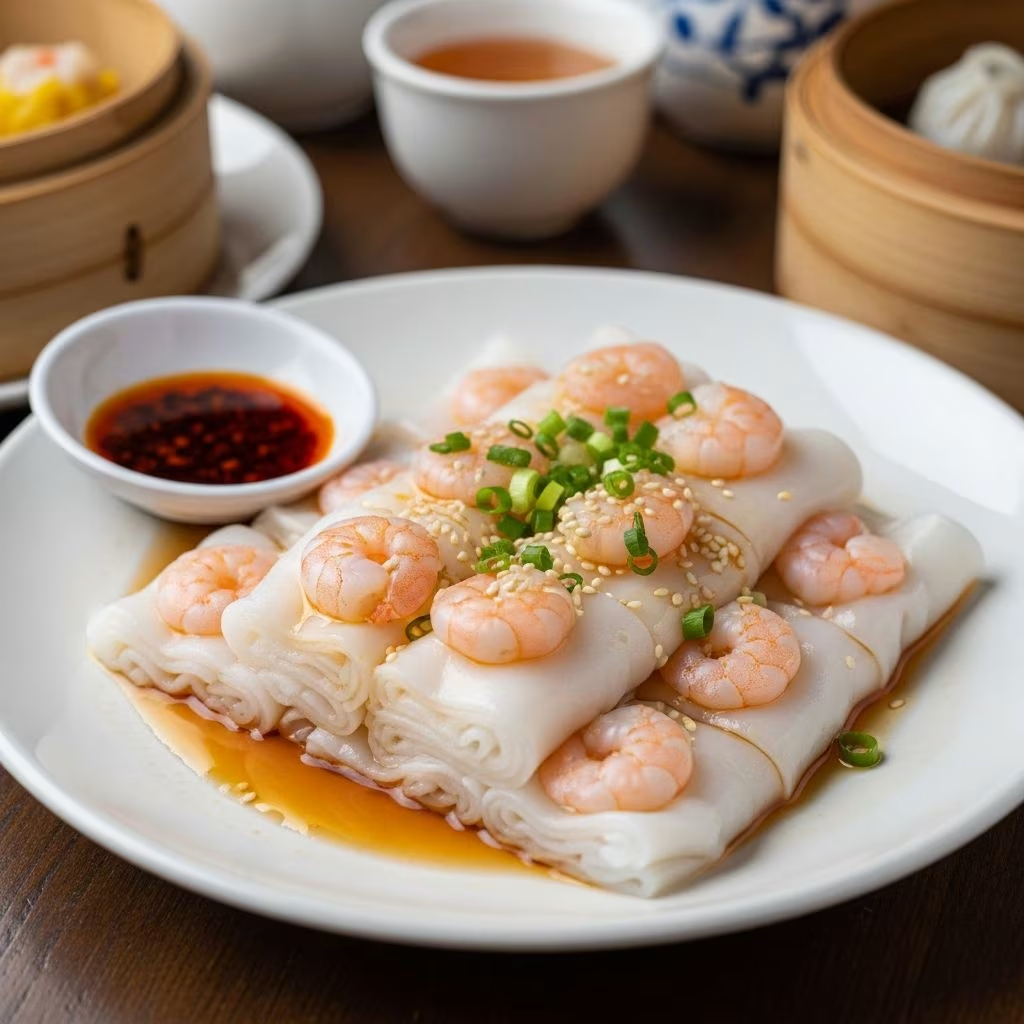
Shrimp cheung fun, also known as ha cheung or shrimp rice noodle rolls, stands as a cornerstone of Cantonese dim sum culture. These delicate rolls feature a thin, silky sheet of steamed rice batter enveloping plump, seasoned shrimp, drizzled with a sweet-savory sauce. Originating from Hong Kong tea houses, they offer a perfect balance of tender seafood and chewy noodles, making them a favorite for brunch or appetizers.
The Allure of Cheung Fun in Dim Sum Tradition
Cheung fun translates to “intestine noodle” due to its long, tube-like shape, but with shrimp, it becomes a refined delicacy. Served hot from steamers, the rolls showcase the artistry of Cantonese cuisine, where texture reigns supreme. The rice sheet must be translucent and elastic, contrasting the juicy shrimp inside. This dish highlights fresh ingredients and precise steaming techniques passed down through generations.
Dim sum enthusiasts prize shrimp cheung fun for its simplicity yet sophistication. Unlike denser dumplings, these rolls emphasize lightness, allowing the natural sweetness of shrimp to shine. Home preparation brings this restaurant experience to your kitchen, requiring just basic pantry staples and a steamer.
Essential Ingredients for Authentic Flavor
Success starts with quality components. For the shrimp, select medium-sized, fresh or thawed prawns (31/40 count per pound works well). Marinades typically include salt, sugar, sesame oil, and cornstarch to enhance tenderness and juiciness.
The rice batter demands a precise blend of flours for that signature silkiness:
- Rice flour: Provides the base structure and chew.
- Tapioca or mung bean starch: Adds stretch and translucency.
- Wheat or potato starch: Contributes smoothness without gumminess.
Sauces combine soy, oyster sauce, sugar, and sesame oil for umami depth. Green onions add freshness, while neutral oil prevents sticking during steaming.
Comparing Flour Blends
| Flour Type | Role | Quantity (for 4 servings) |
|---|---|---|
| Rice Flour | Main body | ½ cup |
| Tapioca Starch | Elasticity | 2-¼ tbsp |
| Wheat Starch | Smoothness | 2 tbsp |
| Cornstarch | Tenderness | 2 tbsp |
This table illustrates common ratios yielding about 8 rolls. Adjustments ensure thin, even sheets.
Preparing the Shrimp: Velveting for Perfection
Begin by peeling and deveining 8-14 shrimp, depending on size. Pat dry, then marinate with ½ tsp sugar, ⅛ tsp baking soda, ¼ tsp sesame oil, ⅛ tsp salt, and ½ tsp cornstarch mixed with 2 tbsp water. The baking soda tenderizes, mimicking restaurant “velveting” techniques.
Steam shrimp briefly (2-3 minutes) until just cooked, preserving plumpness. Alternatively, marinate sliced prawns with white pepper and cooking wine for 5 minutes before assembly. This step infuses flavor without overcooking.
Crafting the Ideal Rice Batter
Mix dry ingredients thoroughly: 5 tbsp rice flour, 1 tbsp mung bean starch, 2 tbsp each wheat starch and cornstarch, plus ¼ tsp salt. Gradually whisk in 1-1½ cups water until lump-free, stirring vigorously for 3 minutes. Let rest 10-15 minutes to release bubbles, ensuring a smooth pour.
Pro tip: Remix before each use, as starches settle. For quicker versions, some substitute rice paper sheets dipped in water, brushed with oil, and rolled around shrimp before steaming. This hack cuts prep time to 10 minutes while approximating texture.
Steaming Techniques for Silky Rolls
Equipment matters: Use a wok with a flat steamer tray or multi-tier bamboo steamer. Preheat on high heat. Line with a soaked cotton cloth or oil a non-stick plate.
Traditional Method:
- Pour thin batter layer (just covering base).
- Steam 2 minutes until set and translucent.
- Add 3-4 shrimp per sheet, plus green onions.
- Steam 2 more minutes.
- Cool 2 minutes, then roll with a scraper.
Avoid thick pours to prevent chewiness. Level the tray meticulously for uniformity. Oil brushing aids release.
Rice Paper Shortcut
For beginners, overlap 2 rice paper sheets, moisten, add shrimp and seasonings, roll tightly, brush oil, and steam 3 minutes. This yields chewy rolls with minimal batter fuss.
Signature Sauce: The Finishing Touch
Whisk 1 tbsp each soy sauce, dark soy, oyster sauce, and sugar with 3 tbsp warm water and ½ tsp sesame oil. Heat gently to dissolve sugar. Drizzle over sliced rolls for glossy appeal. Variations include roasted sesame seeds or chili oil for heat.
Serving and Storage Tips
Serve immediately with sauce on the side for dipping. Garnish with fried shallots or cilantro. Yields 4 servings as appetizers.
- Storage: Refrigerate rolls up to 2 days; re-steam to revive texture.
- Freezing: Wrap individually; thaw and steam before eating.
- Make-Ahead: Prep batter and shrimp day prior.
Common Pitfalls and Fixes
Issue: Batter too thick. Solution: Use less liquid, pour sparingly.
Issue: Rolls stick. Solution: Oil generously or use parchment.
Issue: Shrimp overcooks. Solution: Add post-initial steam.
Practice yields mastery; start with small batches.
Variations to Explore
- Beef Cheung Fun: Substitute marinated beef slices.
- Veggie Rolls: Use shiitake mushrooms and carrots.
- Dry-Fried: Pan-fry rolls post-steaming for crispiness.
- Sweet Custard: Top with egg custard for dessert twist.
Health Benefits of Shrimp Cheung Fun
Low-calorie (about 200 per serving), high-protein from shrimp. Rice flours offer gluten-free carbs. Rich in omega-3s and selenium for heart health. Opt for low-sodium soy to control salt.
Pairing Suggestions
Enjoy with jasmine tea, siu mai, or har gow for full dim sum spread. Pair with light beers or chilled white wine.
Frequently Asked Questions (FAQs)
What is cheung fun?
A steamed rice noodle roll, often filled with shrimp, beef, or veggies, iconic in dim sum.
Can I make cheung fun without a steamer?
Yes, use a wok with a plate or microwave-safe dish covered tightly, steaming 3-4 minutes.
Why use multiple starches?
They create the unique silky, chewy texture impossible with rice flour alone.
Is rice paper a good substitute?
Ideal for quick versions; it mimics chew but differs slightly from batter-based authenticity.
How do I achieve restaurant-thin rolls?
Preheat tray, pour minimally, and steam on high heat precisely.
Nutritional Breakdown (Per Serving)
| Nutrient | Amount |
|---|---|
| Calories | 220 |
| Protein | 15g |
| Carbs | 30g |
| Fat | 4g |
Estimates based on standard recipes; varies by portions.
References
- Shrimp Rice Noodle Rolls (Shrimp Cheung Fun or “Ha Cheung”) — The Woks of Life. 2023-05-15. https://thewoksoflife.com/shrimp-rice-noodle-rolls-cheung-fun/
- HK Dim Sum Shrimp Rice Noodle Rolls (Cheung Fun) — Tiffy Cooks. 2022-11-10. https://tiffycooks.com/dim-sum-shrimp-rice-noodle-rolls-shrimp-cheung-fun/
- 10-Min Shrimp Cheung Fun with Rice Paper — Cicili TV. 2023-08-20. https://cicili.tv/shrimp-cheung-fun-with-rice-paper/
- Steamed Shrimp Rice Rolls — Smelly Lunchbox. 2021-12-05. https://smellylunchbox.com/steamed-shrimp-rice-rolls/
- Dim Sum at Home: Easy Shrimp Cheung Fun — Whiskey and Booch. 2024-02-14. https://www.whiskeyandbooch.com/blog/cheungfun
- Cheung Fun with Shrimp (鲜虾肠粉) — Omnivore’s Cookbook. 2023-07-22. https://omnivorescookbook.com/cheung-fun-with-shrimp/
- Shrimp Cheung Fun Recipe (YouTube) — CiCi Li, Asian Home Cooking. 2023-04-12. https://www.youtube.com/watch?v=nshJSE0dMM0