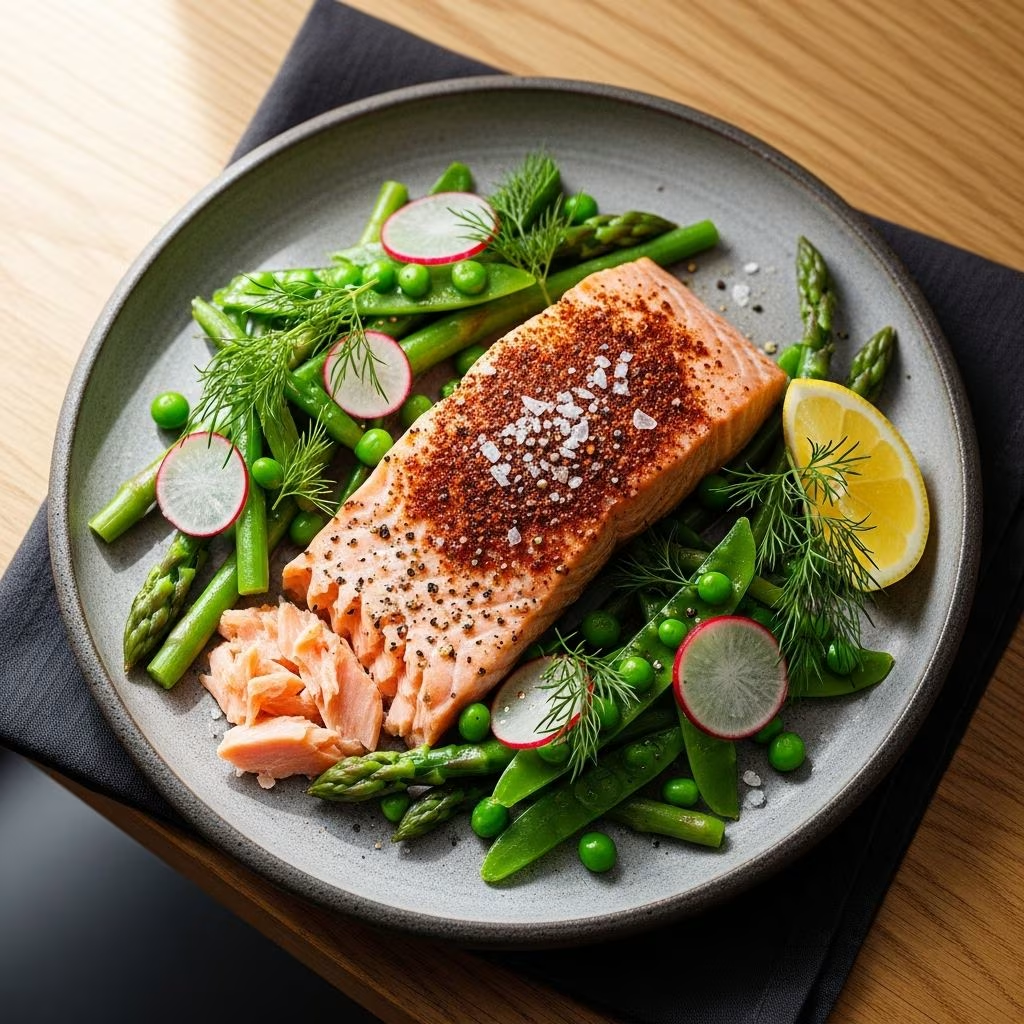
Summer dining reaches new heights when you combine peak-season produce with protein-rich fish and aromatic spice blends. This seasonal salad showcases the delicate texture of gently poached salmon alongside the natural sweetness of corn and tomatoes, all unified by a sophisticated za’atar-infused dressing. The result is a dish that tastes indulgent while delivering genuine nutritional benefits for health-conscious home cooks.
Understanding Za’atar: The Spice Blend That Transforms Simple Ingredients
Za’atar represents a fundamental element of Middle Eastern cuisine, functioning as a versatile spice mixture that brings depth and complexity to otherwise straightforward preparations. This aromatic blend combines multiple complementary ingredients into a cohesive flavor profile. The composition typically includes toasted sesame seeds, thyme, marjoram, and sumac, with regional variations adding paprika or additional herbs. The sesame seeds contribute nutty undertones, while sumac provides a subtle tartness that brightens dishes without requiring additional acid.
Understanding za’atar’s composition helps explain why it pairs so effectively with fresh summer vegetables and delicate fish. The herbaceous elements complement poached salmon’s subtle flavor, while the sesame and sumac add textural interest and complexity. When whisked into olive oil and lemon juice, za’atar creates an emulsified dressing that clings to each ingredient without overwhelming the natural tastes of corn, tomatoes, and greens.
Selecting and Preparing Quality Salmon
The foundation of this dish rests on obtaining salmon that will poach into tender, succulent portions. Aim for skinless fillets weighing between 5 to 6 ounces each, which cook evenly and achieve the ideal texture within approximately 5 minutes of gentle simmering. The skinless preparation allows the delicate flesh to absorb the aromatic poaching liquid while maintaining structural integrity throughout cooking.
Salmon’s nutritional profile makes it an exceptional choice for summer entertaining. Rich in omega-3 fatty acids, salmon provides anti-inflammatory compounds that support cardiovascular health. The poaching method preserves these beneficial nutrients while creating a naturally moist preparation that requires no additional fats beyond the dressing.
When selecting salmon, prioritize flesh that appears moist and firm with a consistent color throughout. Avoid portions displaying discoloration or an overly fishy aroma, indicators of improper storage or handling.
Crafting the Aromatic Poaching Broth
The magic of this preparation begins not with the main ingredients but with the infused broth in which they cook. Creating a flavorful foundation requires building layers of complementary aromatics that will impart subtle seasoning to both the corn and salmon simultaneously.
Begin by filling a large pot with generously salted water—this initial salting ensures that the poaching liquid contains enough seasoning to permeate the protein and vegetables. Add halved lemon slices, which release their citric compounds gradually as the water heats. Three crushed garlic cloves contribute pungent, aromatic notes that become mellow and sweet through prolonged simmering. Fresh thyme sprigs and bay leaves—preferably fresh rather than dried—add herbal complexity and subtle bitterness that balances the eventual sweetness from the corn.
Allow this broth to bubble vigorously for 3 to 10 minutes before adding any ingredients, enabling the aromatics to fully infuse the water. This preliminary step distinguishes homemade preparations from rushed versions that skip this crucial development phase. The resulting liquid becomes a flavorful medium that quietly seasons each component without requiring additional seasoning adjustments.
The Sequence of Cooking: Timing for Perfect Texture
Executing this recipe successfully depends on understanding the different cooking times required for each component. The cooking sequence matters tremendously because each ingredient contributes flavor to the shared broth while also absorbing its essence.
Once the broth reaches a rolling boil, submerge the corn on the cob first. These will require approximately 6 minutes to cook until the kernels reach bright yellow coloration and tender texture. The corn’s starches will gradually release into the broth, creating a subtly enriched poaching liquid. After removing the corn to cool on a plate, reduce the heat to a gentle simmer before carefully adding the salmon fillets.
The reduced temperature prevents the delicate fish from breaking apart or becoming tough from violent bubbling. After exactly 5 minutes at this gentle simmer, the salmon will have cooked through while maintaining a moist interior. Testing for doneness involves observing whether the flesh flakes easily under gentle pressure; overcooked salmon becomes dry and loses its appealing texture.
Building the Za’atar Dressing Foundation
While corn and salmon cook, prepare the emulsified dressing that will bind all components together. This dressing requires whisking together several key elements in proper proportion to achieve balance and complexity.
Combine ½ cup of premium extra-virgin olive oil with exactly 3 tablespoons of fresh lemon juice, measured carefully to ensure the acid-to-fat ratio promotes proper emulsification. The citric acid breaks down the oil molecules, allowing them to distribute evenly throughout the liquid. Add 4 teaspoons of za’atar and 1 teaspoon of kosher salt, whisking vigorously until the ingredients combine into a cohesive liquid that coats the back of a spoon.
The resulting dressing should have a glossy appearance with perceptible flecks of the spice blend visible throughout. This visual confirmation indicates that the za’atar has dispersed evenly rather than settling to the bottom. Reserve approximately half of this dressing for final plating, as the remainder will thoroughly coat the assembled salad.
Assembling Components with Precision
Once cooking concludes, the assembly process requires gentle handling to maintain the integrity of delicate ingredients. Begin by standing the cooled corn upright on a cutting board, using a sharp knife to slice kernels away from the cob in a downward motion. These fresh kernels will have absorbed subtle flavoring from the poaching broth while retaining their natural sweetness.
Transfer corn kernels into a large mixing bowl, creating the salad’s foundation. Dice the heirloom tomatoes into substantial wedges rather than small pieces—this maintains their texture and allows diners to appreciate their individual flavor. Slice the red onion very thinly, distributing it evenly throughout. These raw vegetables benefit from the acid in the dressing, which begins to soften their texture and distribute their flavors more effectively.
Pour approximately half the prepared za’atar dressing over the corn mixture and toss thoroughly, ensuring all components receive adequate coating. The vegetables will gradually absorb this liquid, becoming flavorful while releasing their own juices to create a dynamic dressing medium.
The Critical Final Step: Incorporating the Salmon
The most delicate phase of preparation arrives when folding the poached salmon into the vegetable mixture. Using a slotted spoon to transfer the fish from the poaching liquid, gently break it into large chunks—aim to maintain substantial pieces rather than creating fine flakes. This approach provides textural contrast and makes the salmon visually prominent in the finished dish.
Add these salmon pieces to the dressed vegetables using an extremely gentle folding motion, incorporating them into the mixture without excessive stirring. Aggressive mixing will break apart the delicate fish into unappealingly small fragments and crush the corn kernels. The goal is light combination that leaves structure intact while distributing the dressing evenly.
Presentation and Serving Recommendations
Transfer the salad to a serving platter or divide among individual plates, arranging the components attractively to showcase their colors and textures. Layer baby arugula or other delicate greens across the top, where their peppery quality provides contrast to the sweet vegetables and rich salmon. Drizzle the reserved dressing over the greens, allowing it to cascade down the sides and pool slightly on the plate.
Provide additional za’atar at the table in a small bowl or salt cellar, allowing diners to customize their seasoning intensity. Some will prefer the subtle spicing built into the dressing, while others appreciate the additional aromatic complexity that comes from a final flourish of the spice blend.
Nutritional Benefits and Health Considerations
This preparation method preserves the nutritional integrity of every component. Poaching rather than pan-frying salmon eliminates the need for additional fats while maintaining the protein’s beneficial omega-3 composition. Fresh corn provides fiber and essential vitamins without excessive calories. Heirloom tomatoes contribute lycopene, an antioxidant with demonstrated cardiovascular benefits. The olive oil-based dressing supplies heart-healthy monounsaturated fats.
The combination creates a nutritionally complete meal that satisfies without excessive calories, making it an ideal choice for warm-weather entertaining when lighter fare appeals to diners.
Adaptations and Seasonal Variations
While this recipe celebrates summer’s peak season, understanding its components allows for creative modifications throughout the year. The poaching broth formula remains effective for other fish varieties, particularly white-fleshed options like halibut or cod. The za’atar dressing pairs beautifully with grilled chicken or roasted vegetables for meat-based and vegetarian variations.
When summer corn becomes unavailable, frozen corn kernels provide acceptable substitutes, though they require less cooking time to avoid mushiness. Cherry tomatoes can replace heirloom varieties when the latter are out of season, though they may require quartering rather than wedging.
Frequently Asked Questions
Can this salad be prepared in advance for entertaining?
The individual components can be prepared separately up to 4 hours ahead, but assembly should occur no more than 30 minutes before serving. The acid in the dressing will gradually soften the vegetables and salmon texture if combined too far in advance.
What alternative greens work well in this preparation?
Beyond arugula, consider peppery microgreens, tender spinach leaves, or mixed baby lettuce varieties. Avoid thick-leaved greens like kale, which provide excessive texture contrast.
How should leftovers be stored?
Refrigerate dressed salad in an airtight container for up to 2 days, though the texture will gradually soften as the dressing continues penetrating the vegetables and fish. Undressed components maintain quality for 3 to 4 days when stored separately.
Can the za’atar dressing substitute for other vinaigrettes?
This spiced dressing works well on grilled vegetables, roasted chicken, and grain-based salads, providing versatility beyond this single preparation.
Is there a substitute for za’atar if unavailable?
Combine dried thyme, sesame seeds, sumac, and a small amount of paprika to approximate the flavor profile, though the result will differ from authentic za’atar.
References
- Summer Corn, Tomato, and Salmon Salad with Za’atar Dressing — Patient.info. 2024. https://patient.info/recipes/heart-healthy-recipes/summer-corn-tomato-and-salmon-salad-with-zaatar-dressing
- Za’atar Spice Blend Composition and Uses — Gelson’s Markets. 2024. https://www.gelsons.com/recipes/view/summer-corn-tomato-salmon-salad
- Omega-3 Fatty Acids in Salmon: Health Benefits and Nutritional Profile — American Heart Association. 2024. https://www.heart.org/en/healthy-living/healthy-eating/eat-smart/fish