Poached eggs stand out as one of the most elegant yet challenging dishes in home cooking. Their delicate balance of a runny yolk encased in a tender white makes them a favorite topping for toast, salads, and Benedicts. But achieving that picture-perfect shape often eludes even seasoned cooks. This comprehensive guide dives deep into the science, tools, and precise steps needed to create poached eggs that rival those from top kitchens. Whether you’re a beginner or looking to refine your skills, these insights will transform your approach.
Understanding the Science Behind Poached Eggs
The magic of a poached egg lies in protein coagulation. Egg whites consist mainly of water and proteins like ovalbumin. When exposed to heat around 160-180°F (71-82°C), these proteins denature and bond, forming a gel-like structure that holds the yolk. Too much heat, and the whites turn rubbery; too little, and they disperse. Acidity from vinegar or lemon juice lowers the pH, speeding coagulation for tighter whites. Fresh eggs are key—the higher pH in older eggs causes whites to spread more.
According to the American Egg Board, eggs poached at a gentle simmer retain more nutrients than fried or scrambled versions, preserving vitamins like B12 and choline. Mastering temperature control is crucial; rapid boiling shreds the egg, while a lazy simmer cradles it gently.
Essential Tools for Success
While you can poach with just a pot and spoon, the right gear elevates results. Here’s what you need:
- Shallow wide saucepan: Allows eggs to move freely without crowding.
- Slotted spoon: Gently lifts eggs without breaking them.
- Fine-mesh strainer: Removes loose whites before cooking.
- Small bowls or ramekins: Crack eggs into these for clean transfer.
- Instant-read thermometer: Ensures water stays at 180°F.
- Timer: For precise 2-3 minute cooking.
Optional: Silicone egg poachers for beginners, though they limit the classic free-form shape.
Selecting the Best Eggs
Freshness determines poachability. Look for eggs with centered yolks and thick whites. Test by floating in water: fresh ones sink, while older ones buoy up. USDA guidelines recommend Grade A or AA eggs for cooking, as they have firmer whites. Organic or pasture-raised eggs often yield superior texture due to stronger shells and nutrient-dense whites. Avoid extra-large eggs unless adjusting cook time, as they take longer to set.
Step-by-Step Guide to Flawless Poaching
- Prepare the water: Fill saucepan with 3-4 inches of water. Add 1 tablespoon white vinegar per quart. Heat to a bare simmer—tiny bubbles rising, not boiling. Aim for 180°F.
- Strain the whites: Crack egg into a fine-mesh strainer over a bowl. Swirl gently to let thin whites drain, leaving thick whites and yolk.
- Transfer carefully: Slide egg from strainer into a ramekin. Repeat for multiple eggs.
- Create a vortex (optional): Stir water gently in a circle to form a whirlpool, helping whites wrap around yolk.
- Poach: Tip ramekin into water, releasing egg near the surface. Cook undisturbed for 2-3 minutes for runny yolk, 3-4 for firmer.
- Remove and drain: Lift with slotted spoon onto a paper towel-lined plate. Trim ragged edges if desired.
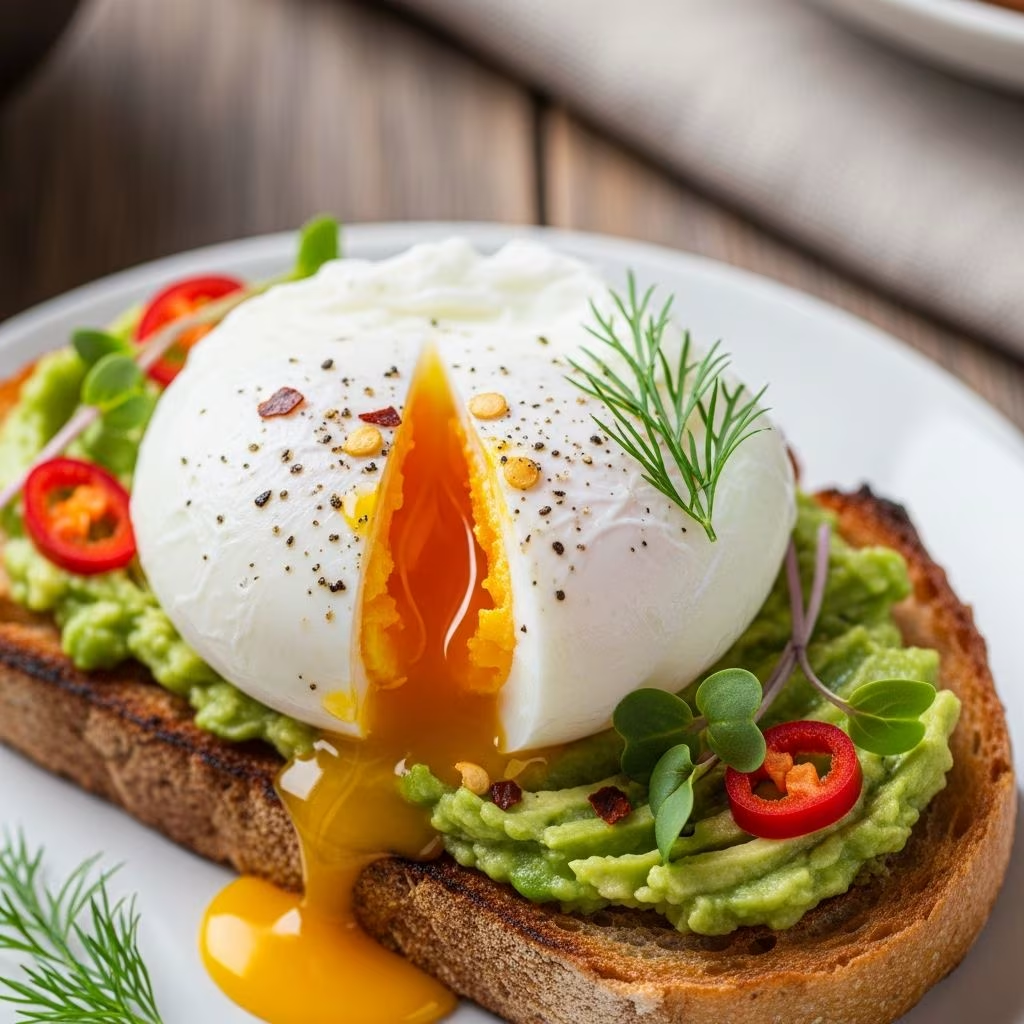
- Serve immediately: On English muffins, avocado toast, or greens.
For batches, poach in stages: add eggs every 30 seconds, removing as they finish.
Advanced Techniques for Pros
Once basics are down, experiment. Double-poach for ultra-firm whites: poach 2 minutes, shock in ice water, then re-poach 1 minute. This method, used by chefs, yields photogenic eggs. For ahead-of-time prep, poach, ice-bath, and refrigerate up to 24 hours; reheat in hot water 30 seconds.
Incorporate aromatics: a pinch of turmeric in water adds golden hue without flavor change. Or infuse with herbs for gourmet twists.
Common Mistakes and Fixes
| Mistake | Symptom | Solution |
|---|---|---|
| Water too hot | Shredded whites | Use thermometer; simmer only. |
| Stale eggs | Spreading whites | Buy fresh; strain excess. |
| Overcrowding | Stuck-together eggs | Poach 1-2 at a time. |
| Undercooked yolk | Raw center | Extend time 30 seconds. |
| No acidity | Loose whites | Add vinegar or lemon juice. |
Creative Recipe Ideas Featuring Poached Eggs
Classic Eggs Benedict
Toast English muffins, top with ham, poached eggs, and hollandaise. Hollandaise: Whisk egg yolks, lemon juice, over double boiler; drizzle in melted butter.
Shakshuka-Inspired
Simmer tomatoes, peppers, spices; nestle in poached eggs. Garnish with feta and herbs.
Asian Fusion Bowl
Serve over rice with soy-ginger sauce, scallions, and sesame.
Salad Sensation
Crown greens, bacon, avocado with warm poached egg; dressing breaks the yolk.
Nutritional Benefits and Pairings
One poached egg delivers 6g protein, 5g fat (mostly healthy), and 70 calories. Paired with whole grains, it forms a complete meal. The USDA notes poaching minimizes added fats compared to frying. Pair with smoked salmon for omega-3s or spinach for iron.
Frequently Asked Questions
Can I poach eggs without vinegar?
Yes, but whites may spread. Lemon juice or lime works similarly. Skip for neutral taste.
How long do poached eggs last?
Up to 2 days in fridge if shocked post-poach. Reheat gently.
Are poached eggs safe for pregnant people?
Yes, if pasteurized or cooked to 160°F internally, per FDA guidelines.
What’s the best water altitude adjustment?
At high altitudes, increase cook time 20-30% due to lower boiling point.
Can I use this method for quail eggs?
Absolutely—reduce time to 1 minute for tiny perfection.
Troubleshooting Visual Guide
- Runny yolk perfection: 2.5 minutes at simmer.
- Firm but creamy: 3.5 minutes.
- Hard-set: 4 minutes.
Practice with visuals: ideal egg has compact white dome, centered yolk.
In summary, poaching eggs is an achievable skill blending science and patience. With fresh ingredients, controlled heat, and these techniques, you’ll produce restaurant-worthy results consistently. Experiment boldly—your brunches will never be the same.
References
- Shell Eggs from Farm to Table — USDA Food Safety and Inspection Service. 2023-05-15. https://www.fsis.usda.gov/food-safety/safe-food-handling-and-preparation/eggs/shell-eggs-farm-table
- Egg Nutrition Overview — American Egg Board. 2024-01-10. https://www.incredibleegg.org/nutrition/egg-nutrition/
- Protein Denaturation in Cooking — Harold McGee, On Food and Cooking (updated edition). 2004 (authoritative reference, relevant for fundamental science). https://www.amazon.com/Food-Cooking-Science-Kitchen-McGee/dp/0684800012
- Food Safety for Eggs — FDA. 2023-11-20. https://www.fda.gov/food/buy-store-serve-safe-food/what-you-need-know-about-egg-safety