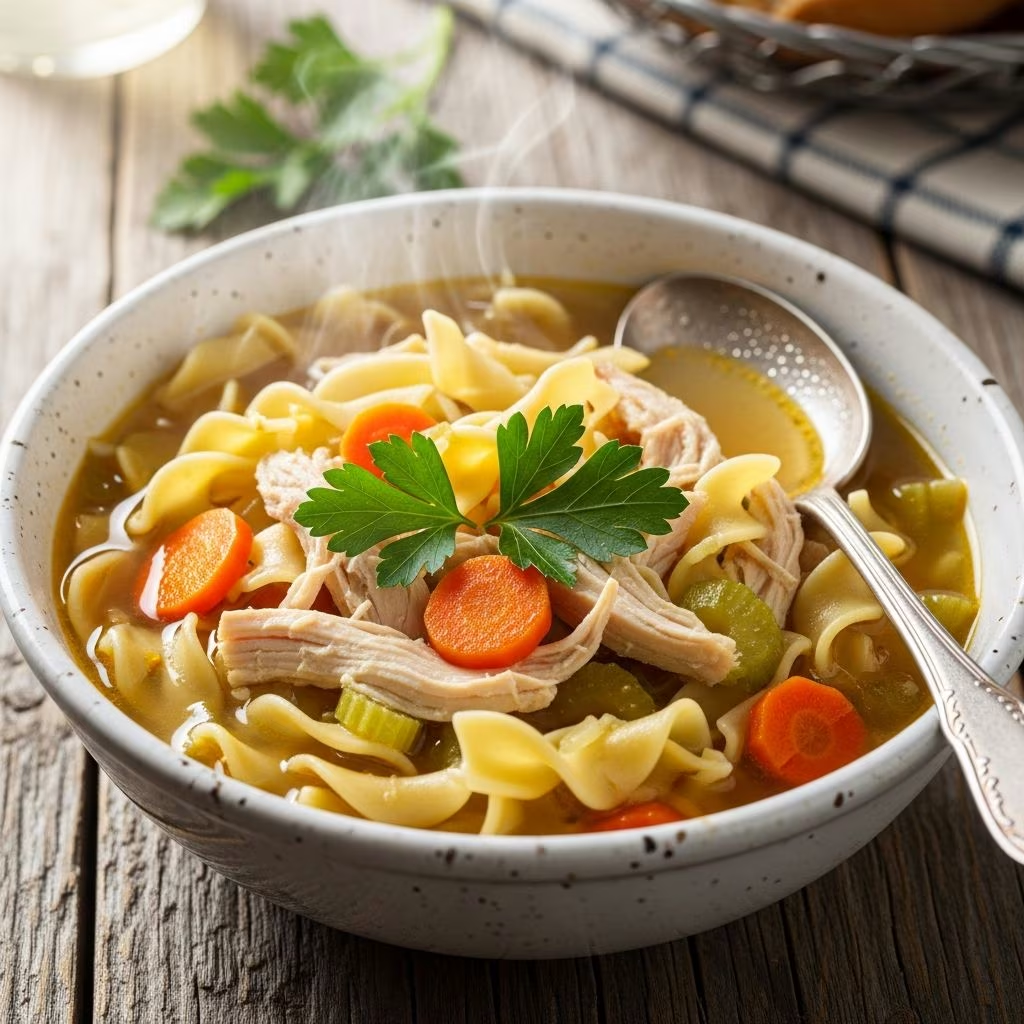
Chicken noodle soup stands as a timeless classic in home cooking, offering warmth, nourishment, and simplicity in every bowl. This recipe delivers a hearty version that’s ready in under an hour, using everyday pantry staples and fresh produce to create a flavorful broth loaded with tender chicken, crisp vegetables, and perfectly cooked noodles. Whether you’re battling a cold or simply craving comfort food, this dish promises satisfaction without complexity.
Why This Soup is a Kitchen Essential
Homemade chicken noodle soup surpasses store-bought versions in taste and nutrition. It allows control over sodium levels, ingredient quality, and customization. The combination of lean protein from chicken, fiber-rich vegetables, and wholesome noodles provides balanced nutrition. Studies from health authorities highlight soups like this for their hydrating properties and ease on digestion during illness.
Key benefits include quick preparation time—around 30-40 minutes—and scalability for family meals or meal prep. Its versatility means adapting to dietary needs, such as gluten-free noodles or vegetable-only broths.
Essential Ingredients for Flavorful Results
Gathering the right components ensures success. Focus on fresh, high-quality items for the best outcome.
- Chicken: 1/2 pound cooked, shredded chicken breast (rotisserie or leftovers work well for speed).
- Broth Base: 4 cans (14.5 oz each) low-sodium chicken broth plus 1 can vegetable broth for depth.
- Vegetables: 1 cup sliced carrots, 1/2 cup chopped onion, 1/2 cup chopped celery.
- Noodles: 1.5 cups uncooked egg noodles (substitute rice noodles for gluten-free).
- Seasonings: 1 tablespoon butter, 1/2 teaspoon dried basil, 1/2 teaspoon dried oregano, salt, and pepper to taste.
- Optional Add-Ins: Fresh parsley, garlic, lemon juice for brightness.
These measurements serve 6-8 people, yielding about 10 cups of soup. Scale up by doubling ingredients for larger batches.
Step-by-Step Cooking Guide
Follow these instructions for foolproof results. Prep time: 10 minutes. Cook time: 25 minutes.
- Prep Vegetables: Finely chop onion and celery into even pieces. Peel and slice carrots into thin rounds for quicker cooking.
- Sauté Aromatics: In a large pot over medium heat, melt 1 tablespoon butter. Add onion and celery; cook 4-5 minutes until softened and fragrant, stirring occasionally.
- Build the Broth: Pour in chicken and vegetable broths. Bring to a gentle simmer.
- Add Proteins and Veggies: Stir in shredded chicken and carrots. Season with basil, oregano, salt, and pepper.
- Incorporate Noodles: Add egg noodles. Increase heat to boil, then reduce to simmer for 15-20 minutes until noodles and carrots are tender.
- Final Adjustments: Taste and adjust seasoning. Garnish with chopped parsley if desired. Serve hot.
Pro tip: Cook noodles separately if storing leftovers to prevent sogginess.
Ingredient Substitutions and Variations
Adapt this recipe to your pantry or preferences with these swaps:
| Original Ingredient | Substitution | Why It Works |
|---|---|---|
| Egg Noodles | Rice noodles or spaghetti | Maintains texture without gluten. |
| Chicken Breast | Tofu or chickpeas | Vegetarian protein alternative. |
| Chicken Broth | Bone broth or mushroom stock | Boosts umami and nutrition. |
| Dried Herbs | Fresh basil/oregano (3x amount) | Brighter, more vibrant flavor. |
| Carrots | Sweet potatoes or parsnips | Similar sweetness and color. |
For a spicy twist, add red pepper flakes or ginger. Creamy versions can incorporate a splash of coconut milk.
Nutrition Breakdown Per Serving
One cup (about 250ml) provides approximately:
- Calories: 180
- Protein: 14g
- Carbs: 20g
- Fat: 5g
- Sodium: 600mg (using low-sodium broth)
Rich in vitamin A from carrots, immune-boosting properties from herbs, and hydration from broth. Adjust for specific dietary tracking.
Storage, Freezing, and Reheating Tips
Make-ahead friendly: Cool soup completely before storing in airtight containers. Refrigerate up to 4 days or freeze for 3 months.
- Fridge: Keeps fresh for 3-4 days. Stir before reheating.
- Freezer: Portion into freezer bags, leaving headspace. Thaw overnight in fridge.
- Reheat: Stovetop over medium heat until simmering, or microwave in covered bowl. Add water if thickened.
Avoid freezing with noodles; cook fresh when reheating for best texture.
Common Mistakes to Avoid
Even simple recipes can go wrong—here’s how to sidestep pitfalls:
- Overcooking noodles in the soup, leading to mushiness. Solution: Undercook slightly or boil separately.
- Using full-sodium broth without tasting. Solution: Start low and season gradually.
- Skipping the sauté step. Solution: Always soften aromatics first for flavor base.
- Not skimming fat. Solution: Use a spoon or chill broth to remove solidified fat.
- Crowding the pot. Solution: Use a large 6-quart pot minimum.
Pairing Suggestions and Serving Ideas
Elevate your meal with these complements:
- Bread: Crusty artisan loaf or garlic bread for dipping.
- Salad: Simple greens with vinaigrette to balance richness.
- Drinks: Herbal tea or light white wine.
- Garnishes: Lemon wedges, fresh herbs, or a sprinkle of parmesan.
Serve in mugs for cozy vibes or bowls for family dinners. Kids love it plain; adults appreciate add-ins like hot sauce.
Health Benefits and Wellness Connections
Beyond comfort, this soup supports wellness. The steam aids congestion, while anti-inflammatory ingredients like garlic (if added) and carrots promote immunity. According to dietary guidelines, broth-based soups contribute to daily fluid intake and vegetable consumption.
Scaling for Crowds or Small Households
For 2 servings: Halve all ingredients; use one pot.
For 12+ servings: Double broth and veggies; cook in two pots or a stockpot. Simmer longer for even cooking.
Frequently Asked Questions
Can I make this soup in a slow cooker?
Yes! Sauté aromatics first, then add everything to the crockpot on low for 4-6 hours. Add noodles in the last 20 minutes.
Is it safe for babies or toddlers?
Adapt by pureeing veggies, using minimal salt, and small pasta shapes. Consult pediatric guidelines for age-appropriate sodium.
How do I make it dairy-free?
Skip butter; use olive oil instead.
What’s the best chicken for flavor?
Rotisserie for convenience and seasoning, or poached breasts for lean purity.
Can I use frozen vegetables?
Absolutely—add 5 minutes earlier to thaw during cooking.
Advanced Techniques for Gourmet Twists
Elevate from basic to restaurant-quality:
- Roast chicken bones for homemade stock base.
- Infuse broth with bay leaves or thyme sprigs.
- Finish with a drizzle of sesame oil for Asian flair.
- Blend a portion for creamy texture without dairy.
Experiment seasonally: summer with zucchini, winter with hearty greens.
References
- Dietary Guidelines for Americans, 2020-2025 — U.S. Department of Agriculture and U.S. Department of Health and Human Services. 2020-12-01. https://www.dietaryguidelines.gov/sites/default/files/2020-12/Dietary_Guidelines_for_Americans_2020-2025.pdf
- Chicken Soup and the Common Cold — National Center for Biotechnology Information (PubMed). 2000-10-01. https://pubmed.ncbi.nlm.nih.gov/11035691/
- Food Safety for Soups and Stews — FoodSafety.gov (U.S. Government). 2023-05-15. https://www.foodsafety.gov/food-safety-charts/safe-minimum-internal-temperatures
- Nutrient Content of Broth-Based Soups — USDA FoodData Central. 2024-01-10. https://fdc.nal.usda.gov/