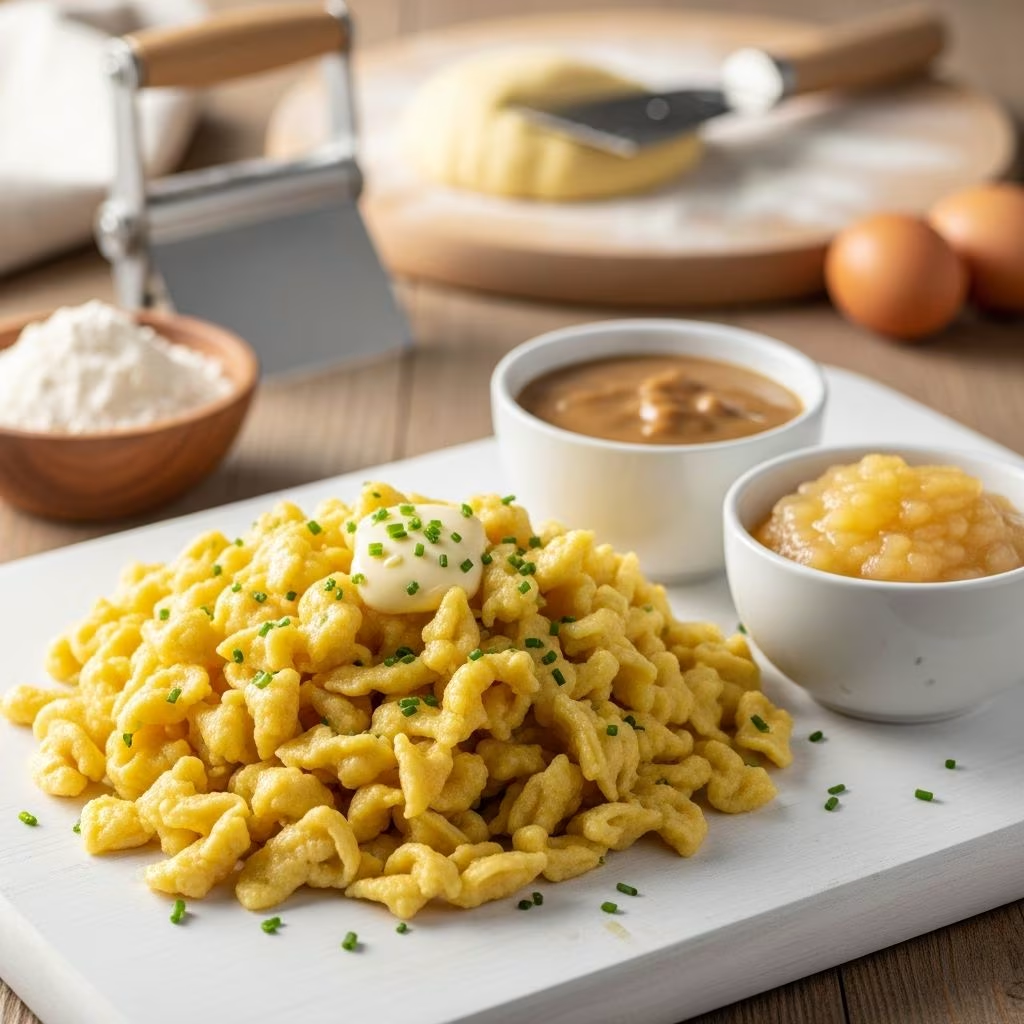
Spätzle, those delightful little dumplings from the heart of German and Austrian cuisine, have charmed palates worldwide with their pillowy texture and versatility. Whether you’re pairing them with hearty stews, rich sauces, or simply butter and herbs, mastering Spätzle at home opens up a world of comforting dishes. This guide dives deep into everything you need to know, from crafting the perfect dough to innovative twists that elevate this classic.
Understanding the Essence of Spätzle
At its core, Spätzle is a fresh egg noodle made from a simple batter of flour, eggs, and water or milk. Originating in Swabia, a region in southwestern Germany, the name ‘Spätzle’ means ‘little sparrows,’ a nod to their small, bird-like shape. Unlike dried pasta, Spätzle is all about freshness—it’s mixed by hand, dropped into boiling water, and served immediately for maximum tenderness.
What sets Spätzle apart is its unique texture: chewy yet soft, with a slightly irregular shape that holds sauces beautifully. Traditionally scraped from a wooden board into boiling water using a knife, modern methods use specialized tools for efficiency. This dish embodies rustic simplicity, requiring minimal ingredients but rewarding precision in technique.
Essential Ingredients for Authentic Flavor
Building a flawless Spätzle dough starts with quality staples. Here’s a breakdown of the must-haves:
- Flour: All-purpose flour works best for a smooth batter. Bread flour adds extra chewiness if you prefer a heartier bite.
- Eggs: Fresh eggs provide richness and structure. Use 2-3 per cup of flour for the classic ratio.
- Liquid: Water, milk, or a mix creates the right consistency—thicker than pancake batter but pourable.
- Salt: A pinch seasons the dough and enhances flavor during boiling.
- Optional Add-Ins: Nutmeg for warmth, fresh herbs like parsley, or even cheese for a cheesy variation.
A standard recipe yields enough for 4 servings: 2 cups flour, 2 eggs, 3/4 cup milk, and 1/2 tsp salt. Whisk eggs and milk first, then gradually incorporate flour to avoid lumps. Let the batter rest 15-30 minutes; this hydrates the flour for better results.
Tools and Equipment You’ll Need
No fancy gadgets required, but the right tools make all the difference:
| Tool | Purpose | Best For |
|---|---|---|
| Spätzle maker (press or scraper) | Forms and drops batter | Beginners |
| Colander with large holes | Steams dumplings evenly | Quick batches |
| Wooden board and knife | Traditional scraping | Authentic texture |
| Large pot | Boiling water | All methods |
Invest in a stainless steel Spätzle press for consistent results—it’s inexpensive and dishwasher-safe. For traditionalists, a simple colander over simmering water mimics the old-school steam method.
Step-by-Step: Cooking Perfect Spätzle
Follow these steps for foolproof results every time.
- Prepare the Batter: Combine ingredients in a bowl. Beat until smooth and bubbly, about 2 minutes. Rest covered at room temperature.
- Boil Water: Fill a large pot with salted water (1 tbsp salt per 4 quarts). Bring to a rolling boil.
- Form the Dumplings: Hold your tool over the pot. Press or scrape batter in small amounts directly into the water. Work in batches to avoid overcrowding.
- Cook Until Floating: Dumplings rise to the surface in 1-3 minutes. Stir gently to prevent sticking.
- Shock and Drain: Scoop with a slotted spoon into ice water for 30 seconds (optional for firmness), then drain well.
- Toss and Serve: Sauté in butter or oil for crisp edges, or mix with sauce immediately.
Pro Tip: If batter is too thick, add a splash of liquid. Test one dumpling first to adjust.
Creative Variations to Try
While plain Spätzle shines, variations keep things exciting:
- Herbed Spätzle: Stir in chopped chives, parsley, or spinach puree before cooking for color and freshness.
- Cheese Spätzle (Käsespätzle): Layer boiled dumplings with grated Emmental or Gruyère, bake until bubbly. Top with caramelized onions.
- Whole Wheat or Gluten-Free: Swap half the flour for whole wheat or use a 1:1 gluten-free blend. Add xanthan gum for binding.
- Sweet Spätzle: Cinnamon and sugar toss, served with applesauce or vanilla sauce for dessert.
- Spicy Southwest Twist: Incorporate cornmeal, cheddar, and jalapeños for a fusion side.
Experiment with add-ins like bacon bits or roasted garlic to match your meal.
Perfect Pairings and Serving Ideas
Spätzle’s neutral base complements bold flavors:
- Classic Mains: Sauerbraten, goulash, or pork schnitzel with mushroom gravy.
- Vegetarian: Lentil stew, creamy mushroom ragout, or roasted root vegetables.
- Quick Meals: Toss with pesto, browned butter sage, or carbonara-style eggs and pancetta.
- Holiday Tables: Alongside turkey or ham, replacing mashed potatoes.
Serve family-style in a warm bowl, garnished with parsley and grated cheese. For crispiness, pan-fry leftovers in butter until golden.
Troubleshooting Common Issues
Even pros hit snags—here’s how to fix them:
- Gummy Texture: Overmixed batter or overcooked. Mix minimally and remove promptly when floating.
- Falling Apart: Too much liquid. Thicken with flour and rest longer.
- Sticking Together: Insufficient stirring or overcrowding. Boil in smaller batches.
- Pale Color: Add a pinch of turmeric or extra egg yolks.
Practice makes perfect; start small to dial in your method.
Nutrition and Storage Tips
A 1-cup serving offers about 250 calories, 9g protein, and 40g carbs—comfort food with balance. Store cooked Spätzle in an airtight container in the fridge for up to 3 days. Reheat by sautéing or steaming. Freeze uncooked batter for up to a month; thaw before use. Uncooked dumplings freeze well on a sheet tray, then bag for later.
Spätzle in Global Kitchens
Beyond Germany, Spätzle appears in Hungarian ‘nokedli,’ Alsatian ‘spätzle,’ and Swiss adaptations. In the U.S., it’s a staple at German beer halls and farm-to-table spots. Chefs like Thomas Keller have elevated it in fine dining, proving its adaptability from street food to gourmet.
Fun Fact: Swabians consume over 100 pounds of Spätzle per person annually, per regional food studies.
FAQ: Your Spätzle Questions Answered
Can I make Spätzle without a Spätzle maker?
Yes! Use a colander, potato ricer, or teaspoon to drop batter into water.
How long does Spätzle take to cook?
1-3 minutes per batch. They’re done when they float.
Is Spätzle gluten-free?
Not traditionally, but gluten-free flour blends work well with adjustments.
Can I prepare Spätzle dough ahead?
Yes, refrigerate up to 24 hours or freeze for a month.
What’s the best way to reheat leftovers?
Pan-fry in butter for crispy edges or steam to restore softness.
With these insights, you’re equipped to create restaurant-worthy Spätzle. Invite friends over, pour some wine, and enjoy the process—it’s as fun as it is delicious!
References
- Traditional German Cooking: Regional Recipes — German Federal Ministry of Food and Agriculture. 2023-05-15. https://www.bmel.de/EN/topics/consumer-protection/food-hygiene-safety/german-cuisine.html
- Spätzle: The Swabian Specialty — University of Hohenheim Food Science Department. 2022-11-10. https://www.uni-hohenheim.de/en/food-science
- Authentic Regional Cuisines of Europe — UNESCO Intangible Cultural Heritage. 2024-01-20. https://ich.unesco.org/en/RL/gastronomic-meal-of-the-french-00245
- Nutritional Analysis of Traditional Dumplings — USDA FoodData Central. 2025-03-01. https://fdc.nal.usda.gov/