Understanding Passion Fruit Curd: What Makes It Special
Passion fruit curd represents a delightful category of fruit-based preserves that captures the vibrant, tropical essence of one of nature’s most distinctive fruits. Unlike traditional jams or jellies that rely primarily on pectin and sugar for their gel-like consistency, curd achieves its luxurious texture through a combination of egg proteins and butter emulsion. This distinctive preparation method creates a velvety spread with a custardy quality that distinguishes it from other fruit preserves.
The magic of curd lies in how its primary ingredients work together. Passion fruit pulp provides the signature tangy-sweet flavor profile that makes this preserve so versatile in the kitchen. Butter contributes richness and helps create that signature silky mouthfeel, while eggs act as a natural thickening agent through the gentle application of heat. The result is a preserve that tastes more like a refined fruit custard than a traditional spread, making it suitable for applications far beyond simply toasting on bread.
What distinguishes curd from other fruit preparations is its limited shelf life compared to jams or jellies. However, this shorter preservation window is a fair trade-off for the superior texture and fresh fruit flavor that cannot be achieved through extended cooking processes. The gentle heating techniques required to prevent egg curdling also help preserve delicate fruit flavors that would be lost in prolonged cooking methods.
Sourcing Quality Passion Fruits and Pulp
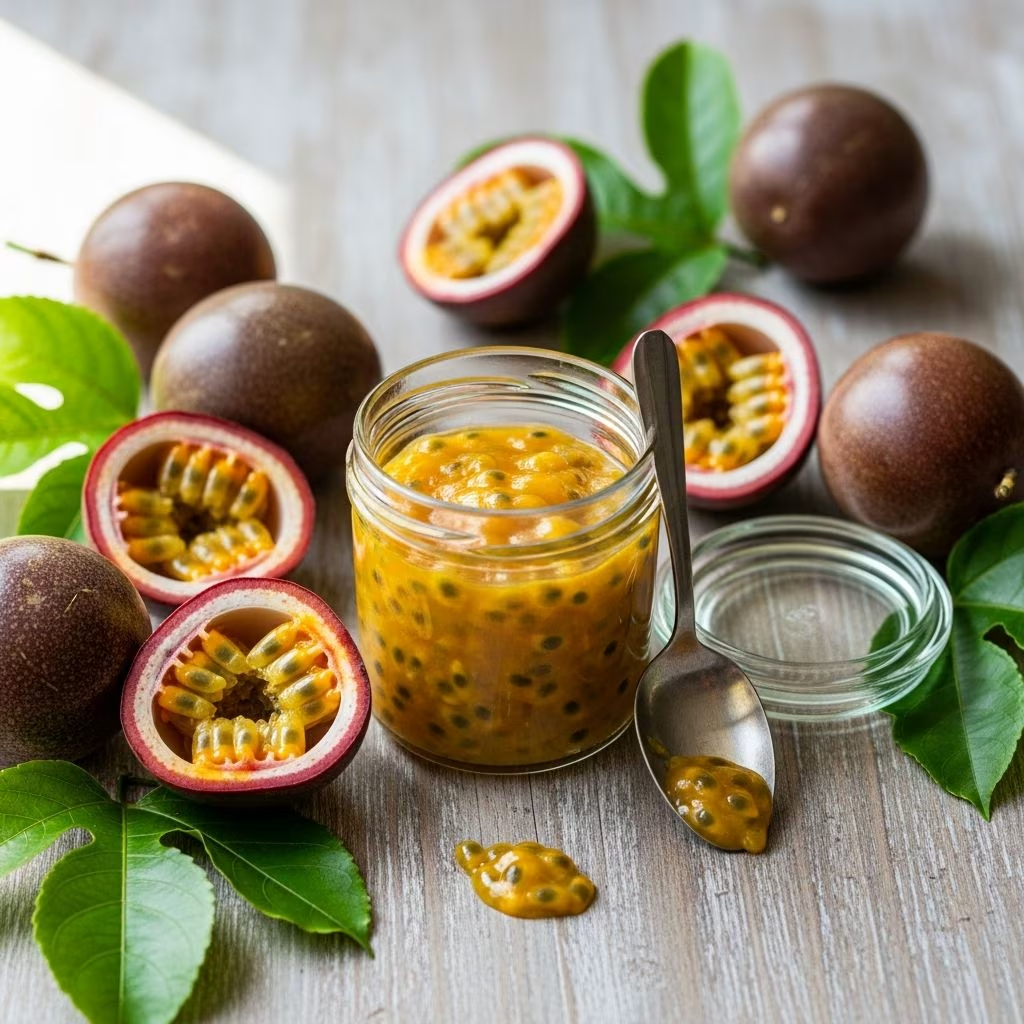
The foundation of exceptional passion fruit curd begins with understanding your options for obtaining passion fruit material. Fresh passion fruits offer an authentic experience and allow you to extract juice and pulp directly from the source. When selecting fresh fruits, look for specimens with deeply wrinkled, dark skin—this wrinkled appearance indicates ripeness and maximum flavor concentration. Smooth-skinned passion fruits are typically underripe and will lack the intensity of flavor desired for curd making.
If you have access to fresh passion fruits, preparing your own pulp is straightforward. Cut each fruit in half and scoop the interior seeds and juice into a bowl. You can use this pulp directly or strain it to separate the juice from the seeds, depending on your texture preference and the recipe you’re following. Fresh passion fruits yield approximately 2-3 tablespoons of usable pulp each, so anticipate needing several fruits to accumulate the quantities called for in typical recipes.
For those without access to fresh fruits or preferring the convenience factor, frozen passion fruit pulp represents an excellent alternative. Available at major supermarket chains, specialty grocery stores, and Latin markets, frozen pulp should list passion fruit as its sole ingredient—avoid products with added water or other additives that could affect your curd’s final consistency and flavor intensity. The frozen option works equivalently to fresh pulp once thawed and provides year-round accessibility to this tropical ingredient.
Passion fruit juice, while tempting as a shortcut, does not perform the same function as pulp in curd recipes. The removal of seeds and solids during juice production eliminates important flavor compounds and body that contribute to curd’s characteristic texture. When recipes specifically call for pulp, substituting juice will result in a thinner, less flavorful final product.
Essential Ingredients and Their Roles
| Ingredient | Quantity Range | Function in Curd |
|---|---|---|
| Passion Fruit Pulp | ½ to 1 cup | Provides signature flavor and tartness; primary liquid component |
| Eggs/Egg Yolks | 2-4 large eggs or 4 yolks | Acts as thickening agent; emulsifies butter; creates custardy texture |
| Unsalted Butter | ¼ to 1 stick | Contributes richness and silky mouthfeel; aids emulsification |
| Sugar | ¼ to ½ cup | Balances tartness; preserves; sweetens final product |
| Lemon Juice | 1-2 tablespoons | Enhances tartness; prevents curdling; complements passion fruit flavor |
The ratio of ingredients influences your curd’s final consistency and flavor balance. Higher egg ratios create thicker curds suited for serving as standalone desserts or cake fillings, while recipes with fewer eggs produce softer spreads ideal for dolloping on yogurt or incorporating into other recipes. Quality matters significantly—use fresh eggs and good-quality butter to achieve the best texture and taste.
Cooking Methods: Finding Your Preferred Technique
The Double Boiler Approach
The double boiler method provides reliable, forgiving results through indirect, gentle heat application. This technique involves heating water in a lower pot to a gentle simmer, then placing a heat-proof bowl above this water source without direct contact. The steam generated provides consistent, moderate warmth that reduces the risk of eggs cooking too quickly or unevenly.
To implement this method, begin by placing passion fruit pulp and sugar in your upper bowl, whisking occasionally until sugar dissolves completely. In a separate container, whisk together your eggs (whether whole or yolks) with lemon juice until smooth. Slowly pour this egg mixture into the warm passion fruit mixture while whisking constantly—this tempering process gradually raises the eggs’ temperature and prevents them from scrambling when combined.
Return the combined mixture to the double boiler and continue whisking frequently for 10-20 minutes as it thickens. The consistency should gradually transition from liquid to a spreadable texture that coats the back of a spoon. Stir regularly, paying special attention to the mixture’s perimeter where it’s more likely to overcook. Once thickened, add cold butter pieces and whisk until completely emulsified, creating a glossy, luxurious finish.
Direct Heat Method
For those comfortable with more direct temperature control, the direct heat method works efficiently when executed with attention and care. All ingredients—passion fruit pulp, sugar, eggs, and lemon juice—combine directly in a saucepan over low-medium heat. Constant whisking prevents any portion from cooking faster than others, which is critical when eggs are exposed to direct heat.
This method requires more active monitoring but produces finished curd slightly more quickly than double boiler techniques. Use a heat-resistant rubber spatula to scrape the bottom and sides of the pan continuously, preventing any cooked-on residue from incorporating into your smooth curd. The mixture signals readiness when it coats the back of a spoon and holds a clear line when you draw your finger across it. At this point, remove from heat immediately and stir in cold butter pieces until incorporated.
Food Processor Shortcut
A simplified approach combines passion fruit pulp, whole eggs, sugar, and salt in a food processor, pulsing until completely smooth and emulsified. Transfer this pre-emulsified mixture to a saucepan over medium-low heat and whisk constantly. This method eliminates the separate tempering step and produces silky results, though it works best with recipes specifically designed for this approach. Temperature control becomes especially important—the curd should thicken around 140°F (60°C) and fully set around 167°F (75°C), with 10-15 minutes of gentle heating typically required.
Temperature Control and Doneness Indicators
Understanding when your curd has reached proper consistency prevents both undercooked and overcooked results. The most reliable indicator is the spoon test: dip a clean spoon into your curd and draw your finger across its back. Properly cooked curd should maintain a clear line where your finger passed, not immediately flowing back together. This texture takes approximately 10-20 minutes depending on your chosen cooking method and heat intensity.
For those using thermometers, temperature provides an objective guideline. Passion fruit curd reaches safe consumption temperatures around 160°F (71°C) for food safety, though optimal texture typically develops between 165-170°F (74-76°C). Temperatures exceeding 180°F (82°C) risk scrambling eggs and creating an undesired grainy texture.
Storage and Longevity
Properly prepared passion fruit curd maintains quality for 3-4 weeks when stored in an airtight container in the refrigerator. The high sugar and egg content, combined with the slightly acidic nature of passion fruit, provides natural preservation, though curd doesn’t achieve the long shelf life of traditional jams. Freezing extends storage life to 3-4 months, though texture may become slightly less smooth upon thawing due to the egg proteins’ response to freezing.
For longer-term storage, water bath canning provides an option, though this requires careful attention to food safety protocols and slightly modified recipes that account for the heating required during the canning process. Standard refrigerated curd is not suitable for water bath canning without proper testing and approval.
Creative Applications Beyond Spreading
While passion fruit curd makes an exceptional spread for toast, scones, and pastries, its versatility extends far beyond these traditional applications. Layer it into yogurt parfaits for a restaurant-quality breakfast, swirl it into vanilla cheesecake batter before baking for marbled complexity, or use it as a filling between sponge cake layers. Thin it slightly with a touch of passion fruit juice to create an elegant sauce for panna cotta, ice cream, or fresh tropical fruit platters.
Curd adds sophistication to dessert decorating—pipe it through pastry bags to fill éclairs or cream puffs, or dollop it atop individual chocolate cakes for a bright, tangy contrast. Mixed with whipped cream, it becomes a fool-style dessert of elegant simplicity. Even savory applications merit consideration: spread on buttered crackers with soft cheese, or thin it with vinegar as an unconventional glaze for roasted duck or pork.
Troubleshooting Common Issues
Grainy or Scrambled Texture: This results from eggs cooking too quickly. Ensure consistent, gentle heat and whisk continuously. Strain the finished curd through a fine-mesh sieve to rescue batches with minor graininess.
Insufficient Thickening: Your mixture may not have reached proper temperature. Continue cooking while whisking, checking doneness every minute. Alternatively, your eggs may have been older or the ratio of eggs to liquid insufficient—future batches might benefit from an additional egg yolk.
Separated or Broken Texture: This indicates improper butter emulsification or mixing during the cooling process. Whisk vigorously when adding butter, and continue whisking during the first few minutes of cooling to maintain emulsion stability.
Insufficient Flavor Intensity: Future batches might benefit from additional passion fruit pulp or a tablespoon of lemon juice. Some recipes strain pulp to remove seeds before cooking, which concentrates flavor further.
Frequently Asked Questions
Can I make passion fruit curd without eggs?
Traditional curd relies on eggs for both thickening and texture development. Egg-free versions using cornstarch or other thickeners produce different results—they’ll be less custardy and more jam-like. Such alternatives are technically preserves rather than true curd.
Is passion fruit curd safe to eat given the raw egg concern?
Properly prepared curd reaches temperatures of 160°F (71°C) or higher, pasteurizing the eggs and making the product safe for consumption by general populations. If you have immune system concerns, consult food safety guidelines specific to your situation.
How do I thin curd that’s become too thick during storage?
Whisk in small amounts of passion fruit juice, lemon juice, or even water to achieve desired consistency. Add gradually, testing texture after each addition.
Whole egg versions produce slightly lighter texture and greater volume due to egg white protein, while yolk-only versions deliver richer color and more decadent mouthfeel. Yolk-only recipes often use less liquid since they contain fewer total proteins.
Sugar contributes to both flavor balance and preservation. Reducing it significantly may result in excessive tartness and shortened shelf life. If reducing sugar, use no more than a 25% reduction and refrigerate promptly after preparation.
Creating passion fruit curd at home transforms this exotic tropical fruit into a versatile ingredient that elevates breakfasts, desserts, and afternoon treats. Whether you choose the reliability of double boiler methods, the efficiency of direct heat techniques, or the modern shortcut of food processor preparation, the fundamental principles remain constant: gentle heat, constant whisking, and careful attention to emulsification. With quality ingredients and attention to technique, you’ll produce silky curd with concentrated passion fruit flavor that justifies the modest effort involved. Each batch represents an opportunity to refine your technique and discover new applications for this luxurious preserve.
- How to Make Passion Fruit Curd — The Flavor Bender. https://www.theflavorbender.com/make-passion-fruit-curd/
- How to Make Passion Fruit Curd — Brazilian Kitchen Abroad. https://braziliankitchenabroad.com/passion-fruit-curd/
- Easiest Passion Fruit Curd — Cardamom and Tea. https://cardamomandtea.com/26620/passion-fruit-curd/
- The Best Passion Fruit Curd — The Yellow Oven. https://theyellowoven.com/passionfruit-curd/
- Passion Fruit Curd Tart with Shortbread Crust — Marissa Makes. https://marissa-makes.com/recipe/passion-fruit-curd-tart-with-shortbread-crust/
- Passion Fruit Curd Recipe — BBC Good Food. https://www.bbcgoodfood.com/recipes/passion-fruit-curd