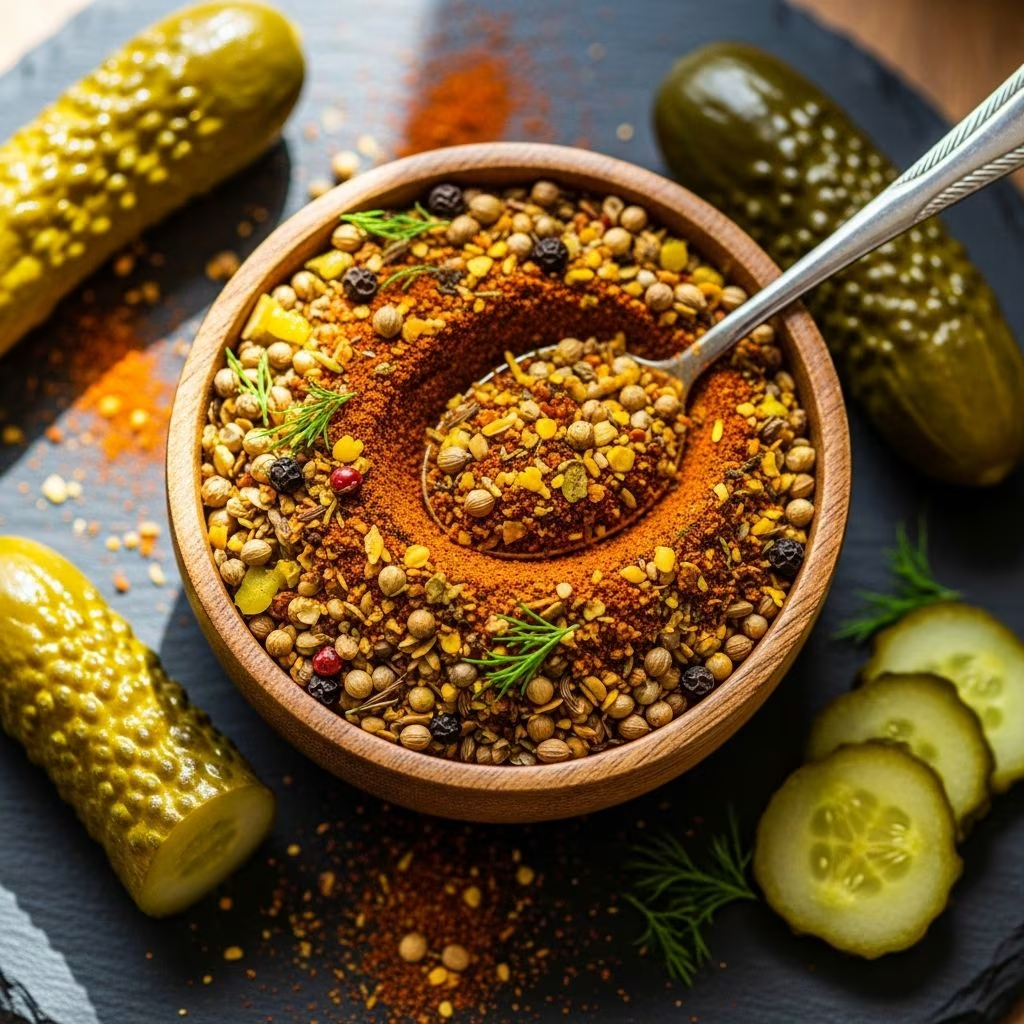
Imagine capturing the crisp, vinegary essence of your favorite deli pickles in a dry rub that elevates everything from grilled steaks to roasted vegetables. This homemade pickle brine spice rub delivers that signature tang without the liquid, making it a pantry powerhouse for bold seasoning. By combining toasted seeds, powdered vinegar, and aromatic herbs, you create a versatile blend that’s low in sugar and high in impact.
Why This Rub Stands Out in Your Kitchen
The magic lies in its ability to mimic pickle brine’s complexity—earthy, sharp, and refreshingly herbal—while being shelf-stable for months. Unlike traditional wet marinades, this dry version adheres perfectly to surfaces, forming a flavorful crust during cooking. It’s ideal for busy cooks seeking quick flavor boosts on proteins like chicken or pork, or even sprinkled over fries for a snack upgrade. Health-conscious eaters appreciate its minimal ingredients, free from additives found in store-bought mixes.
Core Ingredients and Their Flavor Roles
Building a standout rub starts with quality components. Here’s a breakdown of essentials:
- Coriander seeds: Provide a citrusy, nutty base when toasted, forming the rub’s foundation.
- Vinegar powder: Delivers the briny punch of pickle juice in dry form, cutting through richness.
- Dried dill: Infuses fresh, grassy notes reminiscent of classic dill pickles.
- Kosher salt: Enhances all flavors and aids in tenderizing meats.
- Celery seeds: Add a subtle bitterness and vegetal depth.
- Mustard powder: Brings mild heat and tang.
These create a balanced profile: tangy from vinegar powder, aromatic from herbs, and textured from seeds. Sourcing whole spices ensures freshness; grind only what you need to preserve potency.
Step-by-Step Creation Guide
Preparing this rub takes under 10 minutes. Follow these precise steps for optimal results:
- Heat a dry skillet over medium-high. Add 4 tablespoons coriander seeds and toast for 2 minutes, stirring until fragrant and lightly browned. This unlocks essential oils for deeper flavor.
- Cool seeds completely, then grind coarsely in a spice mill or with a mortar and pestle. Coarseness ensures texture on food surfaces.
- In an airtight jar, combine ground coriander with 6 tablespoons vinegar powder, 4 tablespoons dried dill, 2 tablespoons kosher salt, 4 teaspoons celery seeds, and 1 teaspoon mustard powder.
- Seal and shake vigorously to distribute evenly. Store in a cool, dark place for up to 3 months.
Pro tip: Taste and adjust salt if using fine sea salt instead of kosher, as grain size affects intensity.
Best Applications for Meats and Beyond
This rub shines on high-heat cooking methods where its flavors caramelize beautifully. Key uses include:
- Roasted or grilled chicken: Pat 1-2 tablespoons per pound onto skin before cooking for crispy, tangy results.
- Pork chops or tenderloin: Apply generously; the brine-like tang tenderizes and complements pork’s sweetness.
- Beef brisket or ribs: Mix into a brine or rub directly for corned beef vibes.
- Vegetables: Toss potatoes, carrots, or squash with oil and rub before roasting.
- Snacks: Dust over popcorn, nuts, or fries for pickle-chip flair.
For brining, add 2-4 tablespoons to 4 cups liquid (3:1 vinegar-water ratio) and simmer before use.
Customizing Your Rub with Variations
Adapt the base for endless creativity. Use this table for inspiration:
| Variation | Add-Ins (per batch) | Ideal Pairing |
|---|---|---|
| Spicy Kick | 1 tsp red pepper flakes, 1 tsp black peppercorns | Steaks, wings |
| Exotic Twist | 1 tsp juniper berries, ½ tsp turmeric | Game meats, carrots |
| Sweet Heat | 1 tsp ground ginger, pinch allspice | Pork, roasted roots |
| Herbal Boost | 2 tsp dill seeds, 1 bay leaf (crushed) | Turkey brine, soups |
Experiment with small batches; additions like cardamom or star anise add licorice notes for Asian-inspired pickles. Pink peppercorns offer fruity bitterness if sugaring your brine.
Storage, Shelf Life, and Revival Tips
Airtight glass jars keep the rub potent for 3 months at room temperature. Signs of decline include faded aroma or clumping from moisture. Revive by re-toasting or adding fresh vinegar powder. For longer life, freeze in portions. Label with creation date for rotation.
Science Behind the Flavor Magic
Toasting coriander activates volatile compounds, enhancing citrus notes via Maillard reactions during cooking. Vinegar powder, dehydrated from fermented vinegar, provides acetic acid for tang without sogginess. Salt draws out moisture, concentrating flavors on the surface. This synergy mimics pickling’s preservation while suiting dry rubs.
Health and Dietary Perks
Low-sugar and preservative-free, this rub fits keto, paleo, or low-carb diets. Herbs like dill offer antioxidants; celery seeds aid digestion. Use it to reduce reliance on sugary BBQ sauces.
Common Pitfalls and Fixes
- Over-toasting seeds: Burns bitterness; watch closely and stir.
- Fine grind: Loses texture; aim for coarse.
- Weak tang: Source pure vinegar powder; substitutes like citric acid work but alter taste.
Pairing Ideas for Complete Meals
Balance the rub’s acidity with creamy sides: coleslaw, yogurt dips, or mashed potatoes. Grilled corn or pickled onions echo the theme. Beverages like iced tea or light ales cut through richness.
Frequently Asked Questions
What if I can’t find vinegar powder?
Substitute with 2 tbsp citric acid plus 1 tbsp maltodextrin for similar tang and dryness, but test in small amounts.
Can this rub be used in pickling?
Yes, add 1-2 tbsp per quart jar with brine for dill-style pickles.
Is it gluten-free?
Typically yes, but verify spice labels for cross-contamination.
How much rub per serving?
1-2 tsp per portion; 1-2 tbsp per pound of meat.
Vegetarian/vegan friendly?
Absolutely; enhances plant-based proteins like tofu or tempeh.
Expanding to Pickling Spice Blends
Evolve your rub into a full pickling mix by tying in a cheesecloth sachet for brines. Simmer with vinegar-water for infused liquids, perfect for cucumbers, beets, or eggs. This bridges rubs and preserves seamlessly.
Mastering this pickle brine spice rub opens doors to inventive cooking. Its simplicity belies profound flavor transformation, making it a must for spice enthusiasts.
References
- Pickle Brine Spice Rub – Recipes — Patient.info. N/A. https://patient.info/recipes/low-sugar-recipes/pickle-brine-spice-rub
- Homemade Pickling Spice Mix — Give Recipe. N/A. https://www.giverecipe.com/homemade-pickling-spice-mix/
- My Easy Homemade Dill Pickle Spice Blend Recipe — Cultured Guru. N/A. https://cultured.guru/blog/my-easy-homemade-dill-pickle-spice-blend-recipe
- Flavorful Pickling Spice — Sense & Edibility. N/A. https://senseandedibility.com/flavorful-pickling-spice/
- Pickling Spice Recipe + 8 Flavor Variations — Delicious Table. 2024-04-25. https://www.delicioustable.com/pickling-spice/